Me pehea te Whakataurite i nga Hoa Whakaritea Peptide Synthesis: Ko nga Whakamātautau e rima he mea nui
Ko te whakatairite i nga kaha whakahiato peptide ritenga ka timata ma te huri i nga mea e arotakehia ana e koe. Ko te maakete i te marama o Hepetema 2026 Ko te whakarewatanga a Medisca i te wehenga peptide o te ao, he tukunga e whakaatu ana i te whānuitanga o te wehenga i kii ko te whakakotahi i te tuku API me te tohungatanga hanga, hangarau whakahuihui, ratonga tātari, matauranga me te tautoko hangarau, me te tono tohu tohu kaihanga, whakamatautau hua, tuhinga me te tirotiro i nga mekameka tuku ki nga API peptide (Te tuku korero a Medisca, 2026-09-17). Ka tapaina kaore he whare hanga peptide, kaha, te kaute nama, te ahua haumi ranei. Ko te tukunga hei taapiri he taapiri kua tohua e Medisca nga hoa hangahanga mo te wheako rongoa, nga punaha kounga, nga tohungatanga whakangao me nga tikanga hanganga ture (tauhokohoko-waea kapi, 2026-09-17), a, ka ahu mai taua kapinga ki te panui kotahi, kaua ki te aromatawai motuhake.
Koira te tauira e tika ana kia whakauruhia: he tohu whakapumautanga te whakarewanga wehenga, ehara i te whakaatu kaha. Tohu hoa i runga i nga taha e rima, me whakawa ia tangata ma nga tuhinga ka taea e koe te tono, kaua ma te kereme ae-kao-kore ranei.

|
Ahu |
He aha te tono |
He aha te ahua o te whakautu ngoikore |
He aha te ahua o te whakautu kaha |
|---|---|---|---|
|
Te uaua o te raupapa |
He aromatawai whaihua ki to raupapatanga, me te totoro uaua kua tautuhia |
"Ka whakahiatohia e matou nga raupapa katoa" |
I whakaingoatia nga waahi raruraru me te huarahi e whakaarohia ana |
|
Te kaha whakarereke |
Ko ēhea matū he mahinga, he wa ano, ko wai hoki e whakahaere ana i etahi wa |
He tatauranga whakarereke kaore he taipitopito auau |
He rarangi mahinga poto me tetahi ara whakaingoatia mo te toenga |
|
Te maramatanga tātari |
Raraunga mata motuhake rota, ehara i te pepa korero |
CoA anake, he chromatogram tohu ranei |
KoA, chromatogram me MS mo ia rota |
|
Tauineine |
Sigma Peptide Synthesis Ahakoa ka huri te huarahi, ka huri ranei i waenga i te mg me te kg |
“Tauwhati rārangi tātau” |
He rereketanga o te tukanga me tona whakamanatanga |
|
Tautoko whakahura-ki-whakawhanaketanga |
Ko te tohu tuku ingoa me te tangata nona |
"Kotahi te roopu e whakahaere nga mea katoa" |
He waahi whakawhiti kua kiia me ona tuhinga |
Raupapa Matatini: Ka taea e te hoa te hanga i to raupapatanga?
Ko te whakamatautau tuatahi mo nga kaha whakahiato peptide ritenga ehara i te mea ka kii tetahi hoa ka taea e ia te whakahaere i nga raupapa uaua., engari mehemea ka taea te whakaingoa i te Te Kohanga Peptoid aratau rahunga motuhake me te whakaahua me pehea e whakaatu ai ia mea i roto i nga raraunga. Kare e taea te whakamana nga kerēme matatau whanui. Ko nga momo rahunga kua whakaingoatia ehara i te mea.
Ko te whakakorenga me nga raupapa tapahi ka puta he wehe, i te nuinga o nga wa o mua-e whakakore ana i nga tihi poke, me te paheketanga papatipu e rite ana ki te toenga ngaro, toenga ranei. He uaua ake te hopu i te reihi: he isobaric ki te matua, no reira kare e kitea e te papatipu-papatipu MS, me te kitenga ka whakawhirinaki ki te wehenga diastereomer. Ko te whakahiatotanga karekau he tino poke hou, ka puta ake hei whakawhanui teitei, he ngoikore ranei te whakaora monomer (Nga Ara Whakaheke Peptide; Royal Society Atanga Arotahi).

Peptide Uia mo nga mekameka roa, totoro hydrophobic, nga waahanga whakahiato, nga hononga uaua, toenga kore-kanoni, D-amino acids me te macrocyclization hei patai motuhake. Ko te whakautu ngoikore ka kiia he waahanga kotahi. Ko te whakautu kaha ka wehewehe i a raatau me te, i te tauine, he whakaahua i te wa e whakahiatotia ai te kongakonga, Ko te herenga enzymatic me nga rautaki wehewehe rereke ka tika, i tautokohia e nga wheako whakaatu i roto i nga SPPS me te LPPS (Neuland Labs, 2025). Ngaruiti Peptide Synthesizer
Te Mahinga Whakarereke: Ko Tehea Maatauranga He Maamaa, Ko Tehea Nga Waa?
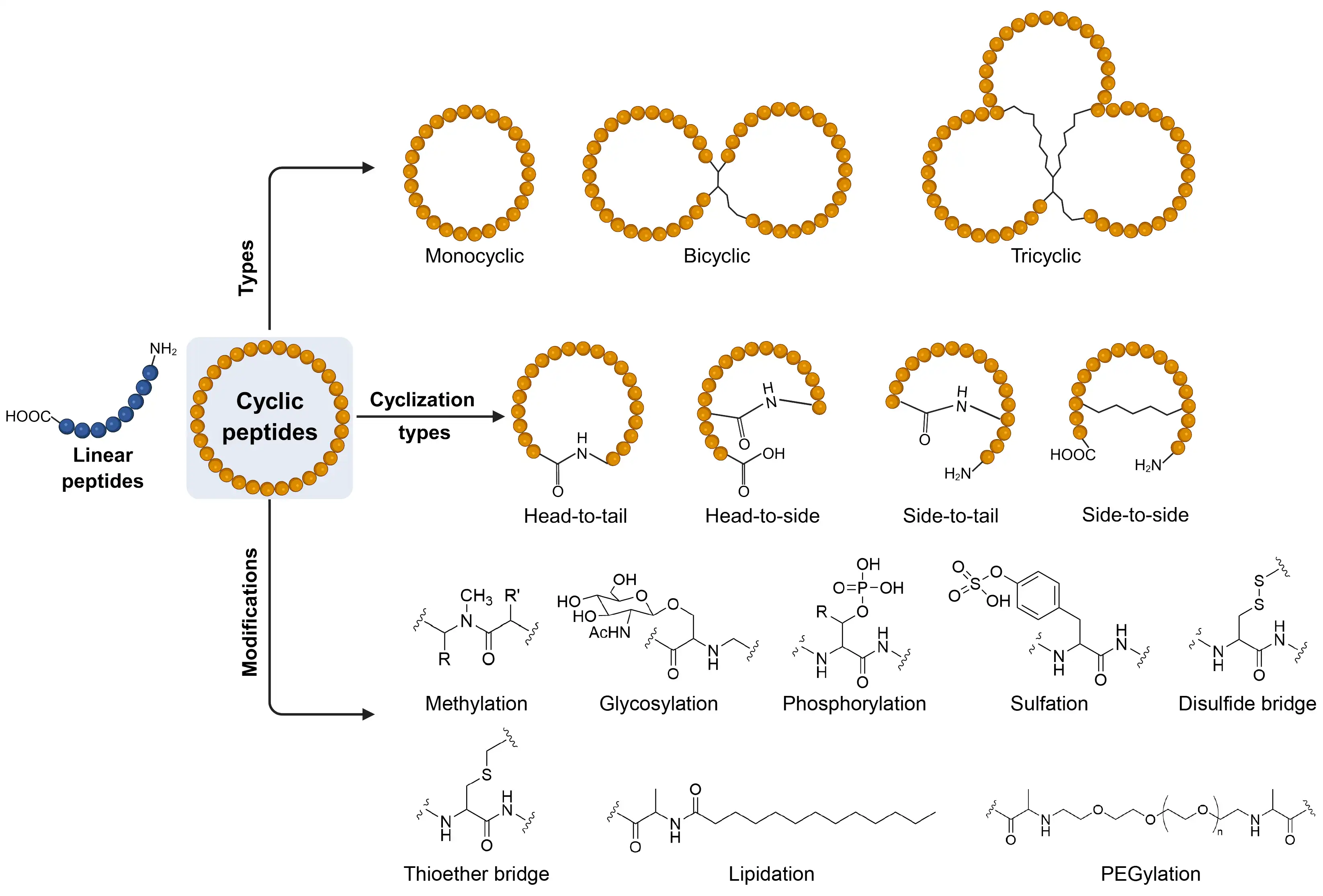
Ko nga whakarereketanga peptide matatini ehara i te kaha kotahi. Whakamahinga-mutunga, hauwai waro, whakangote, lactam and thioether cyclizations, PEGylation, phosphorylation, whakawhanaunga, glycosylation, me C- me nga whakarerekētanga N-terminal e kawe ana i a raatau ake whakahaere reagent, rautaki tiaki-rōpū me te whanonga purenga. Ko te hoa kaha ki te tarai he ngoikore i te glycosylation, na te mea karekau he waahi tukanga e rua.
Na "ka tukuna e matou nga whakarereketanga" ehara i te whakautu. Uia ko nga akomanga he mahinga, te tikanga i whakamanahia, ka rere tonu i te tau kua hipa, a he wa ano, te tikanga i ngana kotahi, e rua ranei. Request the specific chemistry’s batch history, not a portfolio page: lot counts, pauna, and yields for the class you need.
For calibration, one platform’s stated capability set covers over 300 whakarerekētanga-rōpū mahi, tae atu ki te lipidation, tāpara, multi-disulfide loops and FRET pairs (Nga Huringa MOL, 2026). That is a vendor claim, useful as a question to put to every partner: what is your equivalent number, per chemistry class, with batch records behind it?
Mo te Aki: For any modification outside the routine list, ask whether a protocol exists in-house or whether development time is billed separately.
Te Puataata Analytical Transparency: He aha te mea ka tae mai ki ia rota?
Peptide analytical transparency starts with one rule: the documentation follows the lot, not the catalog. A credible certificate of analysis is batch-specific, dated, references the lot number, and carries data from at least two independent methods, typically HPLC and mass spectrometry (ChemVerify, Aperira 2026). The minimum standard is reversed-phase HPLC purity plus electrospray ionization MS confirming molecular weight; amino acid analysis and endotoxin testing are higher-quality additions (ChemVerify, Aperira 2026).
Read the numbers carefully. UV-based HPLC area percent measures chromatographic signal, not net peptide mass, because water, salts and counterions are invisible to UV detection (Janera Science). Net peptide content is typically quoted at 60 ki 80 percent of gross powder weight (ChemVerify, Aperira 2026). A vendor reporting 98 percent HPLC purity without MS data may be overstating effective purity.
A per-lot package worth asking for looks like this: KoA, kromatogram, MS tūāwhiorangi, method parameters and impurity profile. MOL Changes supplies that set per lot, with release testing spanning HPLC, mass spectrometry and amino acid analysis.
Red flags on a certificate of analysis
Generic CoA with no batch or lot number
No mass spectrometry Peptide 1 raraunga
HPLC data without column, gradient and flow rate
Round-number purity values that suggest estimation
Purity quoted without stating the method behind it
Standards to name when you request documents: ahau Q2(R2) for analytical validation, USP <71> te waikura me te USP <85> bacterial endotoxins where relevant, and MHRA ALCOA principles for data integrity.
Tauineine: Ko te mg-ki-kg he puranga Nui ake, he Tukatuka rereke ranei?
Peptide scale-up from mg to kg is a re-engineering exercise, not a larger batch. Neuland Labs describes it as work that “involves re-engineering processes to maintain purity, hua, and cost-efficiency while meeting stringent GMP requirements,” and notes that multi-kilogram capacity “must be supported by validated large-scale purification systems and lyophilization equipment.”
That distinction changes what you ask for. A maximum-capacity figure tells you nothing about whether a partner can hold a method steady as it moves across the scale tiers a program passes through: discovery screening at 1–50 mg, lead optimization at 100 mg–10 g, pre-clinical at 50–500 g, and clinical or pilot batches at 1 kg and above, as MOL Changes sets out in its own service model.
Ask instead for intermediate engineering-batch records, method-transfer documentation, and the reactor scale those batches ran on. At large scale, Neuland Labs adds, rangahau pūmautanga, whakaahuatanga poke, and full method validation become mandatory before batch release, me te HPLC, LC-MS, and residual solvent methods must themselves be validated for large-scale application. Peptide 2
Tautoko Mai i Discovery Through Development: Kei Te Wahi Ka Waa Te Tohanga?

End-to-end support is a service list until you test it at the seams. The failure mode is rarely a partner that cannot synthesize, purea, or scale; it is a program where nobody owns the sequence between those stages, and the buyer discovers it when a batch needs reworking or a submission deadline moves.
Ask who holds the sequence record from design through synthesis, purenga, and large-scale production, and who signs off when a route changes mid-program. Ask the same for regulatory support: if a partner lists IND and NDA support, name the person who assembles the chemistry section, and confirm they see the analytical data at the time it is generated rather than at submission.
The regulatory frame matters here. FDA’s interim 503A bulk drug substances policy sorts substances into three categories: Kāwai 1, where FDA does not intend to act against compounders meeting the guidance conditions; Kāwai 2, where FDA has identified significant safety risks pending further evaluation and would consider taking action; me te Kāwai 3, where supporting information is insufficient and the substance is not eligible for the Category 1 policy. That is a frame for asking questions, not a statement about any specific peptide’s status.
Mo te Aki: Put the handoff questions in writing before you award a program: who owns the sequence at each stage, who approves a route change, who assembles the regulatory section, and what documentation transfers with the project if you move suppliers.
Ko wai Me Whiriwhiri Ko Tehea Kounga Hoa
Weight the five tests against where your program sits on the scale tiers a program moves through, from discovery-stage milligram work to clinical and pilot kilogram batches. The profile that fits you is the one whose weakest dimension you can tolerate.
Discovery-stage teams optimizing a difficult sequence. Weight sequence complexity and modification capability first. A partner whose 300-plus functional-group modification range and non-standard residue experience are routine will save you resynthesis cycles; analytical depth matters less while the sequence is still moving.
Teams transferring a validated sequence into larger batches. Weight scalability and support continuity. Ask directly whether the milligram-to-kilogram path is the same process scaled or a different route, and who owns the technical handoff when your project moves from one team to another.
Teams needing a documented per-lot package for downstream work. Weight analytical transparency above all. Confirm the release package before you order: KoA, kromatogram, and mass spectrometry data supplied per lot, not on request.
Edge case: split the work. If no single partner clears all five tests, run the difficult sequence with a specialist and the scale-up with a manufacturer, and hold the analytical package to one standard across both.
Pātai Auau
He pai ake te nama HPLC mo te purenga?
Kao. An HPLC result reported as area percent measures the proportion of the chromatogram’s peak area, not the mass of peptide in the vial. Salts, whakakeke, residual water and solvent can all sit outside the peak, na a 98% area-percent lot and a 95% area-percent lot are not automatically ranked by that number alone. Tonoa te chromatogram, te tikanga, and the net peptide content alongside it, and read why area percent is not peptide content before you use purity as a screening filter.
Ka taea e tetahi hoa nana i hanga taku roopu rangahau ki te hanga i te roopu haumanu?
Often yes, but not by repeating the same recipe at a larger size. Moving from discovery quantities to clinical supply is a re-engineering exercise, and it carries mandatory method validation, which is why what scale-up actually requires is a different question from whether the partner can run a bigger reactor. Ask what changes between the two campaigns and who validates the analytical methods at the new scale.
He aha taku e patai ai i mua i te whakawhiwhinga i te kaupapa whakahiato?
The same artifacts the five tests above describe: a sequence review against your actual sequence, the modification chemistries the partner runs routinely, a sample lot documentation package, a stated scale-up path, and a named technical contact for the program. Request them as documents rather than as capability statements.
Me pehea taku whakatairite i nga hoa mahi karekau tetahi e whakaputa i nga tatauranga kaha?
Treat the absence as normal. Medisca’s announcement of its peptide division describes the division’s stated scope without disclosing facility, kaha, headcount or investment figures, and most suppliers publish at the same level. Substitute documentation evidence: per-lot analytical packages, method descriptions, and engineering-batch records tell you more about what a partner can do than a capacity number would.
Whakamutunga
Treat the five tests as a standing scorecard rather than a one-off exercise. Score every candidate on sequence complexity, modification capability, mārama tātaritanga, tauineine, and support continuity, then keep the completed scorecards on file. When a program moves from discovery to development, or when a second supplier is needed, the comparison is already documented instead of rebuilt under deadline pressure.
The tests also share one underlying question: what arrives with the material? A capability list states what a partner says it can do. A lot-specific certificate of analysis, he chromatogram, he tuāwhiorangi papatipu, and a described method for the chemistry in question show what was actually done. That distinction, not the length of a catalog, is what separates partners during evaluation.
If you are working through a specific sequence and want a technical read on feasibility, tauine, or documentation before you commit, talk to a technical expert about your sequence and bring the sequence and the analytical requirements with you.
Whakaaturanga: MOL Changes has a commercial interest in peptide quality standards and provides custom peptide synthesis services.