맞춤형 펩타이드 합성 파트너를 비교하는 방법: The Five Tests That Matter
Comparing custom peptide synthesis capabilities starts with a shift in what you are evaluating. The market trigger in September 2026 was Medisca’s launch of a global peptide division, a release that describes the division’s stated scope as combining API supply with formulation expertise, compounding technologies, analytical services, education and technical support, and applying manufacturer qualification, product testing, documentation and supply-chain oversight to peptide APIs (Medisca press release, 2026-09-17). It names no peptide manufacturing facility, 용량, headcount or investment figure. The release as syndicated adds that Medisca selected manufacturing partners on pharmaceutical experience, 품질 시스템, manufacturing expertise and compliance practices (trade-wire coverage, 2026-09-17), and that coverage traces to the same announcement rather than an independent assessment.
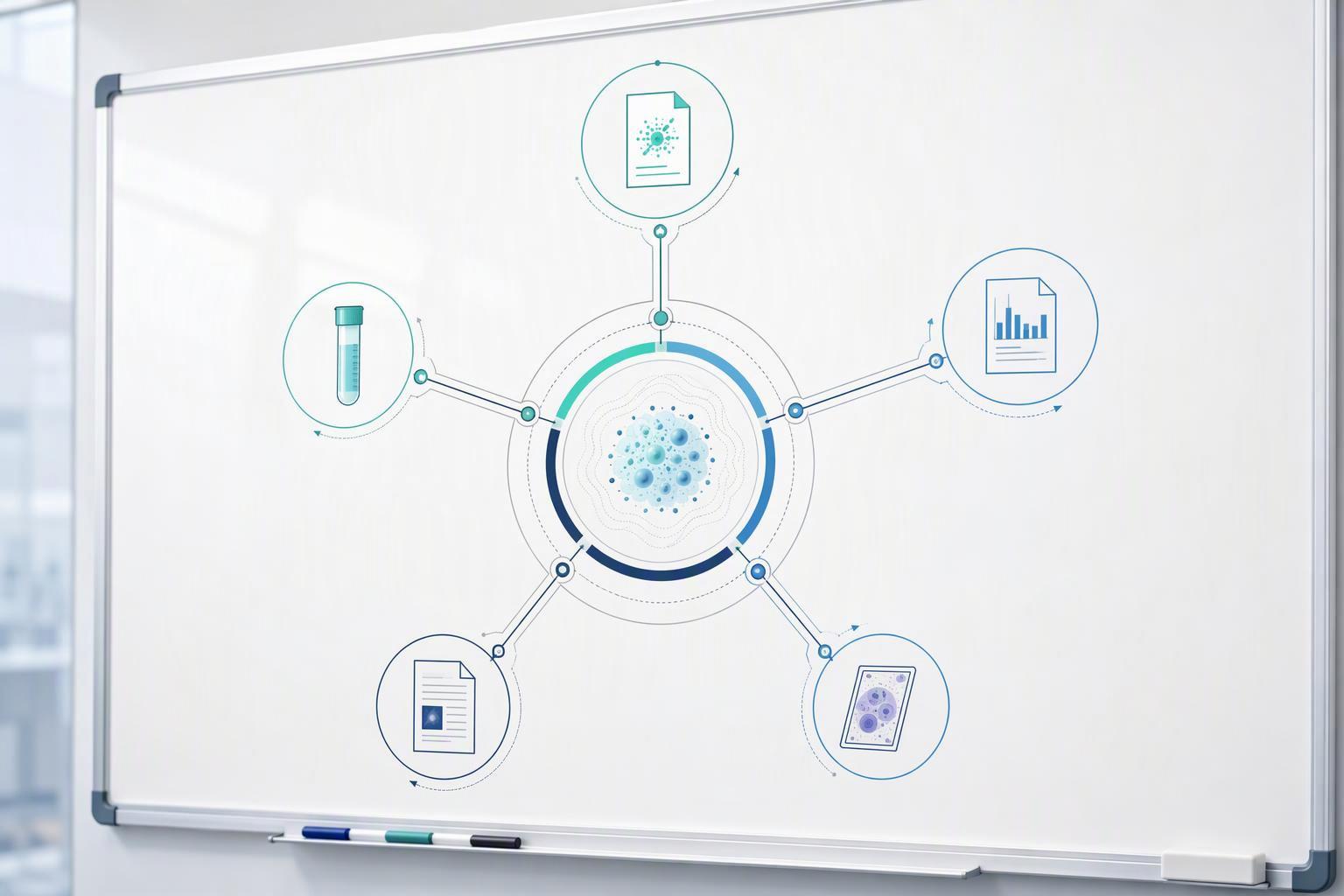
That is the pattern worth internalizing: a division launch is a commitment signal, not a capacity disclosure. Score partners on five dimensions, and judge each one by the documentation you can demand rather than by a yes-or-no capability claim.

|
차원 |
What to demand |
What a weak answer looks like |
What a strong answer looks like |
|---|---|---|---|
|
Sequence complexity |
A feasibility assessment against your actual sequence, with the difficult stretch identified |
“We synthesize all sequences” |
Named problem positions and a proposed route |
|
Modification capability |
Which chemistries are routine, which are occasional, and who runs the occasional ones |
A modification count with no frequency detail |
A short routine list plus a named route for the rest |
|
Analytical transparency |
Lot-specific raw data, not a specification sheet |
CoA만 해당, or a representative chromatogram |
CoA, chromatogram and MS per lot |
|
확장성 |
Sigma Peptide Synthesis Whether the route transfers or changes between mg and kg |
“We scale linearly” |
A described process difference and its validation |
|
Discovery-to-development support |
The named handoff point and who owns it |
“One team handles everything” |
A stated transition stage and its documentation |
시퀀스 복잡성: Can the Partner Actually Make Your Sequence?
The first test of custom peptide synthesis capabilities is not whether a partner says it can handle difficult sequences, but whether it can name the Peptoid Synthesis specific failure modes and describe how each one shows up in the data. General competence claims are unverifiable. Named failure modes are not.
Deletion and truncated sequences appear as separate, usually earlier-eluting impurity peaks, with a mass deficit equal to the missing residue or residues. Racemization is harder to catch: it is isobaric with the parent, so intact-mass MS cannot see it, and detection depends on diastereomer separation. Aggregation often produces no clean new impurity peak at all, showing up instead as peak broadening or poor monomer recovery (Peptide Degradation Pathways; Royal Society Interface Focus).

펩타이드 Ask about long chains, hydrophobic stretches, aggregation-prone segments, difficult couplings, 비표준 잔여물, D-amino acids and macrocyclization as separate questions. A weak answer treats them as one category. A strong answer distinguishes them and, at scale, describes when fragment synthesis, enzymatic ligation or alternative cleavage strategies become necessary, backed by demonstrated experience in both SPPS and LPPS (노이랜드 연구소, 2025). Microwave Peptide Synthesizer
수정 기능: Which Chemistries Are Routine and Which Are Occasional?
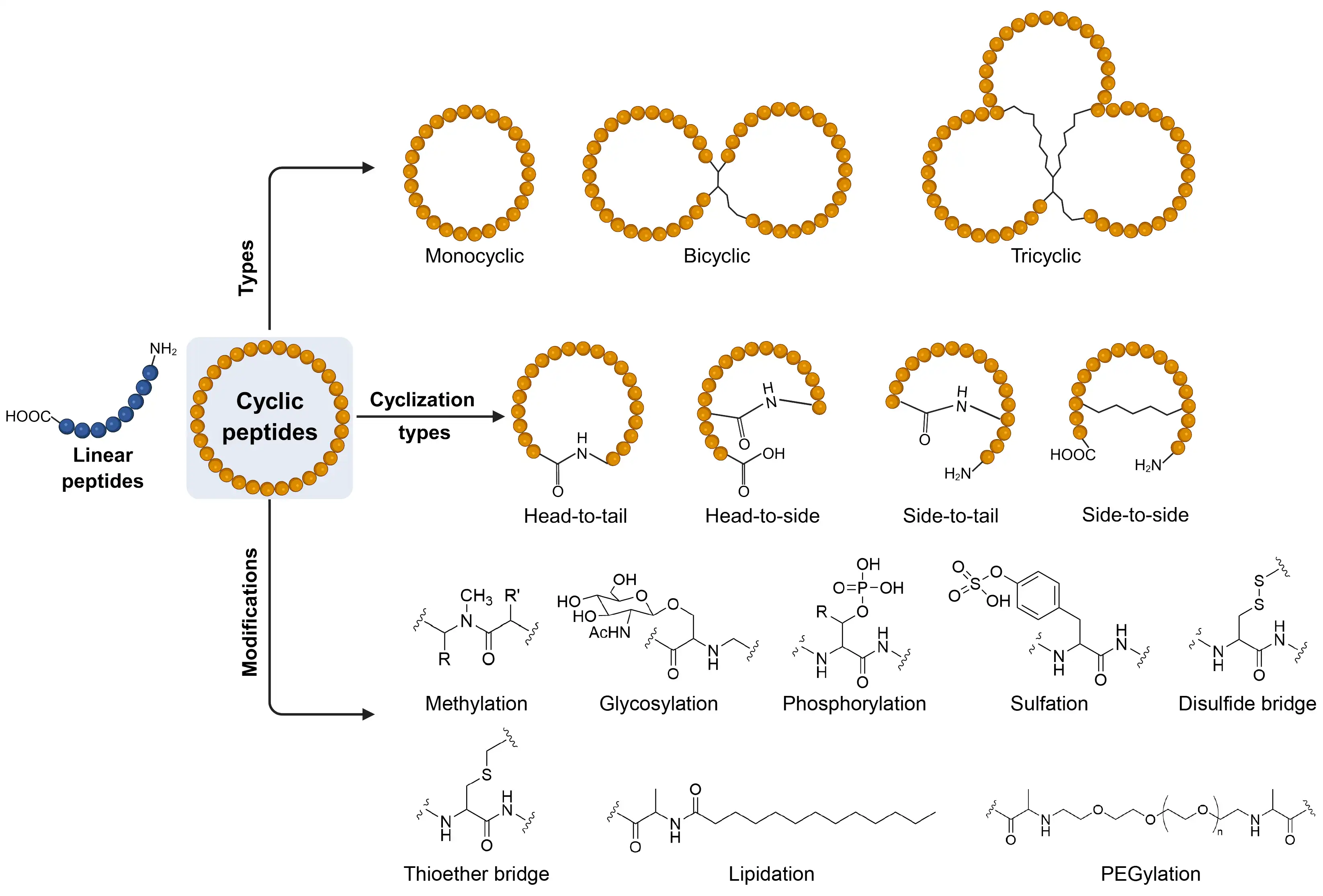
Complex peptide modifications are not one capability. Late-stage functionalization, 탄화수소 스테이플링, 이황화물, lactam and thioether cyclizations, 페길화, 인산화, sulfation, 글리코실화, and C- and N-terminal modifications each carry their own reagent handling, protecting-group strategy and purification behavior. A partner strong in stapling may be weak in glycosylation, because the two share almost no process steps.
So “we offer modifications” is not an answer. Ask which classes are routine, meaning validated and run repeatedly in the past year, and which are occasional, meaning attempted once or twice. Request the specific chemistry’s batch history, not a portfolio page: lot counts, 저울, and yields for the class you need.
For calibration, one platform’s stated capability set covers over 300 functional-group modifications, 지질을 포함하여, 스테이플링, multi-disulfide loops and FRET pairs (MOL 변경 사항, 2026). That is a vendor claim, useful as a question to put to every partner: what is your equivalent number, per chemistry class, with batch records behind it?
팁의 경우: For any modification outside the routine list, ask whether a protocol exists in-house or whether development time is billed separately.
분석 투명성: What Comes With Each Lot?
Peptide analytical transparency starts with one rule: the documentation follows the lot, not the catalog. A credible certificate of analysis is batch-specific, dated, references the lot number, and carries data from at least two independent methods, typically HPLC and mass spectrometry (화학검증, 4월 2026). The minimum standard is reversed-phase HPLC purity plus electrospray ionization MS confirming molecular weight; amino acid analysis and endotoxin testing are higher-quality additions (화학검증, 4월 2026).
Read the numbers carefully. UV-based HPLC area percent measures chromatographic signal, not net peptide mass, because water, salts and counterions are invisible to UV detection (Janera Science). Net peptide content is typically quoted at 60 에게 80 percent of gross powder weight (화학검증, 4월 2026). A vendor reporting 98 percent HPLC purity without MS data may be overstating effective purity.
A per-lot package worth asking for looks like this: CoA, 크로마토그램, MS 스펙트럼, method parameters and impurity profile. MOL Changes supplies that set per lot, with release testing spanning HPLC, mass spectrometry and amino acid analysis.
Red flags on a certificate of analysis
Generic CoA with no batch or lot number
No mass spectrometry 펩타이드 1 데이터
HPLC data without column, gradient and flow rate
Round-number purity values that suggest estimation
Purity quoted without stating the method behind it
Standards to name when you request documents: 나는 Q2(R2) for analytical validation, USP <71> 불임과 USP <85> bacterial endotoxins where relevant, and MHRA ALCOA principles for data integrity.
확장성: Is mg-to-kg a Bigger Batch or a Different Process?
Peptide scale-up from mg to kg is a re-engineering exercise, not a larger batch. Neuland Labs describes it as work that “involves re-engineering processes to maintain purity, 생산하다, and cost-efficiency while meeting stringent GMP requirements,” and notes that multi-kilogram capacity “must be supported by validated large-scale purification systems and lyophilization equipment.”
That distinction changes what you ask for. A maximum-capacity figure tells you nothing about whether a partner can hold a method steady as it moves across the scale tiers a program passes through: discovery screening at 1–50 mg, lead optimization at 100 mg–10 g, pre-clinical at 50–500 g, and clinical or pilot batches at 1 kg and above, as MOL Changes sets out in its own service model.
Ask instead for intermediate engineering-batch records, method-transfer documentation, and the reactor scale those batches ran on. At large scale, Neuland Labs adds, stability studies, 불순물 프로파일링, and full method validation become mandatory before batch release, and HPLC, LC-MS, and residual solvent methods must themselves be validated for large-scale application. 펩타이드 2
Support From Discovery Through Development: Where Does the Handoff Break?

End-to-end support is a service list until you test it at the seams. The failure mode is rarely a partner that cannot synthesize, 정화하다, or scale; it is a program where nobody owns the sequence between those stages, and the buyer discovers it when a batch needs reworking or a submission deadline moves.
Ask who holds the sequence record from design through synthesis, 정화, and large-scale production, and who signs off when a route changes mid-program. Ask the same for regulatory support: if a partner lists IND and NDA support, name the person who assembles the chemistry section, and confirm they see the analytical data at the time it is generated rather than at submission.
The regulatory frame matters here. FDA’s interim 503A bulk drug substances policy sorts substances into three categories: 범주 1, where FDA does not intend to act against compounders meeting the guidance conditions; 범주 2, where FDA has identified significant safety risks pending further evaluation and would consider taking action; 및 카테고리 3, where supporting information is insufficient and the substance is not eligible for the Category 1 policy. That is a frame for asking questions, not a statement about any specific peptide’s status.
팁의 경우: Put the handoff questions in writing before you award a program: who owns the sequence at each stage, who approves a route change, who assembles the regulatory section, and what documentation transfers with the project if you move suppliers.
Who Should Choose Which Partner Profile
Weight the five tests against where your program sits on the scale tiers a program moves through, from discovery-stage milligram work to clinical and pilot kilogram batches. The profile that fits you is the one whose weakest dimension you can tolerate.
Discovery-stage teams optimizing a difficult sequence. Weight sequence complexity and modification capability first. A partner whose 300-plus functional-group modification range and non-standard residue experience are routine will save you resynthesis cycles; analytical depth matters less while the sequence is still moving.
Teams transferring a validated sequence into larger batches. Weight scalability and support continuity. Ask directly whether the milligram-to-kilogram path is the same process scaled or a different route, and who owns the technical handoff when your project moves from one team to another.
Teams needing a documented per-lot package for downstream work. Weight analytical transparency above all. Confirm the release package before you order: CoA, 크로마토그램, and mass spectrometry data supplied per lot, not on request.
Edge case: split the work. If no single partner clears all five tests, run the difficult sequence with a specialist and the scale-up with a manufacturer, and hold the analytical package to one standard across both.
자주 묻는 질문
Is a higher HPLC purity number always better?
아니요. An HPLC result reported as area percent measures the proportion of the chromatogram’s peak area, not the mass of peptide in the vial. Salts, 반대이온, residual water and solvent can all sit outside the peak, so a 98% area-percent lot and a 95% area-percent lot are not automatically ranked by that number alone. 크로마토그램 요청, the method, and the net peptide content alongside it, and read why area percent is not peptide content before you use purity as a screening filter.
Can a partner that made my research batch also make the clinical batch?
종종 그렇습니다, but not by repeating the same recipe at a larger size. Moving from discovery quantities to clinical supply is a re-engineering exercise, and it carries mandatory method validation, which is why what scale-up actually requires is a different question from whether the partner can run a bigger reactor. Ask what changes between the two campaigns and who validates the analytical methods at the new scale.
What should I ask for before awarding a synthesis program?
The same artifacts the five tests above describe: a sequence review against your actual sequence, the modification chemistries the partner runs routinely, a sample lot documentation package, a stated scale-up path, and a named technical contact for the program. Request them as documents rather than as capability statements.
How do I compare partners when none publishes capacity figures?
Treat the absence as normal. Medisca’s announcement of its peptide division describes the division’s stated scope without disclosing facility, 용량, headcount or investment figures, and most suppliers publish at the same level. Substitute documentation evidence: per-lot analytical packages, method descriptions, and engineering-batch records tell you more about what a partner can do than a capacity number would.
결론
Treat the five tests as a standing scorecard rather than a one-off exercise. Score every candidate on sequence complexity, modification capability, 분석적 투명성, 확장성, and support continuity, then keep the completed scorecards on file. When a program moves from discovery to development, or when a second supplier is needed, the comparison is already documented instead of rebuilt under deadline pressure.
The tests also share one underlying question: what arrives with the material? A capability list states what a partner says it can do. A lot-specific certificate of analysis, a chromatogram, a mass spectrum, and a described method for the chemistry in question show what was actually done. That distinction, not the length of a catalog, is what separates partners during evaluation.
If you are working through a specific sequence and want a technical read on feasibility, 규모, or documentation before you commit, talk to a technical expert about your sequence and bring the sequence and the analytical requirements with you.
폭로: MOL Changes has a commercial interest in peptide quality standards and provides custom peptide synthesis services.