



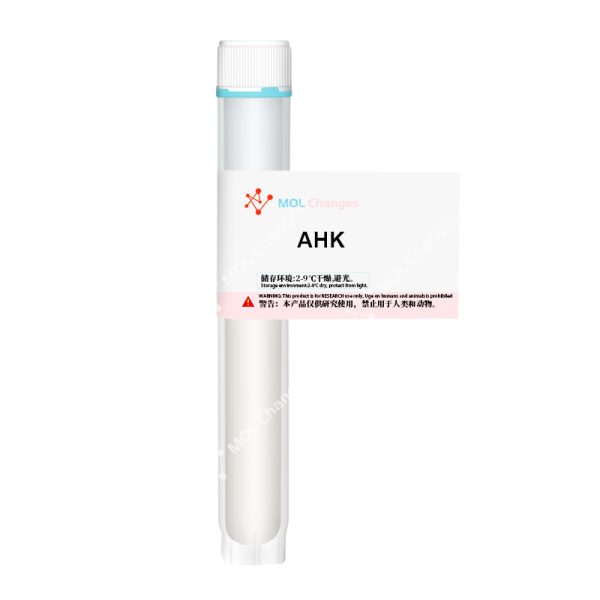
AHK is a tripeptide composed of three amino acids: alanine (Ala), histidine (His) and lysine (Lys).
This small peptide has very good transdermal absorptivity.
It is believed that due to amino acids with electron-donating groups, like histidine and lysine appearing in its structure, it could scavenge free radicals and protect lipids from peroxidation and exert antioxidant functions.
Both chemical synthesis and isolation from the proteolysate of natural proteins (e.g., marine shellfish, milk proteins) are now possible to produce AHK.
In contrast to the majority of macromolecular antioxidants, AHK has much lower molecular weight and better biocompatibility, which may be more suitable as a cosmetic active.
Sequence
Ala-His-Lys
CAS Number
126828-32-8
Molecular Formula
C15H26N6O4
Molecular Weight
354.40
AHK Related Research
They particularly were interested in the antioxidant activity and proposed that: The main effect of AHK is due to its antioxidative activities, which are generated by the following action sequences:
1.Scavenging ROS
ROS is one of the most substantial culprits for causing cellular oxidation and aging in skin.
The direct transfer of electrons or hydrogen atoms to free radicals themselves for ROS inactivation by many antioxidant peptides, causes elimination of ROS.
The histidine and lysine residues of AHK can donate hydrogen atoms or electrons to quench ROS radicals (DPPH, ABTS) directly to terminate oxidative chain reactions.
It has been reported that histidine-containing peptides can scavenge radicals via SET (Single Electron Transfer) or HAT (Hydrogen Atom Transfer) process.
2.Activation of Endogenous Antioxidant Systems
Some antioxidant peptides also increase cellular anti-oxidative capacity by stimulating key intracellular anti-oxidases (e.g., superoxide dismutase SOD, glutathione peroxidase GSH-Px)².
In some cell models, AHK-type peptides could enhance the expression of endogenous antioxidant enzymes such as SOD and GSH-Px, which could in turn facilitates a cellular defense against oxidative stress.
3.Metal Ion Chelation
The imidazole ring of histidine and the amino group of lysine can complex with transition metal ions (such as Fe²⁺, Cu²⁺), which will attenuate metal-catalyzed Fenton reactivity, thus leading to inhibition on hydroxyl radical formation ⁴.
Its copper ion complex (AHK-Cu, commonly known as GHK-Cu or copper tripeptide-1) –instead of AHK alone– has a more established and recognized use in cosmetics.
Taken benefits on antioxidant, collagen regeneration induction and rapid repairability, AHK has been applied to various skincare product forms.
4.For any anti-aging serum and cream products
Tightening loose skin and reducing wrinkles by promote collagen syntonyization & fighting against oxidative stress.
5.For post-surgical or wound-repair cosmetics
Promoting epidermial reparation processes while shortening concerned heal-down duration.
In scalp and hair care cosmetics: Studies proved its abilities of promoting angiogenesis around hair follicle to achieve hair-growth& making it potential for anti-loss shampoos or growth serums.
Furthermore, in antioxidant formulations, AHK has the potential to add benefits to ingredients such as Vitamin C and E, enhancing a broader specialty anti-oxidant network effect of skincare that may improve the defense*1and repair activities on skin.
COA
HPLC
MS

Reviews
There are no reviews yet.