



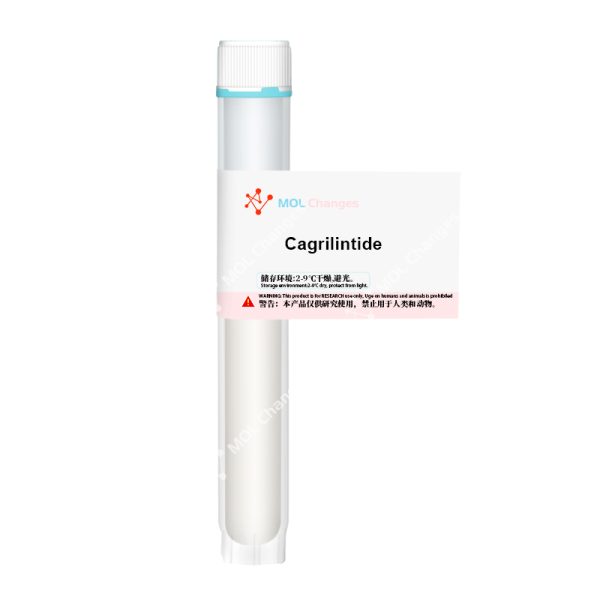
Cagrilintide is a long-acting amylin analog. Amylin is a peptide hormone co-secreted by pancreatic β-cells alongside insulin; regulating energy balance through satiety, delayed gastric emptying, and glucagon inhibition.
Naturally occurring amylin however, aggregates readily and possess poor stability, limiting their clinical application. Early amylin-derived analogs like pramlintide required frequent injections due to suboptimal pharmacokinetics for therapeutic effects in type 2 diabetes.
Cagrilintide achieves this prolonged action via unique fatty acid chain modification – once weekly dosing is the end point sought. Clinical trials have shown potent appetite suppressing effects, a complementary mechanism of action being demonstrated compared to semaglutide.
A fixed ratio combination (CagriSema) has been developed. Experimental weight-loss data indicates the combination exceeds either agent alone in efficacy.
The continued advancement of cagrilintide expands the previously defined therapeutic potential of amylin mimetics; multi-target synergistic treatment of metabolic disorders is the clear future direction.
Sequence
{Eicosanedioic acid-γ-Glu}-Lys-Cys-Asn-Thr-Ala-Thr-Cys-Ala-Thr-Gln-Arg-Leu-Ala-Glu-Phe-Leu-Arg-His-Ser-Ser-Asn-Asn-Phe-Gly-Pro-Ile-Leu-Pro-Pro-Thr-Asn-Val-Gly-Ser-Asn-Thr-Pro-NH2 (Disulfide bridge:Cys3-Cys8)
CAS Number
1415456-99-3
Molecular Formula
C194H312N54O59S2
Molecular Weight
4409.01 g/mol
Cagrilintide Related Research
1.Appetite Suppression and Satiety Enhancement
As an amylin analog, rapid crossing of the blood brain barrier is key to Cagrilintide’s effect.
Direct targeting of specific brain regions regulating pure ‘hunger’ is what sets it apart – activation of the calcitonin receptor (energy sufficiency signaling) reduces, if not eliminates, food cravings centrally.
Willpower based dieting cannot replicate this physiological change to an individual’s set point.
2.Delays in gastric emptying and all subsequent digestion
Inhibition of gastric smooth muscle contractions and partial relaxation of the pylorus provides a more physical form of sustained fullness.
Nutrient absorption is reduced, postprandial blood glucose (and to a large extent all metabolic parameters) are kept as stable as possible.
3.Inhibits postprandial glucagon secretion
Glucagon is a hormone that promotes hepatic glycogenolysis and gluconeogenesis; effectively serving as a hyperglycemic agent.
Cagrilintide mimics the very specific postprandial secretion that alpha cells make, signaling through the brain’s nervous system that this release has occurred.
Significant reduction in said secretion is the end result – lowering postprandial blood glucose being one of the primary benefits.
Improving dietary patterns for type 2 diabetes patients is closely tied to this process; consuming various forms of ‘energy’ can be approached with near-complete confidence without constant glucose monitoring.
4.Synergistic Action with GLP-1 Receptor Agonists
Highly complementary mechanisms are exhibited between cagrilintide and these agonists.
GLP-1 itself focuses more on satiety, while amylin analogues (to a near perfect extent) suppress all forms of hunger.
A dual mechanism, multi-targeted pathophysiology based approach to obesity and diabetes is what the combination offers.
Studies (CagriSema being the most recent) have shown superior weight loss and improved glycemic control when both are used together.
COA

HPLC
MS

Reviews
There are no reviews yet.