Appropriate dissolution method is an important factor for the success of peptide experiments. Improper dissolution will cause the loss of peptides and the failure of the experiment. Však, finding the ideal dissolution method is sometimes quite challenging. The following are the dissolution methods proposed by the two technical groups of MOL Changes. method
MOL Changes Technology Group Dissolution Guide
The main problem in peptide dissolution is the formation of secondary structure.
Although the formation of secondary structures of hydrophobic peptide chains is more obvious, except for the shortest peptide chains, this phenomenon occurs in almost all peptide chains, regardless of polarity. Therefore, the first principle of dissolving polypeptides is to use sterile distilled water or Deionized water (or oxygen-free water if conditions permit).
The peptide solution may encounter bacterial degradation. To avoid this phenomenon, the peptide should be dissolved in sterile distilled water, or filtered with a filter membrane with a pore size of 0.45 nebo 0.2 μm for sterilization. Polypeptides containing Cys, Setkal, and Trp are particularly susceptible to oxidation, so they should be dissolved in oxygen-free water. Oxygen-free water can be obtained by degassing under reduced pressure by injecting inert gases (nitrogen, helium, and argon).
If the peptide is insoluble in pure water, ultrasonic treatment can help break up the particles and increase solubility. Note: Ultrasonic treatment will cause heating of the solution and degradation of the peptide.
If the peptide contains multiple basic amino acids, use 1~10% acetic acid aqueous solution; for very hydrophobic peptides, use 50% acetic acid.
If the polypeptide contains a large amount of acidic amino acids, it can be dissolved in a 1 na 10% ammonia solution or a volatile alkaline buffer such as ethyl morphine acetate or bicarbonate. The pH value must be adjusted before chromatography.
If the peptide is to be loaded onto the column, the amount of organic solvent must be very small, otherwise the retention time will be seriously affected.
If the polypeptide is highly hydrophobic because it contains aromatic hydrocarbon side chains such as Val, Leu, Setkal, Phe, Tyr, Ala, atd., or is a neutral peptide, the use of membrane denaturants such as DMF or DMSO can help dissolve the polypeptide:
A. High-concentration membrane denaturants help dissolve the polypeptide by destroying its secondary structure.
b. Membrane denaturants are suitable for the preparation of peptide analysis solutions, but may interfere with research on their biological activity.
c. DMF is the best denaturant (the highest concentration can reach 30%), and is added dropwise until the peptide is dissolved.
d. During reversed-phase chromatography, DMF will flow out together with the front peak of the eluent. Depending on the injection volume, the peak value may be very high. Most peptides can elute within a few minutes after a large amount of DMF elutes. If the peptide chain is small and elutes too early, the amount of the peptide will be reduced.
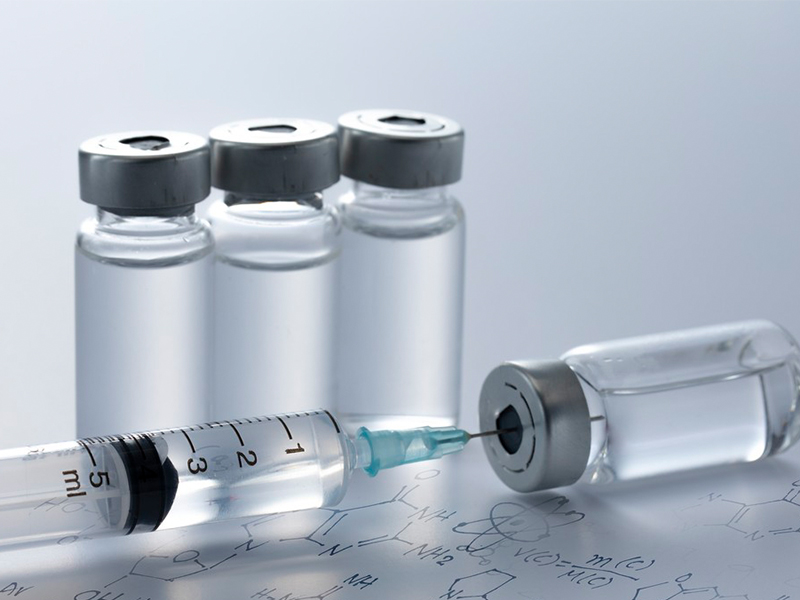
MOL Changes Technical Group II Dissolution Guide
How to distinguish whether amino acids are neutral, acidic or alkaline, and calculate the dissolution method:
1. Assign each acidic amino acid in the polypeptide sequence including aspartic acid Asp (D), glutamic acid Glu (E) and C-terminal carboxyl-COOH as -1; each basic amino acid including arginine Arg ( R), lysine Lys (K), histidine His (H) and the N-terminal amino-NH2 are assigned a value of +1; neutral amino acids are 0. Based on this, the value of the entire polypeptide is calculated, and the score is positive Peptides with a negative score are called basic peptides, those with a negative score are called acidic peptides, and those with a score of zero are called neutral peptides.
2. If it is an alkaline peptide, try to dissolve it with water first; if it cannot be dissolved, try to use 10% – 30% acetic acid; if the peptide is still insoluble, try to use pure acetic acid and trifluoroacetic acid TFA (<50 μl) to dissolve it, and then Dilute the peptide solution to the desired concentration.
3. If it is an acidic peptide, try to dissolve it with water first; if it cannot be dissolved with water, try to use 13% ammonia water (v/v) to dissolve it, and dilute the peptide solution to the required concentration. If the peptide sequence contains cysteine Cys (C), it cannot be dissolved in alkaline solution. Please try the methods below.
4. Neutral peptides are usually dissolved in organic solvents. První, try to use acetonitrile (acetonitrile), or methanol (methanol) or isopropanol (isopropanol) to dissolve; for very hydrophobic peptides, first dissolve with a small amount of dimethyl sulfoxide (DMSO) and dilute with water to Required concentration; if the peptide sequence contains cysteine Cys (C), use dimethylformamide (DMF) or N-methylpyrrolidone (NMP) for dissolution. For peptides that are prone to aggregation, first add 6M guanidine·HCl or 8M urea (Urea) to dissolve them, and then dilute them to the required concentration.
illustrate:
1. In order to facilitate storage and subsequent use, it is recommended to dissolve the peptide to a concentration of about 1-2 mg/ml.
2. Ordinary peptide freeze-dried powder can be stored at -20°C for more than one year. For dissolved peptides, it is recommended to aliquot and store at -20°C; if the peptide sequence contains methionine Met (M), cysteine Acid Cys (C) or tyrosine Tyr (Y) is recommended to be stored in an oxygen-free environment to prevent oxidation.
Attached amino acid list:
1.Neutral amino acids: glycine, alanine, leucin, isoleucine, valine, cysteine, methionine, threonine, serine, phenylalanine, tyrosin, tryptophan Acid, proline, asparagine and glutamine
Features: This type of amino acid molecule contains only one amino group and one carboxyl group
2.Acidic amino acids: glutamic acid, aspartic acid
Features: This type of amino acid molecule contains one amino group and two carboxyl groups
3.Basic amino acids: lysin, arginine, histidine
Features: This type of amino acid contains a diaminocarboxyl group in its molecule; histidine has a nitrogen ring and is weakly alkaline, and is also a basic amino acid.

Miao He
Profil: Hlavní problémy při vývoji peptidových léčiv spočívají v jejich krátkém poločase a potížích s orálním podáváním, a Miao He je předním odborníkem na řešení těchto problémů. Má rozsáhlé zkušenosti v oblasti systémů dodávání peptidů. V současné době se zaměřuje na vývoj nových zesilovačů permeace a nanokuliček pro výrazné zlepšení biologické dostupnosti peptidů..
- Therapeutic Peptide Discovery: Catestatin and Orexin 2026年10月13日
- Metal-Directed 2D Peptide Crystals: Design & Evidence 2026年10月12日
- Diferencované peptidové mechanismy: Závod Novo-Kallyope 2026年10月11日
- Výběr CMO peptidů: Šestirozměrná hodnotící karta dodavatelského řetězce 2026年10月11日
- Jak porovnat vlastní partnery pro syntézu peptidů 2026年10月10日
Our Fact Checking Process
V našem obsahu upřednostňujeme přesnost a integritu. Here's how we maintain high standards:
- Odborná recenze: Všechny články jsou recenzovány odborníky na dané téma.
- Source Validation: Informace jsou podloženy důvěryhodnými, up-to-date sources.
- Průhlednost: Jasně citujeme reference a odhalujeme potenciální konflikty.
Naše kontrolní komise
Náš obsah je pečlivě kontrolován zkušenými odborníky, aby byla zajištěna přesnost a relevance.
- Qualified Experts: Každý článek je posuzován odborníky se specifickými znalostmi oboru.
- Up-to-date Insights: Zahrnujeme nejnovější výzkum, trends, and standards.
- Commitment to Quality: Reviewers ensure clarity, správnost, and completeness.
Hledejte štítek zkontrolovaný odborníky a přečtěte si obsah, kterému můžete důvěřovat.