Como usar esta lista de verificação de resiliência da cadeia de suprimentos de peptídeos
Esta lista de verificação de resiliência da cadeia de fornecimento de peptídeos funciona como um conjunto de julgamentos binários, não é um exercício de leitura. Cada item faz uma pergunta Sim/Não sobre seu próprio programa, e você responde com base no que pode documentar hoje, não é o que você pretende construir.
Os itens são agrupados em cinco fases: dependências de precursor e reagente, qualificação de fornecedor alternativo, dimensionamento do buffer de estoque, requalificação do transporte marítimo e da cadeia de frio, e comunicação com o cliente. Trabalhe-os em ordem. Cada fase alimenta a próxima, e uma lacuna numa fase inicial geralmente aparece como uma questão sem resposta mais tarde.

Um “Não” é um item de trabalho, não é um fracasso. Marca um local onde seu programa tem um único ponto de falha, e a correção é uma tarefa com um proprietário e uma data.
Um limite se aplica ao longo. A ligação entre a interrupção da rota Hormuz e o fornecimento de peptídeos é tratada qualitativamente aqui, porque não há primário, conjunto de dados específicos de peptídeos sobre esse mecanismo foi encontrado. A lista de verificação é construída com base em padrões nomeados e requisitos de comprovação do lado do fornecedor..
⚠️ Aviso: Um “Não” registrado sem um proprietário nomeado e uma data prevista não é um item de trabalho. É uma nota, e as notas não fecham as lacunas.
Fase 1: Mapear dependências de precursores e reagentes
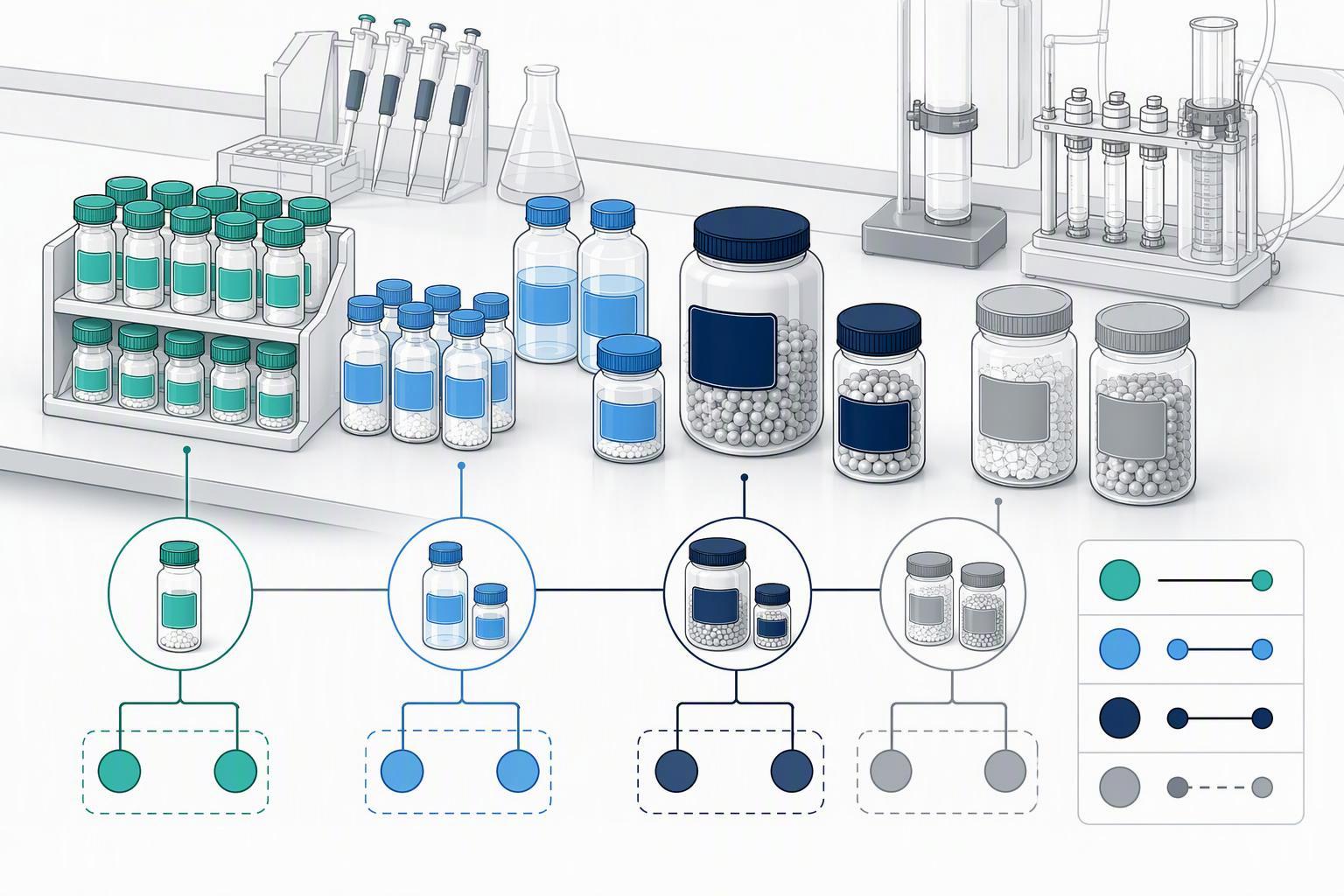
Comece com as entradas, não a mitigação. Antes de qualificar um segundo fornecedor ou dimensionar um buffer, você precisa saber quais precursores de peptídeos e dependências de reagentes são pontos únicos de falha.
Analise cada entrada e responda a duas perguntas.
|
Entrada |
Uma segunda fonte qualificada é chamada? |
Crítico ou substituível? |
|---|---|---|
|
Síntese de Peptídeos Aminoácidos protegidos por Fmoc |
Sim / Não |
|
|
Reagentes de acoplamento (ETAPA, HOBt, DIC e equivalentes) |
Sim / Não |
|
|
Resinas |
Sim / Não |
|
|
Meio de cromatografia |
Serviços Sim / Não |
|
|
Embalagens e recipientes primários |
Sim / Não |
Duas listagens de catálogo ainda podem ser um local de fabricação. Confirme a planta física, não o distribuidor.
A classificação de criticidade deve preceder o dimensionamento do buffer. Uma entrada substituível não precisa de buffer; uma entrada crítica de fonte única faz.
Este é o ponto de entrada porque o custo da mudança de rota chega como um grupo de mudanças menores, em vez de uma sobretaxa de guerra.. Análise do mercado químico da Shimico observa que um fornecedor pode manter o preço de fábrica enquanto o frete, seguro, movimentação portuária, o financiamento ou o prazo de entrega mudam acentuadamente, portanto, as cotações devem ser comparadas com base no custo de entrega, incluindo taxas portuárias, frete, seguro, custo de descarga e rendimento utilizável.
Fase 2: Qualifique fornecedores alternativos
Uma segunda fonte só conta como alternativa depois de ter sido aprovada em uma qualificação documentada. A indústria farmacêutica do CCG vale $23.7 bilhão, e ao redor 80% parte depende de importações através do espaço aéreo do CCG e do Estreito de Ormuz, Peptídeos Sintéticos de acordo com a análise da Think Global Health sobre a exposição farmacêutica do corredor (atualizado 20 Marchar 2026). Essa dependência de importação torna a qualificação de fornecedores alternativos de peptídeos um requisito permanente, não é uma resposta à crise.
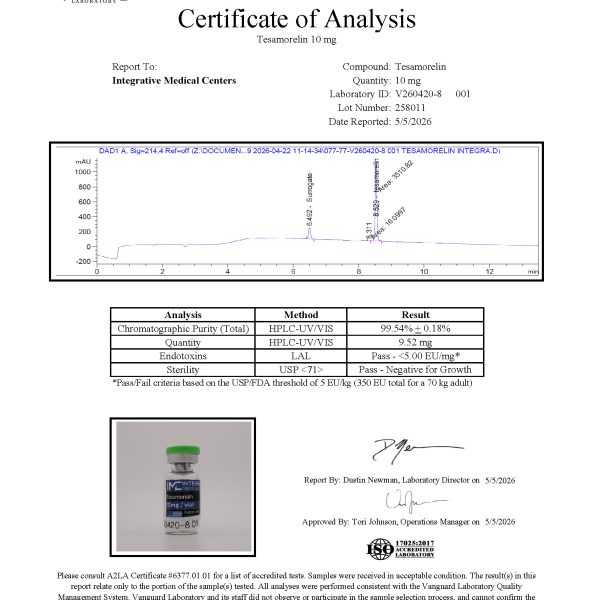
Pontue cada candidato em cinco linhas: correspondência de escala (mg em kg), reprodução de suas modificações, forma de sal e rota de purificação, capacidade estéril, e o pacote analítico. Exija o cromatograma com sua tabela de integração, o espectro MS, e dados de esterilidade e endotoxina, não a frase “alta pureza”.
Mudanças no MOL, que sintetizou peptídeos desde 1998, ilustra a aparência de um pacote completo: faixa de mg para kg, 300+ modificações funcionais, Aula 100 capacidade de sala limpa, e HPLC interno, MS e CQ de esterilidade.
Para dica: Marque dois candidatos lado a lado antes que qualquer um seja necessário, então a comparação é um recorde e não uma confusão.
Fase 3: Dimensionar buffers de estoque
Ao final desta fase você saberá, por entrada, quanto manter e o que desencadeia uma liberação da reserva. Uma regra fixa de meses de cobertura falha porque ignora o prazo de validade, condição de armazenamento e o prazo de requalificação para uma nova pista.
Trabalhe com elas como respostas sim ou não:
-
Taxa disponível versus taxa de consumo. Para cada precursor e reagente, é o estoque atual comparado ao consumo real por mês? Sim / Não
-
Prazo de validade e condição de armazenamento. A data de vencimento e a condição de armazenamento necessária são registradas para cada item de buffer? Sim / Não
-
Gatilho de reserva. Existe um evento definido que converte o estoque de segurança de rotina em uma reserva de interrupção? Sim / Não
-
Release authority. Is one named role Comprar authorised to release from reserve? Sim / Não
Buffer size should track your requalification lead time, not a fixed figure. No source in this research packet publishes a validated buffer magnitude, so treat any single number with caution and size against your own requalification timeline.
Fase 4: Requalificar o transporte marítimo e a cadeia de frio para a nova via
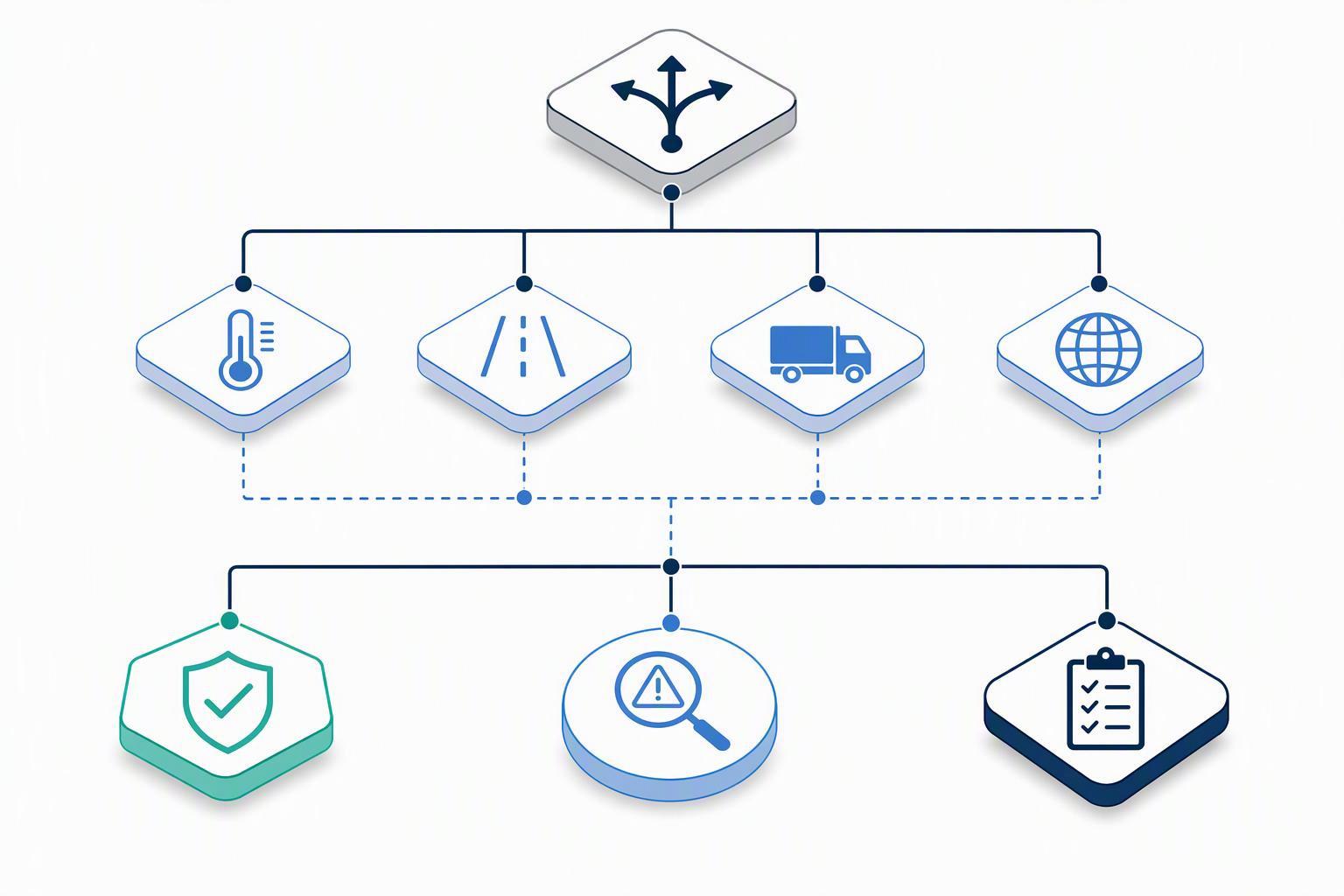
A reroute does not inherit the shipping qualification that covered the old lane. Under the qualification model published in Pharmaceutical Outsourcing’s shipping-system framework (2020), a new lane is itself a trigger to re-qualify, alongside a new product, new shipping vehicle or equipment, new transport mode, and new logistics service provider. The framework’s date does not weaken the trigger list; the conditions it names are the ones a lane change still creates.
Carry-over is narrower than most teams assume. The same source allows it only when the transport temperature range, monitoring locations, lane, LSP and carrier all stay the same in the same transport mode. Change the carrier and the carry-over argument collapses, which matters because carriers of active air and ocean reefer containers can change overnight or on short notice after strikes or natural disasters. Design qualification and operational qualification also run against an anticipated winter or summer temperature and duration profile, so a qualification built for one season is not automatically current for the next.
ICH Q7’s transport requirement, carried in the WHO GMP for active pharmaceutical ingredients (TRS 957 Anexo 2), states the underlying obligation plainly: APIs and intermediates should be transported in a manner that does not adversely affect quality, with special transport or storage conditions stated.
Checklist items for this phase:
-
Has the lane change been logged as a change with a risk assessment? Deviations from the lane used for performance qualification should go through change control, not a note in a shipment file.
-
Do temperature range, monitoring locations, lane, LSP and carrier still match the qualified configuration? All five must match. Any one of them moving means the carry-over no longer applies.
-
Is a seasonal DQ/OQ profile current for the new lane? Confirm the profile reflects the season the shipment will actually travel in. Sobre
Principal vantagem: A carrier or mode change invalidates carry-over even when the temperature range is unchanged.
[VISUAL: diagram, requalification decision flow branching to carry-over permitted / risk assessment required / full requalification required]
Fase 5: Comunicar alterações de prazo de entrega aos clientes
The rule that prevents late surprises is to notify on trigger, not on confirmation. When a supplier confirms a slipped ETA, the client has already lost the weeks you spent verifying it.
Send the impact statement with the trigger notification. It covers four things: what changed, the impact on the client’s timeline, the recovery window, and the mitigation already in motion.
Checklist items:
-
Is a named owner assigned to client notification? Sim / Não. A role, not a team inbox.
-
Is the impact statement pre-agreed before the trigger fires? Sim / Não.
-
Is there a documented mitigation step for each affected lot? Sim / Não.
Compare quotations on delivered cost, including port charges, frete, seguro, custo de descarga e rendimento utilizável, and say so to the client in those terms. A freight line can look stable while landed cost moves: Think Global Health reported that insurance premiums for vessels transiting the Strait of Hormuz rose more than 1,000% since late February (atualizado 20 Marchar 2026).
Para dica: Send the impact statement with the trigger notification, not after the recovery window is confirmed.
Erros comuns que quebram uma lista de verificação de resiliência
The five phases above fail in predictable ways. Each mistake below looks like compliance on paper and leaves the program exposed in practice.
Treating a second catalogue listing as a second source. A distributor entry for the same manufacturer is one source with two order paths. The fix: confirm the synthesis site, the analytical package and the modification capability behind the listing before you count it as an alternate.
Sizing buffers from a uniform safety-stock rule. A flat weeks-of-cover figure ignores how long requalification actually takes. Size the buffer from the requalification lead time for that specific input, not from a company-wide default.
Assuming a qualified lane carries over after a carrier or mode change. Qualification attaches to the route, the packaging and the handling, not to the origin-destination pair. Requalify when any of those change.
Notifying clients only once a delay is confirmed. By then the client has no room to adjust. Notify when the lead-time assumption changes, and state the new range with its basis. Produção de Peptídeos
Qual é a aparência de uma lista de verificação preenchida
A finished peptide supply chain resilience checklist is auditable, not aspirational. You can tell the run is done when four conditions hold across the whole program.
Every critical input has either a named second qualified source or a documented accepted risk. “We’ll find someone” is not a status; a supplier name with a completed qualification file is.
Every buffer item carries a stated reserve trigger and an owner. The trigger is a condition, such as a defined stock level or a supplier notice, and the owner is a person, not a team.
Every active lane has a current qualification status, including any lane you switched to mid-disruption. A lane that moved without requalification is an open item, not a closed one.
Every affected client has a notification owner. The reader should be able to name who tells which account, and when.
Para dica: Run the checklist as a review meeting, not a solo exercise. The gaps surface fastest when the buffer owner and the client-notification owner read their rows aloud.
If those four conditions hold, the checklist is complete for this cycle. Route conditions change, so schedule the next review rather than treating completion as permanent.
Next step: Download the peptide supply chain resilience checklist template and work through it with your sourcing and QA leads, or request a documentation review of your current supplier qualification files.
Disclosure: MOL Changes publishes as a peptide vendor, so we have a commercial interest in how supplier qualification is practiced.
Perguntas frequentes
Quanto tempo leva a requalificação?
O 2020 qualification framework behind Phase 2 treats requalification as an event-driven process rather than a calendar one: it starts when a defined trigger fires, such as a supplier change, a route change, or a failed release, and it ends when the new source clears the same analytical and documentation gates as the incumbent. Because the trigger list is the clock, the honest answer is that duration depends on how much of the package already exists. A supplier with a current CoA, cromatograma, MS spectrum and sterility data on file moves faster than one starting from scratch. Build the requalification window into your buffer sizing rather than assuming a fixed number of weeks.
Is a supplier’s own CoA enough evidence?
Não. A certificate of analysis is the supplier’s own statement about its own material, so it is a starting document, not independent verification. Pair it with the analytical package Phase 2 names: chromatogram and integration table, mass spectrometry spectrum, and sterility or endotoxin data where the grade requires it. The CoA tells you what the supplier claims; the underlying data tells you whether the claim holds.
E se uma pista fechar no meio do envio?
Treat it as a change-control event, not a logistics exception. Trigger the Phase 5 notification to affected clients as soon as the disruption is confirmed, then run the shipment through the same qualification logic as a new lane: confirm the alternate routing holds the cold chain, and document the deviation. The record of what happened, when it was detected, and what was decided is what protects the batch and the client relationship.
O tamanho do buffer muda na escala de miligramas versus quilogramas?
Sim, and the direction is not intuitive. At milligram scale the constraint is usually the minimum order quantity and the cost of holding it, so buffers are sized in single batches. At kilogram scale the constraint shifts to lead time and the number of qualified sources, because a single disrupted lane can stall a program for the length of a requalification cycle. Scale the buffer to the requalification window, not to the order size.
Conclusão
The five phases run as one sequence, not five separate projects: map precursor and reagent dependencies, qualify alternate suppliers, size inventory buffers, requalify shipping and cold chain for the new lane, then communicate lead-time changes to clients. Each phase produces a Yes/No answer you can record, which is what makes this peptide supply chain resilience checklist decidable rather than aspirational. You finish it knowing exactly which inputs have a second qualified source and which do not.
If the whole sequence looks like too much to run at once, start with Phase 1. Every later phase depends on it: you cannot qualify an alternate supplier for an input you have not identified, size a buffer around a dependency you have not mapped, or requalify a lane for a material you have not traced. Run the dependency map first, then work outward one phase at a time.