El impulso es real, pero se basa en una sola fuente
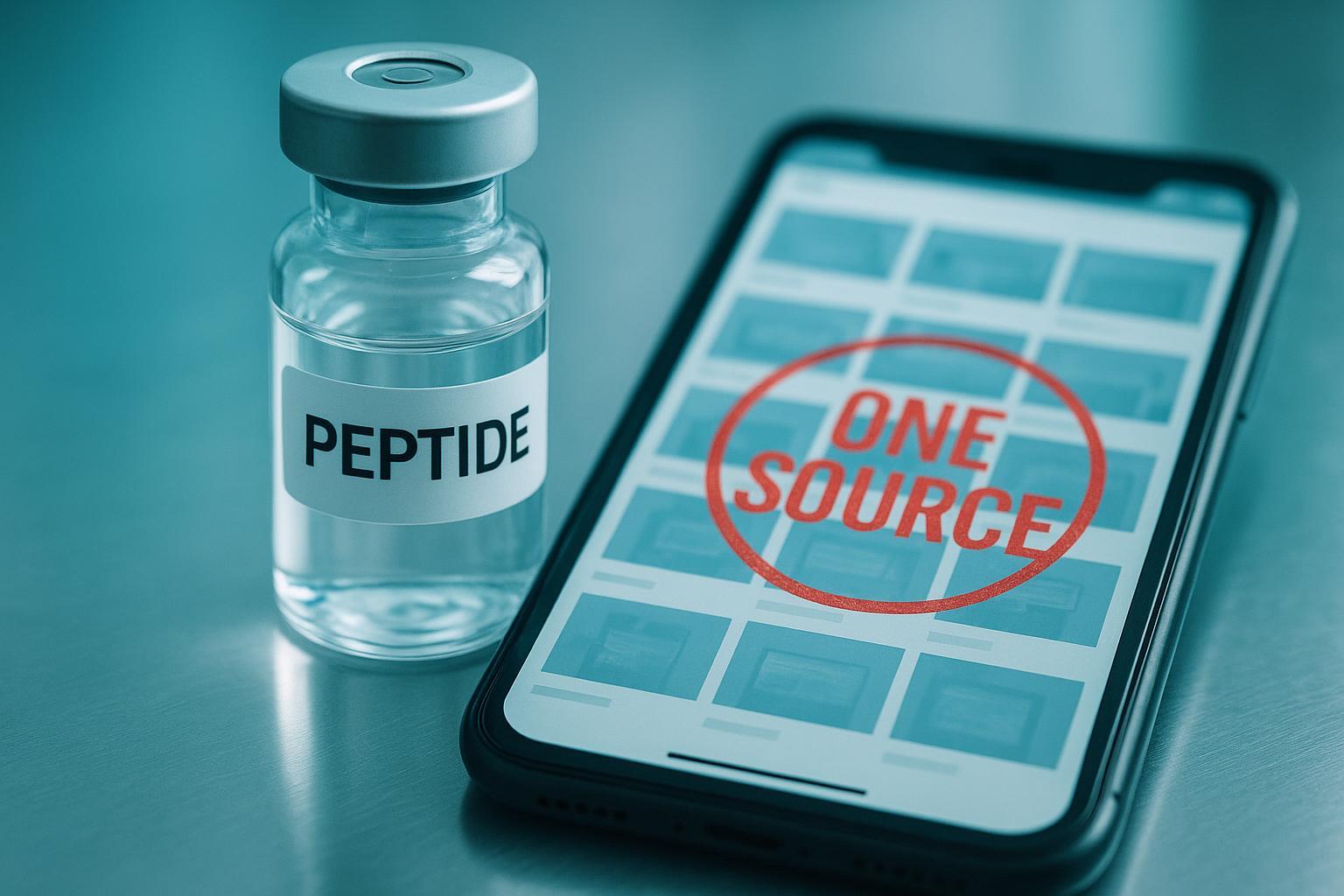
La demanda del BPC-157 está realmente aumentando, y la evidencia de ese aumento es más débil de lo que sugieren los titulares.. A 2025 revisión sistemática en Revista HSS descubrió que el volumen de búsqueda de Google BPC-157 alcanzó un máximo histórico en junio 2024, con más de 50 millones de visualizaciones de videos etiquetados con BPC-157 en YouTube y TikTok y más 100,000 miembros en comunidades de Reddit relacionadas con péptidos. Esa es una señal real, y también es una única fuente ascendente: la mayoría de los artículos "BPC-157 está explotando" publicados desde entonces se remontan a esta revisión.
La cifra desde el punto de vista clínico es aún más frágil. Reuters informó sobre una preimpresión de nferencia que identificaba 1,039 pacientes en más de 15 millones de registros, con un aumento de 33 veces en los usuarios confirmados entre 2020 y 2026. Esa preimpresión no ha sido revisada por pares., lo que importa cuando un único conjunto de datos no revisado hace tanto trabajo en la conversación.
Conclusión clave: Las afirmaciones de impulso sobre BPC-157 tienen mucho eco. Antes de repetir una cifra de crecimiento, nombre el estudio detrás de esto y si aprobó la revisión por pares.

Nada de esto hace que el impulso sea falso.. Hace que la pregunta de atribución sea lo primero que haga un lector atento., y plantea el problema más difícil: Una base de usuarios cada vez mayor está siendo atendida por productos cuyas afirmaciones de calidad se basan en un número que dice menos de lo que parece.. Esa brecha es donde comienza la caracterización del BPC-157..
La visión convencional: La pureza es toda la historia
La posición dominante es simple.: una cromatografía líquida de alta resolución (HPLC) cifra de pureza en un certificado de análisis (CoA) Hay evidencia suficiente de que un péptido es de grado de investigación.. En esa lógica, 99% es la linea de meta, y cualquier cosa arriba 98% es intercambiable.
Es fácil ver por qué esta taquigrafía se afianzó. La pureza es un número., comparable entre proveedores, imprimible en una página de producto, y legible para un comprador que tiene treinta segundos para decidir. Comprime un concepto analítico legítimo en una unidad de marketing..
Las cifras publicadas por los proveedores se agrupan estrechamente en la parte superior de esa escala.. Las purezas listadas públicamente para BPC-157 incluyen 98.329%, 99.41%, 99.54%, 99.55%, 99.74%, 99.8%, y 99.86%, y un agregador informó una media de 99.52% al otro lado de 18 pruebas con una gama de 99.02% a 99.90%. Estas cifras son autoinformadas y no controladas., así que trátelos como ilustrativos de un patrón de marketing en lugar de como una estadística de mercado..
Para propina: Leer una cifra de pureza como una afirmación sobre mucho, no como una propiedad de una molécula. Un número sin método, una columna, y una longitud de onda de detección es un resumen de la conclusión de alguien, no la evidencia detrás de esto.
El contraste es un CoA completo.. Uno riguroso vincula un solo lote a los resultados de laboratorio nombrados e informa los métodos junto con los valores.: Identidad por espectrometría de masas frente a masa teórica., Pureza por HPLC con columna, gradiente de fase móvil y longitud de onda de detección (comúnmente 214 Nuevo Méjico), perfil de impurezas, forma de sal o contraión, contenido de humedad o péptido neto, un resultado numérico de endotoxina con unidades y ensayo, esterilidad donde se reclame, más número de lote, fecha de prueba, laboratorio de pruebas, identificador de muestra y autorización (cómo leer un péptido CoA, 2026-05-24). Ése es el estándar de documentación con respecto al cual se debe juzgar un certificado de número único., y es donde la visión convencional comienza a desmoronarse.
Por qué la pureza por sí sola falla como caracterización BPC-157
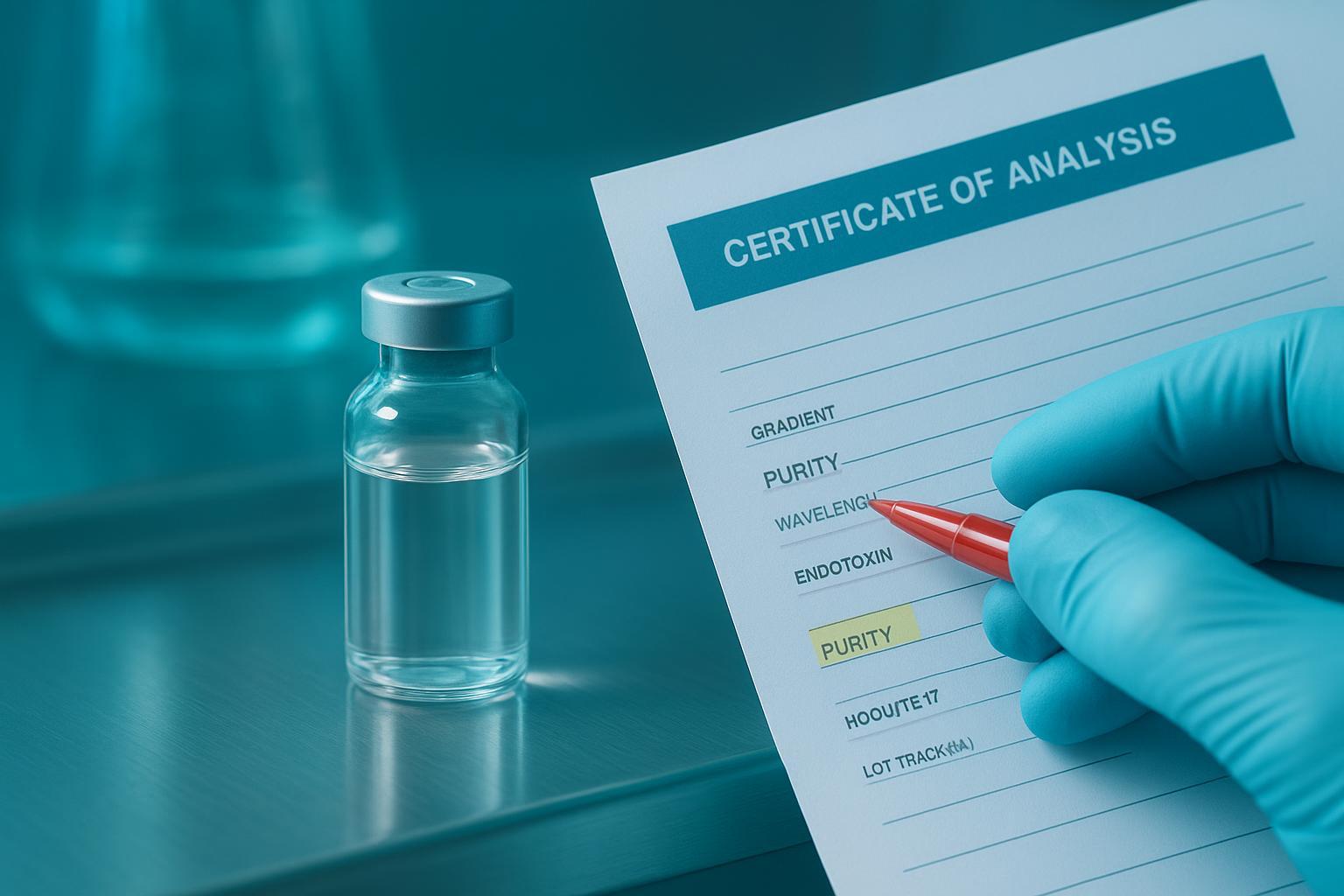
Un porcentaje de pureza responde exactamente a una pregunta: ¿Cuánto de lo que vio el detector en una longitud de onda fue el pico principal?. No te dice si la molécula es BPC-157., cómo se hizo, que contraion lleva, or what else is in the vial. BPC-157 characterization is a multi-axis problem, and purity is the axis most easily gamed.
Identity is the first gap. WIRED’s independent lab testing of retail peptide vials found that sampled products “did not contain the active ingredients on their labels, the BPC-157, Por ejemplo, had no BPC-157 within it,” and a second set analysed by Analytical Formulations could not be positively identified (WIRED, Septiembre 2026). A 99% figure on a vial that holds no BPC-157 is not a quality signal. It is a measurement of the wrong thing.
Method transparency is the second gap. Purity is method-dependent: the same sample can shift by a percentage point or more with changes to column, gradient and detection settings, so a figure without stated HPLC conditions cannot be compared across vendors or batches (ChemVerificar, 2026-06-14). A defensible number states the column, the mobile-phase gradient and the detection wavelength, comúnmente 214 Nuevo Méjico. Most certificates omit all three.
The third gap is contamination. The largest published gray-market audit to date found that 41.6% of samples failed a lenient compounded-drug benchmark and 71.1% failed a stricter manufactured-drug benchmark, while roughly 2.4% contained none of the labelled peptide and 15% of the endotoxin-tested subset showed measurable bacterial endotoxin (Finnrick, 2026). Peptide endotoxin testing is the only way to see that last failure mode; a purity chromatogram never will.
⚠️ Advertencia: The Finnrick audit reports its sample count inconsistently across sections, 6,441 in one place and 6,285 in another. The discrepancy is unresolved, so treat the percentages as directional rather than exact.
Purity is one axis. Identidad, method transparency and contamination are the others, and a single number cannot carry them.
Lo que realmente muestran los datos sobre la caracterización de BPC-157
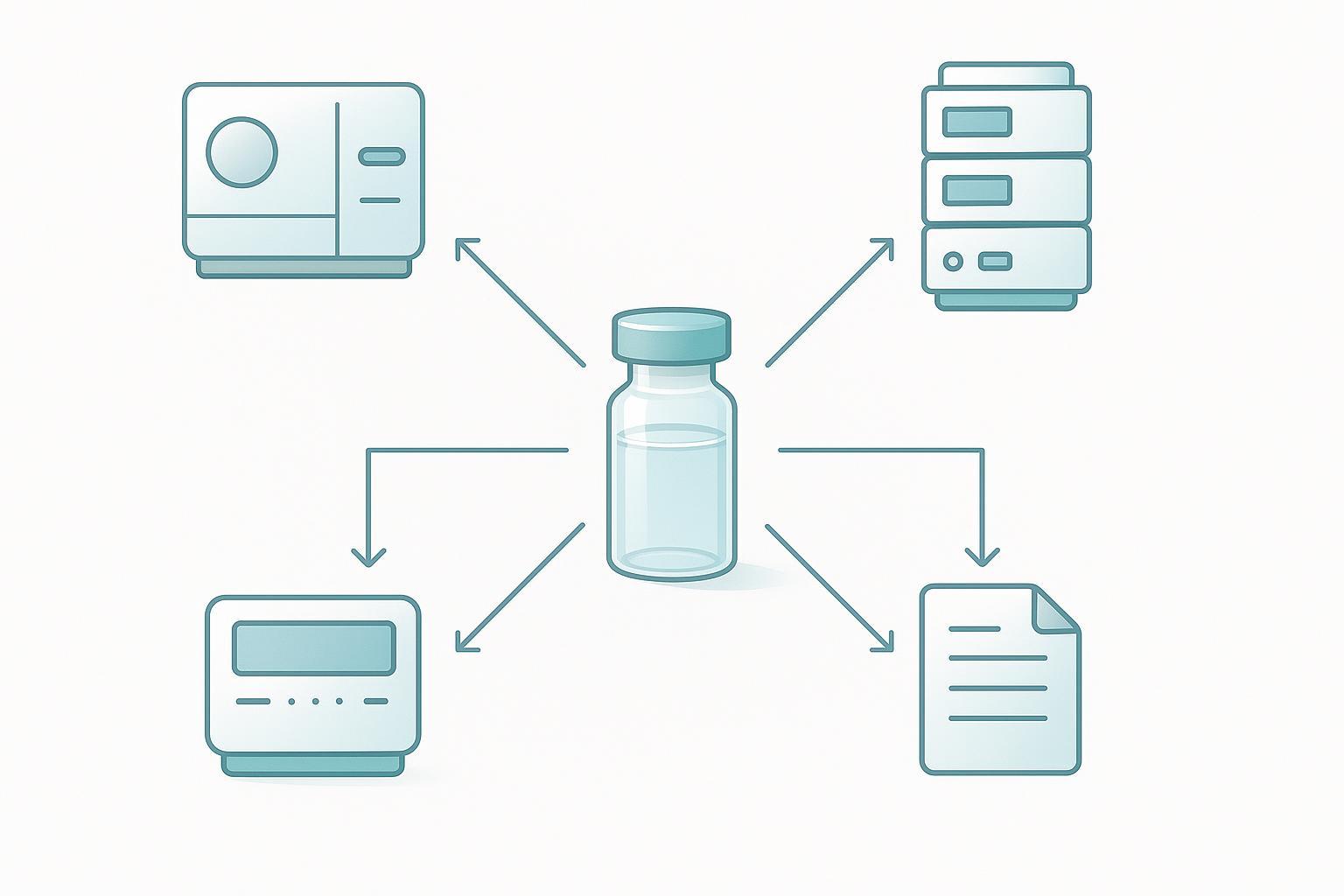
Reframed against what regulators actually ask for, BPC-157 characterization stops being a purity contest and becomes a confirmation problem. The EMA guideline on synthetic peptides, a partir de junio 2026, expects “at least two orthogonal methods … for identity” and assesses purity across size-, cargar- and hydrophobicity-based separations, and it states plainly that ICH Q3A does not apply to synthetic peptides. Confirmación ortogonal, not a headline number, is the requirement.
Identity itself is a stack, not a single test: intact mass plus peptide-mapping sequence coverage, amino acid analysis for composition, and chromatographic resolution of closely related sequence variants, with higher-order structure checked by circular dichroism and DSC where relevant, including oligomeric state. Endotoxin follows the same logic. El USP 〈85〉 endotoxin-limit framework recognizes three validated LAL-based methods, with typical gel-clot sensitivity of 0.03–0.25 EU/mL and turbidimetric or chromogenic ranges of 0.001–100 EU/mL, and sets limits from K/M, where K is 5.0 EU/kg for intravenous and 0.2 EU/kg for intrathecal products.
|
Eje |
Question it answers |
Evidence that answers it |
Failure it catches |
|---|---|---|---|
|
Identidad |
Is this the right molecule? |
Intact mass, mapeo de péptidos, análisis de aminoácidos |
Sequence variants and substitutions |
|
Purity with method transparency |
How much is the target peptide? |
Orthogonal separations across size, cargar, hidrofobicidad |
A single number hiding co-eluting impurities |
|
Impurity and counterion profile |
What else is present? |
Related-substance and counterion testing |
Solventes residuales, TFA, secuencias truncadas |
|
Síntesis de péptidos endotoxina |
Is it safe for the intended route? |
Validated LAL method Péptidos sintéticos against K/M limits |
Route-specific endotoxin exposure |
|
Documentation and traceability |
Can any of this be audited? |
Certificate of analysis, method detail, registros de lotes |
Claims that cannot be reproduced |
This five-axis model is a synthesis of published standards, not a novel claim. It simply organizes what the EMA and USP documents already require into the questions a buyer should ask before accepting a purity figure.
Las lagunas científicas son la verdadera historia
The bottleneck for BPC-157 is not biological plausibility. It is the absence of basic formulation science, validated pharmacokinetics, and controlled human efficacy trials, which is how the 2026 Pharmaceutics review frames the field (Mateescu et al., Pharmaceutics 18(5):625, recuperado 2026-05-20). The same review counts the entire published human evidence base as three uncontrolled pilot studies with a combined enrollment under 30 subjects: a knee-pain series of 16 pacientes, of whom 12 received intra-articular BPC-157 alone; an interstitial cystitis pilot of 12 women; and an intravenous safety pilot of 2 healthy adults.
What is missing is specific. There is no pharmaceutical-grade validated formulation, no formal permeability characterization or BCS classification, no excipient-compatibility studies, unresolved solution and storage stability, undercharacterized human pharmacokinetics, and no validated human bioanalytical method. Oral bioavailability is unknown, subcutaneous pharmacokinetics are unvalidated, plasma protein binding is unpublished, and volume of distribution is unmeasured.
One registered Phase 2 aleatorio, doble ciego, placebo-controlled hamstring-strain trial (NCT07437547) targets 120 participants and is currently recruiting. It has not reported results, so it is not completed Phase 2 evidence.
Even the bibliometric picture depends on how you count. One search returns 227 BPC-157 publications with 53 human-related records; another returns 232 papers with 54 human-tagged (PeptideDeck, BPC-157 statistics, 2026). The difference is query scope, which is exactly why any publication count needs its search string stated.
These gaps are the argument for BPC-157 characterization discipline: when the clinical literature cannot yet tell you what a preparation does in humans, the documentation of what is actually in the vial carries more weight, not less. Producción de péptidos
El panorama regulatorio no está resuelto, No resuelto
Servicios The July 2026 advisory vote changed the conversation, not the law. En 2026-07-23, the Pharmacy Compounding Advisory Committee voted 8 in favour, 6 contra, con 1 abstención, to recommend BPC-157 free base and acetate for the Section 503A bulks list, even though FDA staff briefing materials proposed the opposite outcome, como McDermott Will & Emery’s read of the 503A bulks-list process archivos. As of September 2026, no final FDA action has followed, and the vote alone does not make BPC-157 lawfully compoundable: bulks-list placement plus notice-and-comment rulemaking are still required.
That distinction matters differently by stakeholder. Researchers should treat any supplier implying the vote legalized BPC-157 as misrepresenting the status. Procurement and QC teams should keep research peptide documentation standards tied to what is actually verifiable today, not to a pending rule. Suppliers face the same gap between recommendation and lawful status. Regulators, meanwhile, have not settled the question at all.
FDA’s own position is blunter still. BPC-157 is not FDA-approved for any indication, and no approved finished drug contains it. The agency’s safety-risk page places BPC-157 among bulk drug substances whose nominations were withdrawn, stating that compounded drugs containing it may pose immunogenicity risks for certain routes of administration and may have complexities with regard to peptide-related impurities and API characterization, and that FDA has identified no, or only limited, safety-related information for the proposed routes of administration (FDA, contenido actual 2026-04-22).
Cómo aplicar esto: Una lista de verificación de caracterización

Ask for the method, not the number. That single request is the fastest way to separate a supplier who understands research peptide documentation standards from one who is repeating a marketing figure, and it costs you one email.
-
Request the lot-specific CoA. Confirm the certificate of analysis for research peptides names the lot number, the testing laboratory, and the test date. A document that omits any of the three cannot be tied to the material in front of you.
-
Check that identity evidence is orthogonal. A single HPLC peak is one technique answering one question. Identity is stronger when a second, independent method agrees.
-
Require the HPLC method parameters. Column, gradiente, and detection wavelength belong next to the purity value. sin ellos, the percentage is not reproducible.
-
Require a numeric endotoxin result with units and assay. Peptide endotoxin testing should report EU/mL for a solution at a defined working concentration, or EU/mg when normalising to peptide mass, and should document a positive product control with spike recovery (commonly cited acceptance around 50 a 200%) plus a defined maximum valid dilution, because peptides can inhibit or enhance the LAL signal (Assyro endotoxin testing guide, recuperado 2026-09-14).
-
Confirm counterion or salt form, contenido de humedad o péptido neto, and batch traceability. TFA and Comercio acetate salts behave differently, and net peptide content changes how you calculate a working concentration.
One option among several: a supplier operating a Class 100 Sala limpia con HPLC interno, EM, and sterility QC can be used to assemble a batch-specific characterization package at milligram to kilogram scale, which supports a documentation request rather than replacing it.
Measure the response, not the promise. A supplier who answers the method questions is telling you something; one who deflects to the purity figure is telling you more. Expect a documentation reply within days. A research result takes considerably longer.
Advertencias: Donde este argumento es más débil
A rigorous characterization package still cannot make an unapproved, under-studied peptide safe or effective, and better documentation is not a substitute for clinical evidence. Nothing here changes that.
The five-axis framework is a synthesis of published standards, not a single citable protocol. The EMA guideline is a secondary summary, and the source itself says its percentage thresholds should be confirmed against the primary text. The Finnrick audit sample count is inconsistent between summaries. The nference user-growth figure comes from a preprint, and the PubMed counts are query-dependent.
The purity-first view is defensible elsewhere. For a well-characterized, approved peptide with a validated monograph, a purity figure carries far more weight than it does here, because identity, perfil de impurezas, and endotoxin limits have already been fixed by the monograph.
The argument is that BPC-157 characterization is necessary, not sufficient.
But Doesn’t a High Purity Number Still Tell Me Something?
It does, but only in combination with two other pieces of information: the method that produced the figure and the identity evidence confirming what the peak actually was. A 99.8% result from one lab’s HPLC run is not the same claim as a 99.8% result from another, because the number depends on the gradient, the detection wavelength, and the standard curve behind it. Without the method, the figure is a measurement of something, not necessarily of BPC-157.
If you have already purchased vials on the strength of a purity figure, discarding them on assumption is not the only option. Request the underlying method documentation from the supplier and, where the material matters to your work, commission independent identity and endotoxin testing. That converts an unverified claim into a documented one, and it costs far less than restarting a study.
The PCAC vote is worth addressing directly, because it is frequently read as a green light. It was an advisory vote, it was split, and FDA staff recommended against inclusion. No final rulemaking has followed. The gap between a committee recommendation and a lawful status is the whole point.
On endotoxin, the objection is usually that it is overkill for laboratory work. Whether it is depends on route and dose, and the limit that applies is set by those two variables rather than by the setting. The reason the question gets asked at all is that 15% of the audited subset showed measurable endotoxin. That is not a reason to test everything indiscriminately; it is a reason to know which question you are answering before you decide you do not need to ask it. Acerca de
Conclusión: La caracterización debería definir el BPC-157 de grado de investigación
The purity-first shorthand is a marketing convention, not an analytical standard, and BPC-157 characterization begins where that shorthand ends: orthogonal identity confirmation, method-transparent purity, impurity and counterion profiling, numeric endotoxin reporting, and lot-level documentation that a reviewer can audit.
The shift this argument calls for is already visible in how the strongest procurement teams work. They ask method questions before price questions. They treat a certificate of analysis for research peptides as a starting document rather than a closing one, and they expect suppliers to publish gradients, columns, and detection wavelengths instead of a single percentage. As that expectation spreads, research peptide documentation standards stop being a compliance afterthought and become the vocabulary of the buying conversation itself.
Picture the market that follows: a 99% figure with no stated gradient reads as an incomplete answer, not a selling point. That is a higher bar, and it is the one research-grade material deserves.
Next step: Review our documentation requirements and request a specification sheet before your next qualification cycle.
Divulgación: MOL Changes se publica como proveedor de péptidos, so treat this analysis as one perspective within a market it participates in.