Lo slancio è reale, ma poggia su un'unica fonte
La domanda di BPC-157 è davvero in aumento, e le prove di tale aumento sono più deboli di quanto suggeriscano i titoli dei giornali. UN 2025 revisione sistematica in Giornale dell'HSS ha scoperto che il volume di ricerca di Google BPC-157 ha raggiunto il massimo storico a giugno 2024, con più di 50 milioni di visualizzazioni di video contrassegnati con BPC-157 su YouTube e TikTok e oltre 100,000 membri nelle comunità Reddit legate ai peptidi. Questo è un vero segnale, ed è anche un'unica fonte a monte: la maggior parte degli articoli "BPC-157 sta esplodendo" pubblicati da allora risalgono a questa recensione.
Il dato clinico è ancora più fragile. Reuters ha riportato una prestampa della conferenza che identificava 1,039 pazienti in più di 15 milioni di record, con un aumento di 33 volte degli utenti confermati tra 2020 E 2026. La prestampa non è stata sottoposta a revisione paritaria, il che conta quando un singolo set di dati non revisionato svolge così tanto lavoro nella conversazione.
Chiave da asporto: Le affermazioni sul BPC-157 sono pesanti. Prima di ripetere una cifra di crescita, nominare lo studio dietro di esso e se ha superato la revisione paritaria.

Niente di tutto ciò rende falso lo slancio. Rende la questione dell'attribuzione la prima cosa che un lettore attento pone, e pone il problema più difficile: una base di utenti in aumento viene servita da prodotti le cui qualità dichiarate si basano su un numero che dice meno di quanto sembri. Questo divario è il punto in cui inizia la caratterizzazione di BPC-157.
La visione convenzionale: La purezza è l'intera storia
La posizione dominante è semplice: una cromatografia liquida ad alte prestazioni (HPLC) cifra di purezza su un certificato di analisi (CoA) è una prova sufficiente che un peptide è di grado di ricerca. Su quella logica, 99% è il traguardo, e qualsiasi cosa sopra 98% è intercambiabile.
È facile capire perché questa abbreviazione abbia preso piede. La purezza è un numero, comparabili tra i fornitori, stampabile su una pagina di prodotto, e leggibile per un acquirente che ha trenta secondi per decidere. Comprime un concetto analitico legittimo in un'unità di marketing.
I dati pubblicati dai fornitori si collocano strettamente in cima a quella scala. Le purezze quotate pubblicamente per BPC-157 includono 98.329%, 99.41%, 99.54%, 99.55%, 99.74%, 99.8%, E 99.86%, e un aggregatore ha riportato una media di 99.52% attraverso 18 test con una gamma di 99.02% A 99.90%. Questi numeri sono auto-riportati e non controllati, quindi trattateli come illustrativi di un modello di marketing piuttosto che come una statistica di mercato.
Per Suggerimento: Leggi una cifra di purezza come un'affermazione su molto, non come una proprietà di una molecola. Un numero senza metodo, una colonna, e una lunghezza d’onda di rilevamento è un riassunto della conclusione di qualcuno, non le prove dietro di esso.
Il contrasto è un CoA completo. Uno rigoroso lega un singolo lotto ai risultati di laboratorio nominati e riporta i metodi insieme ai valori: identità mediante spettrometria di massa rispetto alla massa teorica, Purezza HPLC con colonna, gradiente di fase mobile e lunghezza d'onda di rivelazione (comunemente 214 nm), profilo di impurità, controione o forma di sale, umidità o contenuto netto di peptidi, un risultato numerico dell'endotossina con unità e dosaggio, sterilità dove dichiarata, più numero di lotto, data della prova, laboratorio di prova, identificatore e autorizzazione del campione (come leggere un peptide CoA, 2026-05-24). Questo è lo standard di documentazione rispetto al quale dovrebbe essere giudicato un certificato a numero unico, ed è qui che la visione convenzionale inizia a sgretolarsi.
Perché la purezza da sola fallisce come caratterizzazione BPC-157
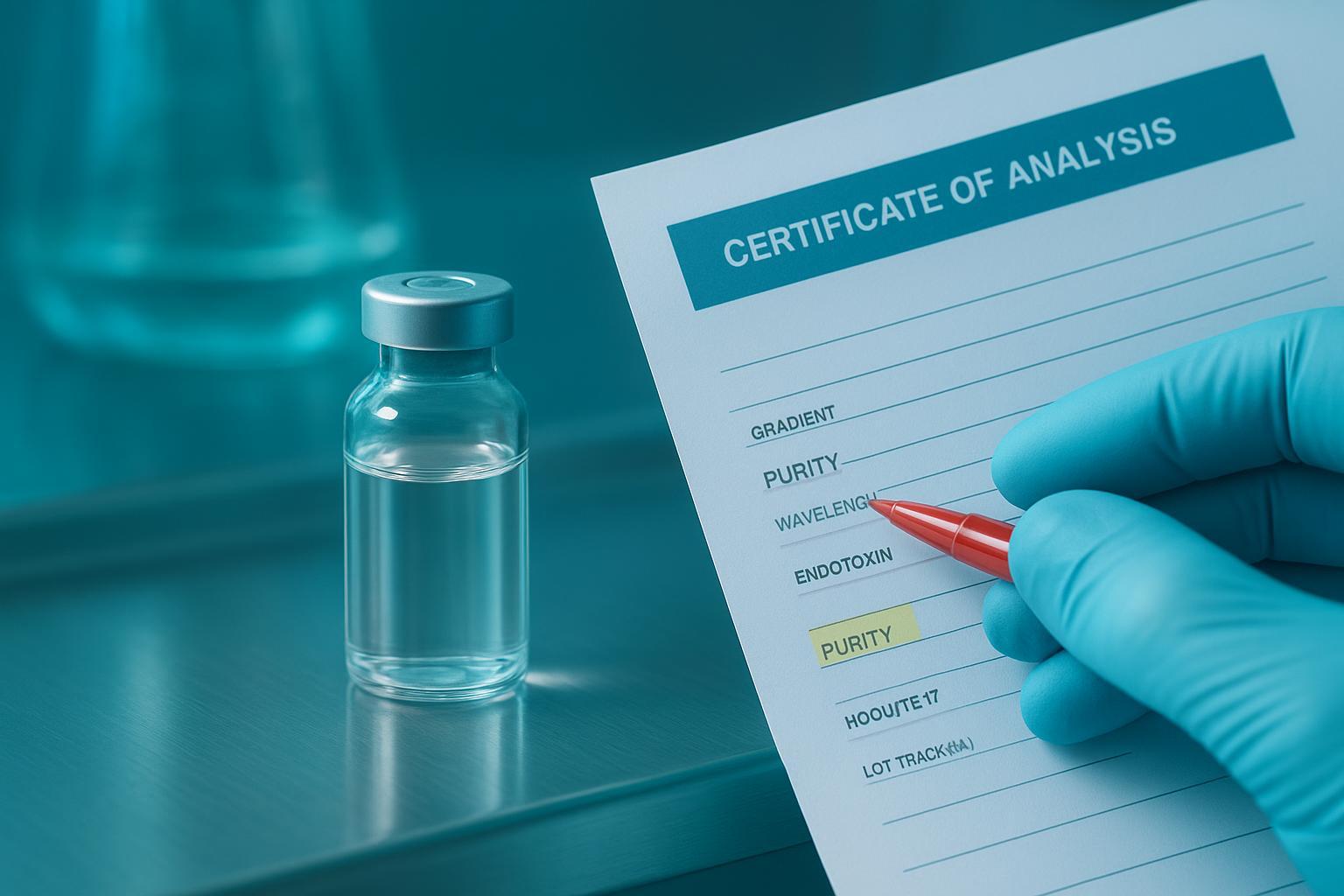
Una percentuale di purezza risponde esattamente a una domanda: quanto di ciò che il rilevatore ha visto a una lunghezza d'onda era il picco principale. Non ti dice se la molecola è BPC-157, come è stato realizzato, quale contropressione porta, o cos'altro c'è nella fiala. La caratterizzazione di BPC-157 è un problema multiasse, e la purezza è l’asse più facilmente manipolabile.
L’identità è la prima lacuna. I test di laboratorio indipendenti di WIRED sulle fiale di peptidi al dettaglio hanno rilevato che i prodotti campionati “non contenevano gli ingredienti attivi sulle loro etichette, il BPC-157, Per esempio, non aveva BPC-157 al suo interno,” e un secondo set analizzato da Analytical Formulations non è stato identificato con certezza (CABLATO, settembre 2026). UN 99% Il valore riportato su una fiala che non contiene BPC-157 non è un segnale di qualità. È una misurazione della cosa sbagliata.
La trasparenza del metodo è la seconda lacuna. La purezza dipende dal metodo: lo stesso campione può spostarsi di un punto percentuale o più modificando la colonna, impostazioni di gradiente e rilevamento, quindi una cifra senza le condizioni HPLC dichiarate non può essere confrontata tra fornitori o lotti (ChemVerify, 2026-06-14). Un numero difendibile indica la colonna, il gradiente di fase mobile e la lunghezza d'onda di rilevamento, comunemente 214 nm. La maggior parte dei certificati li omette tutti e tre.
La terza lacuna è la contaminazione. Lo ha scoperto il più grande audit del mercato grigio pubblicato fino ad oggi 41.6% dei campioni non ha superato un benchmark indulgente sui farmaci composti e 71.1% non hanno superato un benchmark più rigoroso sui farmaci industriali, mentre approssimativamente 2.4% non conteneva alcun peptide marcato e 15% del sottogruppo testato per l’endotossina ha mostrato un’endotossina batterica misurabile (Finnrick, 2026). Il test dell’endotossina peptidica è l’unico modo per vedere l’ultima modalità di fallimento; un cromatogramma di purezza non lo farà mai.
⚠️ Attenzione: L'audit Finnrick riporta il conteggio dei campioni in modo incoerente tra le sezioni, 6,441 in un posto e 6,285 in un altro. La discrepanza è irrisolta, quindi tratta le percentuali come direzionali piuttosto che esatte.
La purezza è un asse. Identità, la trasparenza e la contaminazione del metodo sono gli altri, e un solo numero non può portarli.
Cosa mostrano effettivamente i dati sulla caratterizzazione di BPC-157
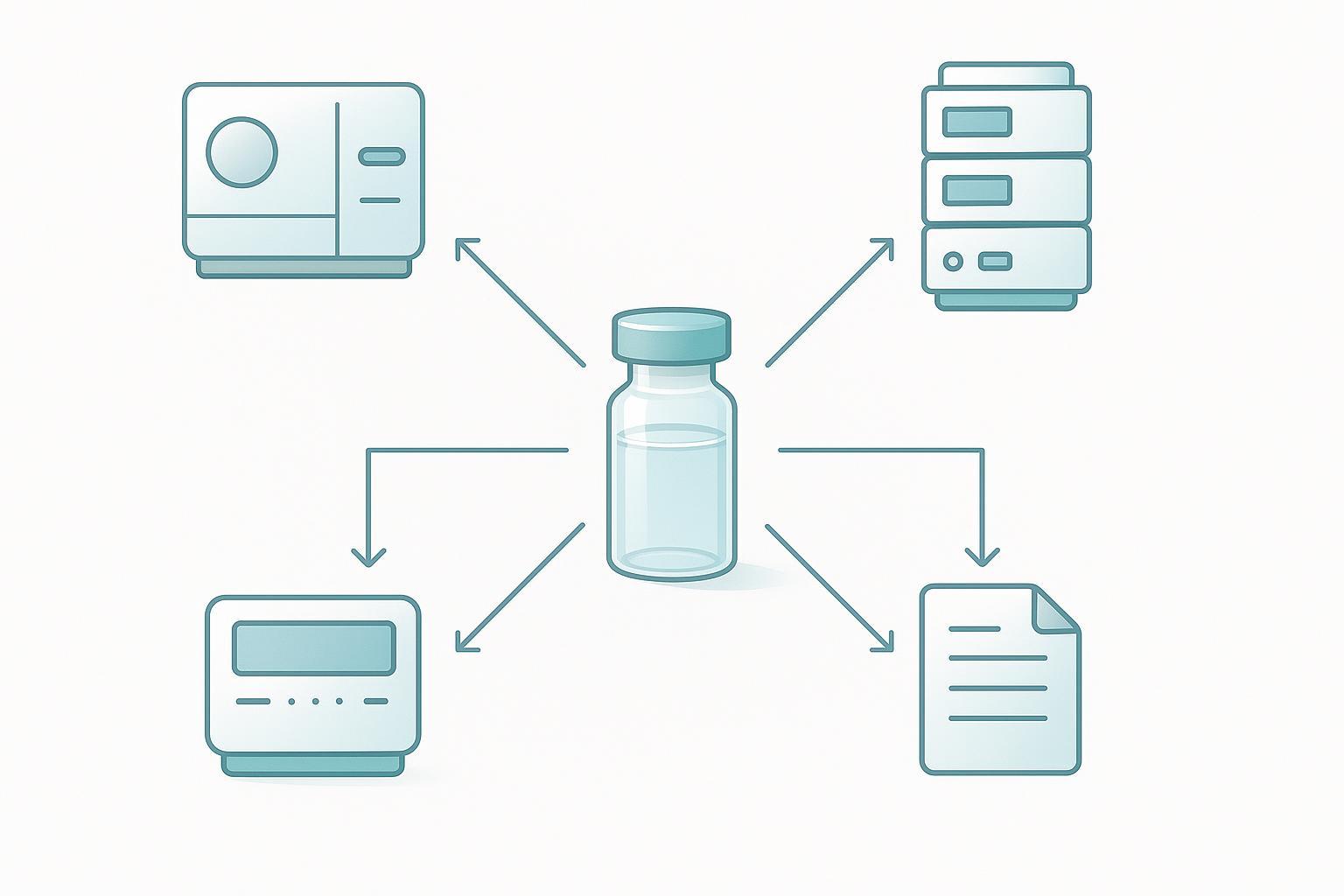
Riformulato rispetto a ciò che effettivamente chiedono i regolatori, La caratterizzazione di BPC-157 smette di essere un concorso di purezza e diventa un problema di conferma. La linea guida EMA sui peptidi sintetici, in vigore da giugno 2026, si aspetta "almeno due metodi ortogonali... per l'identità" e valuta la purezza attraverso le dimensioni, carica- e separazioni basate sull'idrofobicità, e afferma chiaramente che ICH Q3A non si applica ai peptidi sintetici. Conferma ortogonale, non un numero di titolo, è il requisito.
L'identità stessa è una pila, nemmeno un singolo test: massa intatta più copertura della sequenza di mappatura peptidica, analisi degli aminoacidi per la composizione, e risoluzione cromatografica di varianti di sequenza strettamente correlate, con struttura di ordine superiore controllata da dicroismo circolare e DSC ove rilevante, compreso lo stato oligomerico. L'endotossina segue la stessa logica. IL Quadro dei limiti di endotossine USP 〈85〉 riconosce tre metodi convalidati basati su LAL, con sensibilità tipica del coagulo di gel di 0,03–0,25 EU/mL e intervalli turbidimetrici o cromogenici di 0,001–100 EU/mL, e imposta i limiti da K/M, dove K è 5.0 UE/kg per via endovenosa e 0.2 UE/kg per i prodotti intratecali.
|
Asse |
Domanda a cui risponde |
Prove che rispondono |
Il fallimento lo coglie |
|---|---|---|---|
|
Identità |
E' questa la molecola giusta?? |
Massa intatta, mappatura peptidica, analisi degli aminoacidi |
Varianti e sostituzioni di sequenza |
|
Purezza con trasparenza del metodo |
Quanto costa il peptide bersaglio? |
Separazioni ortogonali tra le dimensioni, carica, idrofobicità |
Un unico numero che nasconde le impurità di coeluizione |
|
Profilo delle impurità e dei controioni |
Cos'altro è presente? |
Test su sostanze correlate e controioni |
Solventi residui, TFA, sequenze troncate |
|
Sintesi peptidica Endotossina |
È sicuro per il percorso previsto? |
Metodo LAL convalidato Peptidi sintetici rispetto ai limiti K/M |
Esposizione alle endotossine specifica per percorso |
|
Documentazione e tracciabilità |
È possibile verificare tutto ciò?? |
Certificato di analisi, dettaglio del metodo, record di batch |
Affermazioni che non possono essere riprodotte |
Questo modello a cinque assi è una sintesi degli standard pubblicati, non è un'affermazione nuova. Organizza semplicemente ciò che i documenti EMA e USP già richiedono nelle domande che un acquirente dovrebbe porre prima di accettare una cifra di purezza.
Le lacune scientifiche sono la vera storia
Il collo di bottiglia per BPC-157 non è la plausibilità biologica. È l’assenza di una scienza formulativa di base, farmacocinetica validata, e studi controllati di efficacia sull'uomo, ed è così che 2026 Farmaceutica la revisione inquadra il campo (Mateescu et al., Farmaceutica 18(5):625, recuperato 2026-05-20). La stessa revisione conta l'intera base di prove umane pubblicata come tre studi pilota non controllati con un arruolamento combinato sotto 30 soggetti: una serie di dolori al ginocchio 16 pazienti, di chi 12 hanno ricevuto solo BPC-157 intrarticolare; un pilota di cistite interstiziale di 12 donne; e un pilota di sicurezza per via endovenosa di 2 adulti sani.
Ciò che manca è specifico. Non esiste una formulazione validata di livello farmaceutico, nessuna caratterizzazione formale della permeabilità o classificazione BCS, nessuno studio di compatibilità con gli eccipienti, Soluzione irrisolta e stabilità di archiviazione, farmacocinetica umana sottocaratterizzata, e nessun metodo bioanalitico umano validato. La biodisponibilità orale non è nota, la farmacocinetica sottocutanea non è convalidata, il legame con le proteine plasmatiche non è stato pubblicato, e il volume di distribuzione non è misurato.
Una fase registrata 2 randomizzato, in doppio cieco, studio controllato con placebo sullo sforzo del tendine del ginocchio (NCT07437547) obiettivi 120 partecipanti e sta attualmente reclutando. Non ha riportato risultati, quindi la Fase non è completata 2 prova.
Anche il quadro bibliometrico dipende da come conti. Una ricerca restituisce 227 Pubblicazioni BPC-157 con 53 documenti relativi all'uomo; ne ritorna un altro 232 documenti con 54 taggato come umano (Ponte peptidico, Statistiche BPC-157, 2026). La differenza è l'ambito della query, che è esattamente il motivo per cui qualsiasi conteggio delle pubblicazioni necessita dell'indicazione della stringa di ricerca.
Queste lacune costituiscono l’argomento a favore della disciplina di caratterizzazione del BPC-157: quando la letteratura clinica non può ancora dire cosa fa un preparato nell’uomo, ha più peso la documentazione di cosa c'è effettivamente nella fiala, non meno. Produzione di peptidi
Il quadro normativo è irrisolto, Non risolto
Servizi Il luglio 2026 il voto consultivo ha cambiato la conversazione, non la legge. SU 2026-07-23, ha votato il comitato consultivo sui composti farmaceutici 8 a favore, 6 contro, con 1 astensione, raccomandare la base libera e l'acetato BPC-157 per l'elenco dei prodotti sfusi della Sezione 503A, anche se i materiali informativi del personale della FDA suggerivano il risultato opposto, COME McDermott Will & Lettura di Emery del processo di elenco in blocco 503A record. A partire da settembre 2026, non è seguita alcuna azione finale da parte della FDA, e il voto da solo non rende il BPC-157 legalmente cumulabile: sono ancora necessari il posizionamento di elenchi in blocco e la creazione di regole per avvisi e commenti.
Questa distinzione conta in modo diverso a seconda delle parti interessate. I ricercatori dovrebbero considerare qualsiasi fornitore che indichi il voto legalizzato BPC-157 come se ne travisasse lo status. I team di approvvigionamento e controllo qualità dovrebbero mantenere gli standard di documentazione della ricerca sui peptidi legati a ciò che è effettivamente verificabile oggi, non a una regola in sospeso. I fornitori si trovano ad affrontare lo stesso divario tra raccomandazione e status legale. Regolatori, Nel frattempo, non hanno risolto affatto la questione.
La posizione della FDA è ancora schietta. BPC-157 non è approvato dalla FDA per nessuna indicazione, e nessun farmaco finito approvato lo contiene. La pagina sui rischi per la sicurezza dell’agenzia colloca il BPC-157 tra le sostanze farmaceutiche sfuse le cui candidature sono state ritirate, affermando che i farmaci composti che lo contengono possono comportare rischi di immunogenicità per determinate vie di somministrazione e possono presentare complessità per quanto riguarda le impurità correlate ai peptidi e la caratterizzazione dell'API, e che la FDA ha identificato n, o solo limitato, informazioni relative alla sicurezza per le vie di somministrazione proposte (FDA, contenuto attuale 2026-04-22).
Come applicarlo: Una lista di controllo per la caratterizzazione

Richiedi il metodo, non il numero. Quella singola richiesta è il modo più veloce per separare un fornitore che capisce ricercare gli standard di documentazione dei peptidi da chi sta ripetendo una figura di marketing, e ti costa una email.
-
Richiedere il CoA specifico del lotto. Conferma il certificato di analisi per peptidi di ricerca nomina il numero di lotto, il laboratorio di prova, e la data della prova. Un documento che omette uno qualsiasi dei tre non può essere collegato al materiale che hai di fronte.
-
Verificare che la prova dell'identità sia ortogonale. Un singolo picco HPLC è una tecnica che risponde a una domanda. L'identità è più forte quando un secondo, il metodo indipendente è d'accordo.
-
Richiedere i parametri del metodo HPLC. Colonna, pendenza, e la lunghezza d'onda di rilevamento appartengono accanto al valore di purezza. Senza di loro, la percentuale non è riproducibile.
-
Richiedere un risultato numerico dell'endotossina con unità e test. Test delle endotossine peptidiche dovrebbe riportare EU/mL per una soluzione a una concentrazione di lavoro definita, o EU/mg quando si normalizza la massa peptidica, e dovrebbe documentare un controllo positivo del prodotto con recupero del picco (accettazione comunemente citata in giro 50 A 200%) più una diluizione massima valida definita, perché i peptidi possono inibire o potenziare il segnale LAL (Guida al test delle endotossine Assyro, recuperato 2026-09-14).
-
Confermare il controione o la forma del sale, umidità o contenuto netto di peptidi, e tracciabilità dei lotti. TFA e Negozio i sali di acetato si comportano diversamente, e il contenuto netto di peptidi cambia il modo in cui si calcola una concentrazione di lavoro.
Un'opzione tra tante: un fornitore che gestisce una Classe 100 camera bianca con HPLC interno, SM, e il controllo qualità della sterilità può essere utilizzato per assemblare un pacchetto di caratterizzazione specifico per lotto su scala da milligrammo a chilogrammo, che supporta una richiesta di documentazione anziché sostituirla.
Misura la risposta, non la promessa. Un fornitore che risponde alle domande sul metodo ti sta dicendo qualcosa; chi devia verso la figura della purezza ti dice di più. Aspettatevi una risposta alla documentazione entro pochi giorni. Un risultato della ricerca richiede molto più tempo.
Avvertenze: Dove questo argomento è più debole
Un pacchetto di caratterizzazione rigoroso non può ancora risultare non approvato, peptide poco studiato, sicuro o efficace, e una migliore documentazione non sostituisce l’evidenza clinica. Niente qui cambia la situazione.
Il quadro a cinque assi è una sintesi degli standard pubblicati, non un solo protocollo citabile. La linea guida EMA è una sintesi secondaria, e la fonte stessa afferma che le sue soglie percentuali dovrebbero essere confermate rispetto al testo principale. Il conteggio del campione di audit Finnrick non è coerente tra i riepiloghi. Il dato relativo alla crescita degli utenti di riferimento proviene da una prestampa, e i conteggi PubMed dipendono dalla query.
La visione della purezza è difendibile altrove. Per un aspetto ben caratterizzato, peptide approvato con una monografia convalidata, una figura di purezza ha molto più peso di quanto non abbia qui, perché identità, profilo di impurità, e i limiti delle endotossine sono già stati fissati dalla monografia.
L'argomentazione è che la caratterizzazione di BPC-157 è necessaria, non sufficiente.
Ma un numero di elevata purezza non mi dice ancora qualcosa?
Lo fa, ma solo in combinazione con altre due informazioni: il metodo che ha prodotto la figura e le prove di identità che confermano quale fosse effettivamente il picco. UN 99.8% Il risultato dell'analisi HPLC di un laboratorio non è la stessa affermazione di a 99.8% derivare da un altro, perché il numero dipende dal gradiente, la lunghezza d'onda di rilevamento, e la curva standard dietro di essa. Senza il metodo, la figura è una misura di qualcosa, non necessariamente di BPC-157.
Se hai già acquistato le fiale in forza di una cifra di purezza, scartarli per presupposto non è l'unica opzione. Richiedere la documentazione del metodo sottostante al fornitore e, dove il materiale conta per il tuo lavoro, commissionare test indipendenti sull'identità e sulle endotossine. Ciò converte un reclamo non verificato in uno documentato, e costa molto meno che riavviare uno studio.
Vale la pena affrontare direttamente il voto del PCAC, perché viene spesso letto come un semaforo verde. Era un voto consultivo, era diviso, e il personale della FDA ha sconsigliato l'inclusione. Non è seguita alcuna regolamentazione definitiva. Il punto centrale è il divario tra una raccomandazione del comitato e uno status legale.
Sull'endotossina, l'obiezione è solitamente che è eccessivo per il lavoro di laboratorio. Dipende dalla via e dalla dose, e il limite applicabile è fissato da queste due variabili anziché dall'impostazione. Il motivo per cui la domanda viene posta è questo 15% del sottoinsieme controllato ha mostrato endotossina misurabile. Questo non è un motivo per testare tutto indiscriminatamente; è un motivo per sapere a quale domanda stai rispondendo prima di decidere che non è necessario farla. Di
Conclusione: La caratterizzazione dovrebbe definire il livello di ricerca BPC-157
L’abbreviazione “purezza prima di tutto” è una convenzione di marketing, non uno standard analitico, e la caratterizzazione di BPC-157 inizia dove finisce quella abbreviazione: conferma dell'identità ortogonale, purezza trasparente al metodo, profilazione di impurità e controioni, segnalazione numerica delle endotossine, e documentazione a livello di lotto che un revisore può verificare.
Il cambiamento richiesto da questa argomentazione è già visibile nel modo in cui lavorano i team di procurement più forti. Fanno domande sul metodo prima che sul prezzo. Trattano un certificato di analisi per i peptidi di ricerca come un documento iniziale piuttosto che come un documento conclusivo, e si aspettano che i fornitori pubblichino i gradienti, colonne, e lunghezze d'onda di rilevamento invece di una singola percentuale. Mentre quell'aspettativa si diffonde, gli standard di documentazione dei peptidi di ricerca smettono di essere un ripensamento sulla conformità e diventano il vocabolario della conversazione di acquisto stessa.
Immaginate il mercato che segue: UN 99% la figura senza gradiente dichiarato si legge come una risposta incompleta, non è un punto di forza. Questo è un livello più alto, ed è l'unico materiale di livello di ricerca che merita.
Prossimo passo: Esamina i nostri requisiti di documentazione e richiedi una scheda tecnica prima del prossimo ciclo di qualificazione.
Divulgazione: MOL Changes pubblica come fornitore di peptidi, quindi tratta questa analisi come una prospettiva all'interno di un mercato a cui partecipa.