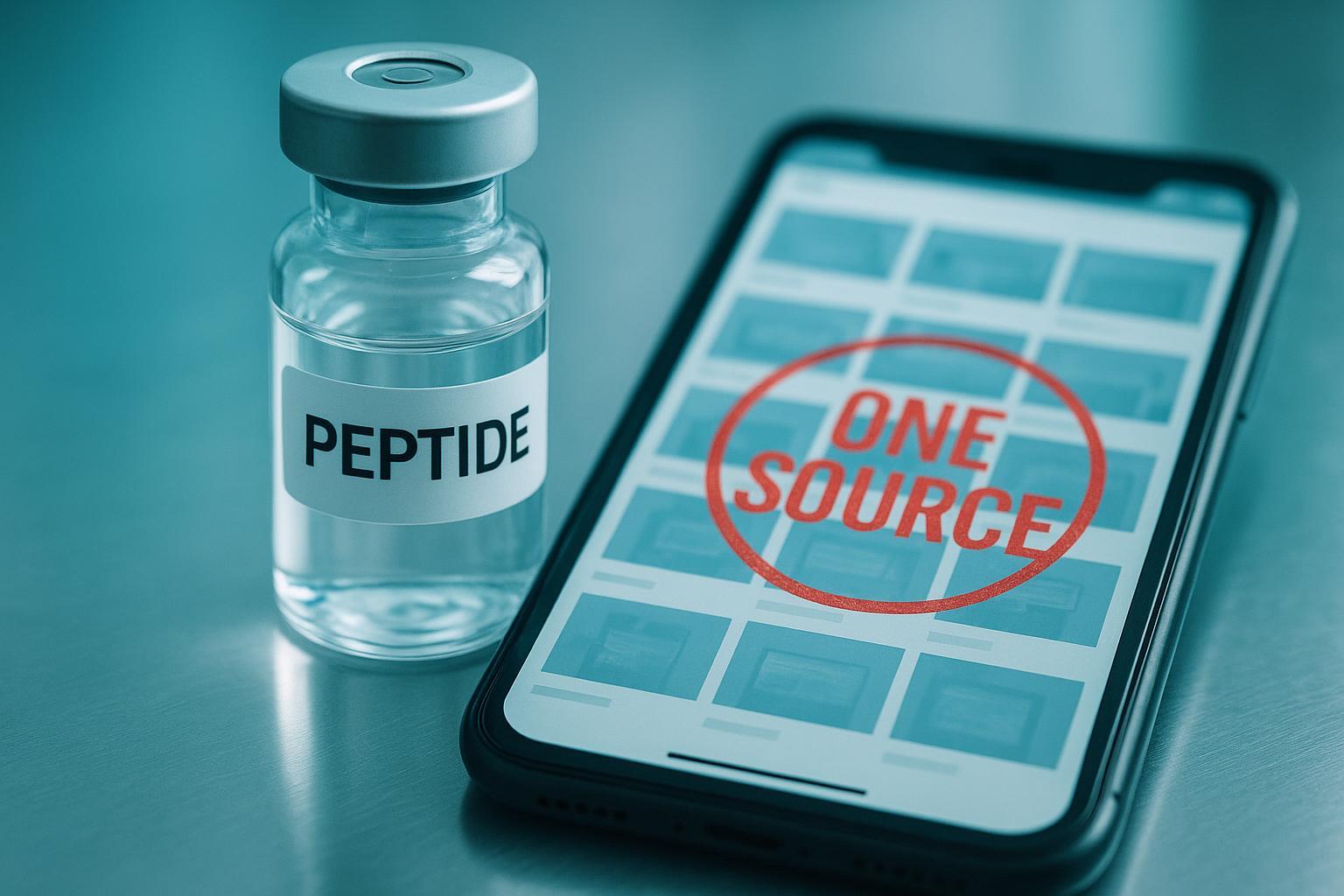
势头是真实的, 但它依赖于一个来源

BPC-157 需求确实在增长, 而且这种上升的证据比头条新闻所暗示的要少. 一个 2025 系统评价 HSS期刊 发现BPC-157 6月份谷歌搜索量创历史新高 2024, 超过 50 YouTube 和 TikTok 上百万 BPC-157 标签的视频观看次数 100,000 肽相关 Reddit 社区成员. 这是一个真实的信号, 而且它也是单一的上游来源: 自这篇评论以来发表的大多数“BPC-157 正在爆炸”文章.
临床方面的数字更加脆弱. 路透社报道了一份推理预印本,该预印本确定 1,039 患者跨越超过 15 万条记录, 确认用户数量增加了 33 倍 2020 和 2026. 该预印本尚未经过同行评审, 当单个未经审查的数据集在对话中完成如此多的工作时,这很重要.
要点: 关于 BPC-157 的势头声称反响强烈. 在重复增长数据之前, 列出其背后的研究以及它是否通过了同行评审.

所有这些都不会导致势头虚假. 这使得归因问题成为细心的读者首先要问的问题, 它提出了更难的问题: 不断增长的用户群所使用的产品,其质量声明所依据的数字并不像看上去的那样. 这个差距就是 BPC-157 表征的起点.
传统观点: 纯粹是故事的全部
主流立场很简单: 高效液相色谱法 (高效液相色谱法) 分析证书上的纯度数字 (辅酶A) 足以证明肽是研究级的. 按照这个逻辑, 99% 是终点线, 以及以上任何内容 98% 是可以互换的.
很容易理解为什么这种速记法流行起来. 纯度是一个数字, 不同供应商之间具有可比性, 可打印在产品页面上, 对于有三十秒时间做出决定的买家来说清晰可见. 它将合法的分析概念压缩为营销单元.
供应商发布的数据紧密聚集在该比例的顶部. 公开列出的 BPC-157 纯度包括 98.329%, 99.41%, 99.54%, 99.55%, 99.74%, 99.8%, 和 99.86%, 一个聚合器报告了一个平均值 99.52% 穿过 18 测试一系列 99.02% 到 99.90%. 这些数字是自我报告且不受控制的, 因此,请将它们视为营销模式的说明,而不是市场统计数据.
对于小费: 将纯度数据解读为关于很多的声明, 不作为分子的属性. 没有方法的数字, 一栏, 检测波长是某人结论的总结, 不是其背后的证据.
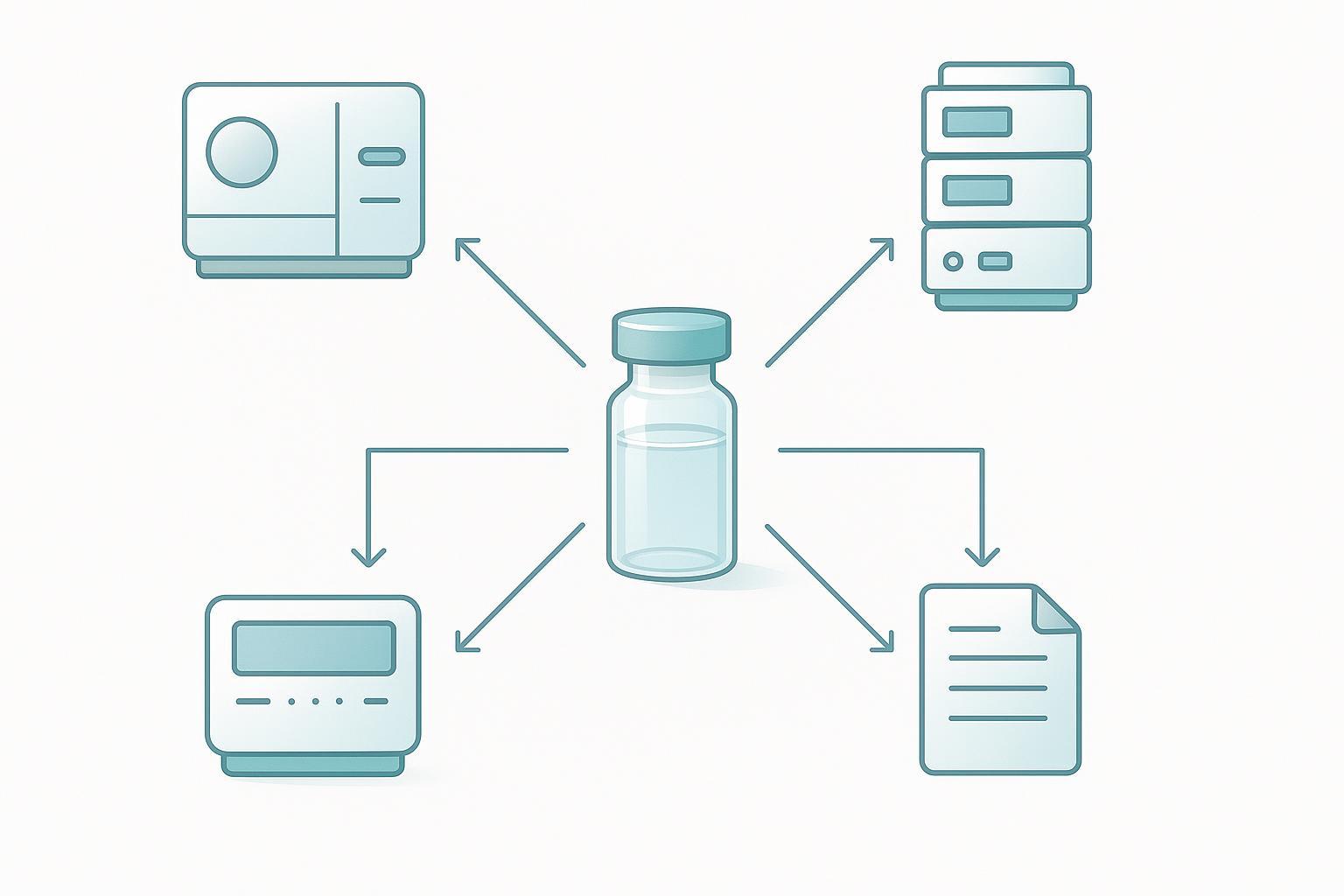
对比的是完整的CoA. 严格的方法将单个批次与指定的实验室结果联系起来,并报告方法和数值: 根据理论质量进行质谱鉴定, 带柱的 HPLC 纯度, 流动相梯度和检测波长 (通常 214 纳米), 杂质概况, 抗衡离子或盐形式, 水分或净肽含量, 带有单位和测定的内毒素数字结果, 声称不育, 加批号, 测试日期, 测试实验室, 样本标识符和授权 (如何读取肽 CoA, 2026-05-24). 这是判断单号证书的文件标准, 这就是传统观点开始分崩离析的地方.
为什么仅凭纯度无法表征 BPC-157
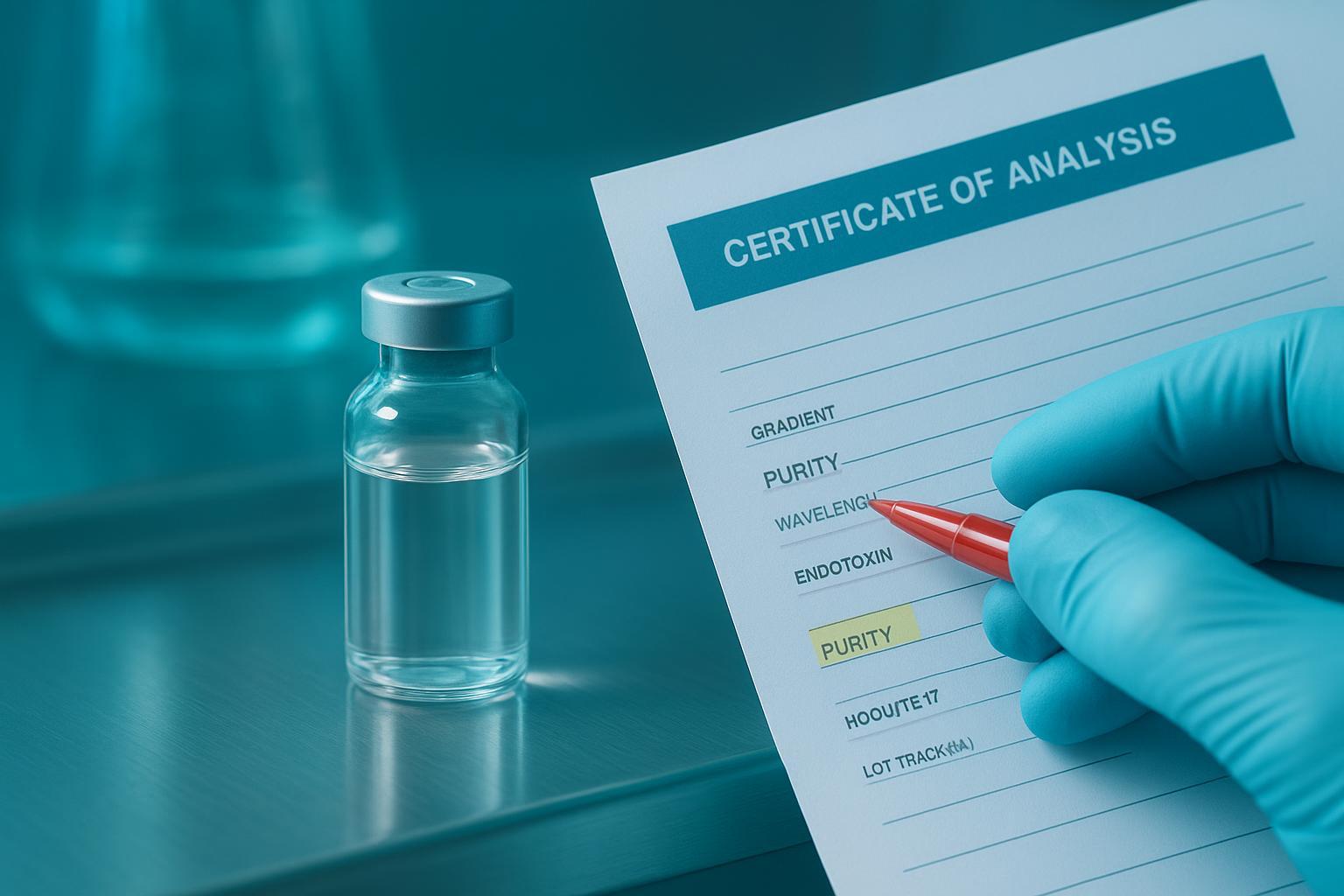
纯度百分比正好回答一个问题: 检测器在某一波长处看到的有多少是主峰. 它不会告诉您该分子是否是 BPC-157, 它是如何制作的, 它携带什么反离子, 或者小瓶里还有什么. BPC-157 characterization is a multi-axis problem, and purity is the axis most easily gamed.
Identity is the first gap. WIRED’s independent lab testing of retail peptide vials found that sampled products “did not contain the active ingredients on their labels, the BPC-157, 例如, had no BPC-157 within it,” and a second set analysed by Analytical Formulations could not be positively identified (WIRED, 九月 2026). 一个 99% figure on a vial that holds no BPC-157 is not a quality signal. It is a measurement of the wrong thing.
Method transparency is the second gap. Purity is method-dependent: the same sample can shift by a percentage point or more with changes to column, gradient and detection settings, so a figure without stated HPLC conditions cannot be compared across vendors or batches (化学验证, 2026-06-14). A defensible number states the column, the mobile-phase gradient and the detection wavelength, 通常 214 纳米. Most certificates omit all three.
The third gap is contamination. The largest published gray-market audit to date found that 41.6% of samples failed a lenient compounded-drug benchmark and 71.1% failed a stricter manufactured-drug benchmark, while roughly 2.4% contained none of the labelled peptide and 15% of the endotoxin-tested subset showed measurable bacterial endotoxin (芬里克, 2026). Peptide endotoxin testing is the only way to see that last failure mode; a purity chromatogram never will.
⚠️警告: The Finnrick audit reports its sample count inconsistently across sections, 6,441 in one place and 6,285 in another. The discrepancy is unresolved, so treat the percentages as directional rather than exact.
Purity is one axis. 身份, method transparency and contamination are the others, and a single number cannot carry them.
数据实际上显示了有关 BPC-157 表征的内容

Reframed against what regulators actually ask for, BPC-157 characterization stops being a purity contest and becomes a confirmation problem. The EMA guideline on synthetic peptides, 六月生效 2026, expects “at least two orthogonal methods … for identity” and assesses purity across size-, 收费- and hydrophobicity-based separations, and it states plainly that ICH Q3A does not apply to synthetic peptides. 正交确认, not a headline number, is the requirement.
Identity itself is a stack, 没有一次测试: intact mass plus peptide-mapping sequence coverage, 氨基酸组成分析, and chromatographic resolution of closely related sequence variants, with higher-order structure checked by circular dichroism and DSC where relevant, including oligomeric state. Endotoxin follows the same logic. 这 USP 〈85〉 endotoxin-limit framework recognizes three validated LAL-based methods, with typical gel-clot sensitivity of 0.03–0.25 EU/mL and turbidimetric or chromogenic ranges of 0.001–100 EU/mL, and sets limits from K/M, 其中 K 是 5.0 EU/kg for intravenous and 0.2 EU/kg for intrathecal products.
|
Axis |
提问它回答 |
Evidence that answers it |
Failure it catches |
|---|---|---|---|
|
身份 |
Is this the right molecule? |
Intact mass, 肽图谱, 氨基酸分析 |
Sequence variants and substitutions |
|
Purity with method transparency |
How much is the target peptide? |
Orthogonal separations across size, 收费, 疏水性 |
A single number hiding co-eluting impurities |
|
Impurity and counterion profile |
What else is present? |
Related-substance and counterion testing |
残留溶剂, 三氟乙酸, 截断序列 |
|
多肽合成 内毒素 |
Is it safe for the intended route? |
Validated LAL method 合成肽 against K/M limits |
Route-specific endotoxin exposure |
|
Documentation and traceability |
Can any of this be audited? |
Certificate of analysis, method detail, 批次记录 |
Claims that cannot be reproduced |
This five-axis model is a synthesis of published standards, not a novel claim. It simply organizes what the EMA and USP documents already require into the questions a buyer should ask before accepting a purity figure.
科学差距才是真实的故事
The bottleneck for BPC-157 is not biological plausibility. It is the absence of basic formulation science, validated pharmacokinetics, and controlled human efficacy trials, which is how the 2026 Pharmaceutics review frames the field (Mateescu et al., Pharmaceutics 18(5):625, 检索到的 2026-05-20). The same review counts the entire published human evidence base as three uncontrolled pilot studies with a combined enrollment under 30 subjects: a knee-pain series of 16 患者, of whom 12 received intra-articular BPC-157 alone; an interstitial cystitis pilot of 12 women; and an intravenous safety pilot of 2 healthy adults.
What is missing is specific. There is no pharmaceutical-grade validated formulation, no formal permeability characterization or BCS classification, no excipient-compatibility studies, unresolved solution and storage stability, undercharacterized human pharmacokinetics, and no validated human bioanalytical method. Oral bioavailability is unknown, subcutaneous pharmacokinetics are unvalidated, plasma protein binding is unpublished, and volume of distribution is unmeasured.
One registered Phase 2 随机化, 双盲, placebo-controlled hamstring-strain trial (NCT07437547) targets 120 participants and is currently recruiting. It has not reported results, so it is not completed Phase 2 evidence.
Even the bibliometric picture depends on how you count. One search returns 227 BPC-157 publications with 53 human-related records; another returns 232 papers with 54 human-tagged (PeptideDeck, BPC-157 statistics, 2026). The difference is query scope, which is exactly why any publication count needs its search string stated.
These gaps are the argument for BPC-157 characterization discipline: when the clinical literature cannot yet tell you what a preparation does in humans, the documentation of what is actually in the vial carries more weight, not less. 多肽生产
监管问题尚未解决, 未解决
服务 The July 2026 advisory vote changed the conversation, not the law. 在 2026-07-23, the Pharmacy Compounding Advisory Committee voted 8 in favour, 6 反对, 和 1 弃权, to recommend BPC-157 free base and acetate for the Section 503A bulks list, even though FDA staff briefing materials proposed the opposite outcome, 作为 麦克德莫特·威尔 & Emery’s read of the 503A bulks-list process 记录. As of September 2026, no final FDA action has followed, and the vote alone does not make BPC-157 lawfully compoundable: bulks-list placement plus notice-and-comment rulemaking are still required.
That distinction matters differently by stakeholder. Researchers should treat any supplier implying the vote legalized BPC-157 as misrepresenting the status. Procurement and QC teams should keep research peptide documentation standards tied to what is actually verifiable today, not to a pending rule. Suppliers face the same gap between recommendation and lawful status. Regulators, meanwhile, have not settled the question at all.
FDA’s own position is blunter still. BPC-157 is not FDA-approved for any indication, and no approved finished drug contains it. The agency’s safety-risk page places BPC-157 among bulk drug substances whose nominations were withdrawn, stating that compounded drugs containing it may pose immunogenicity risks for certain routes of administration and may have complexities with regard to peptide-related impurities and API characterization, and that FDA has identified no, or only limited, safety-related information for the proposed routes of administration (美国FDA, content current 2026-04-22).
如何应用这个: 特征检查表

Ask for the method, 不是数字. That single request is the fastest way to separate a supplier who understands research peptide documentation standards from one who is repeating a marketing figure, and it costs you one email.
-
Request the lot-specific CoA. Confirm the certificate of analysis for research peptides names the lot number, 测试实验室, and the test date. A document that omits any of the three cannot be tied to the material in front of you.
-
Check that identity evidence is orthogonal. A single HPLC peak is one technique answering one question. Identity is stronger when a second, independent method agrees.
-
Require the HPLC method parameters. Column, 坡度, and detection wavelength belong next to the purity value. Without them, the percentage is not reproducible.
-
Require a numeric endotoxin result with units and assay. Peptide endotoxin testing should report EU/mL for a solution at a defined working concentration, or EU/mg when normalising to peptide mass, and should document a positive product control with spike recovery (commonly cited acceptance around 50 到 200%) plus a defined maximum valid dilution, because peptides can inhibit or enhance the LAL signal (Assyro endotoxin testing guide, 检索到的 2026-09-14).
-
Confirm counterion or salt form, 水分或净肽含量, and batch traceability. TFA and 店铺 acetate salts behave differently, and net peptide content changes how you calculate a working concentration.
One option among several: a supplier operating a Class 100 cleanroom with in-house HPLC, 多发性硬化症, and sterility QC can be used to assemble a batch-specific characterization package at milligram to kilogram scale, which supports a documentation request rather than replacing it.
Measure the response, not the promise. A supplier who answers the method questions is telling you something; one who deflects to the purity figure is telling you more. Expect a documentation reply within days. A research result takes considerably longer.
注意事项: 这个论点最薄弱的地方
A rigorous characterization package still cannot make an unapproved, under-studied peptide safe or effective, and better documentation is not a substitute for clinical evidence. Nothing here changes that.
The five-axis framework is a synthesis of published standards, not a single citable protocol. The EMA guideline is a secondary summary, and the source itself says its percentage thresholds should be confirmed against the primary text. The Finnrick audit sample count is inconsistent between summaries. The nference user-growth figure comes from a preprint, and the PubMed counts are query-dependent.
The purity-first view is defensible elsewhere. For a well-characterized, approved peptide with a validated monograph, a purity figure carries far more weight than it does here, because identity, 杂质概况, and endotoxin limits have already been fixed by the monograph.
The argument is that BPC-157 characterization is necessary, not sufficient.
但高纯度数字是否仍能告诉我一些事情?
It does, but only in combination with two other pieces of information: the method that produced the figure and the identity evidence confirming what the peak actually was. 一个 99.8% result from one lab’s HPLC run is not the same claim as a 99.8% result from another, because the number depends on the gradient, the detection wavelength, and the standard curve behind it. Without the method, the figure is a measurement of something, not necessarily of BPC-157.
If you have already purchased vials on the strength of a purity figure, discarding them on assumption is not the only option. Request the underlying method documentation from the supplier and, where the material matters to your work, commission independent identity and endotoxin testing. That converts an unverified claim into a documented one, and it costs far less than restarting a study.
The PCAC vote is worth addressing directly, because it is frequently read as a green light. It was an advisory vote, it was split, and FDA staff recommended against inclusion. No final rulemaking has followed. The gap between a committee recommendation and a lawful status is the whole point.
On endotoxin, the objection is usually that it is overkill for laboratory work. Whether it is depends on route and dose, and the limit that applies is set by those two variables rather than by the setting. The reason the question gets asked at all is that 15% of the audited subset showed measurable endotoxin. That is not a reason to test everything indiscriminately; it is a reason to know which question you are answering before you decide you do not need to ask it. 关于
结论: 表征应定义研究级 BPC-157
The purity-first shorthand is a marketing convention, not an analytical standard, and BPC-157 characterization begins where that shorthand ends: orthogonal identity confirmation, method-transparent purity, impurity and counterion profiling, numeric endotoxin reporting, and lot-level documentation that a reviewer can audit.
The shift this argument calls for is already visible in how the strongest procurement teams work. They ask method questions before price questions. They treat a certificate of analysis for research peptides as a starting document rather than a closing one, and they expect suppliers to publish gradients, columns, and detection wavelengths instead of a single percentage. As that expectation spreads, research peptide documentation standards stop being a compliance afterthought and become the vocabulary of the buying conversation itself.
Picture the market that follows: 一个 99% figure with no stated gradient reads as an incomplete answer, not a selling point. That is a higher bar, and it is the one research-grade material deserves.
下一步: Review our documentation requirements and request a specification sheet before your next qualification cycle.
披露: MOL Changes publishes as a peptide vendor, so treat this analysis as one perspective within a market it participates in.