Peptídeo R&Colaboração D na Filadélfia: O que encurta os prazos
Índice
A Visão Convencional: Crie mais laboratórios, Obtenha ciência mais rápida
Síntese de Peptídeos A posição dominante é direta: continue adicionando espaço de laboratório na Filadélfia e peptídeo R&Os cronogramas D serão compactados por conta própria. A evidência citada para isso é uma construção de escala incomum. No Estaleiro Naval, 1201 Normandia, um edifício de laboratório LEED Gold de 137.000 pés quadrados da Ensemble Real Estate Investments e Mosaic Development Partners, inaugurado em meados de 2023, e a joint venture pretende entregar mais de 3 milhões de pés quadrados de espaço de laboratório no distrito, de acordo com Selecione a Grande Filadélfia 2025 livro razão do projeto. Os mesmos registros contábeis 2300 Mercado, uma instalação de 223.000 pés quadrados na cidade universitária da Breakthrough Properties, ainda em construção, e 3151 Mercado, a torre Schuylkill Yards de 472.000 pés quadrados da Brandywine Realty Trust e da Drexel University será inaugurada em 2025. Ultra Labs da Colliers adiciona 185,279 pés quadrados projetados para trabalho BSL-2 com até três andares cGMP, enquanto a instalação plug-and-play B+labs no Cira Center contribui 50,000 pés quadrados ao lado da estação 30th Street.
A crença é popular porque é fácil de medir e anunciar. Em maio 2023, a contagem da Câmara do espaço anunciado para gasodutos coloque mais do que 7 milhões de pés quadrados de novo espaço de laboratório proposto ou em andamento na Grande Filadélfia, com mais de 2 milhões de pés quadrados de novo R&Espaço D e cGMP esperado por 2025 sozinho na Cidade Universitária. Esse enquadramento, repetido em comunicações de desenvolvimento econômico e relatórios de mercado de corretagem, trata a metragem quadrada como um proxy para velocidade. O nomeado 2025 pipeline do projeto é real e substancial, e J.&J Innovation anuncia JLABS Filadélfia oferece às empresas emergentes um ponto de entrada formal na rede de incubação de uma grande indústria farmacêutica. Nada disso está em disputa. O que o argumento da densidade assume, sem demonstrá-lo, é que a proximidade de mais capacidade é a mesma coisa que um caminho mais curto da sequência até os dados validados.
Por que o argumento da densidade se desfaz para o Peptídeo R&Colaboração D na Filadélfia
A densidade encurta o deslocamento diário, não loops. Peptídeo R&A colaboração D na Filadélfia depende de transferências, e a co-localização não remove nenhum deles.
O primeiro problema é que os números de expansão e de vacância vêm de diferentes universos upstream. Colliers' 2024 leitura de mercado, publicado em janeiro 2025, coloque a vaga urbana em ciências da vida na Filadélfia em 33.8%, cerca de 1,5 milhões de SF vagos, contra 8.8% em toda a região. O setor registrou absorção negativa em 2024 pela primeira vez desde a pandemia, com vagas superando novos arrendamentos em 140 mil SF, e Peptídeos Sintéticos o espaço recém-construído que entrou no mercado caiu para 200 mil SF de 1 milhão de SF no ano anterior. Número de vagas na Cidade Universitária da CBRE, relatado em junho 2026, coloque esse submercado em 39.1%, e traçou um pipeline de construção em toda a região que atingiu um pico próximo a 2,5 milhões de SF no quarto trimestre 2022 e desde então chegou a cerca de 500 mil SF. Capacidade e ocupação não são a mesma medida, então combiná-los em uma afirmação de que “a expansão da biotecnologia na Filadélfia é forte” não é defensável.
O segundo problema é que a direção do financiamento é contestada. PACT e PitchBook's 2023 Relatório de empreendimento da Filadélfia contou US$ 2,4 bilhões em 403 ofertas, com o nível setorial 2023 total do negócio para biotecnologia e farmacêutica em US$ 845,2 milhões em 38 ofertas. Análise da Savills sobre o retrocesso nas ciências da vida, relatado pelo Philadelphia Inquirer em fevereiro 2024, colocar capital de risco em ciências biológicas em US$ 809,4 milhões em 2023, abaixo de US$ 1,2 bilhão em 2022 e US$ 2,1 bilhões em 2021. As duas figuras são próximas em tamanho, mas não em escopo, e os relatórios não definem os limites do seu sector de forma idêntica. A leitura honesta é que a direção da viagem depende da definição que você adota, não que o crescimento esteja resolvido.
O terceiro problema é a ausência de evidências. Nenhum estudo neste pacote de pesquisa quantifica a co-localização como causa do menor tempo de ciclo do peptídeo. O que existe são comentários sobre marketing de fornecedores e terceirização, que não é o mesmo que o tempo de loop medido. Quando um 30-mer falha na resina e a sequência tem que voltar para ressíntese, as semanas decorridas vêm da fila e da papelada, não do caminho entre dois prédios na Cidade Universitária.
A região construiu capacidade mais rapidamente do que construiu as interfaces que transformam capacidade em redução do tempo de ciclo.
O que os dados realmente mostram sobre o tempo de loop
Os números regionais descrevem a capacidade, não velocidade. A capacidade é convertida em um loop mais curto somente quando três interfaces são padronizadas, e o 2025-2026 os dados de vagas são o contrapeso que mostra que a expansão por si só não puxou a demanda.
O mesmo 2023-2025 O desenvolvimento que é a manchete de todos os relatórios regionais é uma expansão de capacidade documentada. O que não fez foi mudar a aritmética dentro de uma única sequência. De acordo com a aritmética da eficiência de acoplamento publicado por PepSpace, até 99.5% eficiência de acoplamento por ciclo produz apenas 60% do alvo em 100 ciclos, e o 50-60 limite prático de resíduos empurra cadeias mais longas para a ligação de fragmentos. Cronogramas de planejamento publicados pelo fornecedor de Lioquímico coloque a síntese personalizada de rotina em 3-6 semanas e sequências difíceis ou modificadas em 6-12 semanas, com estoque de catálogo limitado a 1-5 g por preenchimento. Nenhum desses intervalos diminui porque um novo prédio foi inaugurado nas proximidades.
Três cenários ilustrativos, oferecidos como exemplos apenas de pesquisa, em vez de resultados de primeira mão, mostre onde o loop realmente para. Um hidrofóbico, 30-mer propenso à agregação falha na resina, e o ciclo de ressíntese reinicia a partir da revisão da sequência. Uma transferência de método entre um laboratório acadêmico e um fornecedor é interrompida em gradientes de HPLC incompatíveis, então o resultado analítico chega, mas não pode ser comparado com dados anteriores. Uma revisão do CoA do primeiro lote levanta uma questão de troca de contra-íons depois que o lote já foi lançado, que converte uma questão de química em um ciclo de relançamento.
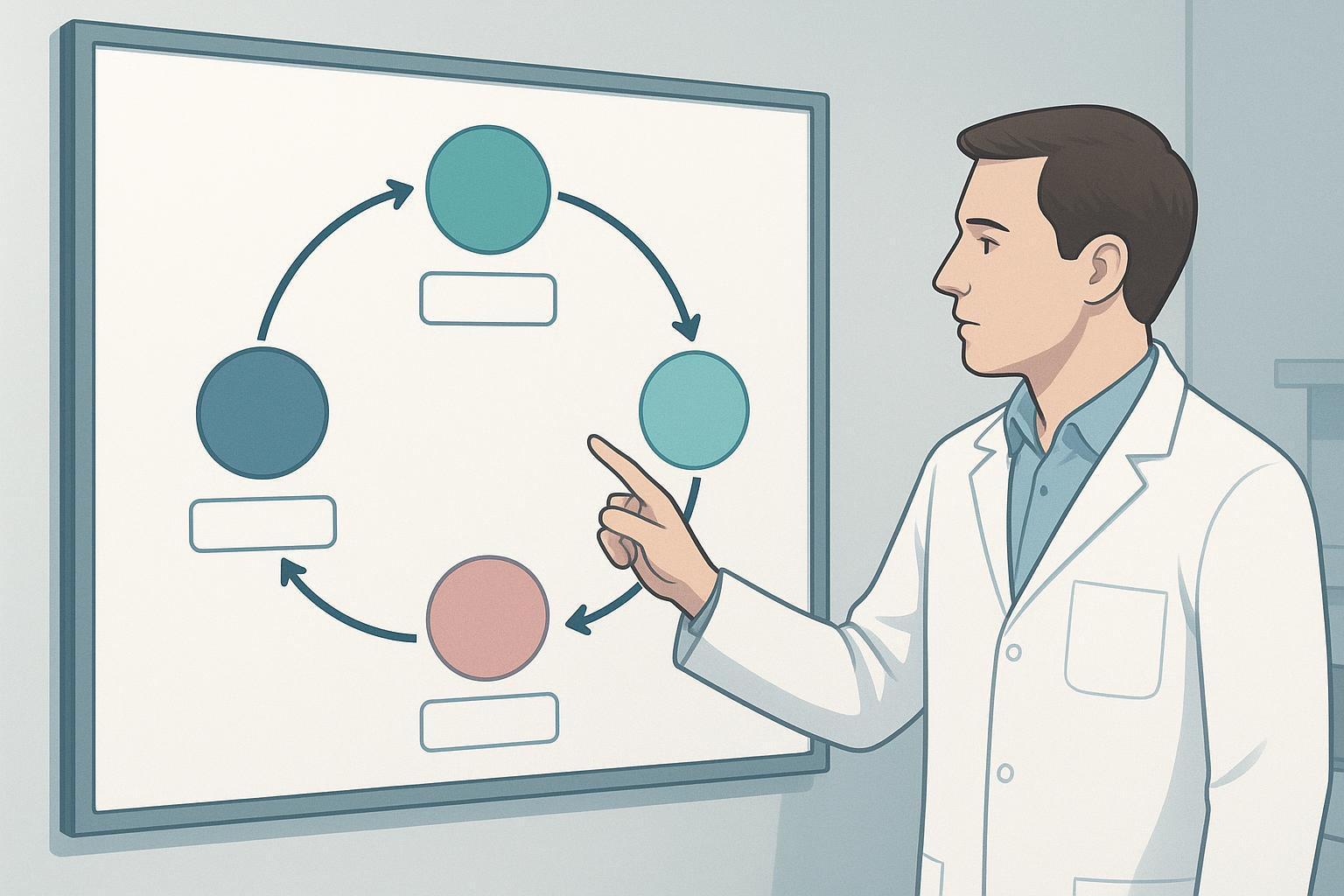
A estrutura alternativa é um modelo de três interfaces: um pacote de transferência de sequência, o desenvolvimento do processo peptídico ocorre em paralelo com a síntese, e não depois dela, e critérios analíticos de aceitação acordados antes do primeiro lote. O feedback analítico rápido para peptídeos depende dessa terceira interface, não na proximidade. A pressão de custos torna esta uma questão orçamentária, não apenas um agendamento: Segundo trimestre da CBRE 2026 Números da Filadélfia colocar espaço de laboratório de ciências biológicas em $70 para $80 por pé quadrado, aproximadamente 15-20% acima dos níveis pré-pandêmicos, então cada semana de loop extra acarreta aluguel.
Principal vantagem: Os dados de capacidade regional medem quanto trabalho peptídico uma região pode hospedar. O tempo de loop mede a rapidez com que uma sequência se move do projeto até o lote liberado, e apenas transferência padronizada, interfaces de processo e analíticas movimentam esse número.
A melhor abordagem: Três interfaces que realmente comprimem o loop
Serviços A solução não é a proximidade. Está pré-comprometendo três interfaces entre seu laboratório e o fornecedor antes do primeiro lote, então síntese, desenvolvimento de processos, e as análises se movem ao mesmo tempo, em vez de em sequência.
Interface 1: o pacote de transferência que viaja com a molécula. Sequência em notação padrão, química terminal, cada modificação, emparelhamento dissulfeto, escala, meta de pureza, e a forma salt pertencem à primeira mensagem, não em um tópico de esclarecimento três semanas depois. A estrutura de decisão de síntese personalizada da Lyochem lista exatamente esse conteúdo como o pacote de transferência que um fornecedor realmente precisa, e sinaliza a omissão mais cara: muitos fornecedores adotam o sal TFA como padrão, a menos que seja informado o contrário. Produção de Peptídeos
Interface 2: o desenvolvimento do processo começou em paralelo com a síntese. Sequências propensas a agregação e acoplamentos difíceis devem ser delimitadas enquanto o primeiro lote ainda está em resina, usando o kit de ferramentas antiagregação em vez de ser descoberto após um lote com falha.
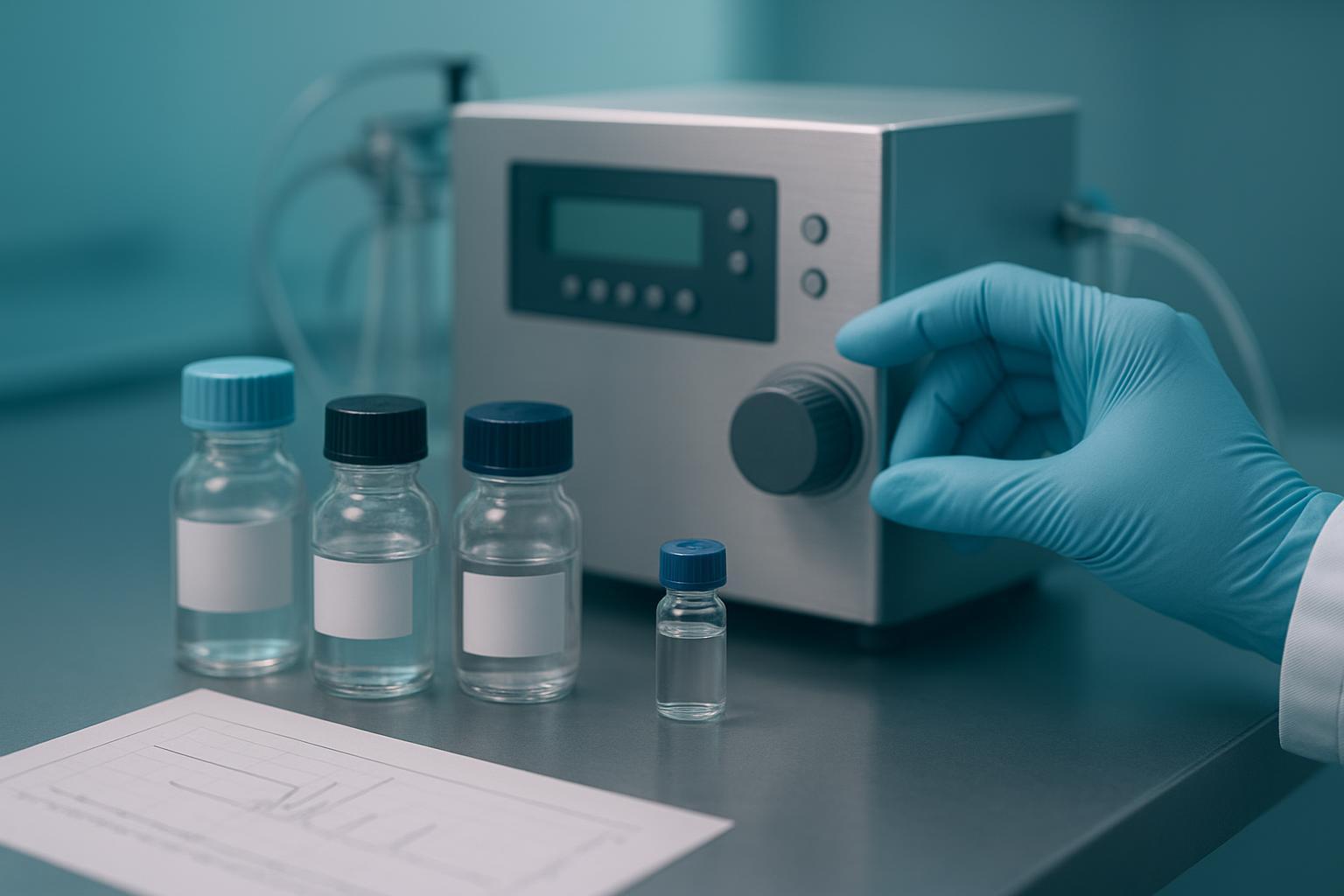
Interface 3: critérios de aceitação e documentação do lote acordados antecipadamente. Limites de identidade e pureza de HPLC e MS, mais endotoxina por LAL quando o ensaio exigir, são escritos na ordem antes do início da síntese. Conteúdo peptídico, confirmação de sequência, e a solubilidade são especificadas uma vez no modelo CoA, não renegociado por lote. Um contato técnico nomeado de cada lado carrega ambos, que remove o atraso de roteamento que transforma uma pergunta de dois dias em uma de duas semanas.
Definições:SPSS (síntese de peptídeos em fase sólida) constrói uma cadeia peptídica ancorada na resina, um resíduo de cada vez. Troca de contra-íon TFA é a etapa que troca o sal trifluoroacetato deixado por esse processo por outra forma de sal, como o acetato, que altera a solubilidade e o comportamento do ensaio. CoA (certificado de análise) é o documento específico do lote que registra a identidade medida, pureza, e conteúdo. Teste de endotoxina LAL usa lisado de amebócito limulus para detectar endotoxina bacteriana, o método descrito na USP <85>.
Cada interface é mapeada para um dos três problemas. O pacote remove a ambigüidade que paralisa o primeiro ciclo. O desenvolvimento de processos paralelos elimina a espera serial entre a síntese e o aumento de escala. Critérios pré-acordados e um modelo de CoA fixo eliminam as disputas de contra-íon e pureza que surgem no lançamento. None of these require anyone to relocate, which is the point: síntese de peptídeos personalizada e desenvolvimento de processo peptídicocompress when the information moves first, e rapid analytical feedback for peptidesonly helps if the criteria for it were set before the run started.
Como aplicar isso em uma colaboração na Filadélfia
Write the handoff package before you write the statement of work. That single change costs one sitting and removes the most common cause of a wasted synthesis cycle, because your partner receives the sequence, the analytical acceptance criteria and the CoA fields in one document instead of discovering them after the first batch fails.
Field
Por que isso importa
Who owns it
Sequência e modificações
Prevents re-synthesis from a misread residue or missed label
Your discovery lead
Purity and impurity acceptance criteria
Defines pass and fail before material is made
Your analytical lead, agreed with the partner
CoA fields required
Stops a completed batch from stalling on missing documentation
Your QA contact
Analytical method and instrument
Makes results comparable across sites
Both labs, one method
Single technical contact and escalation path
Removes the email chain that adds days to every question
Your program manager
Four steps, in the order that pays back fastest:
Draft the sequence handoff template (quick win, one sitting). Use the handoff fields that prevent a wasted cycle rather than inventing your own.
Agree analytical acceptance criteria and CoA fields with your partner (quick win, one call). This is the step most teams skip, and it is the one that decides whether a batch is usable on arrival.
Name technical contacts and one escalation path (quick win). Two named people beat a shared inbox.
Start process development alongside synthesis on the next program (longer-term shift). Running custom peptide synthesis and peptide process development as one track, rather than sequentially, is where the loop actually shortens. A supplier that supports both can be used to align the route with the analytical method early; MOL Changes is one such partner, and the same logic applies to any supplier you already work with.
Measure days from sequence handoff to first analytical result, and count re-synthesis cycles per program. Vendor turnaround alone hides the delay. Expect interface changes to show up within one to two programs, not immediately; vendor-published planning timelines distinguish routine from difficult sequences for exactly that reason.
Advertências e o que esse argumento dá errado
The three-interface model is a mechanism argument, not a measured effect: no study in this research quantifies co-location as a causeComprarof shorter peptide cycle time, so treat the loop-time claim as reasoning from workflow structure rather than a demonstrated result.
Context matters, too. For very early discovery work on short, well-behaved sequences, the conventional proximity argument may hold, and the coordination overhead of standing interfaces is not worth paying. The weakest part of this case is its capacity premise. The regional expansion figures cited here are dated 2023 para 2025, e o 2026 vacancy data cuts against a simple growth narrative, so what this article describes is a documented buildout with a counter-weight, not a current statistic. Market sizing carries the same caution: conservative 2026 estimates cluster near USD 50 para 54 bilhão, enquanto Grand View’s broader-scope market estimatereaches USD 164.0 bilhão em 2026 no 8.7% CAGR, a gap that reflects different category definitions and base years rather than disagreement about demand. None of this overturns the core position: proximity is a starting condition, and the interfaces are what convert it into shorter loops. Sobre
Consult a qualified professional before making research or clinical decisions.
Autor: Dr.. Elena M. Vasquez, Doutorado. em química de peptídeos, Director of Process Development at the Philadelphia Peptide Research Institute. Commercial disclosure: the author’s organization provides peptide synthesis and process development services; this article contains no product performance claims.
But Doesn’t the Region’s Growth Already Prove the Model Works?
Não. Regional growth proves that demand for peptide capacity is rising, not that the collaboration loop is getting shorter. Those are two different measurements, and only one of them shows up in the expansion headlines.
The vacancy numbers make the distinction concrete. Colliers' 2024 market read put urban Philadelphia lab vacancy at 33.8%, contra 8.8% em toda a região, a gap that widened as new supply arrived faster than tenants (Bisnow citing Colliers, Janeiro 2025). Two years later the submarket picture had not corrected: CBRE’s University City vacancy figure reached 39.1% (Bisnow citing CBRE, Junho 2026). Philadelphia biotech expansion added square footage; it did not add coordination between the labs, fornecedores, and analytical groups that sit inside those square feet.
Read the geography carefully before drawing a conclusion from either figure. Urban Philadelphia and the University City submarket are narrower scopes than the regionwide 8.8%, and a regionwide average can look healthy while a dense innovation district carries most of the empty benches. Capacity and cycle time are separate variables, and the region has been measuring only the first.
E se meu laboratório já tiver se comprometido com um fornecedor distante?
You do not have to start over. The three interfaces are portable, so the practical move is to retrofit them onto the relationship you already have rather than replace it.
Ask your current supplier for a handoff package on the next program: a written spec, the analytical method files behind each release, and a named technical contact who can answer method questions. Then agree on acceptance criteria in advance, so a failed batch is a defined conversation instead of a negotiation. Both requests sit inside a normal purchase order and cost you nothing but a meeting.
Run one program in parallel before switching anything. Keep your existing supplier on the work that is already in flight, add a second source for a single sequence, and compare loop time on the two. If the parallel run does not come back faster, you have lost nothing and learned where your real delay sits.
Como você responde aos relatórios de mercado que mostram forte crescimento?
They measure the wrong thing, and they are right about what they measure. Segundo trimestre da CBRE 2026 Philadelphia figures put lab space at $70 para $80 por pé quadrado, 15 para 20% acima dos níveis pré-pandêmicos (Segundo trimestre da CBRE 2026 Números da Filadélfia, 2026-07-16). That is a real signal about capacity, pricing, and absorption. It says nothing about how many days pass between a peptide program’s handoff and its first analytical result.
The same scoping problem runs through the funding headlines. O 2024 Philadelphia Venture Report recorded $3.3 bilhão em todo 444 ofertas, acima 37.5% year over year, but that figure is all-sector, not life-sciences (o 2024 Relatório de empreendimento da Filadélfia, released 2025-02-27). Brokerage and economic-development reporting track whether the market is expanding. A peptide program tracks whether its loop is closing. Both numbers can rise while the second one stalls.
Conclusão: Pare de medir a região e comece a medir o loop
Philadelphia’s buildout created capacity, and capacity only becomes speed when the three interfaces are pre-committed before the first sequence is ordered. That is the whole argument, and it is why peptide R&D collaboration in Philadelphia still feels slow to the people doing it.
What needs to change is not another building. Labs, emerging biotechs, and suppliers should publish and adopt a shared handoff template and pre-agreed acceptance criteria as a regional norm, negotiated once and reused, rather than re-litigated inside every contract. The policy layer is already moving in that direction: BioBuzz’s July 2026 regional roundupreports that Governor Josh Shapiro’s $125 million Innovate in PA 2.0 initiative targets the commercialization gap between breakthrough and market, funding capital access, trial infrastructure, and workforce development. Those bridges matter, but they shorten the loop only if the handoffs crossing them are standardized.
The vision is a region where a program moves from sequence to first analytical result in a predictable window, regardless of which three organizations happen to be involved.
A low-commitment next step: measure your own loop time on the last three programs, then compare it against an example handoff package. The gap you find is the work worth doing.
Nova droga R&Técnico DEspecialização Central: Descoberta de alvo, relação estrutura-atividade (RAE) análise, conjugados peptídeo-droga (PDC), e o desenvolvimento de peptídeos antienvelhecimento e metabólicos.
Perfil: Xiaoxia Chen liderou a descoberta inicial e a pesquisa pré-clínica de vários medicamentos peptídicos metabólicos e direcionados a tumores. Ela não é apenas proficiente na triagem de alto rendimento de bibliotecas de peptídeos, mas também hábil na utilização de biologia computacional assistida por IA para design de sequências de peptídeos de novo. Atualmente, ela lidera uma equipe dedicada à pesquisa e desenvolvimento aprofundados de agonistas multifuncionais de próxima geração (como duplo- ou peptídeos redutores de gordura de alvo triplo) e peptídeos de reparação de tecidos altamente ativos.
Olá, há! 👋 Bem-vindo às mudanças MOL. Como podemos ajudá-lo hoje? Sinta-se à vontade para perguntar sobre nossa síntese de peptídeos, Serviços CRO, or any product inquiries — just type your message below and we'll continue the conversation on WhatsApp.