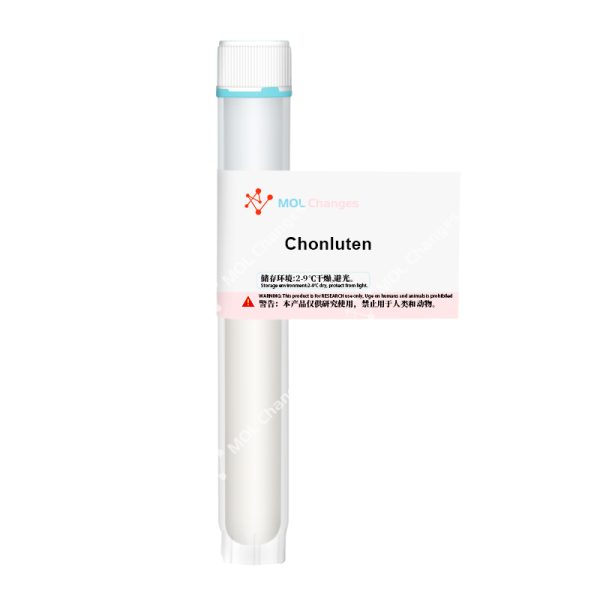
تشونلوتين, possessing the amino acid sequence H-Glu-Asp-Gly-OH, is a bioactive peptide. Immunomodulatory effects and anti-inflammatory activity are well documented for this peptide.
Its origin as a smaller fragment mimicking key active portions of larger proteins allows for highly specific targeting of certain cell types; exceptional efficiency in this regard surpasses that of the parent protein itself.
Studies have shown Chonluten to suppress tumor necrosis factor (تنف) الإنتاج داخل monocytes exposed to pro-inflammatory bacterial عديدات السكاريد الدهنية (LPS) (في المختبر), essentially eliminating the immediate inflammatory response.
Effective intervention of intracellular signaling pathways associated with inflammatory mediators is the primary mechanism; reduction of subsequently formed pro-inflammatory factors follows.
A negative feedback loop is established, limiting both intensity and duration of any given inflammatory reaction – excessive tissue damage being the end result previously seen without such regulation.
Repairing and protecting respiratory epithelial الخلايا, by reducing intercellular gaps, is another capability Chonluten exhibits; maintenance of epithelial integrity is vital.
Pathogen and harmful substance penetration is reduced, mucosal repair accelerated.
إجمالي, all of the above make Chonluten a promising candidate for future anti-inflammatory based therapies.
تسلسل
H-غلو-آسب-غلي-أوه
رقم كاس
/
الصيغة الجزيئية
C11H17N3O8
الوزن الجزيئي
319.27
Research Of Chonluten Peptide
1.Anti-inflammatory Factor Suppression
This is the more directly measurable research outcome.
Intense immune cell stimulation is what initially causes inflammation; constant or repeated production of said pro-inflammatory factors keeps the process going.
Intracellular signaling (كما ذكر أعلاه) is where Chonluten acts.
Core pathways, NF-κB being the prime example, are inhibited.
mitogen-activated protein kinase/MAPK may also be involved.
Suppressing these factors is and remains, to me at least, the most important and currently unquantified aspect of Chonluten’s anti-inflammatory action.
2.Enhancing and Repairing Epithelial Barrier Function
Research indicates Chonluten specifically targets epithelial cells.
Promotion of the expression and subsequent proper assembly of key proteins within تقاطعات ضيقة is its primary mechanism.
Strengthening these structural junctions significantly reduces epithelial نفاذية; effective blocking of trans-epithelial penetration of pathogens, allergens, and various harmful substances is a direct result.
معًا, epithelial cell migration and proliferation are stimulated, aiding in the more rapid repair of any mucosal barrier previously damaged by inflammation, infection, or simple physical injury.
This action complements its anti-inflammatory effects – the reinforced barrier itself reduces externally triggered forms of inflammation, while the smaller, more controlled inflammation allows for (إضافي) بصلح; a virtuous cycle is formed.
3.Lung Repair and Chronic Respiratory Regulation
Chonluten shows particular promise in treating chronic respiratory diseases.
Bronchitis, various forms of asthma, و مرض الانسداد الرئوي المزمن are all within its potential area of effectiveness.
Reducing constant or near-constant inflammation and actively pushing lung tissue towards repair, is what leads to improvements in all aspects of lung function.
شهادة توثيق البرامج
HPLC
آنسة