Kedu ụdị nrụpụta siRNA maka mmepụta peptide nwere ike na enweghị ike ibiri
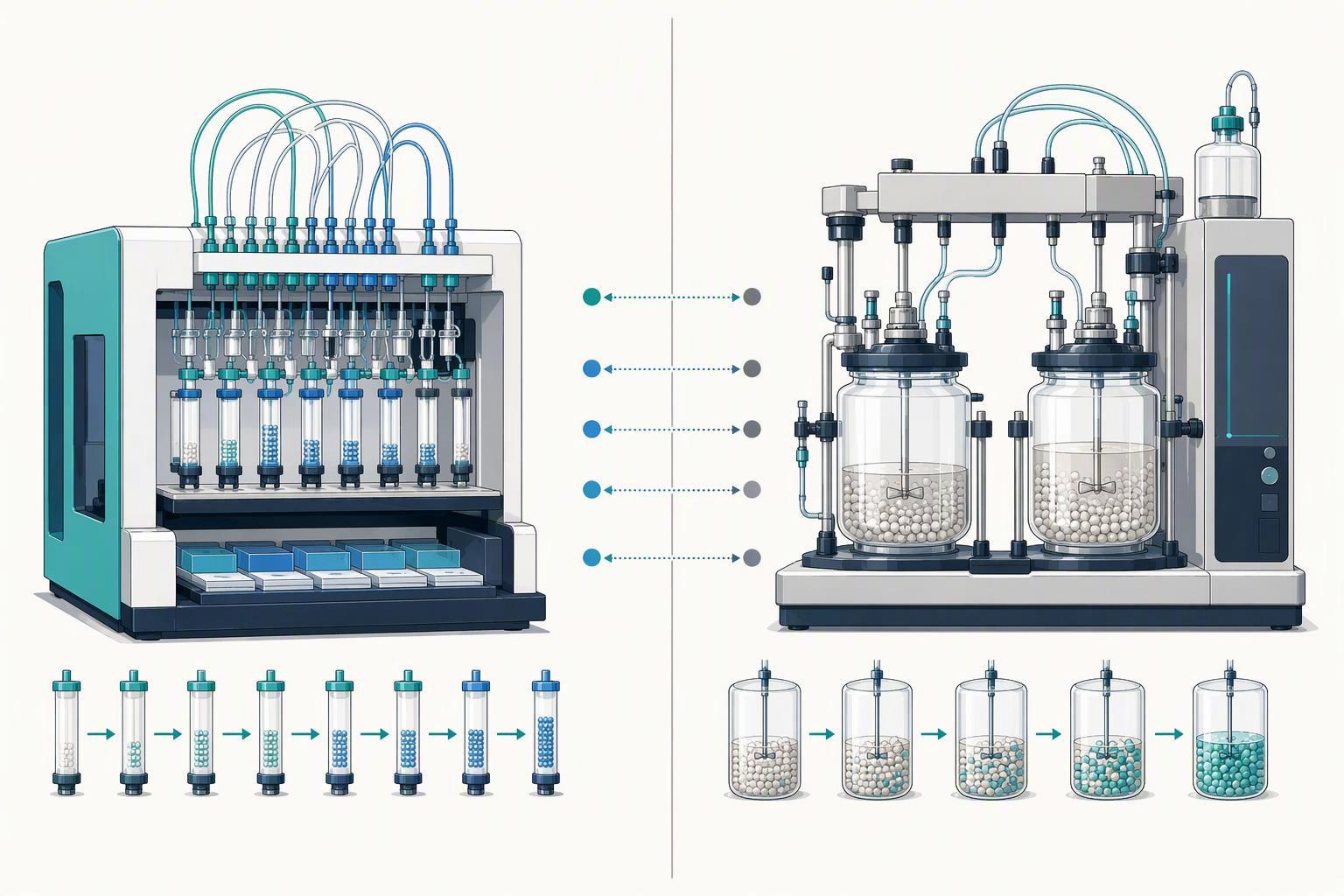
Ọ bụrụ na mmemme peptide gị eruola ebe nlebawanye na ibu adịghị ọcha tolitere omume bench, ụdị nrụpụta siRNA maka mmepụta peptide kwesịrị ịgụ nke ọma, na kwesịrị ịgụ nke ọma. Ihe omumu ihe omumu nke Bachem ekpughere nkenke-na-ligation na-akọwa iwu iberibe RNA dị mkpụmkpụ na ijikọ ha na enzymatic kama ịchịkọta otu ogologo yinye., n'echiche akụ na ụba ekwuputara maka usoro nchacha ọcha dị ntakịrị ma dị mfe, obere ihe mgbaze ojiji, obere mkpofu na ọnụ ahịa dị ala na gram ruo ọtụtụ kilogram (Bachem, ewepụtara 2026-09-21).
Iberibe-na-ligation pụtara ichikota iberibe iche iche wee jikọta ha, kama itolite otu yinye na-aga n'ihu. Mkpirisi n-1 bụ yinye na-efu otu foduru, na ịgba ọsọ bụ mfu nke nhazi nke etiti etiti chiral, ha abụọ na-esiwanye ike ịchịkwa ka ụdọ na-agbatị ogologo. Ntụle dabara adaba maka ebumnuche pụtara nnwale dabara na ihe mkpebi chọrọ, ọ bụghị na panel a kapịrị ọnụ.
Nke a bụ nkọwa nke ihe ọha, ọ bụghị a peptide uzommeputa. Nrụpụta nucleic-acid megide kemịkalụ peptide gụnyere njikọ dị iche iche, nsogbu nchekwa-otu na stereochemistry, ya mere akụkụ a na-ebugharị bụ nhazi usoro, ọ bụghị kemistri.
Ihe ụzọ siRNA Bachem ekpughere na-akọwa n'ezie
Bachem ekpughere ihe ọmụmụ ibe-na-ligation, soro Codexis na-eji vutrisiran dị ka siRNA ihe nlereanya, na-akọwa iwulite molekul ahụ site na mkpirisi RNA ndị a na-emepụta iche wee sonye na enzymatically.. Ụlọ ọrụ ahụ na-akọ na ụzọ a nwere ike "ịmepụta arụmọrụ dị elu, mee ka ọ dị ọcha, ma kwado mmepụta GMP multi-kilogram," na àgwà ngwaahịa ọ na-akọwa dị ka tụnyere omenala njikọ (Ọmụmụ ihe ọmụmụ Bachem, ewepụtara 2026-09-21).

Bachem n'onwe ya nhazi nke enzymatic ligation na-enye echiche akụ na ụba: ijikọ obere iberibe kama ịmepụta otu ogologo yinye na-enye "mkpụrụ dị elu na ibu dị ọcha belata,” karịsịa n'ọtụtụ buru ibu (Ụlọ ihe ọmụma Bachem, ewepụtara 2026-03-24).
Oke abụọ dị mkpa. Nke a bụ nkọwa nke onye na-ere ahịa: ibe na-ekwu enweghị mkpụrụ, ọnụ ọgụgụ dị ọcha ma ọ bụ ọnụ ahịa, ya mere enweghị ike ịlele arụmọrụ na ọnụ ahịa ngwaahịa na ọnụọgụ ndị ebipụtara. Na ngosi na-anọdụ n'ime a sara mbara n'ọnọdu, ebe Bachem's oligonucleotide arụpụta akwụkwọ na-egosi ya dị ka onye mmekọ gafee ma peptides na oligonucleotides., ya na saịtị oligonucleotide GMP raara onwe ya nye yana batches GMP mbụ n'ime ọnwa itoolu nke mmalite (Bachem oligonucleotide NCE ibe, ewepụtara 2026-07-30).
Ebe ntụnyere na-agbaji
Ihe mgbagha abụọ a na-emepụta ihe na-agbanwe na kemịkalụ n'onwe ya. A na-ewu oligonucleotides nucleotide site nucleotide sitere na 5′-DMT-nucleoside-3′-phosphoramidites echedoro., ịnya igwe site na mmebi, njikọ, oxidation ma ọ bụ sulfurization, na capping. A na-ewulite peptide amino acid site na amino acid site na Fmoc ma ọ bụ Boc synthesis siri ike, na ntughari ntughari na njikọta. Ntụnyere chemistry n'akụkụ n'akụkụ na RSC Green Chemistry 2023 nyochaa na-ekwu na ụzọ abụọ ahụ adabaghị ozugbo na-enweghị nhazi otu nchekwa pụrụ iche.
Taxonomies na-adịghị ọcha na-adị iche dịka nke ọma. Echiche nyocha nke oligonucleotide nke FDA na-akọwa adịghị ọcha oligonucleotide dị ka ụdị ogologo ogologo (ndị mkpụmkpụ, ndị ogologo oge, n-1) and phosphorus-stereochemistry variants such as phosphorothioate diastereomers, with full-length and near-full-length species that chromatography does not remove. The EMA guideline on synthetic peptides instead centers deletions, truncations, ịgba ọsọ, gafere- and under-coupling, dimers and aggregates, and residual reagents, solvents and counterions.
|
Akụkụ |
Oligonucleotide synthesis |
Of Peptides Peptide SPPS |
|---|---|---|
|
Building block |
5′-DMT nucleoside-3′-phosphoramidite |
Fmoc- or Boc-protected amino acid |
|
Cycle |
Polypeptide Production Detritylation, njikọ, oxidation/sulfurization, capping |
Deprotection, njikọ, Preparation Of Peptides wash |
|
Dominant impurities |
Shortmers, ndị ogologo oge, n-1, phosphorothioate diastereomers |
Deletions, truncations, epimers, aggregates, counterions |
|
Hard-to-remove species |
Full-length and near-full-length impurities |
Sequence-dependent aggregates |
Peptides also carry chiral centers absent from the nucleotide backbone, and aggregation is sequence-dependent rather than predictable. Dị ka peptide.com’s SPPS side-reaction reference explains, resin aggregation causes incomplete deprotection and coupling, is signalled by failure of the resin to swell, and cannot be predicted reliably from sequence, though hydrophobic sequences are more prone and it is unlikely before residue 5-6 or after residue 21.
Ụkpụrụ anọ na-enyefe
Four things carry over from oligonucleotide manufacturing: modular process design for peptide synthesis, mechanism-level impurity control, staged scale-up planning, and fit-for-purpose analytics for peptide manufacturing. Each is a principle, not a copied protocol. Solid Phase Organic Synthesis
Modular process design. The available building-block toolbox already includes standardized protected amino acids, pseudoprolines and Dmb or isoacyl dipeptides, alongside deliberate resin and linker selection (Merck/Novabiochem). Module-based plants reuse qualified blocks to add capacity with lower qualification risk.
Impurity control at the mechanism. Control what generates the impurity, not the peak on the chromatogram. The SPPS side-reaction reference lists mitigations that transfer as principles: DBU deprotection, NMP or DMSO cosolvent, higher coupling temperature, and hydrogen-bond-disrupting elements such as pseudoprolines and Hmb or Dmb backbone protection (peptide.com, 2019-10-14).
Scale-up planning. Confirm route behavior, impurity trend, and downstream performance at small scale before committing to larger equipment. The exponential yield-decay relationship explains why: na 99% njikọta arụmọrụ, full-length yield falls to roughly 82% emechaa 20 couplings, 67% emechaa 40, na 45% emechaa 80 (Peptides Codex, 2026-09-14).
Fit-for-purpose analytics. I Q2(R2) validation expectations cover specificity and discrimination, nkenke, izi ezi, linearity na oke, robustness, and a quantitation limit at or below the reporting threshold; where authentic impurities are unavailable, specificity may be shown with a second well-characterized orthogonal procedure (I Q2(R2), 2023-11-30, error correction 2025).
Kedu ihe nke a pụtara maka ndị mmepe peptide, Nhọrọ CDMO na usoro iheomume
Maka ndị mmepe peptide, the four principles change one thing above all: peptide impurity control and scale-up planning become a control-strategy problem rather than a purification problem. ICH Q11’s control-strategy expectations require a science- and risk-based strategy that justifies starting-material specifications, controls starting-material impurities, and demonstrates process reproducibility against predefined quality attributes. Applied to a peptide route, that means impurity trends are tracked from route confirmation onward, not discovered at release testing.
For CDMO selection, the same logic converts into questions rather than claims. Ask a candidate to describe the staged supply-agreement structure it uses: small-scale technical confirmation first, impurity trend data second, downstream performance third, commercial Peptide Synthesis scale last. CDMO-practice disclosures, including Polypeptide Group’s strategy reporting and the 2026 DCAT CDMO review, describe this staged pattern as the norm for long-term agreements, which is why it works as an evaluation lens rather than a vendor promise.
Timelines follow from that staging. A program that confirms route and analytics before committing to commercial scale absorbs more cost early and less rework later; one that skips confirmation compresses the front end and pays at scale-up. Nke Peptides
Maka ndụmọdụ: Ask for the staged confirmation plan in writing before signing. MOL Changes supports this kind of front-loaded planning through process development and scale-up services, from milligrams to kilograms.
Nzọụkwụ ọzọ
If the transferability question is now the live one for your program, the useful next step is a technical feasibility assessment rather than a commercial conversation. Ask for documentation covering three things: route-confirmation data for the sequence you actually intend to scale, impurity-profile reporting that shows how the profile is tracked across batches rather than reported as a single release number, and the release-testing documentation behind the analytical methods. Those three items let your CMC team judge fit before any supply commitment is discussed.
MOL Changes provides custom peptide synthesis, process development and quality control for programs moving from milligrams to kilograms, and can supply that documentation package on request.
Ajụjụ a na-ajụkarị
Chemistry iberibe-na-ligation ọ na-emetụta n'ezie na peptides?
Akụkụ, and the distinction matters. Native chemical ligation and its variants were developed for peptide chemistry before oligonucleotide synthesis borrowed the concept, so the underlying idea is not foreign to peptides at all. What does not carry over is the scale of the win. The side-by-side chemistry comparison shows that oligonucleotide assembly gains far more from switching to a modular route than peptide assembly does, because peptide couplings already run at high efficiency on solid support. Treat ligation as a targeted tool for sequences that resist stepwise synthesis, not as a replacement platform.
Anyị etinyelarị ụzọ n'ụzọ SPPS. Gịnị na-agbanwe?
Nothing about the chemistry, and a great deal about the planning. The available building-block toolbox for peptides is already broad, so the practical move is to keep SPPS and apply the modular thinking to how you stage development: confirm the route early, track impurity trends as a distinct workstream, and defer scale commitment until the trend is stable. Programs that treat impurity control as a late-stage cleanup problem rather than a running measurement tend to discover the hard numbers at the worst possible time.
Ego ole nyocha na-arụ ọrụ dị mkpa n'ezie?
More than most early programs budget for, and less than a fully validated commercial panel. I Q2(R2) validation expectations give you the framework: decide which methods are stability-indicating and which are merely in-process checks, then validate each to the standard its decision actually requires. Running a full release panel on every in-process sample is overengineering. Running nothing until the first scale batch is the opposite mistake.
The transferable elements are staged route confirmation, impurity tracking and defined analytical decisions. RNA fragment preparation and enzymatic ligation involve different substrates, enzyme requirements and impurity mechanisms from peptide synthesis. Demonstrate a peptide-specific route before borrowing process-efficiency or scale-up claims.
Mmechi
The siRNA model’s value to peptide production is architectural, ọ bụghị kemịkalụ. What transfers is the discipline of confirming a route in stages, controlling impurities at the mechanism level, and matching analytics to the decision they inform. What does not transfer is the synthesis chemistry itself, and any plan that treats oligonucleotide process knowledge as directly portable will misallocate effort.
If staged confirmation and mechanism-level impurity control become normal practice in peptide programs, the practical effects show up in three places. Developers stop discovering late that a route cannot hold its impurity profile at scale. CDMO selection shifts from comparing headline purity numbers to comparing how a supplier confirms a route before committing to it. Program timelines absorb more cost early and less rework later, which is a better trade for any peptide heading toward commercial supply.
The next step is not a technology decision. It is a scoping one: before the next scale-up campaign, write down which impurities your current route can and cannot control, and at what point in the process you would know. That list is what makes a technical feasibility conversation useful, whether you have it internally or with a manufacturing partner.