AI ја исполнува клупата: План за модел за соработка со AI CRO пептид
Generative artificial intelligence has fundamentally altered the velocity of target discovery and molecular design in life sciences. A prominent landmark in this transition occurred when Insilico Medicine showcased its generative biologics capability at its research hub, demonstrating the computational generation of over 5,000 novel peptide candidates within a single 72-hour design cycle using its Biology42 engine. This operational milestone, anchored at the Masdar City AI and quantum computing center, highlights a profound shift in modern drug discovery: the primary bottleneck is no longer how fast algorithms can generate candidate sequences, but how quickly physical chemistry wet labs can synthesize, purify, analyze, and validate those digital predictions.
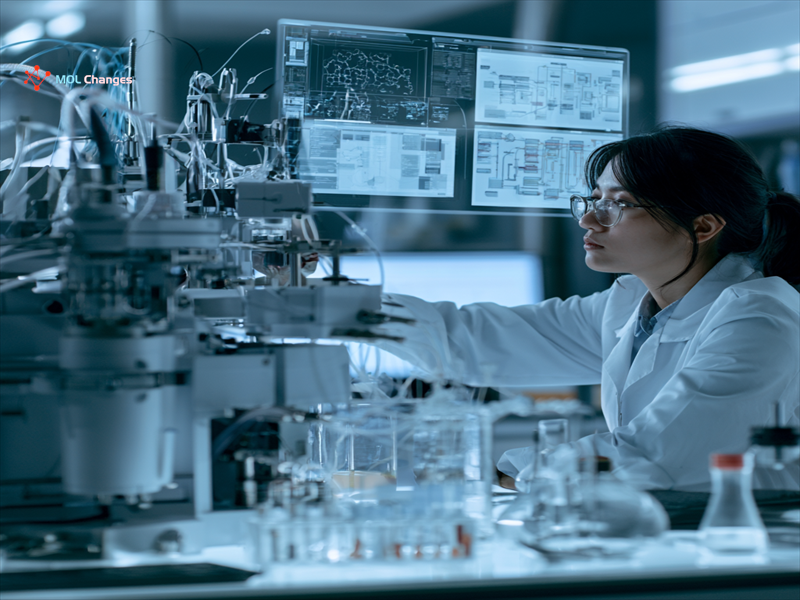
When generative models output thousands of candidate FASTA sequences or SMILES strings in days, traditional contract research organization (CRO) procurement models quickly stall. Стандарден 3- to 5-week synthesis turnaround times create massive backlogs, causing expensive computational pipelines to sit idle awaiting physical binding data. Понатаму, manual data re-entry, unstandardized quality control (КК) известување, and hidden physicochemical artifacts—such as residual trifluoroacetic acid (TFA) cytotoxicity or net peptide content miscalculations—introduce noise that degrades machine learning model retraining.
To capture the full value of generative biologics, biopharma R&D leaders must establish a dedicated AI CRO peptide collaboration model. This operational framework bridges the gap between high-throughput in silico predictions and physical bench validation through standardized data exchange protocols, tiered turnaround SLAs, and stringent analytical quality control.

The Generative Bottleneck: Why Computational Output Outpaces Physical Validation
The modern drug discovery pipeline operates on a continuous Design-Build-Test-Learn (DBTL) feedback loop. In traditional small-molecule and peptide discovery, the “Design” phase was rate-limiting, requiring months of manual medicinal chemistry design, computational docking, and structure-activity relationship (SAR) mapping.
Generative AI inverted this dynamic. Modern deep learning architectures—including diffusion models, transformer-based protein language models, and reinforcement learning algorithms—can evaluate billions of virtual conformers and output thousands of optimized peptide sequences in hours. As illustrated in Insilico Medicine’s generative biologics benchmark, computational engines can filter virtual libraries down to top-ranked candidates based on predicted binding affinity, растворливост, and metabolic stability.

Клуч за носење: Generative algorithms have compressed the “Design” phase from months to hours. Следствено, the rate-limiting step in therapeutic peptide discovery has shifted entirely to the “Build-Test” interface—specifically physical solid-phase peptide synthesis (SPSS), liquid-phase purification, and high-throughput bioanalytical validation.
Сепак, physical molecules remain bound by the laws of organic chemistry. Translating digital sequences into assay-ready physical peptides introduces several critical friction points:

-
Synthesis Yield and Complexity Friction: AI models frequently generate sterically hindered, highly hydrophobic, or beta-sheet-forming peptide sequences. Without real-time synthetic feasibility scoring, these predicted hits suffer from low coupling efficiency and aggregation during SPPS.
-
Turnaround Latency: If physical synthesis and analytical QC require 20 до 30 работни денови, the iterative feedback loop breaks down. AI models cannot refine their scoring functions without timely active learning inputs from physical assays.
-
Data Format Disconnects: Manual PDF Certificates of Analysis (CoAs) force scientists to manually copy HPLC purity areas and mass spectrometry values into computational databases, introducing human error and preventing automated pipeline retraining.
Architectural Pillars of an AI-to-Bench CRO Collaboration Framework
Establishing an efficient in silico to wet lab peptide validation pipeline requires replacing transactional purchase-order workflows with an integrated operational architecture. This model rests on three core pillars: machine-readable data exchange, tiered turnaround SLAs, and stringent analytical QC safeguards.
Inbound Payload | FASTA / SMILES / Batch JSON v
-
Physicochemical Safeguards (TFA-to-Acetate Exchange, Нето содржина, Стерилност) Outbound Payload | Machine-Readable CoA (JSON/CSV) Raw Spectral Data (mzML / Chromatograms) v
IN SILICO GENERATIVE ENGINE (Generative AI / Target Discovery Labeled Peptide Manufacturer / Molecular Scoring) PHYSICAL EXECUTION & WET-LAB BENCH
-
Automated Solid-Phase Synthesis (SPSS / Microplate Arrays)
-
RP-HPLC Purity Gradient & Mass Verification (HRMS / LC-MS) CLOSED-LOOP ACTIVE LEARNING RETRAINING (Automated Model Refinement & Affinity Function Scoring)
1. Standardized Machine-Readable Data Exchange Schemas
To eliminate manual data entry and facilitate automated robotic synthesis queueing, the computational engine and the CRO wet lab must communicate via structured, machine-readable payloads.
Inbound Payload (Computational Output → CRO Lab)
When the generative engine selects a batch of candidate peptides, it exports a structured submission file (JSON or CSV) containing three mandatory data layers:
-
Sequence Identifier & Notation: Natural amino acids represented in single-letter IUPAC/IUB code; non-canonical amino acids, side-chain cyclizations, or terminal modifications represented in Hierarchical Editing Language for Macromolecules (HELM) notation.
-
Structural Cheminformatics: Canonical SMILES or SDF representations, ensuring structure-aware handling of d-amino acids, lipidations, or PEG conjugations.
-
Physicochemical Predictions: Predicted isoelectric point (pI), estimated hydrophobicity index, and target purity threshold (на пр., crude screening vs. ≥95% purified lead optimization).
Outbound Payload (CRO Lab → Active Learning Pipeline)
Oligopeptide 41 Upon completion of physical synthesis and analytical testing, the CRO exports structured QC packages directly to the client’s cloud data lake or LIMS via API:
-
Machine-Readable CoA (JSON/CSV): Contains batch ID, calculated monoisotopic mass, observed mass-to-charge ratio (m/z), RP-HPLC peak area purity percentage, net peptide content percentage, residual salt identification, и нивото на ендотоксин.
-
Raw Spectral Files: Machine-readable raw data, including mzML format files for mass spectrometry and ASCII/CSV raw chromatographic traces for HPLC.
2. Tiered SLA Benchmarks for High-Throughput Peptide Synthesis
Different stages of the drug discovery lifecycle require different balances of speed, чистота, and quantity. Imposing a uniform ≥98% purity requirement on early-stage screening Peptide Manufacturer Factory arrays wastes time and capital. Спротивно на тоа, using crude peptides in cell-based assays risks high false-positive and false-negative rates due to truncated sequence impurities.
Acetyl Hexapeptide 38 An optimized high-throughput peptide synthesis SLA framework operates across three distinct operational tiers:
TIER 3: PRECLINICAL SCALEUP 100mg – Grams | >98% Чистота | 15-20 BD SLA Lead Candidates TIER 2: LEAD OPTIMIZATION 5mg – 25mg | >95% Чистота | 10-12 BD SLA Identified Hits TIER 1: HIGH-THROUGHPUT SCREENING 1mg – 5mg | >85% / Crude | 5-7 BD SLA
Tier 1: High-Throughput Screening Arrays (Fast-Track DBTL)
-
Scale: 1 mg to 5 mg per sequence in 96-well or 384-well array formats.
-
Purity Target: Crude to >85% чистота.
-
Turnaround SLA: 5 до 7 работни денови.
-
Primary Application: Primary binding affinity screening using Surface Plasmon Resonance (SPR), Bio-Layer Interferometry (BLI), or Fluorescence Polarization (FP). Rapidly filters thousands of AI predictions down to top binders.
Tier 2: Оптимизација на олово & Hit Re-Synthesis
-
Scale: 5 mg to 25 mg.
-
Purity Target: ≥95% certified purity via Reverse-Phase HPLC.
-
Turnaround SLA: 10 до 12 работни денови.
-
Primary Application: Secondary functional bioassays (EC50/IC50 determination), plasma stability testing, and metabolic clearance assays.
Tier 3: Preclinical Scaleup & Модификација
-
Scale: 100 mg to multi-gram quantities.
-
Purity Target: ≥98% certified purity with full counterion exchange.
-
Turnaround SLA: 15 до 20 работни денови.
-
Primary Application: In vivo pharmacokinetics (PK/PD), animal toxicology, and IND-enabling preclinical studies.
За Совет: When negotiating CRO contracts for generative AI projects, establish guaranteed turnaround SLAs tied to automated array synthesis rather than single-sequence orders. Partnering with specialized providers like MOL Промени, which operate automated solid-phase synthesis platforms in Class 100 средини за чиста соба, ensures rapid execution without compromising batch-to-batch consistency.
3. Analytical QC & Physicochemical Safeguards
In algorithmic drug discovery, noisy or incorrect experimental data is catastrophic: it retrains generative models on false assumptions, skewing future candidate predictions. To ensure high-fidelity active learning inputs, physical CRO validation must enforce four strict analytical checkpoints.
Mass & Identity Verification (HRMS / LC-MS/MS)
Every synthesized batch must undergo high-resolution mass spectrometry (ESI-TOF or MALDI-TOF) to confirm monoisotopic molecular weight against predicted molecular structures. For complex sequences containing disulfide bridges or isobaric amino acids, tandem LC-MS/MS fragment analysis verifies correct connectivity and sequence orientation.
Purity Assessment (RP-HPLC)
Purity must be evaluated using Reverse-Phase High-Performance Liquid Chromatography (RP-HPLC) with optimized C18 or C4 silica columns and trifluoroacetic acid (TFA) / acetonitrile gradients. Integration of ultraviolet (UV) absorption traces at 214 nm и 254 nm ensures accurate detection of peptide backbone absorption and aromatic side chains.
TFA-to-Acetate Counterion Exchange
Solid-phase peptide synthesis utilizes TFA during resin cleavage and HPLC purification. As a result, custom peptides are naturally delivered as trifluoroacetate salts.
Сепак, residual TFA is potent against living cells: TFA concentrations as low as 0.01% can induce cell membrane disruption and cell death in functional assays, leading to severe false-positive toxicity reads.
⚠️ Предупредување: Never introduce raw TFA-salt peptides directly into cell-based functional assays. For all Tier 2 and Tier 3 validation studies, enforce mandatory counterion exchange from trifluoroacetate to acetate or chloride salts to prevent cell-toxicity artifacts.
Определување на нето содржина на пептид
Lyophilized peptide powder is not 100% pure peptide protein. It contains bound counterions, trace organic solvents, and absorbed moisture. The actual нето содржина на пептиди typically ranges between 65% и 85% of total dry weight.
If an assay protocol calls for preparing a 10 mM stock solution based purely on gross dry weight, the actual peptide concentration will be underestimated by 15% до 35%. This concentration error distorts calculated binding kinetics (Kd) and functional potency (EC50). CRO packages supporting AI validation must report explicit net peptide content determined via elemental nitrogen analysis (CHN) или анализа на аминокиселини (ААА).
Operationalizing Closed-Loop Model Retraining
The ultimate objective of a closed-loop DBTL peptide discovery framework is active learning: utilizing physical experiment outcomes to continuously update generative scoring algorithms.
v
-
Adjust kinetic binding constants (Kd) based on true net peptide weight v
PHYSICAL WET-LAB QC DATA CAPTURE
-
HRMS Monoisotopic Mass Verification
-
RP-HPLC Chromatographic Purity Profile
-
Measured Solubilization & Нето содржина на пептиди % AUTOMATED ERROR CORRECTION & NORMALIZATION
-
Exclude false negatives caused by residual TFA cytotoxicity AI MODEL RETRAINING & FEATURE RE-WEIGHTING
-
Update synthetic accessibility scoring functions
-
Refine sequence-to-solubility energy landscapes
When physical CRO data flows back into the computational pipeline, automated error-checking scripts must evaluate the dataset before model retraining occurs: Ara 290
-
Synthetic Feasibility Re-weighting: If specific sequence motifs (на пр., repeated hydrophobic trimers or poly-glutamine stretches) consistently fail synthesis or yield <10% crude purity, the AI model automatically increases the penalty score for those synthetic patterns in future design cycles.
-
Растворливост & Aggregation Calibration: Physical solubility metrics observed during reconstitution are mapped against predicted lipophilicity parameters (LogP/LogD), refining the AI’s biophysical property prediction models.
-
Assay Normalization: Kinetic constants derived from SPR/BLI are automatically scaled using measured net peptide content values, ensuring that affinity scoring models train on exact molecular concentrations.
Operational Impact Benchmark: Transitioning from traditional transactional CRO orders to an integrated closed-loop DBTL framework yields measurable performance gains across biopharma R&D pipelines:
50% Reduction in DBTL Cycle Time: Rapid automated array synthesis slashes physical validation turnaround from 4 weeks down to 5–7 business days.
60% Increase in Active Learning Efficiency: Automated machine-readable QC ingestion eliminates manual data re-entry bottlenecks and human transcription errors.
35% Higher Scoring Model Accuracy: Normalizing binding data against true net peptide content and removing TFA cytotoxicity noise dramatically improves generative affinity predictions.
Operational SLA & QC Benchmark Matrix for AI Peptide Projects
To guide procurement and R&D decision-making, the following matrix outlines standard operational specs across the primary stages of an AI-driven peptide discovery project:
|
Discovery Stage |
Scale Range |
Minimum Purity Target |
Turnaround SLA |
Mandatory QC Package |
Primary Bioassay Application |
|---|---|---|---|---|---|
|
Tier 1: Screening Arrays |
1 mg – 5 mg |
Crude to >85% |
5-7 работни денови |
LC-MS Identity, RP-HPLC Trace, JSON Sequence Map |
High-Throughput Binding Arrays (SPR, BLI, FP) |
|
Tier 2: Оптимизација на олово |
5 mg – 25 mg |
≥95% Certified |
10–12 Business Days |
HRMS, RP-HPLC UV214/254, Нето содржина на пептиди % |
Secondary Cell-Based Functional Assays (EC_{50}/IC_{50}) |
|
Tier 3: Preclinical Scaleup |
100 mg – Multi-Gram |
≥98% Certified |
15–20 Business Days |
HRMS, RP-HPLC, TFA-to-Acetate Exchange, LAL Endotoxin (<0.1 ЕУ/мг) |
In Vivo PK/PD, Toxicology, Preclinical IND Validation |
Strategic Implementation Roadmap for Biopharma R&Д Лидери
Building an agile, AI-ready CRO collaboration infrastructure requires systematic alignment across computational, wet-lab, and procurement teams. Биофарма Р&D leaders should execute a three-step implementation roadmap:
-
Standardize Ingestion Interfaces: Transition internal computational platforms from exporting loose spreadsheets to producing validated JSON/HELM payloads. Establish direct cloud API endpoints for receiving machine-readable CRO analytical packages.
-
Establish Tiered Procurement SLAs: Move away from rigid, single-purity vendor agreements. Structure master service agreements (MSAs) that incorporate Tier 1 rapid 5-day array turnaround options for early screening.
-
Partner with High-Purity Specialized CROs: Select synthesis partners equipped with modern automated SPPS instrumentation, Класа 100 стерилни производни средини, and robust modification portfolios (на пр., циклизација, unnatural amino acids, lipid conjugation).
By replacing disjointed manual workflows with a closed-loop data architecture and reliable physical execution, biopharma organizations can fully realize the promise of generative AI—turning digital sequence predictions into validated clinical candidates at unprecedented speed.
За авторот
This framework was authored by the MOL Changes Peptide R&D Team, a specialized team of medicinal chemists, bioprocess engineers, and bioanalytical scientists dedicated to advancing high-purity, automated peptide synthesis and sterile manufacturing for cutting-edge biopharma research.
Next Steps for Your Peptide Discovery Pipeline
Evaluating custom synthesis partners to support your AI-driven discovery workflows? Explore MOL Changes’ custom peptide synthesis platform to learn how our Class 100 објекти за чиста соба, 300+ functional modification capabilities, and rapid turnaround SLAs can accelerate your candidate validation. Caprooyl Tetrapeptide 3