Pré-requisitos: O que ter pronto antes de avaliar um fornecedor
Uma análise da documentação leva cerca de meio dia por fornecedor. Você não precisa executar uma auditoria completa para obter valor dela, mas você precisa de cinco coisas na sua frente antes da primeira ligação.
O que ter pronto:

-
O certificado atual do fornecedor, com seu prazo de validade
-
A declaração de escopo anexada a esse certificado
-
Seu acordo de qualidade, assinado ou em rascunho
-
O relatório de auditoria mais recente, se existe um
-
O pacote analítico para um lote vivo
Suponha que você se sinta confortável com o vocabulário de gerenciamento de qualidade: não conformidade, ação corretiva, informação documentada. Se esses termos ainda não são uma segunda natureza, o ISO 9000:2015 vocabulário é a referência compartilhada, e vale a pena concordar com isso antes da ligação. ISO 9000:2015 define não conformidade como “não cumprimento de um requisito” e ação corretiva como “ação para eliminar a causa de uma não conformidade e prevenir a recorrência”. A maioria das conversas paralisadas com fornecedores se resume a duas partes que usam palavras diferentes para o mesmo evento.
Para dica: Peça a declaração de escopo do certificado, não apenas o certificado. Um certificado sem escopo indica que um sistema foi certificado, não o que esse sistema cobre.
Como a ISO 9001:2026 O cronograma de transição define seus prazos de qualificação
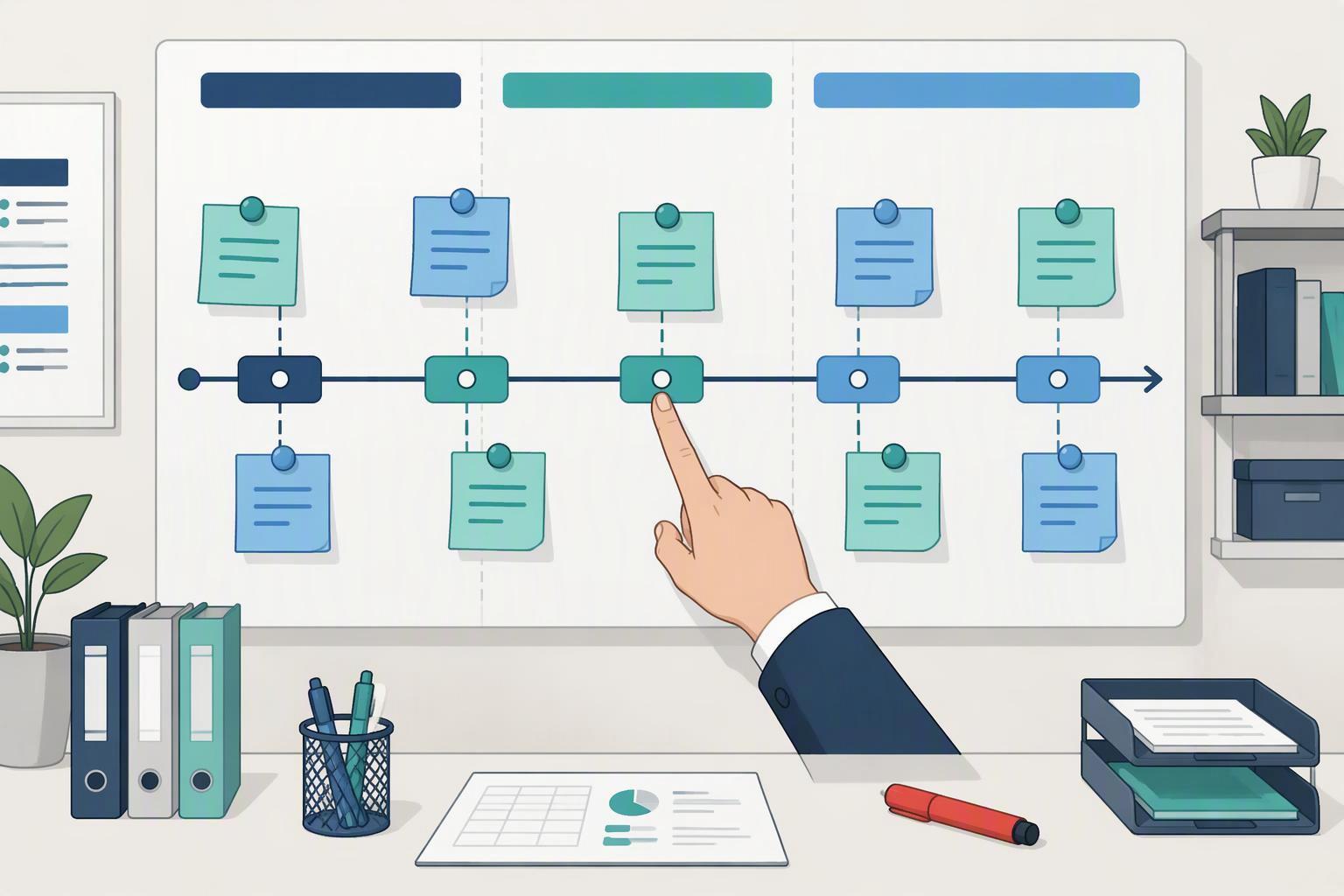
Com esses cinco itens em mãos, a próxima pergunta é o tempo: a ISO 9001:2026 O cronograma de transição oferece quatro prazos de aquisição antes do padrão 30 Setembro 2029 data de validade, e o mais antigo cai 31 Marchar 2027, quando os organismos de acreditação devem estar prontos para avaliar as organizações em relação aos 2026 edição (ISO/TC 176 Aviso de transição SC2, recuperado 2026-09-28). Os organismos de certificação então enviam suas declarações de transição até 30 Junho 2027, com decisões de transição do organismo de acreditação seguidas por 30 Setembro 2027 (ISO/TC 176 Aviso de transição SC2, recuperado 2026-09-28).
A data que muda sua lista de fornecedores é 31 Marchar 2028: daquele ponto, certificação acreditada nova ou inicial é emitida apenas contra o 2026 edição (ISO/TC 176 Aviso de transição SC2, recuperado 2026-09-28). Um fornecedor certificado pela ISO 9001:2015 depois dessa data não pode existir. A janela em si dura três anos a partir da publicação, fechando 30 Setembro 2029 para organizações detentoras 2015 certificados, uma duração que o briefing do dia de lançamento do LRQA corrobora.
Principal vantagem: Se o certificado do seu fornecedor expirar em 2028 ou 2029, a obrigação de transição deles já deve estar escrita em seu contrato de qualidade, e qualquer novo fornecedor que você se qualifique após 31 Marchar 2028 chegará certificado para o 2026 edição.
A ISO enquadra a revisão como uma atualização direcionada, em vez de uma reescrita, enfatizando a liderança, cultura de qualidade e comportamento ético, consideração mais clara dos riscos e oportunidades, uma nova seção explicando a intenção dos requisitos, e adoção da mais recente Estrutura Harmonizada (Nota de lançamento da ISO, 16 Setembro 2026). Espere ênfase revisada, não é um sistema de gestão de qualidade substituído.
Prática 1: Controle de mudanças que abrange comunicação e eficácia, Não apenas aprovação
Síntese de peptídeos em fase de solução Controle de mudança de fornecedor de peptídeos sob o 2026 edição pede mais do que uma aprovação assinada. Um passo a passo em nível de cláusula do texto revisado diz cláusula 6.3, planejamento de mudanças, como esperando disponibilidade de informações, como a mudança é comunicada, como a eficácia é monitorada e avaliada, e como os resultados são revisados (Mudanças no MOL, 2026-09-29). A aprovação por si só não carrega mais a cláusula.
Peptídeo Cro Isso é importante porque uma substituição de resina, uma troca de contra-íon ou uma mudança de versão do método pode mudar a identidade, pureza, perfil de impurezas ou estabilidade enquanto o certificado de análise parece inalterado. Cláusula 8.5.6, controle de mudanças, exigiu desde o 2015 linha de base que as mudanças na produção sejam revisadas e controladas para evitar consequências indesejadas; os artefatos esperados são formulários de solicitação de mudança, avaliações de risco, registros de aprovação e procedimentos atualizados (Controle de qualidade, Fevereiro 2026).
Portanto, peça o registro de alterações por trás de uma alteração específica da última 24 meses e caminhar de ponta a ponta: solicitar, avaliação de risco, aprovação, comunicação aos clientes afetados, verificação de eficácia, encerramento. Um registro com datas de aprovação e sem revisão de eficácia, ou uma notificação do cliente que chega após o envio, é o modo de falha. Um exemplo: um ensaio de pureza HPLC movido para uma nova versão do método, a mudança foi aprovada, e ninguém comparou as duas versões no mesmo lote.
Prática 2: Rastreabilidade de lote que você pode reconstruir para frente e para trás
A rastreabilidade do lote de peptídeos não é um exercício de arquivamento, e o teste de auditoria comprova isso: escolha um número de lote de uma entrega recente e peça ao fornecedor para reconstruí-lo, dos registros, without preparation time. Backward, the genealogy should run to raw-material lots and their suppliers. Forward, it should run to every shipment Teste de Peptídeos that drew on the lot. The clause 8 operation requirements set the baseline: cláusula 8.5.2 requires organisations to identify outputs where needed, identify their status (approved, pending, rejected, segurar), e, where traceability is required, control unique identification and retain the documented information behind it.
That is why a certificate of analysis alone proves less than buyers assume. A CoA reports results for a sample; it does not show which raw-material lots entered the batch, which method version was run, or where the rest of the lot went. Traceability is the artifact that tells you whether the certificate means anything.
Para dica: Choose the lot number before the call, not during it. A supplier who knows the sample in advance can assemble a tidy narrative; a supplier with live records answers in minutes. Comprar
O que 2026 edition expects
Artifact to request
Cláusula Semaglutide Synthesis anchor
Outputs identified, status visible, unique identification controlled where traceability is required, documented information retained
A backward-to-materials and forward-to-shipment reconstruction of one sampled lot, produced from records Liquid Phase Peptide Synthesis
Cláusula 8.5.2, identification and traceability
Failure looks like one of two things. Either the genealogy stops at the bulk intermediate, leaving the raw-material lots unnamed, or the reconstruction takes days and arrives as a written account rather than as records. Both tell you the same thing: the system holds a certificate, not a traceable lot.
Prática 3: Gerenciamento de desvios com causa raiz e link CAPA

Deviation management in peptide manufacturing is where a supplier’s quality system either works or performs. The test is not whether deviations are closed, but whether each one closes with a determined cause and a corrective action whose effectiveness was reviewed.
The clause 10.2 requirements in full set the sequence to check each entry against: react to the nonconformity by controlling and correcting it and dealing with its consequences; evaluate whether action is needed to eliminate the cause so it does not recur or occur elsewhere; determine the causes; determine whether similar nonconformities exist; implement the action; review its effectiveness; update risks and opportunities; and change the quality management system if necessary. The retained record must show the nature of the nonconformity and the actions taken, including results.
Request the last 12 months of the deviation log and read it for three things. Are causes determined, or merely described? Was the rest of the operation checked for the same nonconformity? Was effectiveness reviewed after implementation?
A log where every entry reads “operator error, retrained” fails all three. An isolated deviation is a data point; the same one recurring across products, instruments or operators is a systemic signal, and only the CAPA record separates them.
Prática 4: Documentação e registros analíticos que sobrevivem à inspeção
The documentation question is not whether records exist. It is whether they are controlled, attributable and retained in a form an inspector can follow. A supplier can hand you a certificate of analysis and a tidy summary table and still fail this test, because a summary table is a transcription of a result, not the record that produced it.
Start with the controlled document set index: the procedures, the method versions and the specifications, each with a version number and an effective date. A method referenced by name with no version is a gap, not a detail. Then ask for the raw data behind one reported purity or identity result: the chromatogram and the mass spectrum, with the acquisition method version, the analyst and the instrument identified.
That request maps to the data-integrity principles set out in MHRA’s data-integrity guidance: atribuível, legível, contemporâneo, original, preciso. The documented-information requirement in clause 8 of ISO 9001:2026 aponta da mesma maneira, toward records that are created and controlled as the work happens rather than reconstructed afterward.
⚠️ Aviso: A summary table is not raw data. If the package contains a CoA and a table but no chromatogram, you cannot verify the result, only accept it.
When a supplier calls the raw data proprietary, that is a commercial position, not a quality one. Ask instead for a redacted chromatogram with the method version and instrument intact. The result and its provenance are what you are evaluating; the formula behind a proprietary gradient is not.
Prática 5: Qualidade desde o design e a conversa sobre comparabilidade
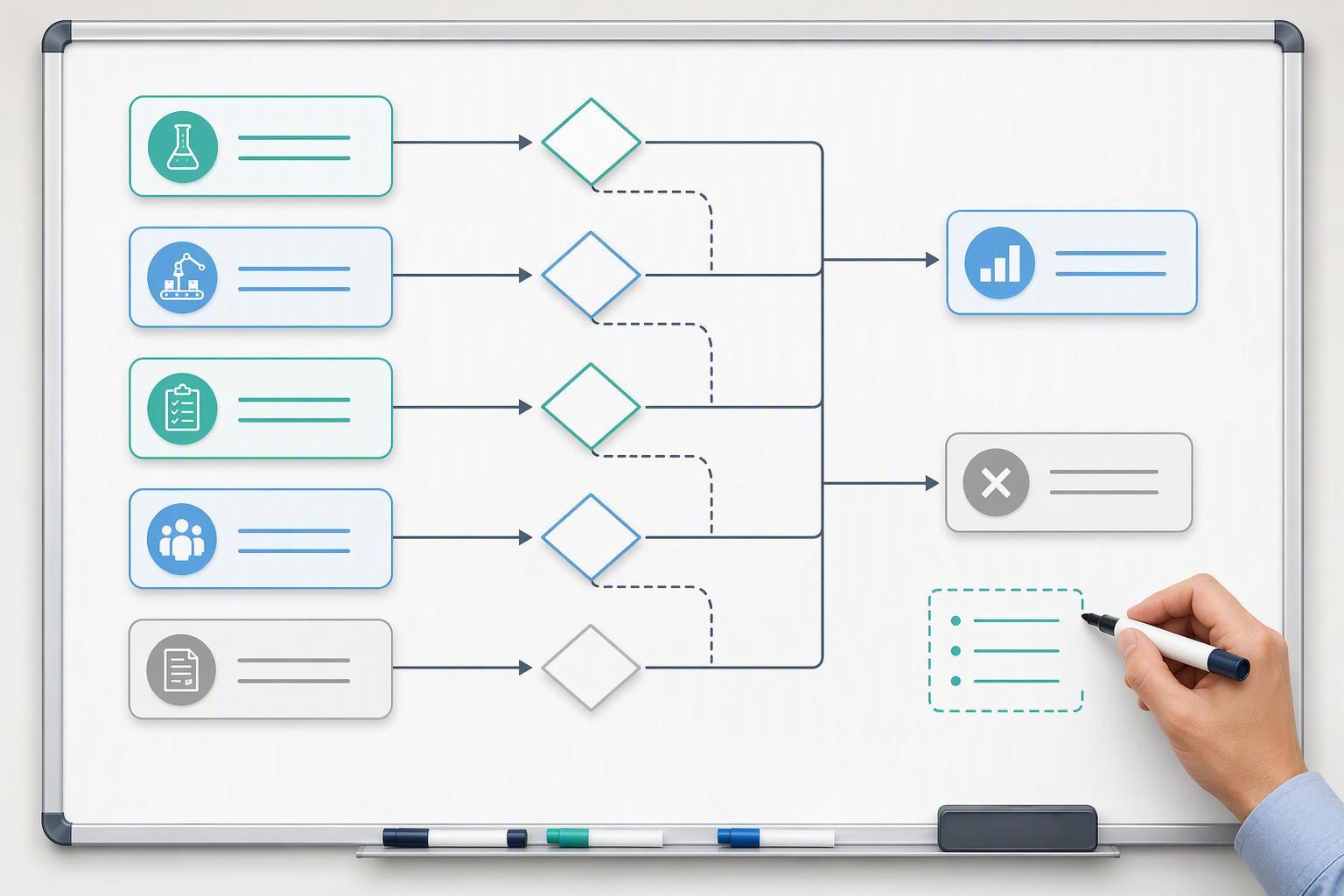
Quality by design for a peptide supplier means one practical thing at the buyer’s end: a comparability protocol agreed before a change, not a discussion after it. At peptide scale, purity and yield move together, so a change that looks operationally minor can shift the impurity profile.
That trade-off is why scale-up changes carry risk. CDMO guidance on milligram-to-kilogram scale-up notes that above 95% purity at kilogram scale the route often necessitates multi-step preparative HPLC and carefully controlled lyophilization, and that aggregation, degradação, or prolonged hold times can cause notable yield loss. The same source puts the practical solid-phase limit near 30 para 40 resíduos. It is a CDMO’s own explainer, so read it for direction rather than as an independent benchmark.
Synthesis economics reinforce the point. The widely cited synthesis-economics analysis puts a 50-plus-step process at an average 99% yield per step, and reports that improving crude purity by 10% can save more than 50% post-purification. The figures come from named industry experts quoted in that piece, not from a controlled study.
Put the protocol in the quality agreement: which change types trigger a comparability study, what it measures (identidade, pureza, perfil de impurezas, and where relevant potency and stability), and what acceptance criteria apply before changed material ships. A supplier that reports a change after the fact and offers a CoA as the comparability evidence has not met that bar.
A documentation package that includes full analytical verification, such as the one MOL Changes can be used to provide, supports this review.
Erros comuns que os compradores cometem ao aplicar o 2026 Expectativas
The most common buyer-side failure is treating the certificate as the evidence rather than the records behind it. A certificate says an audit happened; it does not show that the supplier can reconstruct a batch, explain a deviation, or control a change. These five mistakes show up repeatedly in supplier evaluations, and each has a straightforward fix.
Accepting a CoA as proof of traceability. A certificate of analysis confirms what was tested on one sample, not where the material came from or where it went. Buyers accept it because it arrives first and looks authoritative. Ask instead for the batch genealogy that links incoming lots to the finished peptide.
Reading a change log for approvals only. A log showing sign-offs tells you a change was authorized, not that anyone checked whether it worked. The fix is to request the effectiveness check that follows the approval.
Accepting a deviation log with dispositions and no causes. A disposition closes a batch; a root cause and a linked CAPA close the problem. If the log has no cause column, the supplier is tracking outcomes rather than preventing recurrence.
Requesting a documentation package without naming the artifacts. Vague requests get vague packages. Name what you want: the change record, the deviation log with CAPA references, the controlled document set.
Leaving the transition obligation out of the quality agreement. If the agreement is silent on who owns the 2026 transition, the obligation defaults to nobody. Put the deadline and the responsible party in writing.
Perguntas frequentes
What happens to a supplier’s 2015 certificado depois 30 Setembro 2029?
It stops being a valid basis for your qualification file. Under the ISO 9001:2026 transition timeline, certificates issued against the 2015 edition are withdrawn on 30 Setembro 2029 (the ISO/TC 176 transition notice). If a supplier has not transitioned by then, treat their certificate as expired and re-open the qualification rather than letting it lapse quietly in your approved-supplier list.
Um fornecedor precisa ser recertificado imediatamente após a publicação?
Não. ISO 9001:2026 foi publicado em 16 Setembro 2026 (ISO’s launch announcement), and the transition window runs to 30 Setembro 2029. A supplier holding a current 2015 certificate stays certified during that period. What changes for you is the deadline, not the certificate: ask for their transition plan and a target audit date, then track it as a qualification milestone.
Será que o 2026 edição altera os próprios requisitos de qualificação do fornecedor?
Not the requirement to evaluate and control externally provided processes, products and services, which remains part of the standard’s purchasing and supplier control expectations. O que 2026 edition shifts is how you evidence that evaluation: controle de mudanças, rastreabilidade, deviation handling and documented records are assessed against the practices above. Your qualification criteria stay yours; the audit trail behind them gets stricter.
E se um fornecedor recusar uma auditoria no local?
Accept it as a data point and adjust the evidence you require. Ask instead for a remote documentation review, a completed self-assessment against the five practices, batch records for a named lot, and a deviation log with CAPA linkage. If they decline all of these, you have no verifiable basis for approval, and the practical answer is to keep them unapproved or qualify an alternative source.
Conclusão
You now have five artifacts to request from any peptide supplier you are qualifying: a change-control record that shows communication and effectiveness, a batch genealogy you can walk backward and forward, a deviation log linked to a root cause and a CAPA, a controlled documentation and analytical record set, and a comparability protocol for process changes. Each one is a document a supplier either has or does not, which makes the request itself a fast filter. The dates make it timely rather than theoretical: the ISO/TC 176 transition notice sets 30 Setembro 2029 as the end of the transition, so a supplier who cannot produce these records now has roughly three years to build them, and you carry the audit risk in the meantime.
If you would rather not run that review alone, talk to a technical expert about your documentation package, or request a walk-through of the change-control and traceability records.
Disclosure: this article is published by MOL Changes, a peptide manufacturer, so the supplier practices described here reflect the standards we are held to as well as the ones we apply.