¿Qué significa “socio CDMO de péptidos” cuando la relación es integrada en lugar de transaccional??
La diferencia no es cuántos servicios enumera un proveedor. Es quien posee el conocimiento sobre su molécula entre etapas..

Servicios En el abastecimiento transaccional de péptidos, el proveedor ejecuta un solo lote y el compromiso finaliza, entonces cada nueva fase reinicia la transferencia de tecnología. En el desarrollo integrado de péptidos., Un equipo técnico permanece en la molécula a lo largo de las fases., que es lo que hace posible la continuidad y no simplemente una promesa.
La continuidad es un conjunto de condiciones verificables., no es una etiqueta de relación. Requiere suministro de respaldo precalificado, Comparabilidad analítica entre lotes bajo los mismos estándares de identidad y pureza., detalle del método revelado y datos sin procesar, trazabilidad completa del lote desde el vial hasta los registros de síntesis, y gobernanza de cambios escrita que requiere notificación antes de cualquier cambio material en el sitio de síntesis., método de control de calidad, materias primas, purificación, embalaje o etiquetado. Un proveedor que trata cualquiera de ellos como una suposición en lugar de una condición verificada no ha resuelto la continuidad., como sea que el contrato llame a la relación. Esas cinco condiciones forman una lista de verificación de continuidad que puede llevar a su próxima revisión de proveedor.
Conclusión clave: El abastecimiento transaccional compra un lote y finaliza el compromiso. Un socio CDMO de péptidos integrado mantiene un equipo y una cadena de conocimiento sobre la molécula en cada etapa siguiente..

Comparación rápida: abastecimiento transaccional frente a un socio CDMO de péptidos integrado
Esa distinción es más fácil de ver uno al lado del otro., por lo que la siguiente tabla clasifica ambos modelos en las categorías que deciden una adquisición.
|
Categoría |
Abastecimiento de péptidos transaccionales |
Socio CDMO de péptidos integrados |
|---|---|---|
|
Lo mejor para |
Definido, secuencias listas para usar sin desarrollo de ruta, sin ampliación, y no se adjunta ninguna presentación reglamentaria |
Programas que avanzan hacia el trabajo que facilite la IND, ampliar, o una presentación comercial |
|
¿A quién pertenece la ruta sintética? |
Proveedor; recibes un certificado de análisis, no la ruta |
Compartido; El conocimiento de la ruta permanece con el programa a lo largo de las etapas. |
|
Propiedad del método analítico |
Métodos internos del proveedor.; recibes resultados, datos no crudos |
Métodos y transferencia de datos brutos con el programa. |
|
Carga de transferencia de tecnología en el interruptor |
Retransferencia completa: $300,000–$800,000+ y 6–12 meses a la primera campaña cGMP (Personal de péptidos, recuperado 2026-09-04) |
Más bajo, porque el sitio receptor ya tiene la ruta y los métodos |
|
Cambiar notificación |
Los cambios de ruta o sitio pueden llegarle solo como un nuevo certificado |
El control de cambios se realiza a través de un acuerdo de calidad compartido. |
|
mantenimiento DMF |
Separe las actualizaciones o modificaciones del DMF cada vez que se mude |
Un DMF se mantuvo actualizado en todas las etapas |
|
Ruta de ampliación |
Recursos en cada escala, a menudo revalidado |
Continuo de miligramos a kilogramos |
|
Perfil de costos |
Menor por gramo a pequeña escala |
Ejecuciones de precios indicativos de GLP-1 API cGMP $2,500–5.000 dólares/g de 1 a 10 kg, cayendo a $400–$800/g en 100+ kilos (Personal de péptidos, recuperado 2026-09-04) |
|
Nuestro veredicto |
gana por única vez, Comercio cantidades no declaradas |
gana una vez que un programa debe sobrevivir a un cambio, una ampliación, o una inspección |
Dos advertencias sobre los números. Las cifras de transferencia y abastecimiento dual son direccionales: PeptideStaff no revela ninguna metodología, así que trátelos como rangos de planificación en lugar de cotizaciones. Y varias CDMO importantes ahora establecen compromisos mínimos de lotes comerciales de 50–100 kilogramos, lo que cambia la economía de cualquier programa que no pueda comprometerse a ese volumen.
Escenario 1: Síntesis y modificación personalizadas: quién es el propietario de la ruta?
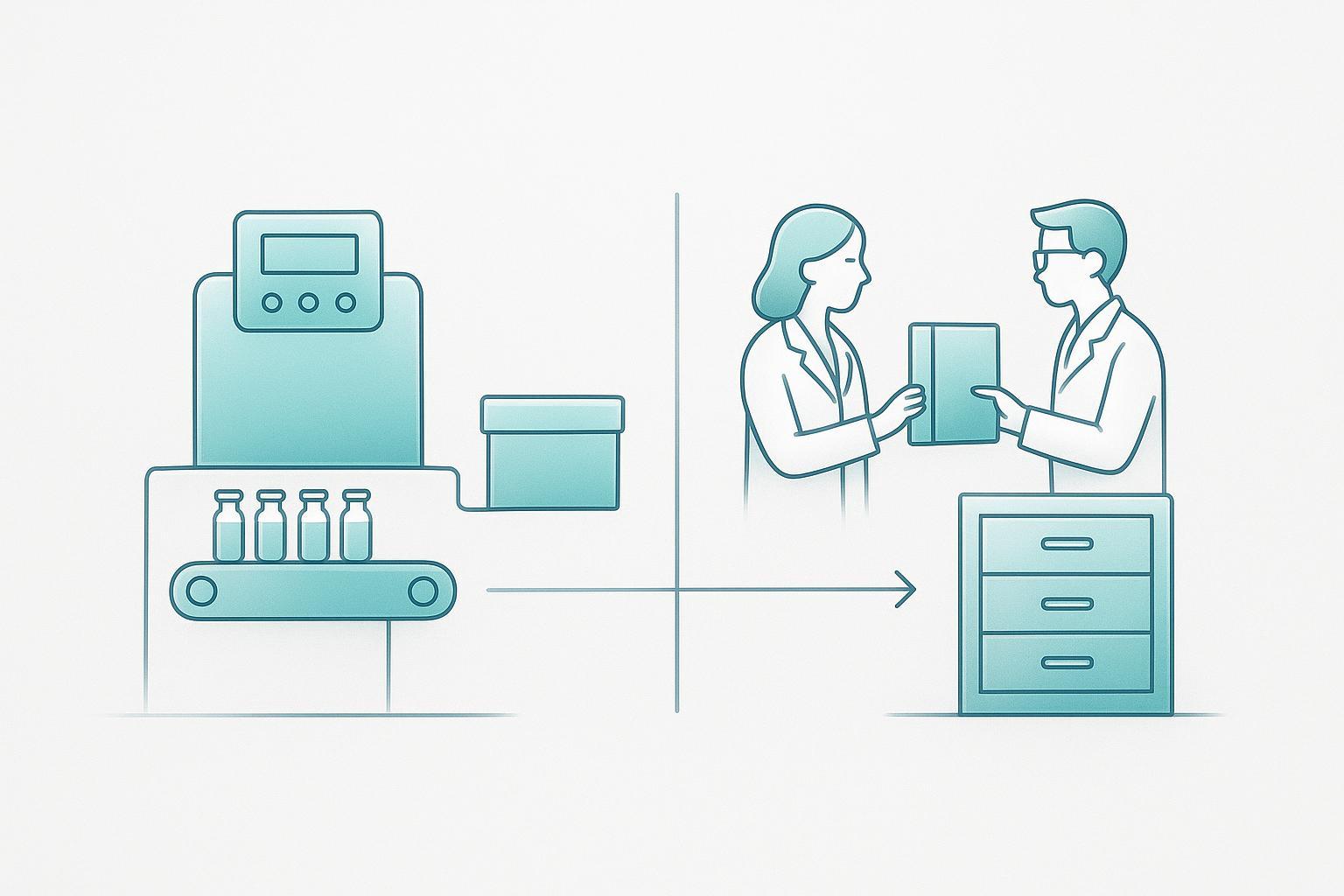
Síntesis de péptidos The integrated partner wins this stage, and the reason is not capacity. It is that route knowledge, no el lote, is the asset. A transactional supplier delivers vials and an invoice; an integrated partner delivers the synthesis route, the rationale behind each coupling and deprotection choice, and the record of what was tried and rejected.
Reported SPPS practical limits differ by source, and the disagreement matters more than any single figure. Laboratorios Neuland puts the practical ceiling at roughly 30 a 40 aminoácidos, mientras un PharmaSource category guide informes 50 a 70 residues achievable with optimised chemistry. Both are describing solid-phase peptide synthesis under different assumptions about resin, coupling reagents and purification tolerance, which is exactly why a route should be judged against your sequence rather than against a headline number.
The failure mode is concrete. A 40-residue modified chain can synthesise acceptably at small scale and then aggregate during purification, collapsing yield at the point where the material is most expensive. Bachem’s knowledge centre notes that GLP-1 analogues typically run 30 a 40 amino acids or more, and that scale moves from milligrams and grams at discovery through kilograms in clinical development to multi-kilogram commercial campaigns. A route that has not been stress-tested against that progression is a route you will redevelop later, usually under time pressure.
Counterion exchange belongs in the same conversation. Trifluoroacetate is the default counterion left behind by standard reverse-phase purification, and swapping it for acetate or chloride changes the salt form, the residual TFA profile and the impurity picture your later analytical work will report. If the supplier controls that decision without telling you, your Stage 2 results will describe a material you did not intend to specify.
Veredicto: the integrated partner wins on custom peptide synthesis and modification, because the route, its counterion strategy and the reasoning behind both transfer with the relationship. A transactional supplier can match the batch and still leave you with nothing to build on.
Escenario 2: Pruebas analíticas: cuyos métodos, cuyos datos brutos?
An integrated partner wins this stage because method ownership and raw-data access are what make a later switch survivable. A transactional supplier sends a certificate of analysis; an integrated partner can hand over the disclosed method details and raw data behind that certificate: the actual chromatogram, the column and gradient used, and orthogonal confirmation such as amino acid analysis. That distinction matters most when purity is hard to hold. Peptide API specifications usually cap individual impurities at ≤0.1%, and reaching >95% purity at kilogram scale often requires multi-step preparative HPLC plus controlled lyophilisation, which is why a process that works at 100 mg can fail at 10 kilos. For pharmaceutical-grade material, expect ≥95% purity and ask for batch records showing >98% purity plus a full impurity profile. Confirm the technique set covers HPLC or UPLC, LC-MS, MALDI-TOF, análisis de aminoácidos, LAL endotoxin testing per USP <85>, and sterility per USP <71>, and that methods are validated to ICH Q2(R2) esperanzas de heredar. If the material is research-grade and no filing depends on it, a transactional COA is enough.
Escenario 3: Desarrollo y ampliación de procesos: donde el modelo transaccional fracasa
Transactional sourcing stops working here because scale changes the process, not just the batch size. A route that delivers a gram at high purity can fail at kilogram scale once chromatography load, solvent volumes and impurity profiles shift. The mg-to-kilogram progression in peptide manufacturing runs from milligram and gram discovery quantities through kilogram clinical supply to multi-kilogram commercial batches, and each step is a new process to qualify rather than a larger version of the last one.
Capacity planning has a second trap. As DataM Intelligence notes in its peptide CDMO market report, announced reactor volume does not immediately become customer-ready capacity, because new assets must clear construction, equipment commissioning, process qualification and validation first. Limited qualified commercial-scale capacity is a high-impact restraint on the market.
Directional stage-by-stage peptide manufacturing timelines from CDMO Hub put clinical GMP work at 3 a 6 months and commercial scale-up at 12 a 24 months or more, with validation and filing adding 6 a 12 meses. Treat these as planning ranges, not commitments: the guide cites no methodology, and actual timelines depend on route complexity, impurity control strategy and the receiving site’s own qualification load.
Escenario 4: La gobernanza del cambio y el costo real de cambiar a mitad del programa
An integrated peptide CDMO partner wins on switching cost, and the gap is wide enough to change a procurement decision. Published estimates put the cost of switching peptide CDMO partners mid-program at $300,000 a $800,000 or more, con Péptidos sintéticos 6 a 12 months to the first cGMP campaign and a further 10 a 20 percent added for dual sourcing. Those figures are directional and the methodology behind them is not disclosed, so treat them as a planning range rather than a quote.
The regulatory layer compounds the money. A transactional model means separate DMF updates or amendments each time a supplier, site or method changes, and analytical methods usually need revalidation on top of that. An integrated relationship keeps one DMF current instead.
Two mechanisms reduce that burden when they are planned in advance. ICH Q12’s change-management protocol, publicado 19 Noviembre 2019, lets a sponsor agree acceptance criteria prospectively, so an executed protocol carries less regulatory load than a full prior-approval submission. The FDA’s comparability-protocol framework works the same way: pruebas, studies and acceptance criteria are written before the change, and the manufacturer validates effects on identity, fortaleza, calidad, purity and potency before distribution.
Note the trigger point. Switching the drug substance site triggers a regulatory notification whenever the facility differs from the approved application, intermediate sites included. That is why written change governance before any material change belongs in the contract: notification ahead of any shift in synthesis site, método de control de calidad, materias primas, purificación, embalaje o etiquetado. Batch-record traceability across those changes should meet MHRA ALCOA data-integrity expectations, so the audit trail survives the switch even if the partner does not.
Escenario 5: Qué debe contener un paquete de transferencia por escrito
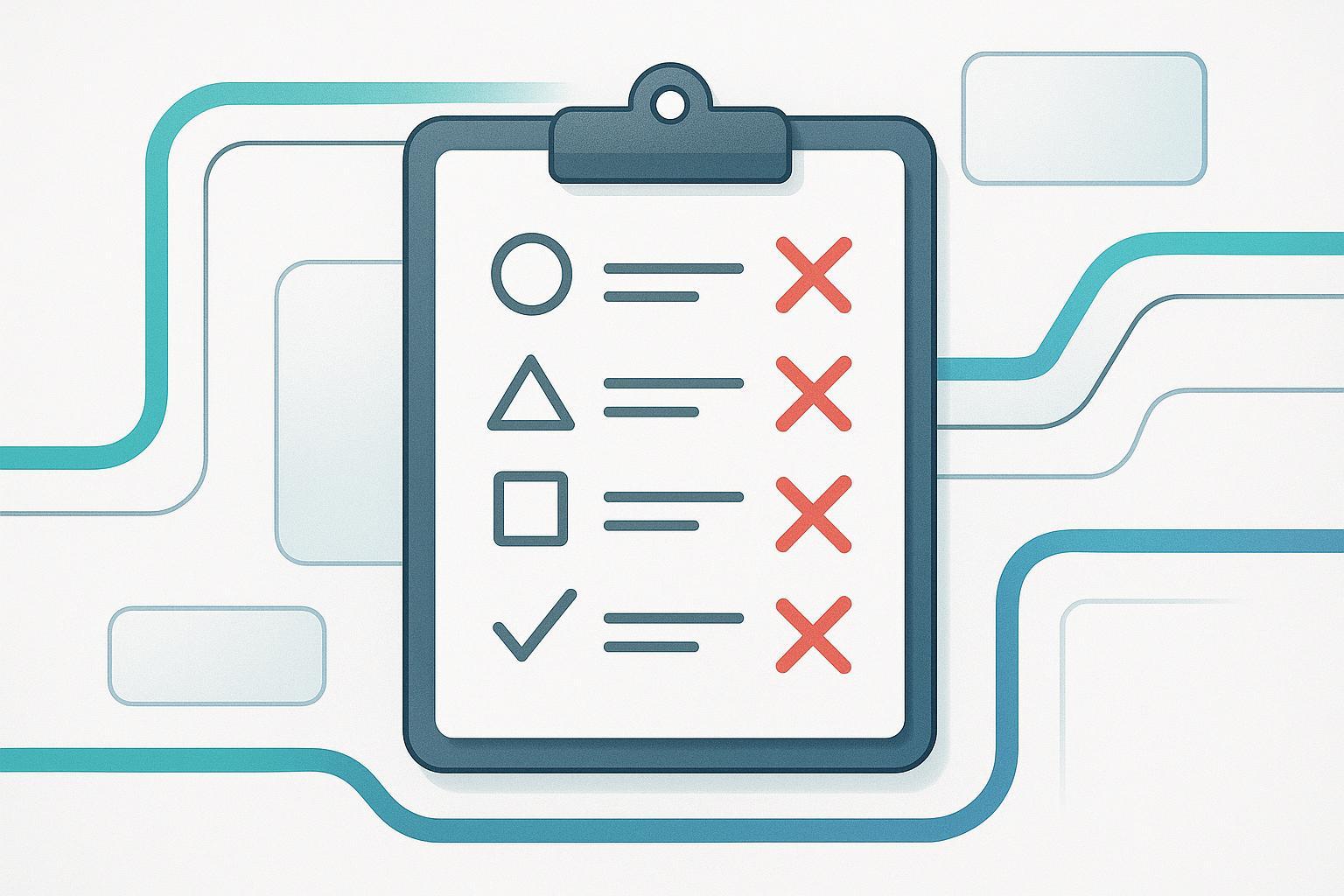
A written peptide tech-transfer package should contain four blocks: proceso (synthetic route, conditions, reactivos, critical parameters); métodos analíticos (HPLC, EM, release methods, estándares de referencia); presupuesto (pureza, impurity limits, identidad, content criteria); and materials and history (raw-material sources, prior batch records, known risks) (Global Biotech Laboratories, recuperado 2026-09-02). Incomplete packages typically miss critical process parameters, undocumented known issues, or unstated specifications.
Para propina: Start with analytical method transfer. Methods must be reproduced and verified before they gate any batch, so sequencing it first removes the most common cause of stalled technical dialogue.
The documented sequence runs kickoff and gap assessment, documentation transfer, transferencia de método analítico, a non-GMP demonstration batch, then confirmation and scale (Global Biotech Laboratories, recuperado 2026-09-02). That source is a CDMO that sells transfer services, so treat its timeline, “a matter of weeks to a few months” for a well-prepared transfer with complete documentation and a dedicated technical lead, as vendor-favourable rather than neutral.
Criterios imprescindibles frente a señales de alerta: cómo calificar a cualquier socio CDMO de péptidos
A vendor that cannot answer the method question will not survive a switch. Score any peptide CDMO partner on the two lists below, and keep them apart: must-haves are what you require in writing before you sign, red flags are what you walk away from.
Imprescindibles
-
Disclosed method detail and raw data, no resúmenes
-
A written change-notification clause
-
Batch traceability from vial back to synthesis and QC records
-
A named technical lead, not a shared inbox
-
A stated scale-up path with qualification milestones
Banderas rojas
-
COA-only responses to method questions
-
No documented change-control procedure
-
A transfer package missing critical process parameters
-
Capacity claims built on announced reactor volume, which does not immediately become customer-ready capacity
-
Single-site dependency with no pre-qualified backup
Treat the must-have list as a continuity checklist you can take to your next vendor review.
¿Quién debería elegir qué modelo?
If your program is research-grade or screening-stage, with no filing dependency and a molecule you may abandon next quarter, transactional peptide sourcing is genuinely the right call. You get a catalog or custom quote, a certificate of analysis, and no relationship overhead. Nothing in an integrated peptide development model earns its premium at that stage.
Once a program heads toward IND-enabling work, the calculus flips. Method transfer and impurity profiling compound: cada nueva fase reinicia la transferencia de tecnología, and the analytical history you built in the previous one has to be rebuilt by whoever takes the next stage. A partner who already holds the route, the methods and the raw data removes that restart.
Programs running on an incumbent supplier that is showing failure signals need a third path: an integrated partner plus a pre-qualified backup, with the cost of switching peptide CDMO partners mid-program budgeted before you need it, no después.
One edge case deserves honesty. If the molecule is a short unmodified peptide on a mature route, the continuity premium buys less. The route is commoditized, methods are standard, and a transactional supplier can hand over a complete package without much loss.
Where continuity does pay is across stages that share data. A partner that supports route development, analytical method ownership and scale-up under one quality system can be used to carry the same impurity profile from milligram screening into kilogram production, which helps when a regulator asks how a specified impurity was controlled at each stage. That is the mechanism, not a slogan: fewer handoffs, fewer re-validations, one traceable dataset.
Preguntas frecuentes
¿Puedo cambiar de socio de CDMO de péptidos a mitad del programa??
Sí, but treat it as a project, not a purchase order. A mid-program switch is feasible; the constraint is the cost of switching peptide CDMO partners mid-program, which is directional at roughly $300,000 a $800,000 and six to twelve months once method revalidation and separate Drug Master File amendments are counted. Sequence matters more than speed: transfer and revalidate the analytical methods first, then qualify the new route, and only then commit a batch. Starting with the batch inverts the order and usually forces a repeat.
¿Puedo utilizar un proveedor transaccional y un socio integrado juntos??
Sí, and many programs do. The split that holds up is transactional sourcing for research-grade or non-filing material, with the integrated partner owning the filing-relevant route and methods. Two conditions make it work. Primero, budget the dual-sourcing premium, since running two supply paths costs more than either alone. Segundo, put written change governance before any material change in place, so a supplier swap on the screening side cannot silently alter what the filing depends on.
¿Qué modelo ofrece un mejor control analítico??
The integrated model, because raw-data access and method ownership are the levers, not the instrument list. Impurity control is where that shows: releasing a peptide above 95% at kilogram scale typically needs multi-step preparative HPLC, and pharmacopoeial expectations for related substances sit at or below 0.1% for individual impurities (USP, recuperado 2026-09-15). Ask any partner for batch records showing >98% purity plus a full impurity profile, and for the underlying chromatograms rather than the summary table.
Se anuncia que la capacidad de fabricación de péptidos es la misma que la capacidad disponible.?
No. Announced reactor volume does not immediately become customer-ready capacity, because construction, commissioning, process qualification and validation all have to complete first. Read the current expansion announcements as pipeline, not availability: CordenPharma’s €500 million peptide plant near Basel targets commercial operations in H1 2028, Bachem’s Sisslerfeld facility is expected in 2030, and WuXi AppTec’s Taixing expansion has brought total SPPS reactor volume above 100,000 l (DataM Intelligence, 2026). Plan against qualified lines, not headline litres. Producción de péptidos
¿Todavía vale la pena utilizar el abastecimiento transaccional de péptidos??
Sí, within a boundary. Transactional peptide sourcing is the right model for research-grade material and early screening, where no filing depends on the route or the methods, and where speed and unit price dominate. It stops being adequate once the program needs IND-enabling work, impurity profiling against a defined threshold, or a validated scale-up path. The signal to watch is not batch size but dependency: the moment a regulatory submission rests on a route or a method, the transactional model no longer covers the risk.
Próximos pasos
Choose transactional peptide sourcing when you need a defined molecule at a defined specification and nothing downstream depends on the supplier’s knowledge. Choose an integrated peptide CDMO partner when the program moves from screening toward IND-enabling work and continuity of route, methods and data becomes the thing you are actually buying.
If you are re-evaluating a partner mid-program, the fastest way to test the relationship is to ask for the written transfer package described in Stage 5 and see how much of it exists. A partner that can produce it quickly is already operating the way you need. Acerca de
Talk to our technical team if you want to walk through your program’s stage and the criteria that matter most at it.
Divulgación: MOL Changes has a commercial interest in peptide quality standards and works with sponsors on the criteria described in this article.