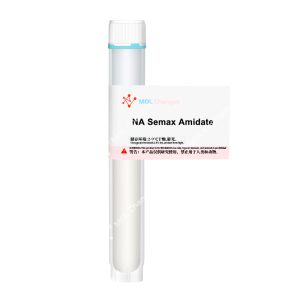
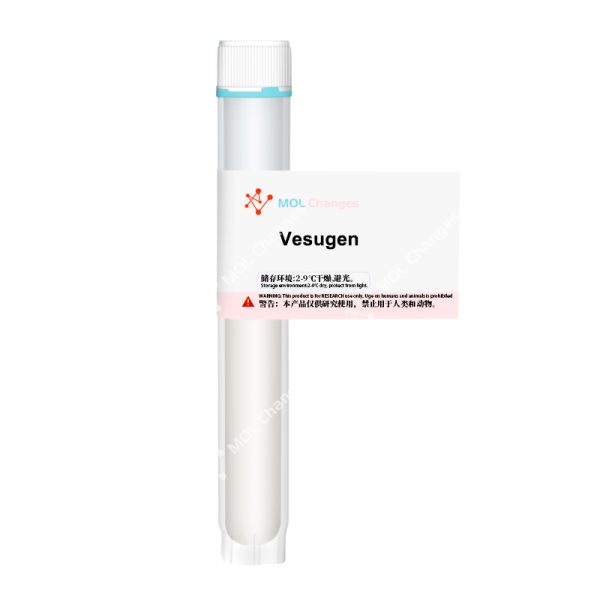
Vesugen is a synthetic tripeptide comprising three amino acids (lysine-glutamic acid-aspartic acid, KED). Its design is derived from a peptide complex isolated from the vascular tissue of young animals, which supports the repair and functional regulation of the vascular system, with a primary focus on microvascular network health. The research and development of this type of peptide bioregulator are largely based on work conducted at the St. Petersburg Institute of Bioregulation and Gerontology, aimed at enhancing vascular homeostasis by mimicking natural peptide fragments.
순서
Lys–Glu–Asp
CAS 번호
/
분자식
C₁₆H₂₇N₅O₈
분자량
390.38
Research Of Vesugen
1.Development and Source of Vesugen
The development of Vesugen was inspired by studies of a peptide complex named “Ventfort®”, obtained from the blood vessels of young animals. Researchers identified the Vesugen tripeptide within this natural complex and considered it a key active component responsible for vascular regulatory activity. Vesugen was subsequently chemically synthesized in high purity. As a short peptide bioregulator, it is purported to repair microvessels, improve blood flow, and support vascular elasticity, thereby potentially counteracting early signs of vascular aging.
2.The mechanism of action of Vesugen involves multi-level cellular and molecular regulation
(1).Promotion of Cell Proliferation and Differentiation
The core proposed mechanism of Vesugen is the modulation of vascular endothelial cell proliferation. Endothelial cells form the single layer lining blood vessels, and their proliferation and migration are crucial for vascular repair (angiogenesis) and maintaining vascular integrity. 그만큼 Ki-67 protein is a well-established marker of cell proliferation, with its expression level closely linked to mitotic activity.
More in-depth molecular docking simulations suggest that Vesugen may bind to the promoter region of the gene (MKI67) encoding the Ki-67 protein, thereby epigenetically regulating its expression and promoting cell proliferation. This finding provides a specific molecular biological explanation for Vesugen’s purported “vascular repair” function—namely, repairing damaged vessels by promoting the regeneration of vascular endothelial cells¹.
(2).Regulation of Gene Expression and Chromatin State
Vesugen can bind specifically to DNA, modulating chromatin conformation and gene transcriptional activity, which affects the synthesis of various proteins related to vascular function.
예를 들어, it may reduce the expression of inflammatory factors (~와 같은 CXCL12) and delay 세포노화².
(3).Promotion of Angiogenesis and Remodeling
In vitro experiments demonstrate that Vesugen exerts protective effects on vascular cells, improving microcirculation and enhancing vascular elasticity. These combined effects contribute to its potential for repairing small vessels, optimizing blood flow, and reversing early vascular aging.
It may enter the nucleus via peptide transporters (예를 들어, Pept1 and Lat1), interact with DNA or histones, activate cellular signaling cascades, and thereby promote the synthesis of vascular elastin and enhance microcirculation³.
(4).Enhancement of Stress Resistance and Antioxidant Capacity
Vesugen can improve an organism’s tolerance to stressful conditions like hypoxia and reduce oxidative damage to neural and vascular cells, potentially through modulation of intracellular signaling pathways (예를 들어, PI3K/AKT).
3.Neuroprotective Effects and Broader Applications
Research indicates that Vesugen increases the number of dendritic spines—associated with synaptic plasticity—in hippocampal neurons, indirectly supporting cerebral microvascular health and blood flow.
Animal studies have shown that Vesugen can protect brain neurons from hypoxic damage⁴.
4.Clinical Applications and Usage
The applications of Vesugen are primarily focused on cardiovascular health maintenance and adjunctive disease management. It is recommended for various vascular-related conditions, including arterial hypertension, vascular atherosclerosis, varicose veins, thrombophlebitis, and local microcirculation disorders (예를 들어, trophic ulcers)⁴.
뿐만 아니라, it is used to support conditions involving cerebral blood circulation issues (such as cerebral atherosclerosis and sequelae of cerebrovascular accidents) and for the prevention of age-related decline in vascular function⁵.
In some applications, Vesugen is also explored for mitigating the impact of psychological-emotional stress and extreme environmental factors on the vascular system¹.
5.Summary and Current Status
Vesugen, as a peptide-based agent targeting vascular health, operates through gene-level regulation and optimization of cellular function. It is currently primarily employed within bioregulator therapies in Russia and parts of Europe.
COA
HPLC
MS