What Are SLC Transporters and Why Are They Hard Targets?
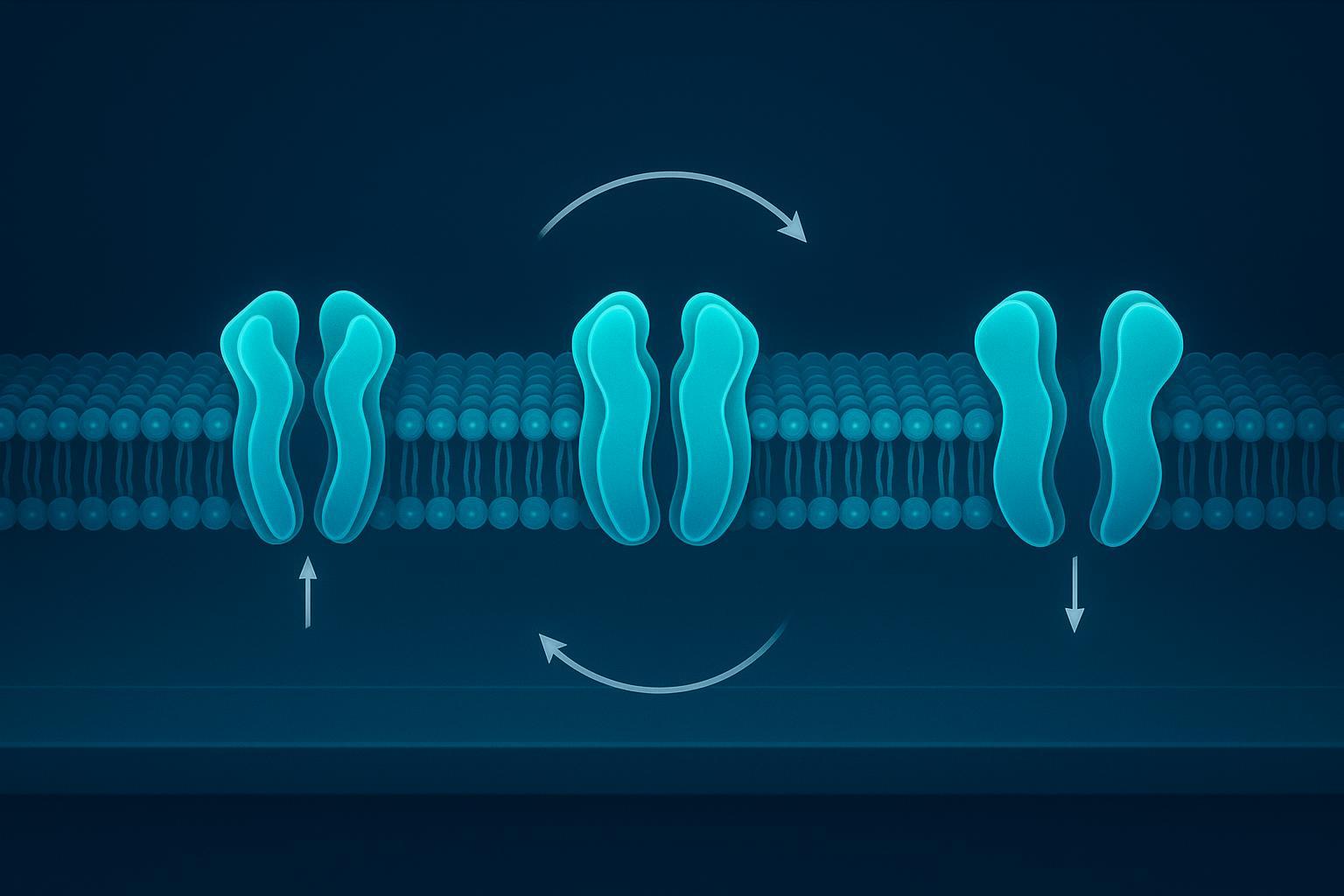
Li-transporter tsa SLC ke liprotheine tse tsamaisang li-ion tse solute, limatlafatsi, li-neurotransmitters le lithethefatsi ho pholletsa le lisele tsa lisele, le batho ba na le 464 litho tse tsebahalang li ile tsa hasana hohle 70 malapa (Litaba-Bongaka, 2026-09-10). Hape ke lithuto tsa laboratori tse manganga ka mokhoa o sa tloaelehang, and the reasons are structural rather than procedural.

The difficulty starts with architecture. SLC transporters are integral membrane proteins built from many transmembrane helices, which makes them hard to express, solubilise, purify and crystallise (PMC, 2025-09-02). Many operate through an alternating-access cycle, shifting between inward-facing, occluded and outward-facing states, so a single experiment tends to capture one conformation rather than the whole picture. Native expression levels are often low, which complicates purification, antibody generation and structural work, and moving the protein into detergent solution can distort or destabilise the structure you were trying to study.
Functional readouts are just as constrained. Many SLCs have no known substrate or strong secondary assay, 'me litekanyo tsa lipalangoang li ferekanngoa ke substrate specificity, ho se nke lehlakore ka motlakase, localization, tataiso le mesebetsi ea matsoho, ka boitšoaro bo hlephileng ba substrate bo eketsang karolo e 'ngoe ea tlhaloso.
Liphello ke lelapa leo meriana e sa kang ea e ama. Meriana e teng e sebetsana le karoloana e nyane feela ea lelapa le phahameng la SLC (Litaba-Bongaka, 2026-09-10), le ngoe 2026 maikutlo a hakanya hore lelapa le leholo le fetelletseng 400 ditho, hoo e ka bang karolo ea boraro ha e na ligand ho hang (Vanguard ea teko ea bongaka, 2026-09-07). Motsoako oo, e thata ho hlalosa, ho thata ho tshoara boemong bo le bong, ho lekanya ka thata, ke ka lebaka leo reagent ea peptide e nang le sebopeho se setle e fumanang sebaka sa eona mosebetsing oa pele oa lipalangoang..
Why Custom Peptides for SLC Transporter Research Fit Early Discovery
Li-peptide tsa tloaelo bakeng sa lipatlisiso tsa sepalangoang sa SLC li lumellana le ho sibolloa ha pele hobane li hlalosoa ka tatellano, li-reagents tse lableable le tse feto-fetohang tse ka hahoang khahlano le liphofu moo li-antibodies, metsoako ea lisebelisoa le baeloji ea meralo e emisitse. Lekhalo la motsoako oa lisebelisoa ke bopaki bo hlakileng ba ho lekana hoo. A 2024 tlhahlobo ea lisebelisoa tsa lisebelisoa tsa SLC ka Meeli ho Pharmacology hlahliloe 20,678 limolek'hule tse nyenyane tse ikhethang ka bophara 199 SLCs le, ka mor'a ho sebelisa mokhoa oa ho kopanya lisebelisoa, fihla ho 6,876 li-inhibitors tse koahelang feela 51 ba tsamaisang thepa. Phuputso e tšoanang e fumane hore 530 ea 810 Li-pair tsa SLC tse entsoeng ka letsoho li ne li le sieo ho database tse lekiloeng, le hore ho li-SLC tse ngata tse amanang le mafu ho na le tlhahlobo e teng ha ho se na motsoako oa lisebelisoa o fumanoeng ho hang..
Key Takeaway: Li-levers tse 'ne li etsa qeto ea hore na reagent ea peptide e sebetsa mosebetsing oa lipalangoang: tatellano eo o e khethang, leibole eo u e khomaretseng, phetoho ea botsitso eo u e sebelisang, le bopaki ba analytical u ka bontša bakeng sa lotho.
The Validation Cascade: Target Validation, Binding, Imaging, Assay Development
Etsa lisebelisoa tse 'nè ka tatellano. Mokhahlelo o mong le o mong oa reagent le litlhoko tsa bopaki li qobella se latelang, kahoo ho tlolela pele hangata ho bolela ho reka peptide e tšoanang habeli.
|
Sethala |
Tlhokahalo ea reagent |
Ho hlokahala bopaki |
Kgoro ya diqeto |
|---|---|---|---|
|
Netefatso ea sepheo |
Tatelano e sa ngolwang kapa e fetotsweng hanyane |
Protheine e sebetsa kamoo ho lebelletsoeng tsamaisong ea hau |
Na sepheo sena se loketse lenaneo? |
|
Litšebeletso Binding |
Biotinylated kapa peptide e se nang label |
Ligand ea hau e kenya sepheo |
Na tšebelisano e tšoarella? |
|
Imaging |
Peptide e ngotsoeng ka fluorescent |
Sepheo se hokae le hore na ke bokae |
Na letšoao le tobileng? |
|
Khatelo-pele ea tlhahlobo |
Peptide Synthesis Reagent e netefalitsoeng ho tloha methating e kaholimo |
E ka ikatisa, phetoho e lekanyang |
A na u ka tsamaisa sena ka tekanyo? |
The cascade ha se khopolo-taba. Bakhethoa ba pele ba shebiloeng ke SLC ba sebelisa ts'ebetso, botsitso le mekhoa ea kalafo ea liphatsa tsa lefutso li se li ntse li le nts'etsopele ea bongaka bakeng sa lefu la sethoathoa, mathata a autism spectrum le bohloko bo sa foleng, ka liteko tsa kalafo ea liphatsa tsa lefutso ka ho khetheha tse hlahlobang mafu a amanang le SLC6A1 a amanang le neurodevelopmental, GLUT1 deficiency syndrome and SLC13A5-related disease (Drug Target Review, 2026-09-11).
Assay development sits last for a reason: the functional-assay landscape for these transporters is narrow, so the readout you can build depends on what the earlier stages proved.
Designing Custom Sequences for Transporter Targets
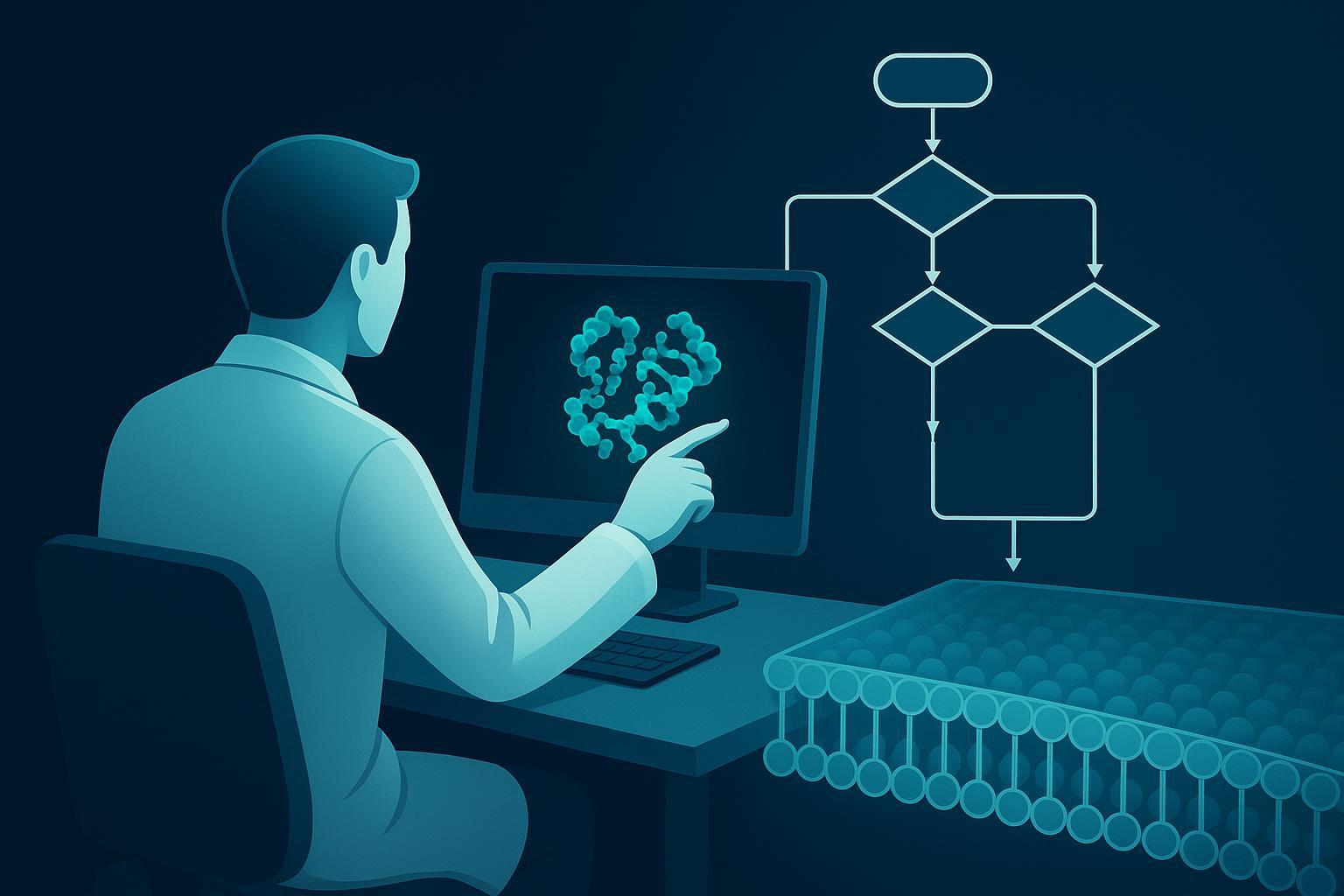
Sequence design starts from the region you need to interrogate, not from a catalogue. Decide first whether the peptide must mimic a natural transporter ligand, compete at a known binding site, kapa Reka simply raise an antibody against a loop. That decision fixes the length, the terminal chemistry, and how much of the sequence can be changed without losing the interaction you want to measure.
SLC transporters are unusually unforgiving here. Li-transmembrane tse otlolohileng li na le hydrophobic 'me mehatla ea tsona ea cytoplasmic hangata e ruile haholo., 'me likarolo tsena ka bobeli li etsa hore kopano ea mekhahlelo e tiileng le tlhoekiso ea morao-rao e be thata ho feta epitope e tloaelehileng ea protheine e qhibilihang.. Lebella chai e tlase e tala, ho bokellana ho feta nakong ea cleavage, le fensetere e fokolang ea ho hloekisa. PHT1 (SLC15A4) ho hiroa ha TASL ke ntlha ea bohlokoa ea litšupiso: e bonts'a kananelo ea SLC-ligand e rarollotsoeng boemong ba limolek'hule, e leng boemo ba lintlha tseo tatellano ea hau e lokelang ho li hlompha (Tlhaho Puisano, 2023).
Ho latela melao e 'meli e sebetsang. Odara analoge e sa ngoloang hammoho le mofuta o mong le o mong o ngotsoeng, kahoo monehelo oa leibole o ka lekanyetsoa ho fapana le ho nahanoa. 'Me u tšoare khetho ea tatellano e le siling mosebetsing oa morao-rao: ha ho na boemo ba tlhoekiso kapa ts'ebetso ea tlhahlobo e khutlisetsang tšebelisano tatellano e sa kang ea kengoa.
Fluorescent and Biotin Labels: Choosing the Right Probe
Khetha leibole ho tsoa ho sebopeho sa tlhahlobo, eseng ho tsoa ho seo likepe li lebelo ka ho fetisisa. Li-labels tsa Fluorescent li lumellana le litšoantšo le sebaka sa subcellular; biotin labels sutu tlamang, dibopeho tsa ho hula fatshe le ho hapa bokahodimo. Fumana odara eo morao 'me reajente e ka etsa hore palo eo e se ke ea sebetsa.
Caveat e lokela ho boleloa ka ho hlaka: fluorophore ka boeona e ka fetola boitšoaro ba lipalangoang, kahoo peptide e ngotsoeng ha se feela hore ke moemeli ea tšepahalang bakeng sa ea sa ngolisoang (PMC, ho tsamaisa peptide ea kalafo ho pholletsa le litšitiso tsa mala, 2021-06-15). Tšoara phetoho leha e le efe ea kamano e bonahalang kapa tekanyo ea ho nka e le thepa ea conjugate ho fihlela u bontšitse ka tsela e fapaneng..
Molemo oa Biotin ke hore o lula o le ka ntle ho tsela ea optical. A published single-cell flow cytometry uptake method quantitates peptide fluorescence per cell and uses sodium azide to separate energy-dependent internalisation from surface binding, then trypan blue, trypsin or pronase stripping to separate internalised from surface-bound peptide (PMC, single-cell flow cytometry peptide uptake assay, 2016-12-05). Those controls are what turn a fluorescence number into a mechanistic claim, and they only work if you know which side of the membrane your signal sits on.
Budget the label into the timeline as well as the design. N-terminal biotin, biotin-Ahx, FAM and FITC-Ahx additions carry roughly a two-business-day penalty on top of standard synthesis (GenScript custom peptide services, live service page, kgutlisitsoe 2026-02-12).
|
Label |
Best-fit assay |
Moeli o ka sehloohong |
Turnaround penalty |
|---|---|---|---|
|
Fluorescent (FAM, FITC-Ahx) |
Imaging, localization, flow-cytometry uptake |
Fluorophore e ka fetola boitšoaro ba lipalangoang; e hloka li-azide le li-control tsa ho hlobolisa ho toloka |
+2 matsatsi a khoebo |
|
Biotin / biotin-Ahx |
Binding, theolela fatshe, ho tshoaroa ka bokahodimo |
Ha ho mokhoa oa ho bala o tobileng; e hloka mohato oa ho lemoha |
+2 matsatsi a khoebo |
|
E sa ngoloang |
Tlholisano e tlamang, lipalangoang kinetics |
E hloka mokhoa o ikhethileng oa ho tseba |
Ha ho letho |
Key Takeaway: Bapisa leibole le mokhoa oa tlhahlobo pele, joale netefatsa hore conjugate e itšoara joaloka peptide ea motsoali pele u haha sephetho ho eona.
Stability-Enhancing Modifications and Their Trade-offs
Liphetoho tsa peptide tse matlafatsang botsitso li eketsa hore na moaho o pholoha nako e kae ha ho etsoa tlhahlobo, empa k'hemistri e le 'ngoe e rekang fensetere eo e ka fetola kamoo peptide e tlamellang mopalami oa eona ka thata hakae. Tšoara phetoho e 'ngoe le e' ngoe e le phetoho e hlokang taolo ea eona, eseng joalo ka ntlafatso ea mahala.
Litšireletso tsa kamehla ha li lefelle letho le eketsehileng. N-terminal acetylation le C-terminal amidation ke likhetho tse tloaelehileng, and suppliers typically offer them at no additional charge alongside a catalog of more than 300 functional-group modifications (GenScript). Terminal blocking mainly defends against exopeptidase trimming, which is often the first thing to erode a peptide in serum or a long incubation.
Each benefit carries a cost. Higher purity grades recover less material: research grade at 85-95% purity returns 40-60% of the crude, and ultra-pure material at 98% or above returns only 20-40% (KeriSite International, kgutlisitsoe 2026-07-09). Counterion chemistry is a related constraint: trifluoroacetate stays firmly bound to the free N-terminus and to basic residues such as Arg, Lys, and His, and removing it for a biocompatible salt form takes an extra ion-exchange step (Bachem, kgutlisitsoe 2026-07-28).
Tlhokomediso: A stabilized construct can silently change transporter affinity or narrow the very assay window you set out to measure. Etsa papiso e sa fetoloang tekong e le 'ngoe e le hore phetoho efe kapa efe e bakoa ke phetoho ho fapana le peptide ka boeona..
Analytical Testing and QC: What Your Data Package Must Prove
Peresente ea bohloeki ka bo eona ha e bontše letho. Palo e fetoha bopaki feela ha e fihla ka mokhoa o e hlahisitseng, tlhahlobo ya boitsebiso e netefatsang tatellano, le litekanyetso tsa kamohelo tseo mofani oa thepa a li entseng pele ho matha. Kopa ka boraro ba tsona, 'me u botse data e tala ka mor'a bona.
Palo ea bohloeki eo u e hlokang e itšetlehile ka seo peptide e lokelang ho se etsa. Tataiso ea Bachem ea taolo ea boleng ba peptide e beha menyako ho feta 95% bakeng sa lithuto tsa ho sebelisana le li-receptor-ligand le liteko tsa ho thibela kapa tsa tlhōlisano, 90 ho 95% bakeng sa mosebetsi oa quantitative enzyme-substrate, le holimo 80% bakeng sa blotting ea Bophirimela. Morekisi ea qotsang sehlopha se le seng bakeng sa kopo e 'ngoe le e 'ngoe o u joetsa hore ha a so nahane ka ea hau.
Boitsebiso ke teko e fapaneng le bohloeki. Peptide e ka ba joalo 98% hloekile mme e ntse e le tatellano e fosahetseng. Tlhaloso ea QC ea Wikipedia e amohela boima bo lekantsoeng ka har'a ± Da 2 ea boima ba theoretical monoisotopic, ho atolosa ho ± 5 Da ka holimo 3 kDa, nakong eo Li-Labs tsa ILS e tlaleha lifensetere tse thata ho tsoa ho LC-MS: ± 0.5 Da ka quadrupole e le 'ngoe le ± 0.01 Da ka lisebelisoa tse phahameng. Bapisa mamello ho sesebelisoa, 'me u hlahlobe hore boima bo tlalehiloeng ke bona bo hlokometsoeng, eseng boleng ba khopolo-taba bo boletsoeng hape.
Joale ho na le lekhalo pakeng tsa bohloeki le bongata. Vial e ngotsoeng 10 mg e ka tšoara feela 6 ho 8 mg ea peptide ea 'nete hang ha li-counterions le mongobo li baloa, joalo ka ha ILS Labs e bolela ka kakaretso ea QC. Ke ka lebaka leo litaba tsa net peptide li leng tsa setifikeiti hammoho le bohloeki, le hore na ke hobane'ng ha tatellano e ruileng ea mantlha e bonts'a maemo a tlase a letlooa ho tsoa ho sebopeho sa letsoai, ntlha eo Bachem a e hlalosang ka ho hlaka. Lekanya ts'ebetso ea hau ea ts'ebetso khahlanong le litaba tsa marang-rang, eseng boima ba vial, kapa molarity e 'ngoe le e 'ngoe e tlase e fosahetse ka khutso.
Litlhoko tsa Endotoxin li lekana le thuto. Lisebelisoa tsa boemo ba lipatlisiso hangata li hlalosoa ka tlase 10 EU/mg, preclinical ka tlase 1 EU/mg, le kliniki ka tlase 0.25 EU/mg tlas'a meeli ea FDA parenteral, ka tlhahlobo ea LAL ho latela USP <85> joalo ka mokhoa oa ho rekota (wikipept; Li-Labs tsa ILS). Bakeng sa liteko tsa li-transporter tse thehiloeng ka lisele, boemo ba sehlopha sa lipatlisiso hangata bo lekane, empa tlhaloso e lokela ho boleloa ho e-na le ho nahanoa.
Ka hona, sephutheloana se felletseng sa tšebeliso ea lipatlisiso se na le bohloeki ba RP-HPLC ho UV 214 kapa 220 nm on a C18 column with an acetonitrile/0.1% TFA gradient, LC-MS boitsebiso, litaba tsa peptide, LAL endotoxin per USP <85>, a rapid sterility screen, and heavy metals by ICP-MS per USP <233> and ICH Q3D (Li-Labs tsa ILS). Impurities above 0.5% should be characterised rather than merely counted, with LC-MS/MS used for sequence coverage and fraction identification (wikipept).
|
Teko |
Mokhoa |
Typical acceptance criterion |
|---|---|---|
|
Bohloeki |
RP-HPLC, UV 214/220 nm, C18, acetonitrile/0.1% TFA gradient |
>95% receptor-ligand and blocking assays; 90-95% enzyme-substrate; >80% Western blot |
|
Boitsebiso About |
ESI-MS kapa MALDI-TOF; LC-MS single quad or high-resolution |
±2 Da (±5 Da above 3 kDa); ±0.5 Da single quad, ±0.01 Da HRMS |
|
Likahare tsa peptide tsa Net |
Quantitative amino acid analysis or nitrogen determination |
Reported per lot; expect 60-80% of vial weight |
|
Counterion |
Ion chromatography or NMR |
TFA kapa acetate, stated on the CoA |
|
Endotoxin |
LAL per USP <85> |
<10 EU/mg research grade; <1 EU/mg preclinical |
|
Boemo bo sa hloekang |
LC-MS/MS for peaks >0.5% |
Litšila tsa motho ka mong li tsebahalitsoe le ho baloa |
Teko e sebetsang ea sephutheloana sa data e bonolo: mohlahlobi a ka etsa sephetho sa hau bocha ho tsoa ho eona ntle le ho ikopanya le mofani oa thepa? Haeba chromatogram e se na fensetere ea ho kopanya, bongata bo boholo ha bo na boleng bo hlokometsoeng, kapa litaba tsa marang-rang ha li eo, karabo ke che.
Lot-to-Lot Consistency and Reading a Certificate of Analysis
Setifikeiti sa tlhahlobo ke tseko ea mofani oa thepa mabapi le sehlopha se le seng, ha se tiisetso ea hore sehlopha se latelang se tla e bapisa. E nke e le qalo ea ho netefatsa, mme o hlalose mamello eo o tla e amohela pele o etsa odara.
Phapang pakeng tsa palo e boletsoeng ea bohloeki le e lekantsoeng e ka ba bophara. A 2022 boithuto ba laboratori bo fumane hore li-peptide li ngotsoe ho 98% kapa ho feta ka mokhoa o le mong HPLC ho tloha ho 94.2% ho 99.1% ha li-laboratory tse tharo li li tsamaisa hape ka likholomo tse fapaneng le mekhahlelong ea mehala (KeriSite International, kgutlisitsoe 2026-07-09). Khetho ea mokhoa feela e tsamaisa palo.
Linyeoe tse ikemetseng tsa tlhahlobo e ncha li supa ka tsela e ts'oanang. Ka sete e le 'ngoe ea lihlahisoa tse hlano tse hlahlobiloeng hape ho tsoa sehlopheng se seholo sa 30, bane ba lekanya hofeta 10% ka tlase ho bohloeki ba bona ba CoA, le sehlahisoa se thathamisitsoeng ka holimo 98% khutla ka 67%. Mohlala o fapaneng o bontšitse a 99.2% CoA eo litaba tsa eona tsa peptide li neng li reriloe 76% hobane mofuta o kopaneng oa 16-mer o phahamisitse 'malo oa bohloeki (KeriSite International, kgutlisitsoe 2026-07-09). Hlokomela mohloli: KeriSite ke morekisi ea hlolisanang, 'me linyeoe tsena li ngotsoe ke barekisi, kahoo li bale e le papiso ea mokhoa oa ho hlōleha ho e-na le lipatlisiso tse sa nke lehlakore.
Seo CoA e se tlalehang se fapana ho ea ka morekisi. QC suite ea barekisi ba ka sehloohong e kenyelletsa litaba tsa metsi ka titration ea Karl Fischer, dikahare tsa naetrojene ka tlhahlobo ea mantlha joalo ka tekanyo ea litaba tsa peptide, TFA e setseng ka ion chromatography, le kopanelo kgahlanong le maemo a referense (Bachem, kgutlisitsoe 2026-07-28). If your CoA lists purity and molecular weight only, you are missing the fields that explain a mid-study shift.
Put the acceptance targets in the order itself. These are the batch-to-batch tolerances worth specifying:
|
Paramethara |
Acceptance target |
|---|---|
|
HPLC nako ea ho boloka |
±0.2 min |
|
Bohloeki |
±0.5% area |
|
Observed molecular weight |
±0.5 Da |
|
Likahare tsa Peptide |
±5% |
|
Likahare tsa metsi |
|
|
Likahare tsa Counterion |
±3% |
Suppliers working to tighter internal targets report purity CV below 0.5% and retention-time CV below 1.0%, with in-house specification pass rates above 95% (KeriSite International, kgutlisitsoe 2026-07-09). Ask a prospective supplier for their multi-batch CV data, not just a single-batch CoA. Lot-to-lot consistency is a process claim, and the only evidence for it is a distribution across batches.
Common Misconceptions About Peptide Reagents in Transporter Work
The most expensive misconception in transporter work is that a high purity number means a valid reagent. Purity is one property among several, and the assumptions that quietly invalidate a peptide usually sit outside the purity figure entirely.
A labeled peptide is interchangeable with its unlabeled analog. Ha se. Adding a fluorophore or biotin changes molecular weight, hydrophobicity, and often transporter affinity, so a labeled probe needs its own binding characterization rather than inheriting the unlabeled peptide’s numbers. Tlhahiso ea Peptide
A certificate-of-analysis purity figure transfers across analytical methods. Ha ho joalo. A value obtained by one HPLC method is not comparable to a value from a different gradient, kholomo, or detection wavelength, so compare figures only when the method matches.
Net peptide content is ignored when calculating molarity. Net peptide content changes every molarity calculation. Ho lekanya thepa ka boima bo feteletseng le ho e nka e le peptide e hloekileng ho feta boholo ba reagent e sebetsang ka har'a tube., ka linako tse ling ka moeli o pharaletseng.
Lintho tsa letsoai tsa TFA li kena ka ho toba litekong tsa lisele tse hanyetsanang le ho hanyetsa. Litlhahlobo tse thehiloeng ho lisele li angoa ke counterion, mme kereiti e thathamisitsoeng bakeng sa litlhahlobo tseo ke ≥98% litaba tsa peptide tse fanoeng e le TFA kapa letsoai la acetate. (KeriSite International, 2026-07-09). Moo counterion ka boyona e sitisang ho bala, netefatsa foromo ea letsoai pele ho tlhahlobo, eseng kamora.
Key Takeaway: Phoso e theko e boima haholo ha se palo e tlase ea bohloeki. Ke reagent e fetisitseng lintlha tsohle tse boletsoeng ha e ntse e lutse mohopolong o sa lebelloang oa ho ngola, mokhoa, molarity, kapa sebopeho sa letsoai.
Mohlala o Sebetsang: One Construct Through the Cascade
Sehlopha sa lipalangoang se qalang ho tsoa ho substrate motif e tsebahalang hangata se etsa li-peptide tse tharo ka ho bapisa: analoge e sa ngoloang ea litšupiso, mochine o ngotsoeng ka fluorescent, le biotinylated capture reagent. Analoge ea litšupiso e beha motheo. Ntle ho eona, phetoho ea lets'oao ho tsoa ho probe e ngolisitsoeng e ke ke ea amahanngoa le leibole ho fapana le tatelano ka boeona..
Moralo oa tatellano o qala ka lintlha tse khethollang sepheo seo ho tsejoang hore se sebelisoa, kaha ho amoheloa ha peptide ke SLC ho ka rarolloa joang ka mokhoa o ipapisitseng le ho boloka mabitso ao.. Liphetolelo tse ngotsoeng le tsa biotinylated li na le tatellano e tšoanang ea mantlha, ka phetoho e behoang boemelong kapa boemong bo pepeneng ka solvent hofeta ka hare ho sefahleho se tlamang.
Nakong ea tlhahlobo, li-azide le li-stripping control li tiisa hore lets'oao le bonts'a tlamo e itseng ho fapana le papatso e sa tobang.. QC e haha kaho pele e fihla mohatong oo: purity-by-application matrix e tiisa hore peptide e sebetsa ka mokhoa o reriloeng oa buffer le mokhoa oa ho lemoha, le li-peptide tsa net, eseng boima bo feteletseng, e beha molarity e sebedisoang palong e tlamang.
Limitations and When Peptides Are the Wrong Tool
Li-peptide ke sesebelisoa se fosahetseng ha lenaneo le hloka mokhoa oa ho bala oa sepalangoang o seng o le teng. Sebaka sa lipalangoang se na le sebaka se moqotetsane sa tlhahlobo ea ts'ebetso, kahoo reagent ea peptide e ka fana ka tlamahano, data ea sebaka kapa ea kamano, empa ha e khone ho emela tekanyo ea sepalangoang ka boeona. Haeba potso ke hore na substrate e tsamaea ka mose ho lera, peptide probe e araba potso e fapaneng.
Mekhaniki ea phihlello e fapanyetsanang e beha moeli oa bobeli. Hobane liprotheine tsena li potoloha lipakeng tsa kahare- le libopeho tse shebaneng le kantle, liteko hangata li hapa naha e le 'ngoe ka nako, 'me peptide e ntlafalitsoeng khahlanong le naha e' ngoe e ka 'na ea se ke ea tlaleha ho e' ngoe. Label perturbation e kopanya sena: ho hokela fluorophore kapa biotin ho ka etsa hore tekanyo e tlamang e se ke ea sebetsa, le liphetoho tse matlafatsang botsitso li ka fetola kamano e lekaneng hoo mohaho o tsitsitseng o seng o sa sebetse e le papiso e tobileng khahlanong le tatellano ea motsoali..
Tšoara leha e le efe ea tsena e le lebaka la ho fihlella bakeng sa baeloji ea meralo, motsoako oa sesebelisoa o tiisitsoeng kapa tlhahlobo ea orthogonal sebakeng sa eona. Ho tseka ho fetelletseng seo sehlopha sa reagent se ka pakang litšenyehelo tsa kotara ea lenaneo.
Rea qala: First Steps for a Transporter Peptide Project
Hlalosa tlhahlobo eo reagent e lokelang ho e sebeletsa pele o kopa eng kapa eng. Mekhoa ea ho amohela e tla pele: tlhoeko kereiti, litaba tsa peptide, sebopeho sa letsoai, mamello ea batch-to-batch, le mekhoa ea tlhahlobo e tla bonts'a e 'ngoe le e' ngoe. Khoutu e kopiloeng pele li-specs tseo li le teng hangata e khutla ka menahano eo u sa e khethang.
Mehato e meraro e tlosa boholo ba likhohlano:
-
Ngola litekanyetso tsa ho amohela, ebe u kopa qotso. Hlalosa sebopeho sa tlhahlobo, buffer, ho tsepamisa maikutlo, le mamello eo le tla e amohela pakeng tsa lotho.
-
Laela analoge e sa ngolisoang haufi le mohaho o ngotsoeng. E u fa taolo bakeng sa label ka boeona le mokhoa oa ho netefatsa hore phetoho leha e le efe ea pontšo e tsoa ho phetoho, eseng peptide.
-
Kopa sephutheloana se felletseng sa tlhahlobo, eseng sebopeho sa bohloeki. HPLC, spectrometry ea boima, le setifikeiti sa tlhahlobo se u lumella ho netefatsa boitsebiso hammoho le bohloeki.
Etsa moralo oa nako ho potoloha k'hemistri. Sebopeho sa tloaelo se tloaelehileng se sebetsa hoo e ka bang 2 ho 3 libeke, tatellano e fetotsoeng 4 ho 6 libeke, le kopano 3 ho 5 libeke (Litšebeletso tsa Tsingke peptide synthesis, kgutlisitsoe 2026-08-21). Haeba letsatsi la hau la tlhahlobo le behiloe, qala ka moaho o fetotsoeng.
Haeba u batla maikutlo a bobeli mabapi le hore na sepheo sa hau le ho bala hoa lumellana pele u etsa tatellano, bua le setsebi kapa kopa tlhahlobo ya kgonahalo. MOL Changes e fana ka litšebeletso tsa peptide tse tloaelehileng, kahoo tšoara sena e le thahasello ea khoebo ha u lekanya keletso e ka holimo.
Lipotso Tse Botsoang Khafetsa
Ke boemo bofe ba bohloeki boo ke bo hlokang bakeng sa tlhahlobo e tlamang ea transporter?
Ka holimo 95% ke moeli oa ho sebetsa oa ho sebelisana le li-receptor-ligand le ho thibela kapa liteko tsa tlhōlisano, ho latela tataiso ea bohloeki ba peptide ea Bachem. Bohloeki feela ha bo etse hore reagent e tšoanelehe ho sebelisoa: e kopanye le netefatso ea boitsebiso le palo ea lintlha tsa peptide pele u bala molarity.
Na lengolo la fluorescent le ka fetola tsela eo peptide ea ka e sebelisanang le sepalangoang ka eona?
Ee. Fluorophore ka boeona e ka fetola boitšoaro ba lipalangoang, joalo ka ha ho tlalehiloe ho a 2021 ho ithuta ka li-analogues tsa fluorescent substrate. Etsa papiso e sa ngolisoang ka mokhoa o ts'oanang hore o tsebe ho arola litlamorao tsa tatellano..
Ke netefatsa joang boitsebiso ba peptide eseng ho hloeka ha eona feela?
Netefatsa ka bongata. Boima bo lekantsoeng bo lokela ho oela ka hare ho ± 2 Da ea theoretical monoisotopic mass ka ESI-MS kapa MALDI-TOF., ho tiisa ho ±0.5 Da ka single-quad LC-MS le ±0.01 Da ka MS e phahameng, ho latela litlhaloso tsa tlhahlobo tsa ILS Laboratories. Tsela ea ho hloeka ntle le bongata ba bongata ha e u bolelle letho mabapi le hore na tatellano e nepahetseng e entsoe.
Likahare tsa peptide tsa net li bolela'ng le hore na ke hobane'ng ha li le bohlokoa?
Net peptide content ke bongata ba peptide ea 'nete ka har'a vial hang ha li-counterions le metsi a setseng a tlalehoa., 'me e ka lula hantle ka tlase ho palo ea bohloeki. ILS Laboratories e hlokomela seo 10 mg ea phofo ea lyophilized e ka ba le feela 6 ho 8 mg ea peptide, e fetolang palo e 'ngoe le e 'ngoe ea molarity tlase.
Na ke kopa TFA kapa foromo ea letsoai ea acetate?
E itšetlehile ka tlhahlobo. Trifluoroacetate e tlamella ka thata ho N-terminus ea mahala le liketane tsa mahlakoreng 'me e ke ke ea tlosoa ka botlalo., kahoo mosebetsi o thehiloeng liseleng o thibelang li-counterion-sensitive bakeng sa letsoai la biocompatible le fapanyetsanoang ka ion, joalo ka ha Bachem le KeriSite ka bobeli ba hlalosa. Litlhahlobo tse tlamang ho buffer hangata li mamella TFA; litlhahlobo tsa lipalangoang tsa lisele tse phelang hangata ha li joalo.
Ke lokela ho lebella phapang e kae ea lotho lipakeng tsa lihlopha tsa peptide?
Ho feta kamoo bafuputsi ba bangata ba nahanang kateng. Li-peptides tse ngotsoeng ho 98% kapa ho feta ka mokhoa o le mong HPLC ho tloha ho 94.2% ho 99.1% ho pholletsa le lilaboratori tse tharo ka a 2022 papiso lipakeng tsa laboratori e phatlalalitsoeng ho Amino Acids. Hlalosa mamello ea batch-to-batch ka tatellano: nako ea ho boloka ka hare ho ± 0.2 min, bohloeki ka har'a sebaka sa ± 0.5%., litaba tsa peptide ka har'a ± 5%.
Mananeo a li-transporter a SLC a lebile hokae?
Mabapi le lifomate tsa liteko tse balang tšebetso ea sepalangoang lits'ebetsong tsa bophelo ho fapana le litokisetsong tse ikhethileng tsa membrane, e phahamisang mokoallo bakeng sa moetso wa dipatlisiso. Li-peptide tse ngolisitsoeng ka fluorescent bakeng sa litšoantšo tsa sepalangoang le li-peptide tsa biotinylated bakeng sa lithuto tse tlamang lipalangoang li ntse li tsoela pele ho hlalosoa hammoho morerong o le mong e le hore tatellano e le 'ngoe e sebetse ho bala ka bobeli..
Qetello
Reagent e ntle feela joalo ka bopaki ba tlhahlobo ka mor'a eona, 'me taelo ea cascade e etsa qeto ea hore na u hloka bopaki bofe pele. Peptide e tloaelehileng bakeng sa lipatlisiso tsa sepalangoang sa SLC e fumana sebaka sa eona morerong ha tatellano e lumellana le sepheo, leibole ha e sothe biology eo o e methang, phetoho efe kapa efe ea botsitso e na le mabaka a utloahalang khahlanong le khoebo ea eona, mme sephutheloana sa data se paka boitsebiso, bohloeki, le dikahare ho ena le ho di tiisa. Fumana odara e fosahetseng 'me u e lefelle hamorao, e leng hantle moo phapang ea lotho e bonoang tlhahlobong e ikemetseng e fetohang theko e boima.
Tšimo ha e eme. Mananeo a hlahang a SLC hajoale a nts'etsopele ea bongaka a ntse a hatela pele ho ts'ebetsong le mekhoa ea kalafo ea lefutso, kahoo litlhoko tsa reagent tseo u li ngolang ho latela litlhaloso kajeno li tla lula li fetoha. Iketsetse tloaelo hona joale: hlalosa tlhahlobo pele, ebe ho etsa lipatlisiso, joale litekanyetso tsa ho amoheloa tsa tlhahlobo. Mehato ea pele ea ho Qala ke eona eo u lokelang ho e khutlisetsa sehlopheng sa hau bekeng ena.