



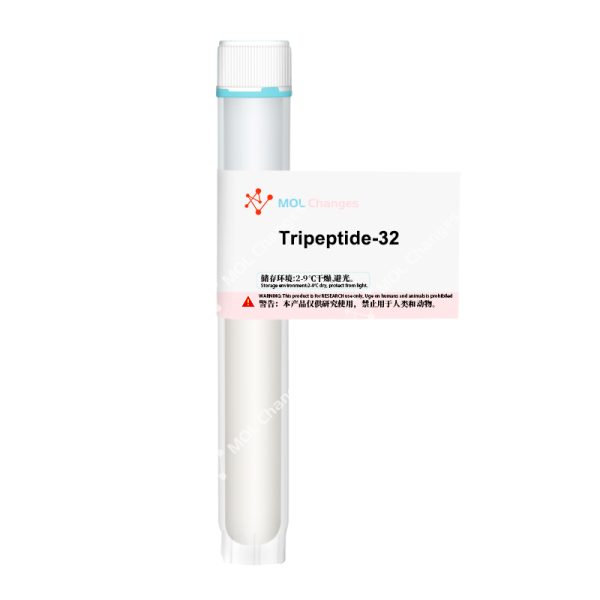
Tripeptide-32 (trade name Chronolux®) is a synthetic peptide made up of serine, threonine, and proline linked together by peptide bonds. As a small signaling peptide, it easily penetrates the skin and communicates with cells; thereby exerting various forms of biological activity through this interaction.
Sequence
Ser-Thr-Pro-NH2
CAS Number
1185583-20-3
Molecular Formula
C12H22N4O5
Molecular Weight
302.33
Tripeptide-32 Related Research
Tripeptide-32 was initially designed to target and regulate the PER1 gene (Period Circadian Regulator 1). This is considered one of the core genes within the biological clock; maintaining the body’s circadian rhythm being its primary purpose.
Unlike many traditional antioxidant peptides (rice bran being a prime example), the most notable mechanism of action for tripeptide-32 lies specifically in this regulation. PER1 itself is a core component of said clock.
Interaction with other genes, primarily via a negative feedback loop (CLOCK and BMAL1 as key examples), regulates the subsequent periodic fluctuations of numerous physiological processes – sleep/wake cycle, metabolism, cell repair to name a few.
Tripeptide-32 works through several interconnected pathways: regulating circadian rhythms. Skin cells, like all body cells, have their own biological clock system; CLOCK and PER1 genes are the ‘core’ of it.
The CLOCK gene acts as a ‘starter’ for activating multiple cellular activity related genes at set times, direct PER1 activity affecting mitochondrial function, various antioxidant responses and to a large extent energy metabolism.
PER1’s interaction with GPX1 (glutathione peroxidase 1) is one such example – increasing its scavenging of reactive oxygen species, reducing the associated oxidative stress.
Studies continue to show effective external signaling by tripeptide-32.
By promoting the transcription of these core clock genes, tripeptide-32 can help “synchronize” or “reset” disrupted skin biological clocks.
Various physiological activities within cells occur at specific times; maintaining this correct timing is a primary function of the clock system.
Stimulating the synthesis of cell repair proteins: Normal circadian rhythms regulate the synthesis of numerous repair-related proteins.
Tripeptide-32, via a PER1-mediated signaling pathway, facilitates the production of extracellular matrix components – collagen being the prime example, along with other more general forms of elastin.
A material basis for all types of cell regeneration is provided by this process.
PER1 itself regulates specific cell cycle genes (p53 being one, Cyclin D1 if I recall correctly), balancing both proliferation and subsequent apoptosis; skin barrier function and repair capacity are improved by this constant regulation.
Enhancing cell viability and lifespan: Laboratory observations have shown skin cells treated with tripeptide-32 to have stronger viability and to live longer (at least in part due to the above mentioned repair mechanisms).
Increased energy levels are also seen.
The true anti-aging effect is to some extent antioxidant and anti-inflammatory; reducing mitochondrial ROS accumulation being key.
PER1 pathways lead to all of the above, improved or near-normal ATP (Adenosine triphosphate) production and inhibition of inflammatory factors.
Age related diseases (cancer, neurodegeneration being two clear examples) are all linked to PER1 deficiency, so tripeptide-32’s therapeutic potential is a very real and important area of research.
Based on its core mechanism of regulating circadian rhythms, tripeptide-32 shows a wide range of application potential across multiple fields.
Skin anti-aging being one of the more well-established areas, this ingredient promotes collagen synthesis and in some cases, overall barrier function; synchronizing the cellular biological clock of the skin is its primary mode of action.
Estée Lauder’s Advanced Night Repair Serum (the 7th generation, upgraded and recently launched again in April 2025) is a prime example – Bifida Ferment Lysate combined with Tripeptide-32 forms part of their core formula.
Official in vitro experimental data they provide supports this use, increasing (at least temporarily) ATP production (a near universal factor in all forms of cell repair) by up to 46%, and more specific lipid synthesis within the barrier following prolonged periods of ‘staying up late’.
Neurodegenerative diseases are another area of interest; close ties to circadian related disorders make Alzheimer’s type diseases a logical target for any potential intervention via this peptide.
The PER1 gene (to further elaborate) plays a well documented tumor suppressing role, so adjuvant cancer therapy using tripeptide-32 or a derivative, is a line of research currently being pursued.
COA
HPLC
MS

Reviews
There are no reviews yet.