步 1: 分类哪些合成对决策至关重要

在预算减少的情况下, 问题不在于您能买得起哪些肽,而在于哪些肽改变了继续/不继续的决定. 这种重新构建是将可资助项目与停滞不前的项目区分开来的原因: 仅有的 17% 的研究资助申请者在 2025 财年获得奖励, 最低的利率 30 年 (GrantedAI AAU 分析总结, 检索到的 2026-04-05). 早期研究者的成功源于 29.8% 2023 财年至 18.5% 2025财年同期. 当单个失败的开发步骤造成成本时 $200,000 到 $500,000 修复计划并将其推迟三到六个月 (肽参谋, 检索到的 2026-09-10), 您资助的每个合成槽都必须赢得自己的位置.

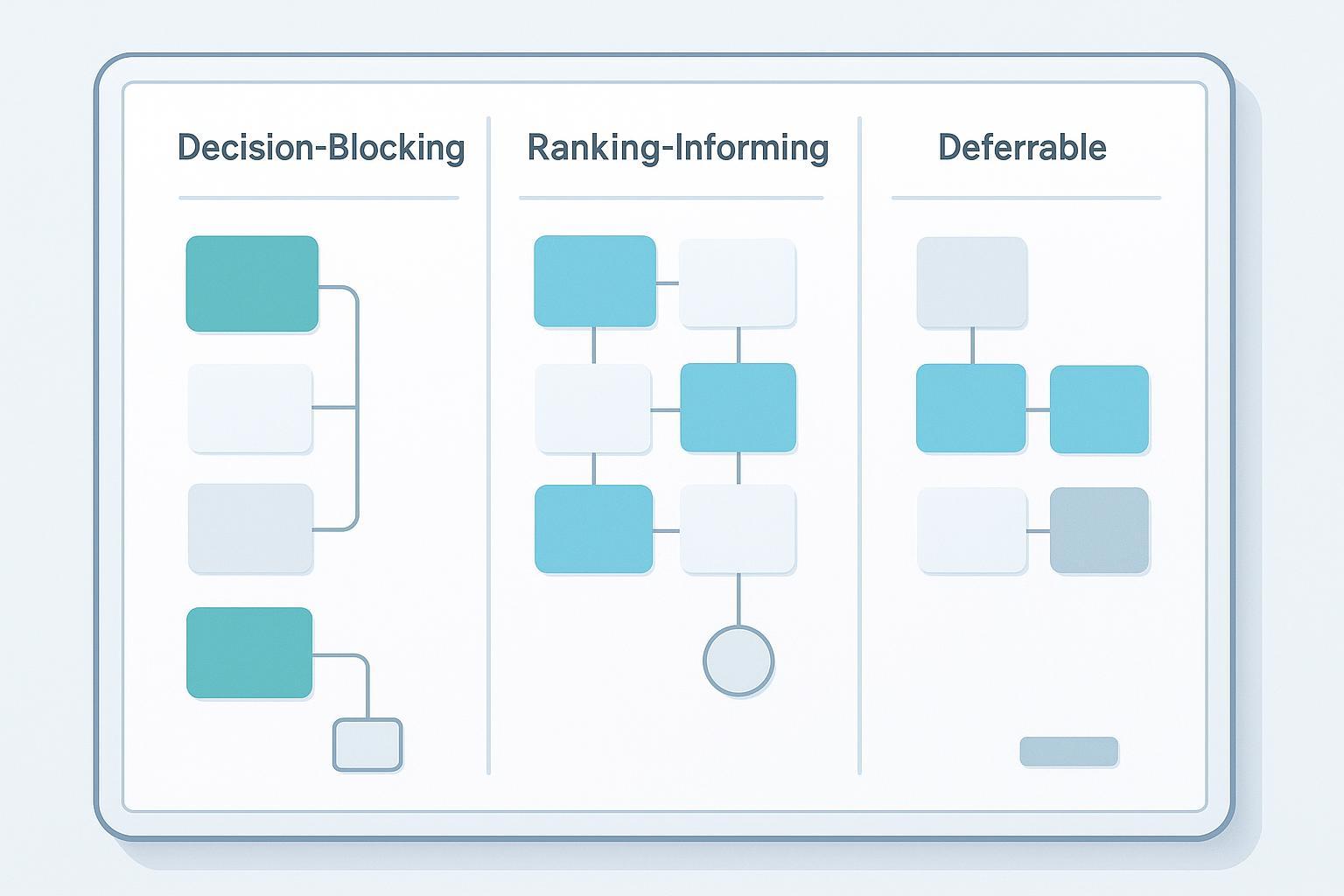
分类的工作原理是根据它提供的决策对每个请求的序列进行排序, 不违背其科学利益. 实用的预算受限路由图将发现阶段综合, 纯化, 和 MS/HPLC 表征处于外包队列的前端, 与方法开发, 配方筛选, 稳定, 并在中期选择生物分析 (PeptideStaff 外包指南, 检索到的 2026-09-04). 使用该顺序作为默认顺序,并且仅当序列确实对决策至关重要时才覆盖它.
|
合成请求类型 |
决策依赖 |
推荐路线 |
|---|---|---|
|
靶标验证肽 |
阻止走/不走 |
资金优先; MS/HPLC 释放的标准纯度 |
|
SAR 模拟集 |
告知排名 |
批量资金; 协商每个模拟的定价 |
|
含量标准 |
告知排名 |
如果检测达到下一个里程碑,则提供资金 |
|
结构探头 |
值得拥有 |
推迟直到做出决定为止 |
|
扩大规模候选者 |
阻止走/不走 |
仅在模拟排名结束后才进行资助 |
失效模式是可预测的. 一个以同等优先级合成清单上所有内容的实验室将减少的预算花在从未做出决定的肽上, 那么就无法资助本来会终止或确认该计划的一批. 树脂上聚集失败的 30 个残基疏水序列是典型案例: 它消耗一个合成槽, 纯化运行, 和数周的分析时间, 而决策关键模拟装置则在其后面等待. 分诊并不是减少科学性. 这是为了确保您资助的科学是您下一个决策所需的科学.
步 2: 按里程碑调整肽表征包的大小
特征分析包回答了四个问题: 身份, 纯度, 内容, 和结构完整性. 完整的答案至少需要四种不同的分析 (赛提克实验室, 2026). 预算泄漏是在每个里程碑时全面深度购买所有四个.

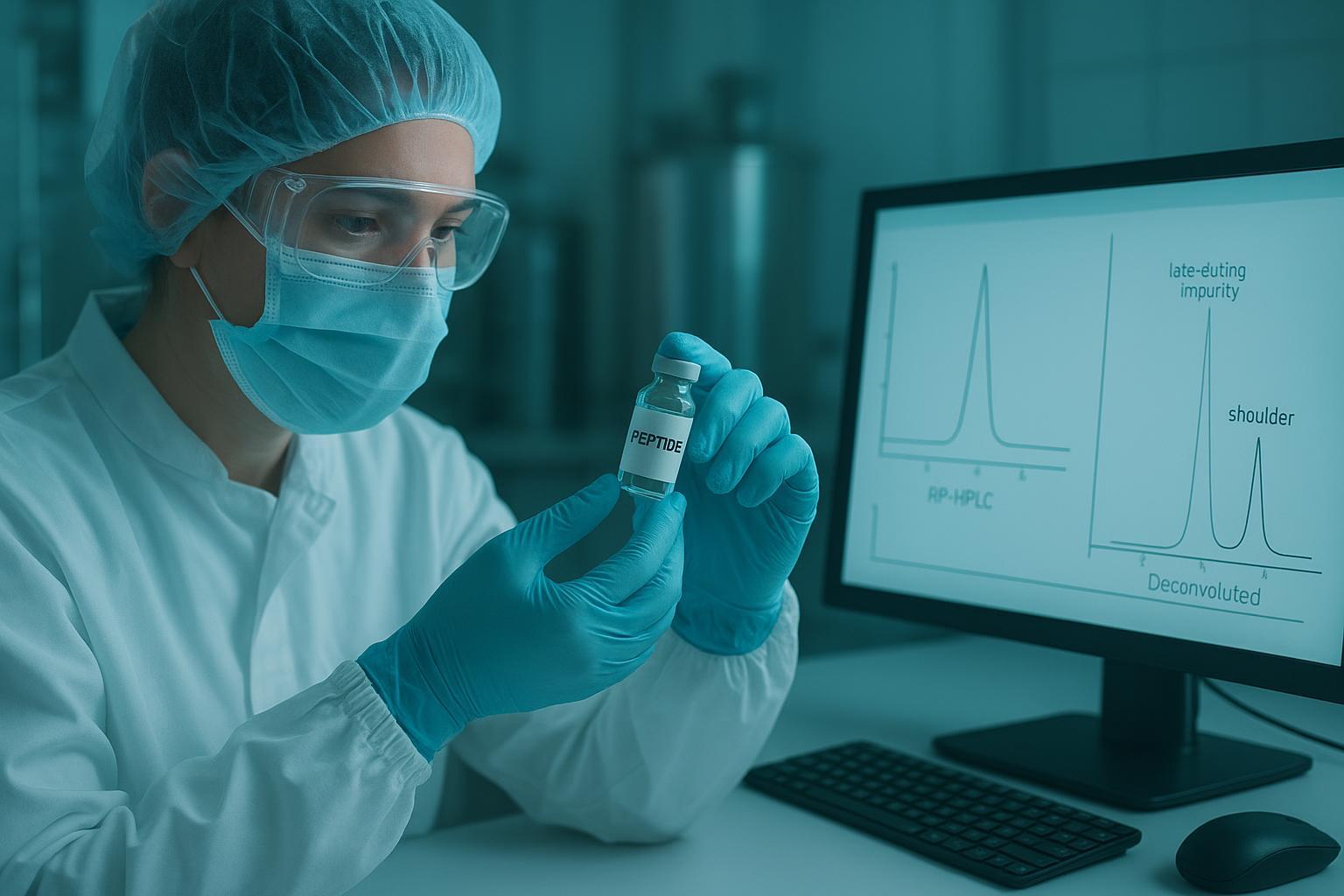
C18 柱上的反相 HPLC, 运行一个 5%-60% 乙腈梯度 0.1% TFA结束 20-40 分钟,紫外检测 214 纳米, 大致量化为 0.05% 最小起订量和 0.01% 报告精度. 它仍然漏掉了紫外线不可见的杂质, 共洗脱缺失和 D 异构体, 和绝对内容. HPLC 纯度是必要的,但还不够 (赛提克实验室, 2026).
大规模确认弥补了部分差距. 解卷积 LC-MS 质量应与理论单同位素质量匹配在 ±0.1 Da 范围内, 现代 Orbitrap 或 Q-TOF 仪器通常保持在 5 百万分之一. 诊断内容值得记住: 甘氨酸缺失显示为-57.02 Da, 甲硫氨酸氧化 +16 和, 天冬酰亚胺 -18 Da (赛提克实验室, 2026).
内容是重力数据误导的地方. 冻干粉通常携带 5%-15% 水加抗衡离子 5%-20% 总质量, so weighing the vial overstates peptide content. Amino acid analysis is the gold standard, and it is what USP and Ph. 欧元. accept (赛提克实验室, 2026).
|
里程碑 |
Minimum assay set |
Can be deferred |
验收标准 |
|---|---|---|---|
|
Screening |
反相高效液相色谱纯度, single-point LC-MS |
氨基酸分析, orthogonal purity, 抗衡离子 |
Mass within ±0.1 Da; purity reported, no specification |
|
Hit-to-lead |
反相高效液相色谱法, 液质联用, 杂质概况 |
氨基酸分析, full method validation |
Mass within ±0.1 Da; impurities above 0.10% identified |
|
Lead optimization |
反相高效液相色谱法, 液质联用, 氨基酸分析 |
Full ICH validation, immunogenicity risk work |
Content by AAA; mass within ±0.1 Da; specified impurities ≤0.5% |
|
Translational / IND-enabling |
Full orthogonal package: 反相高效液相色谱法, 液质联用, AAA, 抗衡离子, 手性的, elemental |
没有任何 |
All peptide-related impurities ≥0.10% identified; 0.10%-0.5% band characterized and justified |
服务 The regulatory thresholds in that last row come from the FDA’s 2023 guidance on synthetic peptide drug products: peptide-related impurities must be identified at ≥0.10%, new specified impurities must stay ≤0.5% of drug substance, and anything in the 0.10%-0.5% band must be identified, 特征化的, and justified as not affecting safety, 功效, or immunogenicity (美国FDA, 2023). Those are filing requirements, not method limits, and the two should not be conflated when you scope a package.
A lean package cannot resolve absolute content without amino acid analysis, cannot see UV-invisible impurities, and cannot separate co-eluting deletions from D-isomers on HPLC alone. Say so in the plan rather than discovering it at filing.
失效模式是可预测的: paying for full orthogonal characterization on screening lots that will be re-synthesized anyway, then lacking the budget for the orthogonal confirmation the IND-enabling lot actually requires.
步 3: 将参与模型与您的决策点相匹配
Choose the engagement model that matches where your go/no-go decisions fall, not the one with the lowest quoted unit price. The three common structures behave very differently across a funding year, and the mismatch is what drains a constrained budget.
The scale of what you are avoiding is worth naming. Building peptide capacity in-house carries capex of $5M-$50M, with itemized total capital of $4.2M-$31M and annual operating costs of $2.7M-$9.5M for 10-30 staff, 根据 PeptideStaff’s cost-benefit analysis of peptide outsourcing versus in-house production. Outsourcing the same work conserves 60%-75% of that capital, with internal build-out running $5M-$15M, per PeptideStaff’s biotech startup peptide outsourcing guide. The same source notes the break-even sits near 5 kg per year, and that groups producing under 50 kg annually typically spend 40%-60% more per gram in-house.
|
方面 |
Fee-for-service |
FTE-style block |
杂交种 |
|---|---|---|---|
|
Commitment horizon |
Per project or per lot |
Reserved capacity over a fixed term |
Core block plus project add-ons |
|
Cash-flow shape |
Spikes at each decision point |
多肽合成 Level monthly draw |
Baseline plus variable spikes |
|
Change-order behavior |
Re-quoted when scope moves |
Absorbed inside the block |
混合: block absorbs, add-ons re-quote |
|
IP and data handling |
Defined per statement of work |
Negotiated once for the term |
Split by workstream |
|
Best-fit decision cadence |
Quarterly or slower |
Continuous, high-volume programs |
Predictable core with periodic surges |
Neither structure is universally better, and both carry a real limitation. A lean fee-for-service engagement cannot absorb a mid-program scope expansion without a re-quote, which can stall work at exactly the wrong moment. An FTE-style block can burn budget on idle capacity if your internal pipeline stalls.
故障模式具有特殊性和常见性: signing an FTE-style block to capture a lower effective rate, then discovering the program’s decision points are quarterly. The reserved capacity sits unused in the quarters that matter, and you have paid for availability you never consumed. If your decisions cluster at milestones rather than running continuously, fee-for-service or a hybrid with a small core block usually fits better. If you are running parallel programs with steady analytical throughput, the reserved block earns its premium.
步 4: 制定应对资金波动的工作计划

A work plan built for a stable budget breaks under a continuing resolution. The FY2026 appropriation that preserved NIH funding near prior-year levels set the program level at $47.493 十亿, 大致 $458 million or about 1.0% above FY2025, and it was enacted through P.L. 119-75 在 2026-02-03 after the administration had requested $27.9 十亿, a cut of about 40% (CASRAI enactment briefing). The same statute bars the 15% flat indirect-cost cap, so the enacted figure is a floor that can move again rather than a settled number.
The disruption is not hypothetical. The same STAT News and MassINC Polling Group survey of 989 NIH-funded researchers found that 43% had cancelled planned research projects, 45% had a grant start delayed, 和 22% had rescinded offers to students, staff, or postdocs (STAT News).
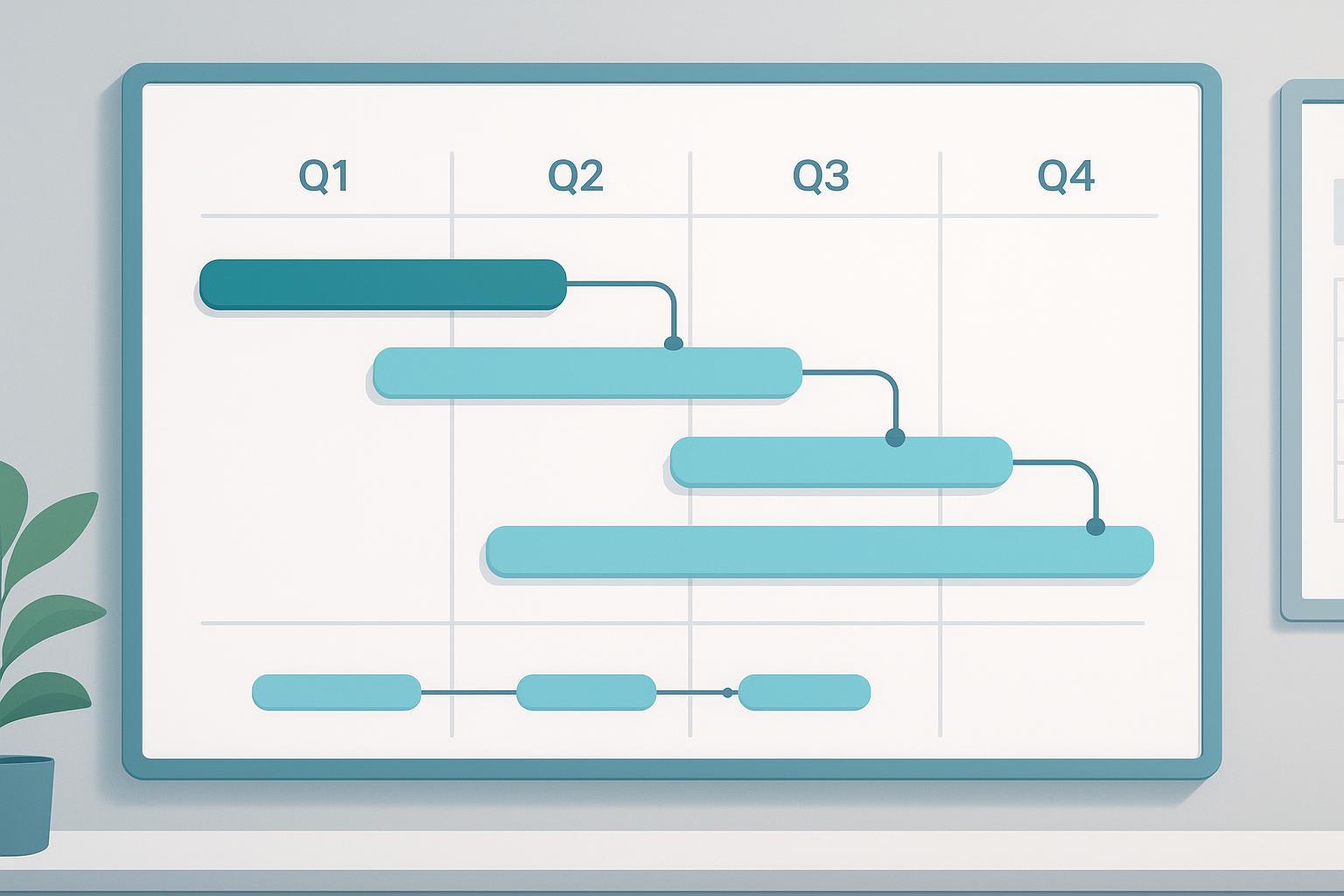
Stage the work so every commitment ends at a decision point you can pause at. Sequence synthesis first, 然后表征, then tox and CMC, and place a 店铺 quarterly gate between each block. If a grant start slips, you stop at the gate with finished data in hand instead of a non-cancellable campaign in flight.
Subaward accounting changes how a CRO engagement is charged. Under NIH’s implementation of the revised Uniform Guidance, modified total direct costs include up to the first $50,000 of each subaward, effective for awards issued on or after October 1, 2024, and fixed-amount subawards above $500,000 require prior approval (NIH Notice NOT-OD-25-059). A peptide synthesis outsourcing strategy that splits work across several subawards therefore recovers indirect costs differently than a single consolidated award, which is worth modelling before you sign.
The failure mode is committing to a GMP campaign or a full IND-enabling tox package on the assumption that next year’s award arrives on schedule. When the start is delayed, the campaign is already running and the money is already spent.
步 5: 在提交之前验证质量和文档
Verify the quality framework and the documentation standard before the first purchase order, not after the first lot arrives. Re-running a synthesis to close a documentation gap costs about what the original synthesis cost (reported CRO cost-per-failure figures), so the cheapest place to catch a gap is the vendor qualification stage.
There is no single peptide-specific rulebook to audit against. Peptide work is governed by a stack of quality-system and analytical standards: 我Q7, 我Q6B, Q2, and the Q3 series, plus FDA cGMP/GLP expectations and, where testing labs are involved, 国际标准化组织/国际电工委员会 17025 和ISO 9001. Cleanroom classification follows ISO 14644.
One exclusion matters when you scope the package. Peptide drugs are specifically excluded from the ICH Q3A/Q3B impurity qualification guidance, so peptide projects lean more heavily on Q6B, compendial methods, and product-specific justification (review of peptide impurity qualification). Ask a prospective partner how they handle that gap, because the answer tells you whether they have built a defensible approach or are borrowing one from small molecules.
Request these five documents before committing budget:
Certificate of analysis with the method reference behind each reported value
Raw chromatograms and spectra, not summarized tables
Amino acid analysis report where peptide content matters
Counter-ion and water content determination
Quality-system certifications relevant to the work (国际标准化组织/国际电工委员会 17025, 国际标准化组织 9001, cGMP as applicable)
The reporting bar for a defensible dossier is higher than a single purity figure. Impurity identification down to 0.1%, RP-HPLC plus LC-MS purity profiling, and two orthogonal methods are the standard expectation from both FDA and EMA, with full raw-data documentation behind them (peptide characterization reporting checklist).
The failure mode is accepting a purity number without the method behind it. A lot reported at 98% from one HPLC channel, with no orthogonal confirmation and no impurity identification below 0.5%, can pass internal review and still fail a regulatory one, because the number cannot be reconstructed from the underlying data. When you evaluate a peptide characterization package, treat the raw data as the deliverable and the summary table as a convenience. 关于
步 6: 建立预算模型并设定审核节奏

Build the model from planning ranges, not from a single quote, and re-check it quarterly against actuals. The ranges are wide enough that a point estimate is a guess wearing a number.
A vendor planning guide’s cost table puts discovery-scale synthesis at $5K-$50K per peptide (肽参谋, 检索到的 2026-09-04), analytical method development at $50K-$200K per method set (same guide), formulation development at $150K-$500K per program, and GMP manufacturing at $200K-$1M per campaign. Toxicology adds GLP 28-day rat tox at $150K-$300K and a full IND-enabling package at $800K-$2M+ (肽参谋, 检索到的 2026-05-26). Treat these as vendor planning tables rather than audited market rates; the toxicology page itself flags its figures as rough estimates.
The failure mode is budgeting from one quote and absorbing a 3-4x overrun when the program moves from discovery-scale synthesis into method development and toxicology without a re-forecast.
要避免的常见错误
The most expensive mistakes in peptide outsourcing are not technical failures. They are scoping and sequencing failures that spend the budget before the decision point arrives, and their cost is measured in failed steps and delayed programs rather than in unit price.
Treating every synthesis request as equally urgent. Queues form because everyone escalates at once. Rank requests by the decision each one unblocks, and let the rest wait a cycle.
Buying full orthogonal characterization at screening. Screening needs identity and rough purity, nothing more. Reserve orthogonal methods for lots that will enter a study.
Choosing an engagement model on unit price rather than decision cadence. A cheaper per-residue rate that cannot pause mid-campaign costs more than a flexible CRO engagement model priced higher per step.
Committing to a campaign that cannot be paused. Funding volatility is the norm, not the exception. If the work plan has no stop point, a delayed award strands the whole commitment.
Accepting a purity value without the method behind it. A number without its chromatographic method and raw data cannot be defended later, and re-running the analysis costs more than requesting it upfront.
结果: 范围广泛的计划是什么样的
If the plan is working, every synthesis lot in flight maps to a named decision, every characterization package matches its milestone, and the next commitment can be paused without stranding work. Those three conditions are checkable, which is what separates a scoped plan from a hopeful one.
The measurable signals are straightforward. Most of your synthesis spend should sit behind a documented go/no-go decision rather than accumulating as inventory. Each lot headed toward a regulatory or formulation milestone should carry orthogonal confirmation, not a single HPLC trace. And cash committed against the next quarterly gate should leave enough uncommitted to absorb a delay.
A reasonable stretch goal is to extend the same triage and scoping discipline to analytical and formulation work. A vendor-attributed survey of outsourcing rates reports that peptide biotechs outsourced roughly 65% of analytical work and 55% of formulation development in 2025, up from about 45% 和 40% 在 2022 (PeptideStaff market note, 检索到的 2026-08-14). The same note projects the peptide CRO market growing from $4.8B in 2025 to $5.5B in 2026 and $9.1B by 2030, 一个 14% 复合年增长率, with analytical services expanding fastest at roughly 19% annually (肽参谋, 检索到的 2026-08-14). Treat both figures as vendor-attributed estimates rather than independent measurements.
State the limits plainly. A lean characterization package cannot resolve absolute content without amino acid analysis, cannot detect UV-invisible impurities, and cannot separate co-eluting deletions or D-isomers on HPLC alone.
常见问题解答
有限的肽预算应有多少用于合成与表征?
There is no fixed split. The allocation follows the milestone, not a percentage rule. Early discovery work usually tilts toward synthesis volume, because you need material to test. As a program moves toward a candidate nomination or an IND-enabling package, characterization takes a larger share, since impurity identification down to 0.1% by RP-HPLC plus LC-MS and two orthogonal methods is the standard expectation. Triage first: which syntheses actually feed a decision this quarter? Fund those fully, including their characterization, rather than spreading a thin budget across every sequence on the list.
我们可以在内部保留一些肽工作以节省资金吗?
Only at volumes most academic and early-stage teams never reach. In-house peptide manufacturing carries capital costs of roughly $5M to $50M and annual operating costs of $2.7M to $9.5M. Outsourcing is typically cheaper below about 1 kg per year, the two approaches break even near 5 kg per year, and in-house only wins above roughly 50 kg per year. Companies producing under 50 kg per year commonly spend 40% 到 60% more per gram in-house. For a constrained research budget, that math rarely favors building internal capacity.
如果合成批次失败或拨款开始延迟,我们该怎么办?
Treat both as planned pause points rather than crises. A failed synthesis step can cost $200,000 到 $500,000 and delay a program by 3 到 6 月, 和 45% of surveyed researchers reported a grant start delay. Build the contingency into the plan: define in advance which syntheses are decision-critical enough to repeat immediately and which can wait, and hold a small reserve for rework. Vendor-reported figures suggest peptide CROs can compress development timelines by 30% 到 50% through established processes, but that is a vendor claim, not a peer-reviewed benchmark, so use it as directional context rather than a planning assumption.
我们如何将按服务付费与 FTE 式的参与进行比较?
Use decision cadence as the criterion. Fee-for-service suits discrete, well-defined lots where you know the sequence, the scale, and the acceptance criteria up front. An FTE-style engagement suits programs with frequent, unpredictable decision points, because it keeps a team available without re-scoping each time. Each model has a real limitation: fee-for-service can add turnaround time at each change order, while FTE-style engagements commit budget whether or not the work is decision-critical that month. Match the model to how often your program actually changes direction.
精益特征包在监管审查中是否站得住脚?
It can be, if it still contains the essentials. Impurity identification down to 0.1%, RP-HPLC plus LC-MS, two orthogonal methods, and full raw-data documentation are the standard expectation from the FDA and EMA. Note that peptides are excluded from ICH Q3A and Q3B, so the applicable thresholds 合成肽 come from the FDA’s 2023 guidance rather than those impurity frameworks. What a lean package cannot do is claim coverage it did not perform: if you skip an orthogonal method or truncate raw data, the gap is visible in review. Scope down deliberately, document what you ran, and state the limits.
结论
Six practices carry a constrained peptide program through the year: triage which syntheses are decision-critical, right-size the peptide characterization package by milestone, match the engagement model to your decision points, stage the work plan against funding volatility, verify quality and documentation before committing, and build the budget model with a review cadence attached. Together they preserve experimental momentum when money is tight, because the sequences that matter keep moving and the ones that can wait are allowed to wait.
The next step is a scoping conversation, 不是采购订单. Request a characterization scope review or talk to a technical specialist about staging a work plan against your quarterly decision gates, so the package you commit to matches the decisions you actually have to make this cycle.
笔记: All peptides and analytical services discussed here are intended for research use only and are not for human or veterinary use.
披露: this article is written for a general research audience; the author has no commercial interest in any specific supplier named or implied. 多肽生产