What Peptide Data Workflows for AI Drug Discovery Actually Require

Peptide data workflows for AI drug discovery are the record-keeping, analytical, and governance practices that make a peptide dataset machine-usable by a predictive model. They cover five areas: sequence and modification records, assay context, impurity data, batch history, and standardized analytical results. What separates them from generic data-readiness advice is that every requirement lands at the level of an individual record field, and each one has to survive both a confidentiality review and a documented validation protocol.
The record-level bar is the part most teams underestimate. The reference treatment of peptide structure notation holds that machine learning pipelines work best from a lossless chemical representation as the primary record, with model-specific encodings derived from it rather than stored as the source of truth (Annotation of Peptide Structures Using SMILES and Other Chemical Codes, 2017). In that approach, InChIKey acts as an identity and deduplication key, while cyclization and crosslinks must be written as explicit connection objects instead of left implicit.
Regulators are moving in the same direction. The FDA’s January 2025 draft guidance on AI in regulatory decision-making introduces a risk-based credibility assessment tied to a defined context of use (FDA draft guidance, content current 2025-01-06). It is a draft, not for implementation, but it signals that AI-ready peptide datasets will be judged on traceability rather than volume.
要点: Three things distinguish these workflows from ordinary data cleanup: field-level record requirements, confidentiality mechanics that let partners share without exposing a lead, and an operational validation protocol rather than a stated principle.
Two misconceptions cause most of the confusion. “Clean data” does not mean “curated data”, a tidy spreadsheet can still be unusable by a model. And a single purity number does not describe a peptide; impurity and batch history data carry the information a model can actually learn from. This section draws on peer-reviewed structure-notation literature and current regulatory guidance, with no vendor sources.
Why Peptide Data Workflows for AI Drug Discovery Matter Now
Peptide data workflows for AI drug discovery matter because the money now moves before the data does. In the 2026 AI deal tracker published by VLS Research, disclosed upfronts cluster at $30–50M against headline values above $1B, roughly 2–3% of headline value paid as cash (VLS Research, AI Drug Discovery Deal Tracker 2026, 检索到的 2026-07-03). Isomorphic Labs–Eli Lilly shows about $45M upfront against over $1.7B in milestones; Noetik–GSK shows $50M upfront on a five-year licensing structure. Note the source: one analyst tracker, with a vendor interest in the AI deal narrative.
The clinical record is the counterweight. Around 90% of molecules entering the clinic never reach approval, and 50–60% of Phase II failures trace to lack of efficacy, figures that have barely moved in two decades (Mao Z & Yan L, Frontiers in Pharmacology, 检索到的 2026-07-03). The same 2024 systematic review of 20 AI-driven programs from 2018 到 2023 found AI-assisted lead optimization cut candidate screening time 30–50% on average, while Phase I/II attrition stayed comparable to industry benchmarks.
这个差距就是重点. Partners can now sign on a model, but a model cannot learn from records that never captured the peptide.
This affects R&D leads, analytical chemistry, data and IT, and the alliance managers who inherit diligence questions after signature.
The Five Data Pillars of AI-Ready Peptide Datasets
AI-ready peptide datasets are built from five record-level pillars, and together they form the readiness checklist a team can score itself against before signing a partnership agreement. Each pillar below is written the same way: why it matters, how to implement it, and what failure looks like when it is missing. The order is deliberate. Identity comes first because every downstream field, from assay context to impurity profile, inherits the errors of an ambiguous structure record. A model trained on a mis-specified sequence does not fail loudly; it learns the wrong molecule and reports confident predictions about it.
Score each pillar honestly. A team that can reconstruct every peptide from its own records, attach assay conditions to every result, and trace every lot to a certificate of analysis is ready to hand data to a partner. A team that cannot is not blocked from partnering, but it should expect the first months of the collaboration to be spent on data remediation rather than model training.
药丸 1: Unambiguous Sequence and Modification Records
Peptide sequence and modification records matter because a model cannot learn from a peptide it cannot reconstruct, and identity errors propagate silently through every downstream prediction. The fix is a lossless chemical representation as the primary record, with model-specific encodings derived from it rather than stored as the source of truth.
Implementation follows a small set of conventions. HELM handles polymer-aware structures, including branches and non-natural monomers, while SMILES serves atom-level graph models. InChI and InChIKey act as deduplication and identity keys across systems. Cyclization and crosslinks belong in explicit connection objects, never as an implicit assumption that “cyclized” means the same thing everywhere. The reference treatment of peptide structure notation covers the rest: multi-letter codes for non-protein or non-natural residues, lower-case annotation for D-amino acids, and residue-level modification annotation in MAP format (Journal of Cheminformatics / PMC).
The failure mode is quiet and expensive. A program records a lactam bridge and a disulfide as “cyclized” in the same field, so the model treats two chemically distinct scaffolds as one. Every prediction built on that column is contaminated, and nothing in the pipeline flags it.
A model-usable record for a modified macrocyclic peptide carries the field set below. MOL Changes supports this structure-first approach in its peptide data work, and the example is replicable with any conformant record system.
|
Field |
Model-usable record |
Typical free-text record |
|---|---|---|
|
Primary representation |
HELM string with explicit connection objects |
Sequence pasted into a notes field |
|
Atom-level encoding |
SMILES derived from the HELM record |
Absent |
|
多肽合成 Identity key |
InChIKey for deduplication |
Absent |
|
Non-natural 合成肽 residues |
Multi-letter codes, defined in a monomer table |
Single-letter approximations |
|
Stereochemistry |
Lower-case D-amino acid annotation |
Not recorded |
|
修改 |
Residue-level MAP annotation |
Free-text note, e.g. “cyclized” |
|
Cyclization type |
Explicit bridge object with positions |
Ambiguous |
|
服务 Crosslinks |
Explicit connection object |
Absent or implied |
药丸 2: Assay Context That Travels With the Result
A binding affinity without its assay conditions is not a training label, it is a number. Assay context has to travel with the result: assay type, target construct and species, readout format, and whether the value was measured or predicted.
The measured-versus-predicted distinction is where most datasets quietly break. 一个 2025 systematic review of epitope predictors found that only 174 的 777 (22%) computationally predicted HLA-binding peptides in one SARS-CoV-2 study were confirmed to bind stably in vitro (npj Vaccines, 2025-08-30). That figure is scoped to a single study, not a general accuracy rate for AI in immunology, but it shows why a predicted value and a measured value cannot share a column without a flag separating them.
⚠️警告: Pooling SPR, fluorescence polarization and cell-based values into one affinity column trains the model on the assay rather than the chemistry. The model learns which laboratory generated the number, not which peptide binds.
药丸 3: Impurity Profiles, Not a Single Purity Number
Peptide impurity and batch history data belong in the record as a profile, not a headline percentage. Two lots reported at 98% pure can behave differently in an assay, and the model needs the impurity envelope and counterion state to see why.
Counterion effects are well documented. In a 2025 review, the M33 peptide as a TFA salt showed 5–30% greater cytotoxicity toward normal bronchial epithelial cells than the acetate counterpart, and MOG peptide formulated with TFA was associated with encephalomyelitis onset roughly 5 days earlier at comparable incidence and severity (Biomolecules, 2025-11-07). A separate review found chloride was the least efficient of the tested anions at inducing helical structure in LL-37 (Pharmaceuticals / Molecules, 2020-12-03). These are formulation-dependent observations, not a blanket statement that any counterion is unsafe.
Implementation means storing impurity retention times, relative areas and the counterion exchange state alongside the purity figure. For validation tiers, 我Q2(R2) sets the validation range rather than peptide purity limits: impurity testing must cover the reporting threshold up to 120% of the specification limit, and purity by area percent is validated from 80% of the lower to 100% of the upper specification limit (我Q2(R2), final guideline 2023-11-30).
药丸 4: Batch History and Lot-Linked Certificates of Analysis
Model trust is a traceability property, which is why lot numbers, certificate-of-analysis linkage and re-test history belong in the dataset rather than only in the quality management system. The ALCOA+ expectations that AI/ML pipelines now have to satisfy are a pre-existing GMP standard extended to a new use case, not a new rule invented for models. Data lineage is flagged as a critical concern as AI/ML integrates with MES and LIMS, and the digital thread is defined as the unbroken chain of data relationships from raw material testing through manufacturing to final product release (Regulatory Perspectives for AI/ML Implementation, PMC, 2025-06-16).
对于小费: Retain re-test and re-assay history rather than overwriting 店铺 它. A superseded value with a timestamp is evidence; a replaced value is a gap.
The failure mode is a double-counted campaign. Three assays run on the same lot get entered as three independent observations, and the model treats one batch as three, inflating confidence in a result that was never replicated.
药丸 5: Standardized Analytical Results and Machine-Readable Formats
Standardized analytical results for peptide AI depend on formats a pipeline can parse without manual cleanup. Machine-readable standards already exist for the analytical layer: mzML for raw mass spectrometry data, mzIdentML and mzTab for identifications and quantification, PX-XML for submission metadata, SDRF-Proteomics for sample and exposure relationships, and USI for stable spectrum identifiers (Proteomics data infrastructure).
Reproducibility also requires the full method block. HPLC method parameters include column chemistry (typically C18), particle and pore size, column dimensions, mobile phases and modifiers, gradient program, flow rate (around 1.0 mL/min analytical), column temperature, 检测波长 (typically 214–220 nm for peptides) and injection amount. Identity must be confirmed by intact-mass LC-MS or MALDI-TOF with observed versus theoretical mass and a stated ppm or Da acceptance window, not by HPLC alone (Phenomenex HPLC knowledge center, 2026-07-29).
The failure mode is a record that says “standard RP-HPLC gradient.” Without the method block, the result cannot serve as a validation anchor, and a partner cannot reproduce it.
Confidentiality: Sharing Peptide Data Without Leaking the Lead
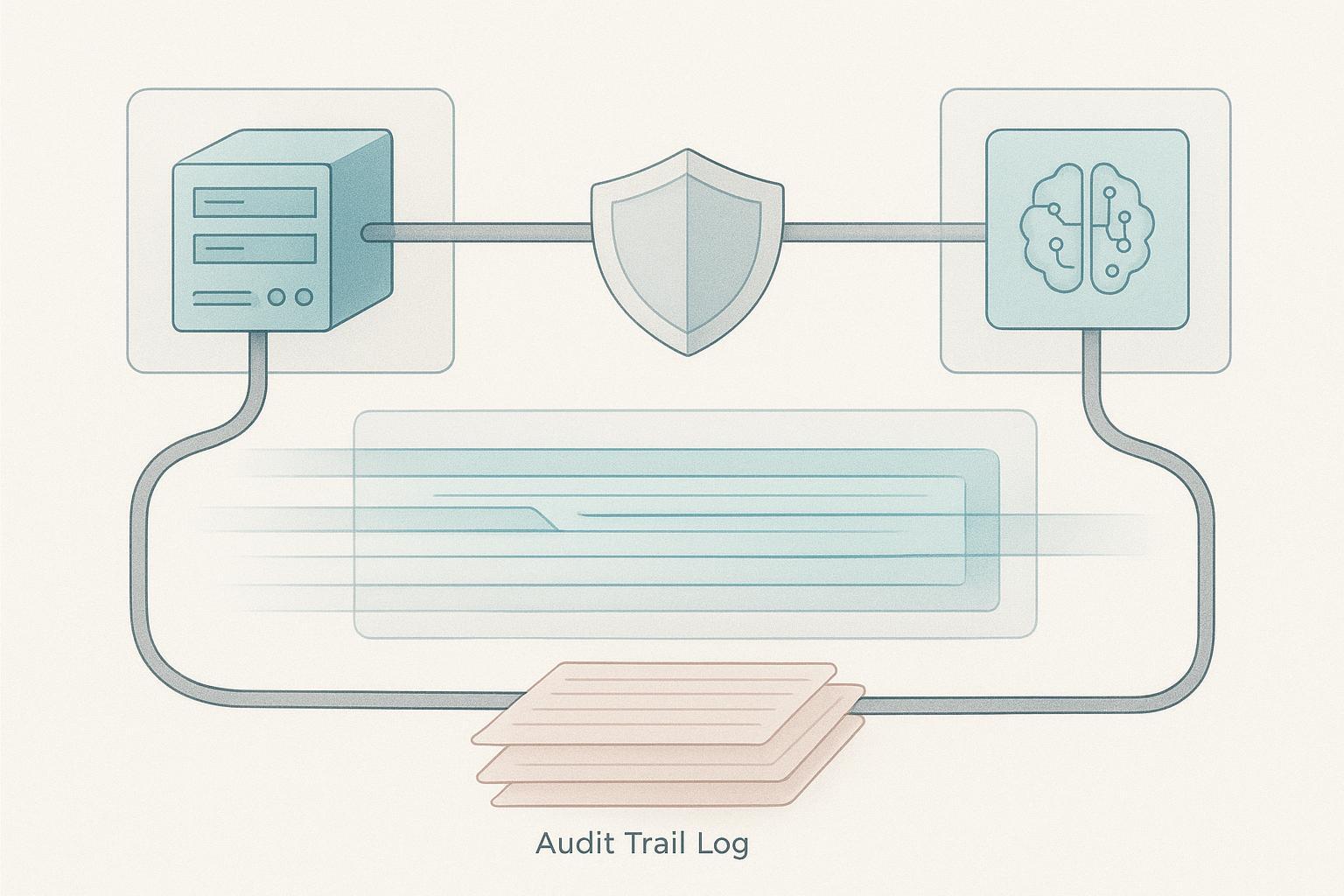
Confidentiality risk in AI peptide partnerships is measurable, not theoretical. 一个 2025 study of drug-discovery neural networks found that in a black-box scenario where only output logits are exposed, such as a model offered as a web service, membership inference attacks identified which chemical structures had been in the training set, and combining several attacks increased the risk (Publishing neural networks in drug discovery might compromise confidentiality, 2025-03-26). The authors note that molecules from minority classes, often the most valuable in drug discovery, are particularly vulnerable, and that unique structures differing from established library compounds may correspond to proprietary leads or novel scaffolds under development.
The operational response is a tiered access model rather than a single data-sharing decision. Sponsors keep raw records in-house; the partner receives de-identified or hashed representations where the modeling task permits; only aggregate outputs leave the collaboration. Contractual limits on what the partner may retain, plus an audit trail on every query against the shared set, close the loop.
要点: De-identification reduces leakage risk but does not eliminate it for structurally distinctive peptides, so tiering and query auditing carry the weight that masking alone cannot.
Scientific Validation: An Operational Protocol, Not a Principle
Validation is not a principle you agree with. It is a sequence you run: orthogonal confirmation first, then independent replication, then reconciliation of every model-facing value back to the raw analytical data it came from. Skipping the third step is the most common failure, because a reconciled number and an unreconciled number look identical in a training table.
Define the orthogonal pair per claim type before you generate anything. For identity, pair intact mass with a second, mechanistically different method rather than a repeat injection on the same instrument. For activity, pair a biophysical binding readout with a cell-based functional readout, because the two answer different questions.
Replication must use an independently synthesized lot, not a re-run of the same material. Running the same assay twice on the same lot measures instrument precision, not generalization. 一个 2025 systematic review of epitope prediction methods found that many current approaches suffer from overfitting to their training datasets, which drastically limits how well they transfer to new targets (npj Vaccines, 2025-08-30). The same review notes that not all binders are immunogenic: a top-ranked epitope may bind antibodies in vitro yet fail to elicit the intended response in vivo, and accuracy on a benchmark does not carry over when the readout, cell line, or target context differs.
That is the failure mode to design against. A validation set drawn from the same campaign as the training set measures memorization, not generalization.
The Benchmark Gap: What Standardization Still Cannot Fix
Standardization is necessary but not sufficient. The field’s benchmarks are new and narrow, and no scorecard can yet measure what it claims to measure.
PepBenchmark, the standardized peptide-ML benchmark released in April 2026 and presented at ICLR 2026, covers 29 canonical-peptide plus 6 non-canonical-peptide datasets across 7 groups, with a unified preprocessing pipeline and a leaderboard spanning four method families: Fingerprint, GNN, PLM, and SMILES. Its authors state plainly that prior work was “hindered by the absence of standardized benchmarks” and suffered “quality issues common in ad hoc pipelines.” That is a real advance, and it is also a narrow one: 35 datasets, one benchmark, one release.
The honest limits matter more for planning than the headline does. No survey gives a single defensible FAIR-adoption percentage for biopharma R&D, and no study counts the proportion of AI drug-discovery papers with leakage or reproducibility defects. Any readiness scorecard is therefore a judgment aid, not a measurement.
⚠️警告: Treat a readiness score as a structured conversation starter, not a validated metric. If a partner asks what your score is benchmarked against, the correct answer today is “our own criteria,” not a published standard.
The external frame is arriving, though. The FDA’s January 2025 draft guidance on AI in regulatory decision-making proposes a risk-based credibility assessment tied to a stated context of use. It is a draft, not for implementation, and it governs submissions rather than discovery. Even so, it points at the question a readiness program should be built to answer: what is this model for, and what evidence makes its output credible for that use?
Getting Started: A 30-Day Peptide Data Readiness Pass
Peptide data workflows for AI drug discovery get tested fastest by pulling twenty peptide records at random and scoring each one against the five pillars. That is a five-minute decision, and it usually settles the question of whether a program is partnership-ready. Most teams find that a handful of records are clean, a larger group is partially complete, and a few cannot be reconstructed at all.
For every field that fails, decide whether the gap is a capture problem or a linkage problem. A capture problem means the data was never recorded, so the fix is a change to what the team collects at the bench. A linkage problem means the data exists somewhere but is not joined to a lot, a method, or an assay readout, so the fix is an identifier and a join, not a new experiment. The two have different owners and different timelines, and treating a linkage problem as a capture problem wastes months.
Then run one peptide through the full chain end to end: identity record, lot-linked certificate of analysis, machine-readable analytical file. Document every point where a human had to intervene by hand. That intervention list is the real scope of the readiness project.
The common hesitation is that this requires replacing the platform. In most cases it does not. It requires field-level discipline on records the team already produces.
下一步: Run the twenty-record scoring pass and bring the intervention list to a technical data-readiness review, where the gaps get mapped to concrete fixes.
常见问题解答
What makes a peptide sequence and modification record unambiguous?
An unambiguous record names the exact chemical structure, not a shorthand that a reader has to interpret. The reference treatment of peptide structure notation treats a lossless chemical representation as the primary record, with HELM used for polymer-aware structures and SMILES for atom-level graph models, InChI or InChIKey as deduplication and identity keys, cyclization and crosslinks written as explicit connection objects, and non-natural residues written in multi-letter codes with lower-case letters for D-amino acids. Residue-level modification annotation, as used by MAP, keeps a lactam bridge distinguishable from a disulfide. A record that says “modified peptide” without that detail is clean-looking but not AI-ready.
Is HELM or SMILES the better primary record?
Neither is universally better; the choice follows the model that will consume the record. HELM preserves polymer-level topology and handles non-natural monomers and connection objects cleanly, which suits sequence-aware and macrocycle work. SMILES gives an atom-level graph that most graph neural networks and cheminformatics toolkits read directly. Programs that need both store one as the primary record and generate the other, with InChIKey as the join key so the same molecule is never counted twice.
How much assay context is enough?
Enough that a different lab could repeat the measurement and interpret the number. At minimum: assay type and readout, target and construct, cell line or matrix, concentration range, incubation conditions, detection method, and the units. 一个 2025 systematic review of epitope predictors found that a top-ranked epitope may bind antibodies in vitro yet be poorly immunogenic in vivo, and that accuracy does not transfer when readout, cell line or target context differs. A binding value with no context cannot be pooled with anything.
Is a single purity number ever acceptable?
Only as a headline, never as the record. 我Q2(R2)’s validation-range requirements set impurity reporting from the threshold up to 120% of the specification limit, and purity area percent from 80% 到 100% of specification limits, with detection and quantitation limits around signal-to-noise ratios of roughly 3:1 和 10:1. Peptide impurity and batch history data that carry only “98% pure” hide which impurities, at what level, 通过什么方法. Keep the number, then attach the profile behind it. 多肽生产 关于
How do we share structures with a partner without exposing the lead series?
Share the model or the derived features rather than the raw training set, and test what the output reveals. Membership-inference attacks that recover training molecules from a served model identify training molecules from output logits alone, and minority-class and novel-scaffold molecules are the most vulnerable, with combined attacks raising the risk further. If a partner needs the data itself, use a controlled environment with an agreed feature set and an audit trail rather than a file transfer.
Can a model be validated without an independent lot?
不. A model validated only on lots it has already seen reports memorization, not generalization. Hold back at least one lot per program, ideally from a different synthesis campaign, and keep it untouched until the final evaluation. If no independent lot exists, the honest statement is that the model is internally consistent, not validated.
Does the FDA draft guidance apply to discovery-stage work?
Not directly, but it is the clearest available statement of the standard you will eventually be held to. The FDA’s January 2025 draft guidance on AI in regulatory decision-making proposes a risk-based credibility assessment tied to a stated context of use. It is a draft dated 6 一月 2025 and is not for implementation. Discovery teams that document context of use now will not have to reconstruct it later.
要点: A readiness claim is only defensible when it names the record fields, the sharing architecture and the validation protocol, not when it reports a purity number.
结论
Readiness is a property of the record, not of the model, and that is the test peptide data workflows for AI drug discovery now face in every partnership conversation. The five pillars, unambiguous sequence and modification notation, assay context that travels with the result, impurity profiles rather than a single purity figure, lot-linked certificates of analysis, and machine-readable standardized analytical output, are the checklist. Confidentiality architecture and a written validation protocol are what let you share that record without handing over the lead.
The benchmark and regulatory frames are still forming: PepBenchmark 2026 is early, and the FDA draft guidance is not yet written for implementation. A readiness program built now answers a question partners will ask more formally later, so build it to be re-scored rather than certified once. This guide is a judgment aid, not a measurement. No defensible field-wide FAIR-adoption percentage or leakage-defect count exists, so a scorecard here supports a decision rather than settling one.
MOL Changes 作为肽供应商发布.
Find out where your peptide records would fail a partner’s model. A technical data-readiness review maps your peptide records against the five pillars and classifies each gap as a capture problem or a linkage problem. Request a data-readiness review with our analytical team.