俄勒冈投资, 精确描述
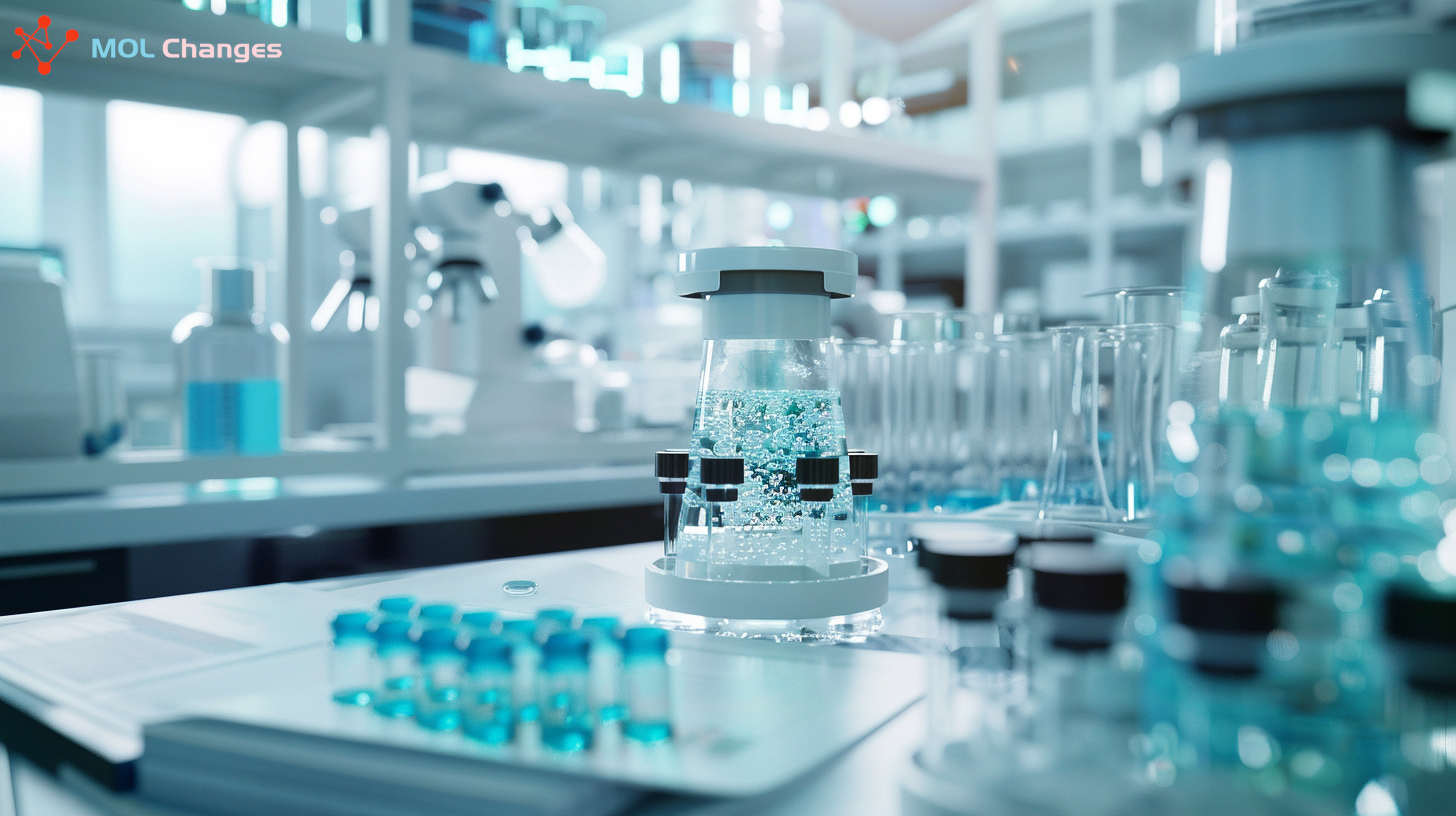
根据 PharmOutquiry 对 Lonza 公告的报道, 弯道, 俄勒冈州工厂将安装两台商业规模的 PSD-4 喷雾干燥装置, 为未来产能增加留有余地. 预计完工时间约为 2029. 该设施的目标是喷雾干燥分散体 (SDD) — 将难溶性 BCS II 类和 IV 类小分子转化为无定形固体分散体的制药工程方法,显着提高生物利用度. Lonza 将此次投资描述为解决行业中持续存在的商业规模 SDD 产能缺口.
PSD-4 规模的喷雾干燥不是试点技术. 它是最终产品制造基础设施,旨在支持后期临床试验和商业供应项目. 弯头的选择, 俄勒冈州 — 现有的 Lonza 工厂 第四季度完成了固体形式筛选扩展 2022 — 强调这是一个成熟的美国小分子药物产品中心的扩建, 不是绿地能力推动.
有关该设施设计处理内容的背景信息: 喷雾干燥分散体要求活性药物成分 (应用程序编程接口) 已经有足够的数量和纯度来支持工艺开发和临床制造. 当分子进入商业 SDD 制造时, 它清除了多年的早期合成, 分析表征, 配方筛选, 和监管审查. 俄勒冈工厂从发现和临床前开发结束的地方开始.
一系列数十亿美元的赌注揭示了什么
俄勒冈州的公告符合 Lonza 最近的资本配置的连贯模式,值得全文阅读:

-
瓦卡维尔, 加利福尼亚州: 一个 $1.2 斥资10亿收购罗氏大型哺乳动物生物制品基地, 随后额外支付瑞士法郎 500 万元扩建投资, 针对商业哺乳动物原料药制造 — 描述为 DCAT 价值链洞察 (2025) 随着 Lonza 努力满足大规模生物制品需求
-
多肽合成 拂, 瑞士: 瑞士法郎 500 百万美元的生物药品灌装和加工设施; 针对 ADC 商业化生产单独扩大生物共轭产能
-
朴茨茅斯, 新罕布什尔: 瑞士法郎 200 用于中小批量临床和早期商业生物制剂供应的生物制造基础设施
-
弯曲, 俄勒冈州: 用于药品生产的商业规模 PSD-4 喷雾干燥, 完成~2029, 作为 PharmaNow (2026) 报道, 瞄准商业 SDD 输出中持续的产能缺口
这些投资的统一逻辑是商业规模的供应连续性. 作为 BioPharma 对 Vacaville 收购的分析 著名的, Lonza 的战略是将自己定位为生物制药客户在项目从临床到上市及其他阶段的过程中所依赖的制造合作伙伴,而不是主要作为早期探索化学的合作伙伴.
该序列发送的市场信号: 外包生物制造投资集中在开发管道的后端. 值得建设基础设施的项目是那些具有明确商业轨迹的项目. 早期发现和 IND 支持工作——快速迭代, 小批量, 定制化学, 和深度分析表征——在不同的服务层中运行, 大型综合 CDMO 既不专门从事这一业务,价格也没有竞争力.
关键信号: 龙沙在俄勒冈州的投资证实最大的 CDMO 正在调整其能力以实现临床到商业的连续性. 这是结构性的, 不是临时的 - 它阐明了哪些合作伙伴类型服务于哪些管道阶段.
生物制造领域正在分裂, 不合并
CDMO 巨额投资的直观解读是趋同: 较大的参与者吸收更多的市场, 较小的专家整合或退出. 肽开发的实际操作却与此相反. 随着程序的复杂性和 GLP-1 类似物的修改需求的增长, 钉合肽, ADC 有效负载增强, 大规模制造 CDMO 与专业化学发现合作伙伴之间的技术差距并未缩小而是扩大了.
构建这一点的一个有用方法是区分 肽列表的 CDMO 服务分类 draws between research-phase services (custom synthesis, non-GMP analytical testing for early sequences) and CMC development services (工艺开发, GMP preparation, 扩大规模). These two service layers require different equipment, different staff competency profiles, and different quality systems — and they are increasingly served by distinct organizations.
The table below captures how specialized peptide CDMOs differentiate from large-scale manufacturers across the dimensions that matter most to early-stage development teams:
|
方面 |
Large Integrated CDMO (Lonza-type) |
Specialized Peptide Synthesis Partner |
|---|---|---|
|
Primary development stage |
Phase II through commercial |
Discovery through IND-enabling |
|
Batch scale |
Kilogram to multi-hundred kilogram |
Milligram to gram, with kg-scale pathway |
|
Synthesis modalities |
Platform-based (mammalian, microbial, SDD) |
统计软件, LPPS, hybrid condensation, 微生物发酵 |
|
Modification portfolio |
Limited within established platforms |
Extensive: 300+ 功能组, custom on-demand |
|
Turnaround model |
Scheduled long-horizon |
Rapid iteration; weeks not quarters |
|
Analytical integration |
cGMP release testing |
Orthogonal method development, 杂质分析, structure confirmation |
|
Sterility standard |
Validated GMP cleanroom |
班级 100 ultra-sterile environment for cell-assay-grade material |
|
CTA/regulatory interface |
Full NDA/BLA CMC support |
IND-enabling documentation; CoA-level quality package |
Neither profile is universally superior. They serve different pipeline moments, and the mismatch cost flows in both directions: engaging a large integrated CDMO for rapid discovery-phase synthesis introduces scheduling overhead and minimum-batch requirements that slow iteration; engaging a research-grade synthesis provider for commercial manufacturing introduces unacceptable regulatory risk. The decision error is treating the CDMO market as a single tier.
留在专家通道的早期连锁服务
Lonza’s Oregon build will eventually process drug products whose API synthesis and analytical characterization happened years earlier, often at specialized chemistry organizations. Understanding precisely which services belong in that early chain clarifies what a spray-drying facility does 不是 replace.
Discovery-grade and IND-enabling synthesis. The core deliverable at this stage is a confirmed, analytically characterized peptide sequence at sufficient purity and quantity for in vitro and in vivo pharmacology. 定制肽合成 at research scale requires SPPS method optimization for hydrophobic, 易聚集, and long-chain sequences, followed by preparative RP-HPLC purification, 冻干, and full CoA documentation. Minimum-viable batches range from 1 mg for initial screening to 500 mg for early pharmacokinetic studies — quantities that fall below the economic threshold for platform CDMO engagement.
Modification chemistry. The therapeutic landscape that is driving CDMO investment — GLP-1 receptor agonists, ADC payloads, 钉合肽, orally bioavailable macrocycles — all require modification chemistry that goes well beyond a standard linear sequence. 这 peptide modification and analytical services demanded at discovery and pre-clinical stages include:
-
Isotope labeling: ¹³C, ¹⁵N, ²H, and ¹⁸O incorporation for quantitative LC-MS/MS bioanalysis, DKIE studies, and stable isotope dilution assays. Isotopic enrichment ≥99% is standard for clinical biomarker applications.
-
Fluorescent labeling: 异硫氰酸荧光素, FAM, 塔姆拉, Cy3, 赛5, and FRET pair installation for cell-uptake assays, receptor-binding studies, and confocal imaging. Dye attachment position and quenching efficiency require orthogonal validation by HPLC and spectrophotometry.
-
脂化和聚乙二醇化: 棕榈酰化, 肉豆蔻酰化, and site-specific PEG conjugation for half-life extension in GLP-1 and other metabolic peptide programs.
-
环化: 二硫化物, 内酰胺, 硫醚, and stapling chemistries for conformational restriction and protease stability improvement.
-
Click-chemistry handles: Azide, 炔烃, 二苯并二苯并呋喃, and BCN functionalization for site-selective bioconjugation in ADC linker development and imaging probe construction.
Analytical QC and characterization. Early-development peptides require identity and purity confirmation before any biological testing, not as a regulatory formality but as scientific necessity. An underdosed or chemically heterogeneous research peptide produces unreliable pharmacology data that misdirects the entire program. The analytical package at this stage typically includes: RP-HPLC purity quantification at 214 纳米和 254 纳米, ESI-MS or MALDI-TOF molecular weight confirmation, amino acid analysis for sequence verification, and — for material destined for cell-based assays — endotoxin testing to USP ⟨85⟩ LAL limits. Cell-assay-grade peptide material sourced from a 班级 100 sterile synthesis environment reliably meets the endotoxin thresholds (通常 <1 欧盟/毫克) that cell biology and in vivo pharmacology groups require. This is not a capability that is incidentally available at commercial drug-product facilities designed for fill-finish operations.
Impurity profiling and structural heterogeneity control. Peptide structural microheterogeneity — deamidation, 氧化, 外消旋化, 截断, and aggregation byproducts — becomes a CMC risk as programs advance. Addressing it analytically during discovery, using orthogonal chromatographic modes (C18, C4, diphenyl) and high-resolution ESI-MS fragmentation maps, is substantially less expensive than discovering it during IND batch review.
阶段性合作伙伴选择矩阵
The practical implication of the bifurcation described above is a tiered partnership structure, where the appropriate CDMO type shifts as a program advances. The matrix below draws on the service taxonomy used across the peptide synthesis sector and should function as a first-pass routing tool, not a definitive procurement guide. 这 partner selection criteria beyond capacity — modification expertise, 分析深度, 技术沟通质量, and documentation standards — should be evaluated within each tier before engagement.
|
Development Stage |
Primary Deliverable |
Appropriate Partner Type |
Key Qualification 合成肽 标准 |
|---|---|---|---|
|
发现 / Hit Identification |
Modified research peptides, screening libraries, assay reagents |
Specialized synthesis lab (research-grade) |
Modification portfolio breadth, HPLC/MS CoA quality, turnaround speed (2–4 weeks standard) |
|
潜在客户优化 |
SAR-iteration batches, isotope-labeled standards, pharmacokinetic probes |
Specialized synthesis lab with strong analytical capability |
Isotope labeling precision, endotoxin control for cell assays, ≥95% purity with full MS confirmation |
|
Pre-clinical / IND-启用 |
cGMP or cGMP-like batches for toxicology studies, CMC documentation 多肽生产 |
Peptide-focused CDMO (with GMP-level quality system) |
GMP certification pathway, stability program capability, IND CMC document support |
|
Phase I–II |
GMP API batches, clinical drug substance, 方法验证 |
Peptide CDMO with regulatory track record |
ICH Q7 compliance, regulatory filing experience, CTA/IND submission support |
|
第三阶段 / 商业的 |
Large-scale GMP API, drug product manufacturing, supply continuity |
Integrated large CDMO (龙沙, Bachem commercial scale) |
Commercial capacity, supply redundancy, regulatory inspection history |
The key decision is not which tier the program ultimately needs but which tier it needs 现在. An IND-enabling study requires a partner in tier 3, not tier 5. Engaging tier 5 infrastructure for tier 2 work introduces procurement overhead, minimum-batch commitments, and scheduling latency that the discovery timeline cannot absorb.
反驳——及其不足之处
The most reasonable pushback to the analysis above is that Lonza does have small molecules chemistry capabilities and peptide-related manufacturing services. Its Visp site handles peptide drug substance within bioconjugate programs; its small molecules platform supports API development for complex synthetic drugs. This is accurate and worth acknowledging directly.
The distinction that remains, 然而, is one of optimization and scope. Lonza’s small molecules platform is designed around process chemistry for established APIs moving toward GMP manufacturing — route scouting and optimization for programs that already have a lead candidate and a development plan. Discovery-phase peptide synthesis, 相比之下, requires a service model built for rapid iteration: custom sequence by custom sequence, with modification permutations that may number in the dozens across a single lead series, and with analytical turnaround measured in days rather than weeks. The commercial infrastructure that makes a GMP bioreactor or a PSD-4 spray-dryer economically viable is the same infrastructure that makes it cost-inefficient for milligram-scale custom chemistry.
Spray-dried dispersion manufacturing also requires that the API chemistry problem be solved before formulation begins. The compound arriving at a PSD-4 unit in Bend, Oregon in 2030 will have been synthesized, purified, 特征化的, and stability-profiled by organizations whose core competency is that upstream chemistry work. Those organizations and the Oregon facility are not substitutes — they are sequential nodes in the same development chain.
The structural reality: large CDMOs and specialized peptide synthesis partners are not competing for the same work. They serve different pipeline moments, and Lonza’s Oregon investment confirms the point by showing exactly which moment a CDMO of that scale is optimizing for.
正确解读市场信号
Lonza’s Oregon announcement is not a consolidation threat to specialized peptide synthesis providers. It is a confirmation that the outsourced biomanufacturing market is maturing in a direction that rewards specialization at both ends of the pipeline.
For peptide R&D决策者, the practical implications are direct:
-
Early-stage sourcing decisions (discovery through IND-enabling) belong in the specialist lane — partners with deep modification chemistry, rapid-iteration synthesis workflows, orthogonal analytical capabilities, and endotoxin-controlled sterile manufacturing for cell-grade material.
-
Mid-to-late-stage sourcing (Phase I through commercial) belongs at CDMOs with established GMP infrastructure, regulatory filing experience, and the supply continuity a commercializing program requires.
-
The decision to engage either tier before it is appropriate is not cost-neutral. Premature engagement of commercial-scale CDMO infrastructure slows early iteration; premature handoff from research-grade synthesis to GMP before CMC readiness introduces regulatory risk.
The spray-drying facility Lonza is building in Bend, Oregon will process drug products that began as sequence hypotheses synthesized at milligram scale, characterized by HPLC and ESI-MS, iterated through dozens of modification permutations, and advanced through pre-clinical and clinical work over years. That early-chain work happens in a different facility, under a different quality system, with a different partner.
Ready to evaluate whether your sequence is ready for the next development stage?
MOL Changes provides peptide synthesis, 修改, and analytical characterization from discovery through IND-enabling scale, including stable isotope labeling, fluorescent label installation, sterile cell-grade material with endotoxin testing, 和完整的 HPLC/MS CoA 文档. Contact the technical team to discuss sequence feasibility, modification options, or your analytical qualification requirements.
Additional references: Lonza Completes Expansion to Solid Form Services (Lonza.com, 一月 2023); Lonza Plans Oregon Spray-Drying Facility for Drug Development and Manufacturing (PharmOutsourcing, 2026); PharmaNow, 2026; What Lonza’s $1.2B Buy of Roche Biologics Plant Means for the CDMO Market (BioPharma, 2024); DCAT 价值链洞察, 2025; Peptide CDMO Services by Stage (肽列表, 2026)