Hoe u deze continuïteitschecklist voor peptideleveranciers gebruikt
Deze continuïteitscontrolelijst voor peptideleveranciers is binair, gefaseerd, en gesequenced tegen de slottijdlijn. Elk item is een ja/nee-vraag, zodat u het aan een document kunt koppelen in plaats van een mening over een leverancier te vormen. De items zijn gegroepeerd per transactiefase, niet per onderwerp, omdat uw invloed verandert naarmate de deal beweegt: De desinvestering van JPT Peptide Technologies door BioNTech is onderhevig aan sluitingsvoorwaarden en zal naar verwachting rond zijn 2026, wat betekent dat u in de periode vóór sluitingstijd nog over de voorwaarden kunt onderhandelen.
De drie fasen verlopen in volgorde. Vóór afsluiting heeft betrekking op de kennisgeving en openbaarmaking van controlewijzigingen, vervolgens het eigendom van de methode en de specificatie. Bij overdracht omvat de lijst met verzoeken om technische overdracht en de kwalificatie van de locatie na een eigendomsverandering. Na de overdracht zijn de back-upproductie en de bescherming van langlopende programma's gedekt.

Eén logica loopt door alle drie heen: kwalificeer parallel een primaire en een back-up, En plaats die tweede bron tegen de slottijdlijn in plaats van ermee te beginnen na de aankondiging. Een continuïteitsverklaring is geen contractuele verplichting, Beschouw publieke geruststellingen dus als context, niet als bewijs.
Sleutel afhaalmaaltijd: De checklist is binair, gegroepeerd per fase, en besteld tegen de sluitingstijdlijn, omdat uw hefboomwerking het hoogst is vóór sluitingstijd.
Reikwijdte opmerking: dit is een leidraad voor leveringscontinuïteit en documentatie, geen juridisch of regelgevend advies. Bevestig uw eigen verplichtingen met uw QA en juridische functies.
Voor sluitingstijd: kennisgeving en openbaarmaking van controlewijzigingen
Meldingsrechten werken alleen als ze contractueel zijn en afgestemd zijn op uw eigen herkwalificatieschema. Gebruik deze zes vragen om te testen wat de overeenkomst de leverancier daadwerkelijk verplicht openbaar te maken, en wanneer.
|
# |
Controlelijstitem |
Waarom het ertoe doet |
|---|---|---|
|
1 |
Is de trigger voor een verandering van controle geïdentificeerd?, en dekt het deze transactie?? |
Triggers noemen doorgaans acquisitie, fusie, overdracht van stemcontrole, verkoop van de onderneming, en gebeurtenissen op het gebied van sleutelpersoneel of capaciteitsherschikking; een transactie die bij geen van beide past, veroorzaakt niets. |
|
2 |
Is het schriftelijke kennisgevingsvenster gekoppeld aan uw herkwalificatieperiode?, geen “redelijke kennisgeving”? |
Herkwalificatie duurt maanden; kennisgeving gemeten in kalendergemak laat geen tijd over om te handelen. |
|
3 |
Heeft de leverancier de juridische entiteit en het eigendom van het kwaliteitssysteem na de sluiting bekendgemaakt? |
De nieuwe eigenaar erft de GMP-verplichtingen, dus je moet weten wie ze nu in handen heeft. |
|
4 |
Heeft het de retentie van sleutelpersoneel bekendgemaakt en wie het contract na sluiting heeft?? |
Continuïteit van de mensen en de tegenpartij maakt de rest afdwingbaar. |
|
5 |
Voorafmelding is vereist voor de locatie, QC-site, grondstof, zuivering, veranderingen in verpakking en etikettering? |
Veranderingen in de materiële productie zijn de veranderingen die het vaakst verband houden met ‘vóór implementatie’. |
|
6 |
Is de clausule op genezing gebaseerd?, of is er bezwaar tegen, beëindigings- of herkwalificatierechten? |
Peptidesynthesehars Velen zijn opgesteld als ongeneeslijk met beëindigingsrechten, waardoor uw hefboomwerking volledig verandert. |
Voor de onderliggende clausuleanatomie, IntuitionLabs’ analyse van de kwaliteitsovereenkomsten tussen sponsor en CDO legt uit hoe gebeurtenissen kunnen worden geactiveerd, kennisgevingsvensters en herkwalificatierechten worden meestal opgesteld. Aan de regelgevende kant, ECA’s analyse van een waarschuwingsbrief van de FDA over eigendomsverandering maakt het praktische punt: De FDA beschouwt eigendomsverandering als GMP-relevant, en de nieuwe eigenaar erft de verplichtingen. Jouw invloed is de overeenkomst, niet de eigendomsverandering zelf.
Voor sluitingstijd: eigendom van methode en specificatie
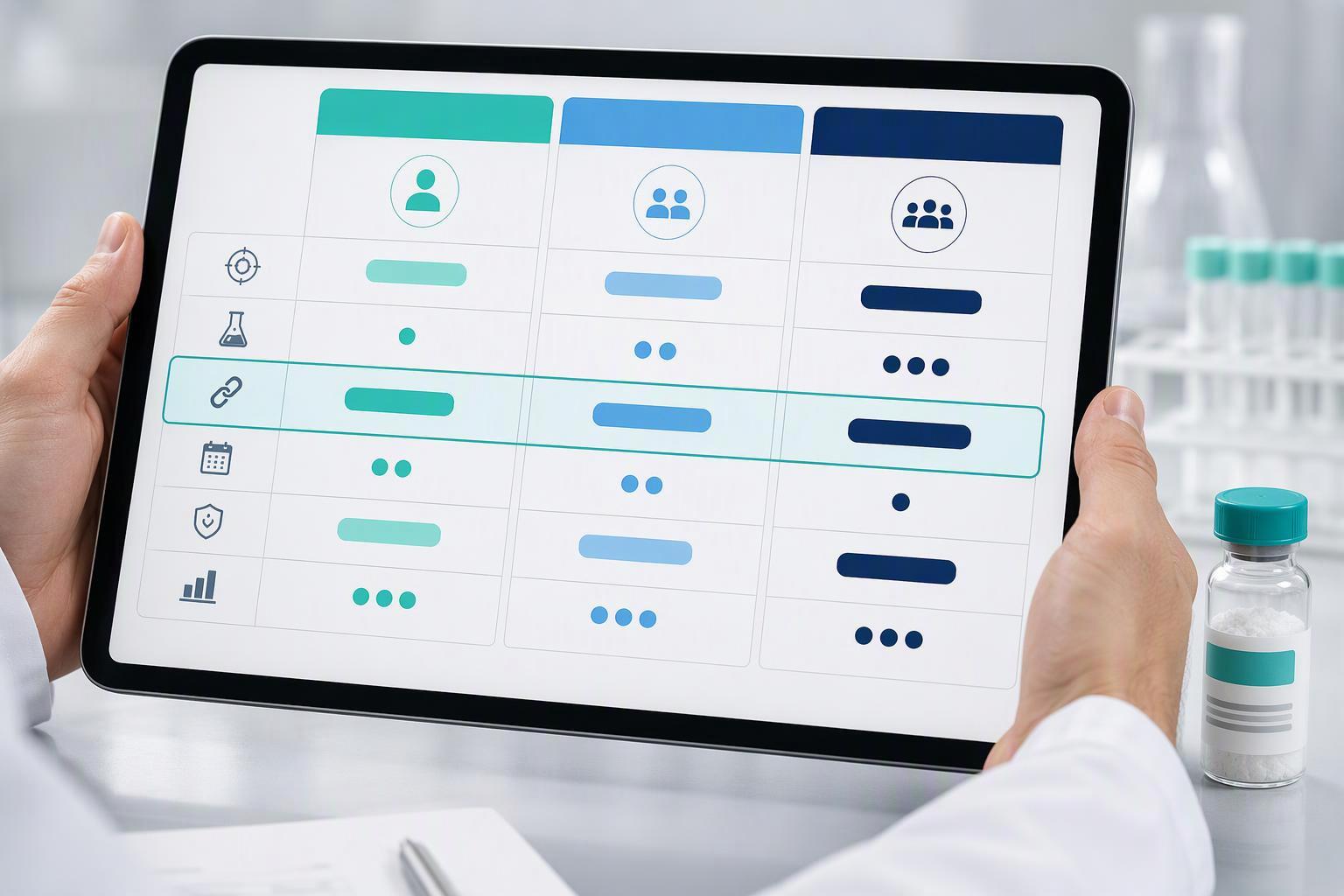
Het eigendom van de methode bepaalt of u überhaupt kunt overstappen. Er zijn drie toewijzingen, en in de overeenkomst moet worden vermeld in welke u zich bevindt: methoden die eigendom zijn van de koper, waar de koper revisies controleert, validatiestrategie en gebruiksrechten; door leveranciers ontwikkelde methoden, waarbij de koper nog steeds contractuele gebruiksrechten nodig heeft, overbrengen en de methode blijven gebruiken; en gezamenlijk ontwikkelde methoden, waarbij de overeenkomst uitdrukkelijk de eigendom van de methode moet toewijzen, de gegevens, het validatiepakket en de overdrachtsrechten (Farma Kwaliteitsafspraken, 2026-01-08).
De beschermende vorm is eeuwigdurend, onherroepelijk, royaltyvrij, overdraagbare en sublicentieerbare licentie die gebruik bij de leverancier of een extern laboratorium dekt, over te dragen aan een opvolgerleverancier, routinematige GMP-gestuurde aanpassingen, en het voortbestaan van de toewijzing of verwerving. Zonder de overlevingsclausule, een overname kan uw rechten teniet doen.
|
Toewijzing |
Wie controleert revisies |
Wie bezit het validatiepakket |
Wat de koper nodig heeft |
|---|---|---|---|
|
Eigendom van de koper |
Koper |
Koper |
Nothing further |
|
Vendor-developed |
Peptide 3 Leverancier |
Leverancier |
Licence to use, overdracht Merrifield Peptide Synthesis and keep using |
|
Jointly developed |
Shared |
Named party |
Express allocation of method, data and transfer rights |
A certificate of analysis does not substitute for this. Raw-data access means the reviewer can see the chromatograms, spectra, calculations and audit trails behind a summary, and the normal model is retention on site with availability for review rather than bulk export (Farma Kwaliteitsafspraken, 2026-01-08). Ask for the peptide tech transfer records that let someone reconstruct what was done.
On specifications, vendor-stated practice norms put individual impurities at ≤0.1%, with ≥95% purity at kg scale usually needing multi-step preparative HPLC plus controlled lyophilisation, and batch records showing >98% purity with a full impurity profile (MOL-wijzigingen, 2026-09-22). These are practice norms, not regulatory thresholds.
Bij overdracht: de lijst met verzoeken om technische overdrachtsrecords
Ask for the transfer dossier by name, schriftelijk, and list its contents item by item. A certificate of analysis answers a different question than peptide tech transfer records do.
The request list below follows the dossier structure in WHO’s technology-transfer annex, the standing technical annex on transferring pharmaceutical manufacturing between sites. Each item is answerable yes or no.
-
Master and batch records, including master formulas. Proves the process is documented as run, not reconstructed afterwards.
-
Process description with route rationale, critical process parameters and in-process controls. Proves the receiving site can reproduce the route, not just the final sequence.
-
Analytical methods with validation or qualification reports, plus system-suitability and transfer evidence. Proves the methods travel with the product.
-
Impurity history, the known impurity list and the limits rationale. Proves limits were derived, not inherited.
-
Reference standards with source, qualification and retention. Proves the measurement baseline is traceable.
-
Stability data with conclusions and retest or shelf-life recommendations. Dipeptide Proves the assigned shelf life has a basis.
Three closing items tie the package together: geschiedenis van veranderingscontrole, deviations and investigations with disposition rationale, and a comparability or transfer summary report linking acceptance criteria to results.
Voor Tip: Paste this list verbatim into your request and ask for the comparability summary by name. It is the one document that shows whether the criteria were met, rather than restating them.
Expect a summary rather than raw data. The difference between an auditable summary and raw data matters here: a dossier should let a qualified reviewer reconstruct what was done and why, which is a higher bar than a signed certificate. A complete transfer package, of the kind MOL Changes assembles, contains these documents as a set.
Bij overdracht: locatiekwalificatie na een eigendomsverandering
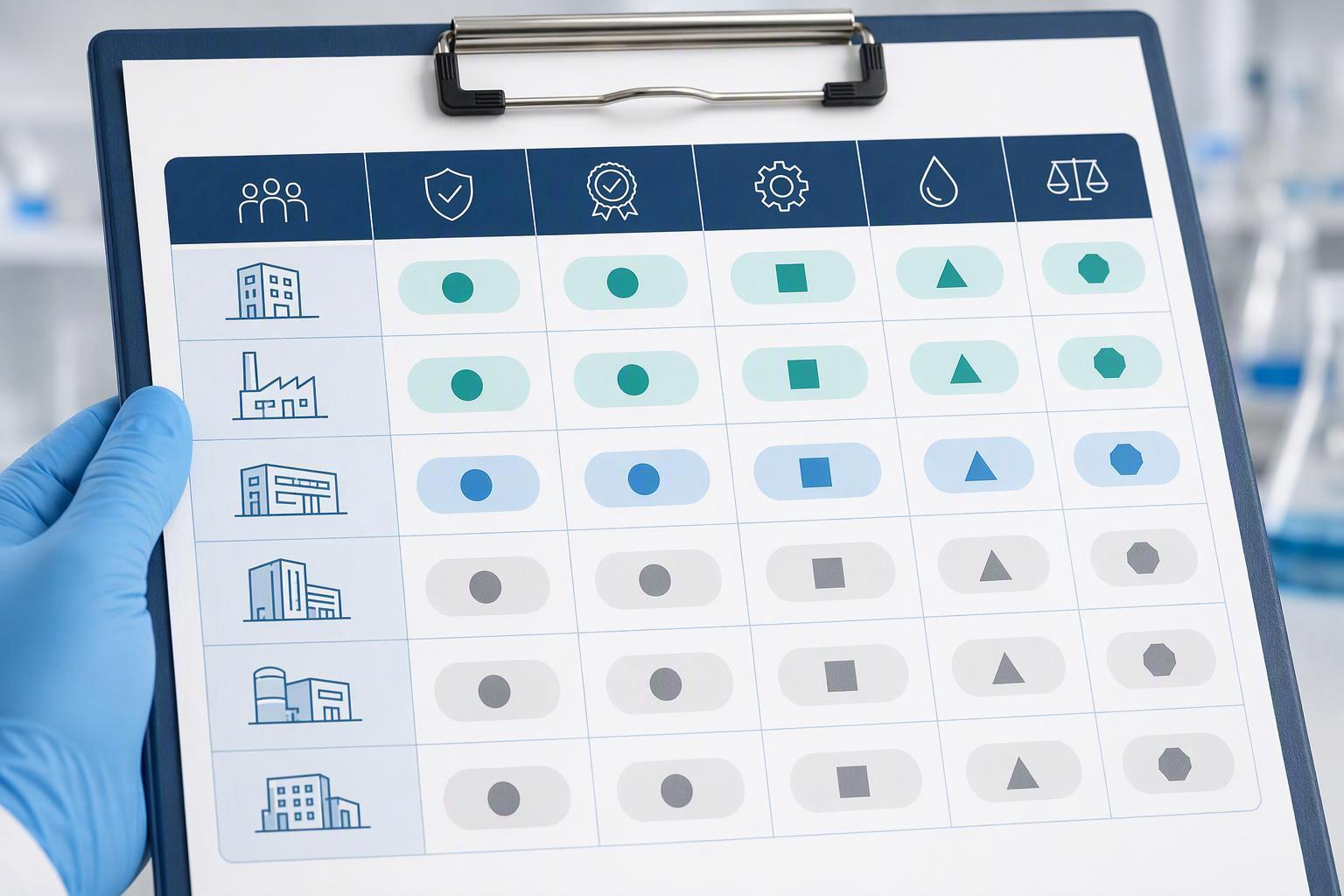
A change of legal entity is a new qualification event, not an administrative update, and peptide site qualification after ownership change should be treated as a fresh evidence request rather than a records amendment.
The FDA has cited recent ownership changes as a risk-based inspection criterion, and in the warning letter ECA analysed, the agency addressed both the previous and the current owner and concluded that oversight was inadequate where deficiencies persisted across the change. De praktische lectuur: the new owner may run the same equipment and still present a different quality system, so the buyer’s evidence has to be rebuilt against the entity that now holds the licence.
Five binary items cover the handover:
|
Item |
Bevestigd |
Pending |
Niet voorzien |
|---|---|---|---|
|
Post-closing legal entity and its quality-system status confirmed |
|||
|
GMP status current and documented for the site as it will operate after close |
|||
|
Equipment equivalency assessed against the equipment your data was generated on |
|||
|
Utilities and environmental controls documented and comparable Acetylhexapeptide 1 |
|||
|
Comparability data available where site or ownership changed |
For the last item, the comparability summary in WHO’s technology-transfer annex sets the pattern: acceptance criteria stated first, results reported against them, not a narrative of what was done.
The transaction itself is modest in headcount terms. The acquirer’s LEO III Fund announcement states that roughly 130 employees transfer with the sale and that the Berlin site will run as a stand-alone company. Small transfers do not shrink the qualification question; they simply make it easier to answer quickly if the documents exist.
Na overdracht: back-upproductie en bescherming van langlopende programma's
A backup source protects a program only if it is qualified before a constraint appears. Second-source qualification for a peptide or API typically runs 6 naar 18 months including process transfer and validation, and the same source advises starting around 18 months out and at least 12 months before the need arises (PeptideStaff’s dual-sourcing planning ranges, opgehaald 2026-06-21).
Six questions, each answerable yes or no:
-
Has at least one alternate CDMO or internal site been qualified before a constraint appears?
-
Is backup qualification sequenced against the closing timeline rather than started at the first supply problem?
-
Has comparability bridging been planned between primary and backup material?
-
Does the backup fit the program’s capacity and sterility requirements?
-
Is the backup’s documentation package ready to accept a transfer?
-
Does the program have a named continuity owner, defined requalification triggers, retained inventory and reference standards, change-control linkage to filings, and a review cadence?
Sequencing a second source against a closing timeline means risk assessment and shortlisting at announcement, screening and a quality agreement during the divestment window, then pilot and comparability batches before or immediately after close, with periodic bridge lots keeping the backup warm (MOL Changes’ resilient supply chain playbook, opgehaald 2026-08-11). The component timelines in the same source break that into risk assessment at 2 naar 4 weken, CDMO identification at 4 naar 8 weken, technology transfer at 12 naar 24 weken, comparability studies at 8 naar 16 weeks and filing support at 6 naar 12 weken (PeptidePersoneel, opgehaald 2026-06-21). Budget $200K to $500K for setup plus $50K to $100K a year for requalification, and note that peptide API rates at non-Chinese facilities rose 5 naar 10% year over year in Q2 2026 against flat-to-declining pricing in 2018 naar 2023 (the same planning ranges and PeptideStaff's 2026 capacity analysis, opgehaald 2026-09-22). Capacity pressure is expected to shape supply security for 24 naar 36 maanden, with the next 12 naar 24 months constrained and announced expansions arriving from late 2027 into 2028 (the same capacity analysis).
⚠️Waarschuwing: The timeline and cost figures above are industry-reported from a vendor-adjacent cluster with no independent corroboration. They are planning inputs, not audited benchmarks.
Operational guidance on buffer stock and warm backup capacity suggests a rolling 8 naar 12 week safety stock of Fmoc-amino acids and coupling reagents, 8 week consignment stock for standard building blocks, en een 6 month buffer for stable isotope labels (MOL-wijzigingen, opgehaald 2026-08-11). The same operational playbook reports that a warm second source cut emergency transitions from 12 months to under 3 weken, with boutique method transfer at 2 naar 4 weken; that figure describes the publisher’s own capability, not an independent benchmark.
Veelgestelde vragen
Hoe lang duurt de kwalificatie van de tweede bron?
Longer than most program timelines allow. PeptideStaff’s dual-sourcing planning ranges put the work in months rather than weeks, and the spread is driven by how much of the release specification is vendor-owned, whether analytical methods transfer cleanly, and how much stability data the new site must generate before it can release. Treat any single figure as vendor-adjacent planning guidance rather than a benchmark.
Kan een back-upsite binnen enkele weken worden gekwalificeerd??
Nee. The operational playbook’s own capability figure of under three weeks describes one publisher’s rapid onboarding of a site it already controls, not a qualification timeline a buyer can expect from an unrelated supplier. Site qualification after an ownership change involves method transfer, documentation review and release testing, which do not compress to that window.
Wat gebeurt er als de leverancier de toegang tot onbewerkte gegevens weigert??
Negotiate review rights instead of export. What raw-data access actually means in a quality agreement is usually retention on site with availability for inspection, so the realistic ask is a documented right to review records at the facility, not a copy of the dataset.
Leidt een verandering van eigenaar tot een registratie bij de toezichthouder??
Niet automatisch, and it does not settle the question either. ECA’s analysis of an FDA warning letter on ownership change shows the new owner inherits the existing obligations, so confirm your own filing position with your QA and legal functions rather than relying on the transfer notice.
Kan de koper bezwaar maken tegen de overdracht of deze beëindigen??
It depends on the clause. A practical breakdown of sponsor-CDO quality agreements distinguishes cure-based notification clauses, which give you a window to raise concerns, from clauses carrying termination rights, which give you an exit. Read which one you signed before the closing date, niet na.
Conclusie
The leverage in this situation is not spread evenly across the deal. It is concentrated before close, and it shrinks the moment the transaction completes. BioNTech’s own framing of the expected 2026 close as a divestment of a non-core site tells you the seller wants a clean, dated exit; a buyer who arrives at the table with questions already written is negotiating inside that window rather than after it. The three phases above follow the same logic: before closing you ask, at handover you verify, after handover you protect what you have already qualified.
Every item is answerable Yes or No, dat is het punt. A completed peptide supplier continuity checklist is what turns the continuity wording in BioNTech’s statement into a documented position you can defend to your own QA function, your investors, and your regulators, rather than a comfort statement you accepted on trust.
If you would rather not run the review alone, request a transfer-readiness review and we will work through the checklist with you, item by item, before your close date.
The author has a commercial interest in peptide manufacturing services. This article is supply-continuity and documentation guidance, geen juridisch of regelgevend advies; confirm your own obligations with your QA and legal functions.