После закрытия Peptide Sciences: Как лаборатории должны проверять альтернативных поставщиков BPC-157
Внезапное прекращение работы компании Peptide Sciences, которая долгое время была одним из наиболее широко используемых дистрибьюторов синтетических пептидов исследовательского уровня в Северной Америке, создала значительный вакуум закупок в академических лабораториях., биотехнологические стартапы, и контрактные исследования Циклический пептид организации (CRO). Для главных исследователей и ученых-исследователей, использующих BPC-157. (пентадекапептид, последовательность Gly-Glu-Pro-Pro-Pro-Gly-Lys-Pro-Ala-Asp-Asp-Ala-Gly-Leu-Val, молекулярная масса 1419.55 И), этот сбой создает непосредственный операционный риск.
Смена поставщиков в середине исследования без строгой квалификации угрожает непрерывности эксперимента. Некачественные замещающие пептиды часто страдают от колебаний чистоты от партии к партии., неточное чистое содержание пептидов, остаточная трифторуксусная кислота (ТФА) токсичность, и непроверенная структурная идентичность. В моделях клеточных культур или биоанализах на животных, эти примеси вносят мешающие переменные, скрыть целевую активность, и нарушить воспроизводимость данных.
Для защиты целостности исследований, закупки лабораторий должны перейти от пассивного выбора поставщиков к активному, процесс квалификации аналитического поставщика. В этом руководстве представлен контрольный список лабораторно-ориентированной оценки, охватывающий аудит аналитической документации., происхождение производства, стехиометрия и состояние противоиона, кинетика стабильности, и соблюдение прав интеллектуальной собственности.
Таблетки 1: Аналитическая документация & Хроматографическая целостность
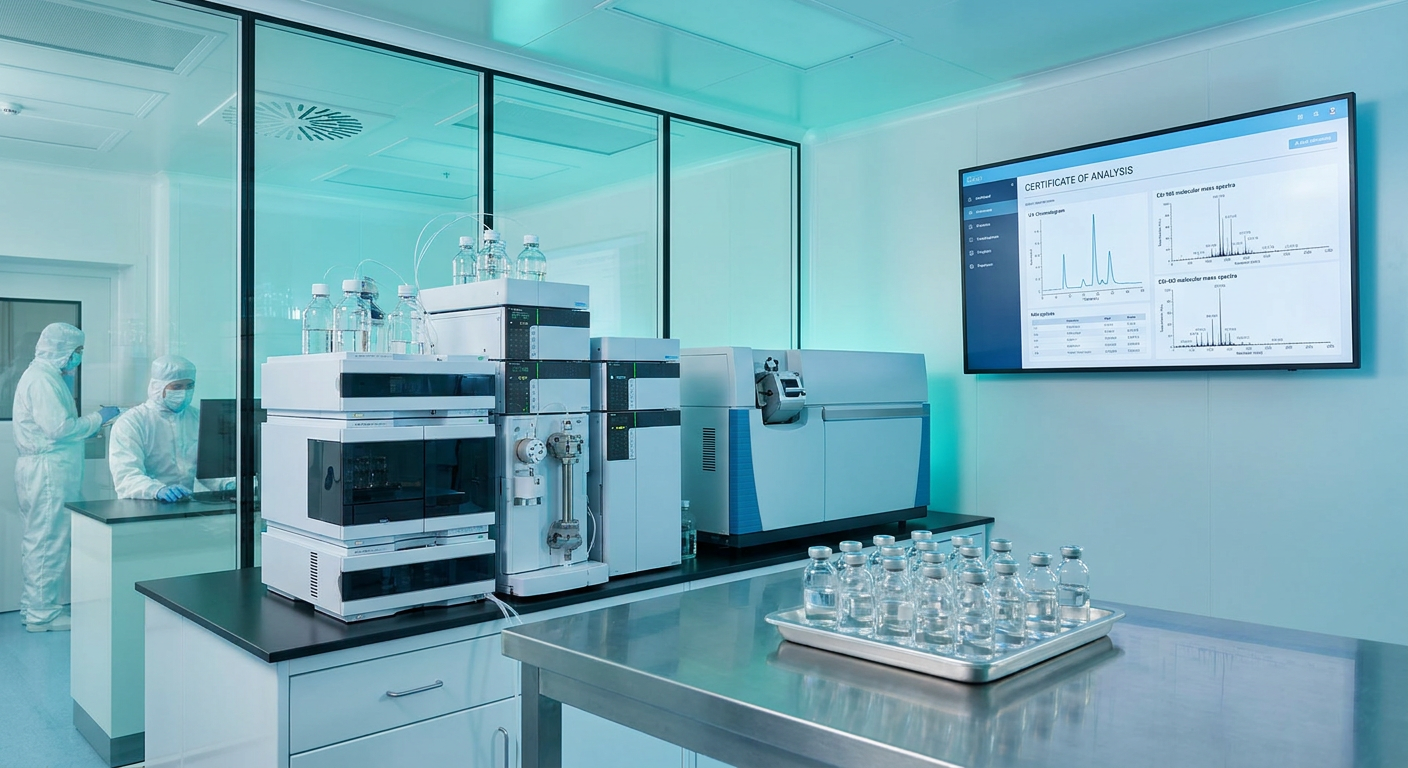
Основной защитой от невоспроизводимых исследовательских реагентов является комплексное, Сертификат анализа для конкретной партии (Соглашение о намерениях). Общие шаблоны сертификатов подлинности или пакетные документы, в которых отсутствуют необработанные аналитические спектры, должны быть немедленно отклонены.. Каждая партия-кандидат БПЦ-157 должна сопровождаться индивидуальной системой высокоэффективной жидкостной хроматографии. (ВЭЖХ) и масс-спектрометрия (РС) данные испытаний.
Обращенно-фазовая ВЭЖХ (ОФ-ВЭЖХ) Проверка чистоты
ОФ-ВЭЖХ — золотой стандарт для количественной оценки химической чистоты и обнаружения укороченных или модифицированных пептидных примесей.. При проверке хроматограммы ВЭЖХ поставщика, проверьте следующие аналитические условия:
- Длина волны обнаружения: Поглощение УФ-излучения следует контролировать при 214 нм или 220 нм, соответствует полосе поглощения амидных связей пептидного остова. Одноволновое обнаружение на 254 нм или 280 нм недостаточно для BPC-157, поскольку в последовательности отсутствуют ароматические остатки. (такие как триптофан или тирозин) которые сильно поглощают волны с более высокой длиной волны УФ-излучения.
- Колонка Химия: Для анализа необходимо использовать стационарную фазу, оптимизированную для пептидов., обычно колонка с обращенной фазой C18 (4.6 × 250 мм, 3.5 мкм или 5 Размер частиц в мкм, 120 Å размер пор).
- Градиент подвижной фазы: В беге должен использоваться органический градиент., обычно 0.1% TFA в сверхчистой воде (Мобильная фаза А) к 0.1% TFA в ацетонитриле для ВЭЖХ (Мобильная фаза Б).
- Порог приемлемости чистоты: Для исследовательских приложений, интегрированная УФ-площадь основного пептидного пика должна составлять не менее 98.0% от общей интегрированной площади пика. Как подробно описано в Лаборатории тестирования пептидов ACS 2026 Руководство по анализу ВЭЖХ, Процент площади чистоты рассчитывается путем деления площади основного пика на сумму всех интегрированных площадей пиков между объемом пустот и промывкой колонки..
- Хроматографические параметры: Основной пик должен демонстрировать четкое разделение базовой линии с коэффициентом разрешения. (Рₛ) по крайней мере 1.5 относительно соседних пиков примесей, минимальное хвостообразование (коэффициент асимметрии между 0.8 и 1.2), и отсутствие дрейфа базовой линии, скрывающего совместно элюируемые виды.
Масс-спектрометрия (РС) Личность & Массовая точность
В то время как ВЭЖХ количественно определяет чистоту, он не может подтвердить молекулярную идентичность. Масс-спектрометрия необходима для подтверждения того, что очищенный пик строго соответствует BPC-157..
- Согласование ионных масс: Масс-спектрометрия с ионизацией электрораспылением (ЭСИ-МС) должен отображать доминирующий однопротонированный вид при m/z 1420.55 [М+Ч]⁺ и вторичный дважды протонированный вид при m/z 710.78 [М+2Ч]²⁺, соответствующий моноизотопной нейтральной массе 1419.55 И.
- Пределы массовой точности: Наблюдаемая масса должна соответствовать теоретическим расчетам в строгих пределах точности массы.:
Δ м = ( |м наблюдаемое – м теоретическое|{м теоретический} ) × 10⁶ ≤ 10 ppm
Согласно ФормаСмеси 2026 Руководство по анализу сертификата подлинности, масс-спектрометры высокого разрешения (такие как инструменты Q-TOF или Orbitrap) должно достичь массы ошибок ниже 10 ppm, проверка правильного элементного состава.
- Проверка последовательности тандемной МС: Для важных программ in vivo или оптимизации потенциальных клиентов, запросить тандемную MS (МС/МС) спектры фрагментации. Диссоциация, вызванная столкновением (CID) фрагментированные ионы (b-ионы и y-ионы) подтвердить точный порядок последовательности аминокислот, отличие BPC-157 от изобарических вариантов скремблирования.
⚠️ Внимание: Остерегайтесь поставщиков, которые поставляют обрезанные хроматограммы или масс-спектры ВЭЖХ без даты получения., серийные номера приборов, или соответствующие номера лотов. Аутентичная аналитическая документация должна четко связывать файл необработанных данных с конкретной партией флаконов, доставленной в ваше учреждение..
Частой путаницей при лабораторном приготовлении пептидов является разница между общим весом порошка и фактическим чистым содержанием пептида.. Получение флакона с надписью «5 мг BPC-157» не означает, что он содержит 5 мг активной пептидной массы. Лучшие пептиды от рака оптом
все с пометкой «5 мг BPC-157» не означает, что они содержат 5 мг активной пептидной массы.
Расчет чистого содержания пептидов (НПС)
Лиофилизированные пептидные препараты не 100% чистые активные фармацевтические ингредиенты. Они состоят из смеси активных пептидов., связанные противоионы, и остаточная влага. Чистое содержание пептидов (НПС) представляет собой фактический процент массы пептида по отношению к общей массе порошка:
НПС (%) = ( Масса чистого активного пептида/общая масса порошка брутто ) × 100%
NPC обычно определяется с помощью аминокислотного анализа. (ААА) или анализ элементарного азота (Н%). В коммерческих лиофилизированных партиях, NPC варьируется между 70% и 85%. Остальные 15% к 30% Общий вес состоит из:
- Остаточная вода: Определено Карлом Фишером (КФ) титрование; приемлемые уровни должны оставаться на уровне или ниже 8.0% (ж/б).
- Противоионы: Соли, накапливающиеся при твердофазном синтезе и расщеплении.
Если исследователь взвешивается 1.0 мг брутто лиофилизированного порошка при условии, что 100% активный пептид, когда истинный NPC 75%, все последующие расчеты молярной концентрации будут ошибочными на 25%. Такое систематическое недостаточное дозирование приводит к существенной экспериментальной ошибке в количественных анализах SAR и клеточных исследованиях.
ВАЛОВАЯ МАССА ЛИОФИЛИЗИРОВАННОГО ПОРОШКА ЧИСТАЯ МАССА АКТИВНЫХ ПЕПТИДОВ | | ПРИЛАВОК- | (70% – 85%) | | Бэйсайдпептиды ИОНЫ | Ала-Асп-Асп-Ала-Глы-Леу-Вал | | Ацетат) | (10% – 20%) ВОДА (КФ) (≤ 8.0%)
УНС | Ала-Асп-Асп-Ала-Глы-Леу-Вал | | Ацетат) | (10% – 20%) ВОДА (КФ) (≤ 8.0%)
Трифторацетат (ТФА) Токсичность против. Конверсия ацетата
Твердофазный синтез пептидов (СПСС) использует трифторуксусную кислоту (ТФА) во время расщепления смолы и боковой цепи
Синтез пептидов Цитотоксические риски: Остаточные противоионы TFA могут нарушить анализ клеточных культур.. Концентрации TFA всего лишь 0.1 мМ ингибируют клеточную пролиферацию, изменить мембранный потенциал, и вызывают неспецифическую цитотоксичность в первичных клеточных линиях и моделях органоидов..
л, и вызывают неспецифическую цитотоксичность в первичных клеточных линиях и моделях органоидов..
- Варианты обмена соли: Для клеточных анализов in vitro и чувствительных биологических исследований in vivo., лаборатории должны запросить ацетатообменные или бессолевые составы.. При оценке поставщиков специализированных приложений, подтвердите, предлагают ли они выделенные индивидуальный синтез пептидов с гарантированным удалением противоионов TFA (<1.0% остаточное содержание TFA подтверждено ионной хроматографией).
Таблетки 3: Производство, Стерильность, и контроль эндотоксинов
Место и способ производства пептида напрямую определяют его физическое качество., стабильность, и свобода от биологических загрязнений.
Классификация чистых помещений & Экологический контроль
Лиофилизация и упаковка представляют собой критические точки воздействия, где стерильные пептиды могут поглощать влагу из окружающей среды или бактериальные загрязнения.. Альтернативные поставщики должны продемонстрировать, что синтез, очищение, Заполнение флаконов происходит в документированных условиях чистой комнаты..
- Сорт 100 (ИСО 5) Стандарты: Асептическая упаковка требует обработки в рамках класса 100 ультрастерильные чистые помещения, поддерживается ламинарным потоком воздуха HEPA, постоянное положительное давление, и автоматическое регулирование температуры/влажности.
- твердых частиц & Контроль микробов: Работа в рамках проверенных Сорт 100 ультрастерильные чистые помещения гарантирует, что частицы из окружающего воздуха (≥0,5 мкм) оставаться ниже 3,520 частиц на кубический метр, предотвращение попадания грибковых спор или бактерий во время окончательного укупоривания флакона.
Тестирование бактериального эндотоксина (ЛАЛ-анализ)
Бактериальные эндотоксины (липополисахариды, ЛПС) Высвобождение из наружных мембран грамотрицательных бактерий во время бактериальной ферментации или промывания загрязненной водой вызывает серьезные воспалительные каскады в биологических системах..
- Требования к анализу LAL: Каждая партия, предназначенная для культивирования клеток или исследований на животных, должна пройти количественный анализ лизата амебоцитов Limulus. (ЛАЛ) тестирование.
- Пределы приема: Порог эндотоксина для стандартного материала исследовательского класса не должен превышать 1.0 ЕС/мг. Для критического парентерального введения или исследований иммунных клеток, выбирайте партии, сертифицированные на уровне или ниже 0.1 ЕС/мг.
Ключевой вывод: Высокая чистота ВЭЖХ (>98%) не гарантирует низкий уровень эндотоксина. Эндотоксины представляют собой макромолекулы, не поглощающие УФ-излучение, которые не регистрируются стандартными следами ОФ-ВЭЖХ в УФ-диапазоне 214 нм.. Всегда требуйте явных результатов теста LAL в CoA..
Таблетки 4: Стабильность, Кинетика хранения, и нормативная защита/защита интеллектуальной собственности
Надежный поставщик предоставляет проверенные протоколы стабильности и работает в соответствии с надежными системами управления качеством, которые защищают вашу интеллектуальную собственность..
Профили стабильности & Обработка протоколов
Понимание кинетики разложения BPC-157 гарантирует, что реагенты сохранят полную эффективность на протяжении долгосрочных исследований.:
- Лиофилизированное хранение: Высушенный лиофилизированный порошок, хранящийся при температуре от -20°C до -80°C в защищенном от света месте, остается стабильным не менее 24 месяцы. Избегайте частых циклов замораживания-оттаивания сухого порошка перед разведением..
- Кинетика восстановленного раствора: После растворения в стерильной, дезоксигенированная бактериостатическая вода или фосфатно-солевой буферный раствор (ПБС, рН 7.4), водный раствор BPC-157 остается стабильным при 4°C в течение 14 к 28 дни.
- Векторы химической деградации: BPC-157 содержит аспартат-аспартат. (Асп-Асп) и мотивы, богатые пролином. Воздействие повышенных температур (>25°С), щелочной pH (>8.0), или окислительная среда ускоряет определенные пути разложения:
- Деамидирование: Образование изоаспартата на участках Asp-Asp, изменение времени удерживания при ВЭЖХ.
- Изомеризация пролина: Цис-транс конформационный переворот, который изменяет кинетику связывания целевого рецептора.
- Агрегация: Гидрофобная ассоциация, образующая нерастворимые олигомеры при высокой ионной силе..
Нормативное управление & Защита интеллектуальной собственности
При квалификации альтернативного поставщика, проверять свои системы качества и правовую защиту:
- Аккредитация качества: Отдавайте приоритет производителям, работающим в соответствии с ISO 9001:2015 системы менеджмента качества или ISO/IEC 17025 аккредитованные аналитические лаборатории.
- Отслеживание партий: Производитель должен вести полные журналы цепочки поставок сырья., отслеживание партии смолы, и сертификаты чистоты растворителя.
- Уведомление об изменении контроля: Поставщики должны согласиться на официальные уведомления о контроле изменений. (CCN) перед изменением маршрутов синтеза, средства очистки, или расположение производственных объектов.
- Защита интеллектуальной собственности: Убедитесь, что поставщик предоставляет подписанные соглашения о неразглашении информации. (соглашения о неразглашении) и четкие соглашения о передаче материалов (MTA) которые защищают патентованные модификации последовательностей и данные исследований. Как подчеркивается в ДозированиеРасчет 2026 Стандарты тестирования качества пептидов, работа с партнерами, предлагающими специализированные услуги CRO по пептидам гарантирует прозрачность владения интеллектуальной собственностью и соответствие нормативным требованиям для пользовательских программ синтеза.
Контрольный список для практической оценки поставщиков лабораторий
Используйте этот контрольный список двоичной оценки во время технического аудита поставщиков.. Каждый кандидат-поставщик должен соответствовать всем обязательным критериям приемки или превосходить их перед получением одобрения на закупку..
| Категория аудита | Критерий оценки | Спецификация приемки | Метод проверки | Статус | ||||
|---|---|---|---|---|---|---|---|---|
| 1. Аналитический контроль качества | Чистота зоны ОФ-ВЭЖХ | ≥98,0% интегрированной площади основного пика | УФ 214 нм / Колоночная хроматограмма C18 | [ ] П
Масса высокого разрешения Лаборатория синтеза синтетических пептидов Спектр td colspan=”1″ rowspan=”1″> 1. Аналитический контроль качества |
Массовое подтверждение ESI-MS | [М+Ч]⁺ = 1420.55 ±0,01 Да (Массовая ошибка ≤10 ppm) | Масс-спектр высокого разрешения | [ ] Проходить / Неудача |
| 1. Аналитический контроль качества | Хроматографическая симметрия | Ре
Форма пика Пентапептид 4 Анализ больной Фактор 0,8–1,2 |
Анализ формы пика | [ ] Проходить / Неудача | ||||
| 2. Стехиометрия | Чистое содержание пептидов (НПС) | Явно сообщается (Обычно 70–85 %) | Аминокислотный анализ (ААА) или N% | [ ] Проходить / Неудача | ||||
| 2. Стехиометрия | Содержание влаги | Титрование по Карлу Фишеру ≤8,0% по массе | Аналитический отчет КФ | [ ] Проходить / Неудача | ||||
| 2. Стехиометрия | Идентификация противоионов | раскрыто (ТФА, Ацетат, или Бесплатная база); Остаточная ТЖК <1.0% для клеточного анализа | Ионная хроматография | [ ] Проходить / Неудача | ||||
| 3. Производство | Окружающая среда для чистых помещений | Сорт 100 (ИСО 5) стерильная среда | Журнал экологического аудита / Сертификат | [ ] Проходить / Неудача | ||||
| 3. Производство | Предел эндотоксина | LAL-анализ ≤1,0 ЕС/мг (≤0,1 ЕС/мг для исследований на животных) | Сертификат испытания LAL | [ ] Проходить / Неудача | ||||
| 4. Стабильность/IP | Документированные протоколы хранения | Валидированный лиофилизированный (-20°С) и решение (4°С) данные | Краткое описание исследования стабильности | [ ] Проходить / Неудача | ||||
| 4. Стабильность/IP | контроль качества & Прослеживаемость | Этикетка флакона, соответствующая сертификату подлинности конкретной партии; ИСО 9001/17025 | Необработанные данные & Подтверждение качества | [ ] Проходить / Неудача |
Рабочий процесс принятия решений: Прием и проверка сменных партий БПЦ-157
Следуйте этому стандартизированному протоколу при получении партии от нового поставщика пептидов.:
- Шаг 1: Физический & Аудит упаковки → Проверьте герметичность флаконов., однородность лиофилизированного торта, и убедитесь, что номера партий соответствуют отгрузочным документам и сертификату подлинности..
- Шаг 2: Аналитический аудит сертификатов → Проверьте наличие полных хроматограмм ОФ-ВЭЖХ УФ 214 нм. (чистота ≥98,0%) и спектры ESI-MS (м/з 1420.55 М+Ч⁺, погрешность массы ≤10 ppm). Подтвердите результат LAL-эндотоксина (≤1,0 ЕС/мг).
- Шаг 3: Стехиометрический расчет → Проверьте отчетное чистое содержание пептидов. (НПС %). Рассчитайте истинную массу, необходимую для целевых молярных растворов:
Требуемый вес брутто = желаемая масса чистого пептида/десятичный NPC
- Шаг 4: Экспериментальное восстановление & Проверка отклонения → Восстановить в стерильном растворителе.. Если раствор мутный, стойкие частицы, или отклонение pH (<5.0 или >8.0), немедленно прекратите использование и направьте поставщику официальный отчет о дефектах качества..
Часто задаваемые вопросы (Часто задаваемые вопросы)
Какова минимально приемлемая чистота ВЭЖХ для BPC-157 в исследовательских биоанализах??
Для количественных биохимических исследований, анализы связывания целевых рецепторов, и модели клеточных культур, минимально допустимая чистота 98.0% как определено методом ОФ-ВЭЖХ с УФ-детектированием при 214 нм. Уровень чистоты ниже 98% содержат синтетические укороченные пептиды или дефектные последовательности, которые могут конкурентно блокировать целевые рецепторы, приводящие к ошибочным или невоспроизводимым результатам эксперимента.
Почему общий вес флакона отличается от чистого содержания пептида BPC-157?
Лиофилизированные пептидные порошки содержат непептидные компоненты., включая связанные противоионы (такие как TFA или ацетат) накапливается во время синтеза и остаточная влага поглощается во время обработки. Чистое содержание пептидов (НПС) отражает фактический процент массы активного пептида в общей массе порошка (обычно 70% к 85%). Всегда корректируйте расчеты концентрации, используя значение NPC для конкретной партии, указанное в Сертификате счетов..
Как остаточная TFA влияет на эксперименты с клеточными культурами?
Трифторуксусная кислота (ТФА) представляет собой сильную органическую кислоту, используемую при твердофазном синтезе пептидов.. Остаточные противоионы TFA, присутствующие в необмененных пептидных препаратах, могут снижать pH культуральной среды и оказывать прямое цитотоксическое действие на клетки в концентрациях выше 0.1 мм. Для клеточной культуры, стволовая клетка, или органоидные исследования, указать ацетатообменный или бессолевой BPC-157 с сертифицированными уровнями остаточной ТЖК ниже 1.0%.
Какая документация указывает на то, что поставщик имеет надежную согласованность между партиями??
Ищите поставщиков, работающих по стандарту ISO. 9001:2015 стандарты управления качеством или ISO/IEC 17025 аккредитация лабораторий. Авторитетные производители предоставляют исторические наложенные хроматограммы от партии к партии., поддерживать полную отслеживаемость сырья, и выдавать официальные уведомления о контроле изменений перед изменением процедур синтеза или параметров упаковки..
Укрепление протоколов качества лабораторных реагентов
Устранение сбоев в цепочке поставок после закрытия крупных поставщиков требует твердой приверженности аналитической строгости.. Осуществляя обязательное, Контрольный список многокомпонентной оценки — приоритет чистоты ОФ-ВЭЖХ, Идентификатор ESI-MS высокого разрешения, явные расчеты чистого содержания пептидов, Сорт 100 происхождение чистых помещений, и тестирование эндотоксинов LAL — исследовательские лаборатории могут успешно квалифицировать альтернативных поставщиков BPC-157, сохраняя при этом целостность данных и воспроизводимость экспериментов..
Для исследовательских организаций, которым требуются специальные пептиды высокой чистоты., строгая аналитическая документация, и класс 100 производство чистых помещений, партнер проверенной платформы синтеза. Исследовать индивидуальные решения для синтеза пептидов или проконсультируйтесь с техническими специалистами, чтобы установить проверенные цепочки поставок для ваших исследовательских программ..
Об авторе & Технический обзор
Автор: Научный & Команда обеспечения качества в MOL Changes
MOL Changes — это специализированный R&Организация D, объединяющая опыт органической химии и молекулярной биологии.. Эксплуатационный сертифицированный класс 100 ультрастерильные чистые помещения, наша команда химиков и аналитиков по пептидному синтезу разрабатывает индивидуальные протоколы последовательностей, управляет рабочими процессами твердофазной и микробной ферментации, и выполняет комплексную ВЭЖХ, РС, и контроль качества эндотоксинов для академических и промышленных исследовательских лабораторий по всему миру.