ISO 9001:2026 Översyn av peptidkvalitetssystemet: Vad har ändrats och vad du ska kontrollera först
ISO 9001:2026 flyttade till scenen 60.60 på 16 september 2026, och ingen deadline för övergång har publicerats. De ISO 9001:2026 övergångsspårare bekräftar att den sjätte upplagan nu är live, medan övergångsdokumentet fortfarande är onumrerat, citerad som "IAF MD XX" i ANAB Heads Up 553 bulletin av 16 april 2026. Certifieringsorgan säger åt kunderna att planera för ett treårigt fönster som slutar runt september 2029, men SGS ramar in detta som en förväntning, inte ett publicerat krav. Samma situation finns redan för ISO 14001:2026, och ett certifieringsorgan säger tydligt att dess övergångssiffra kommer från ett utkast.

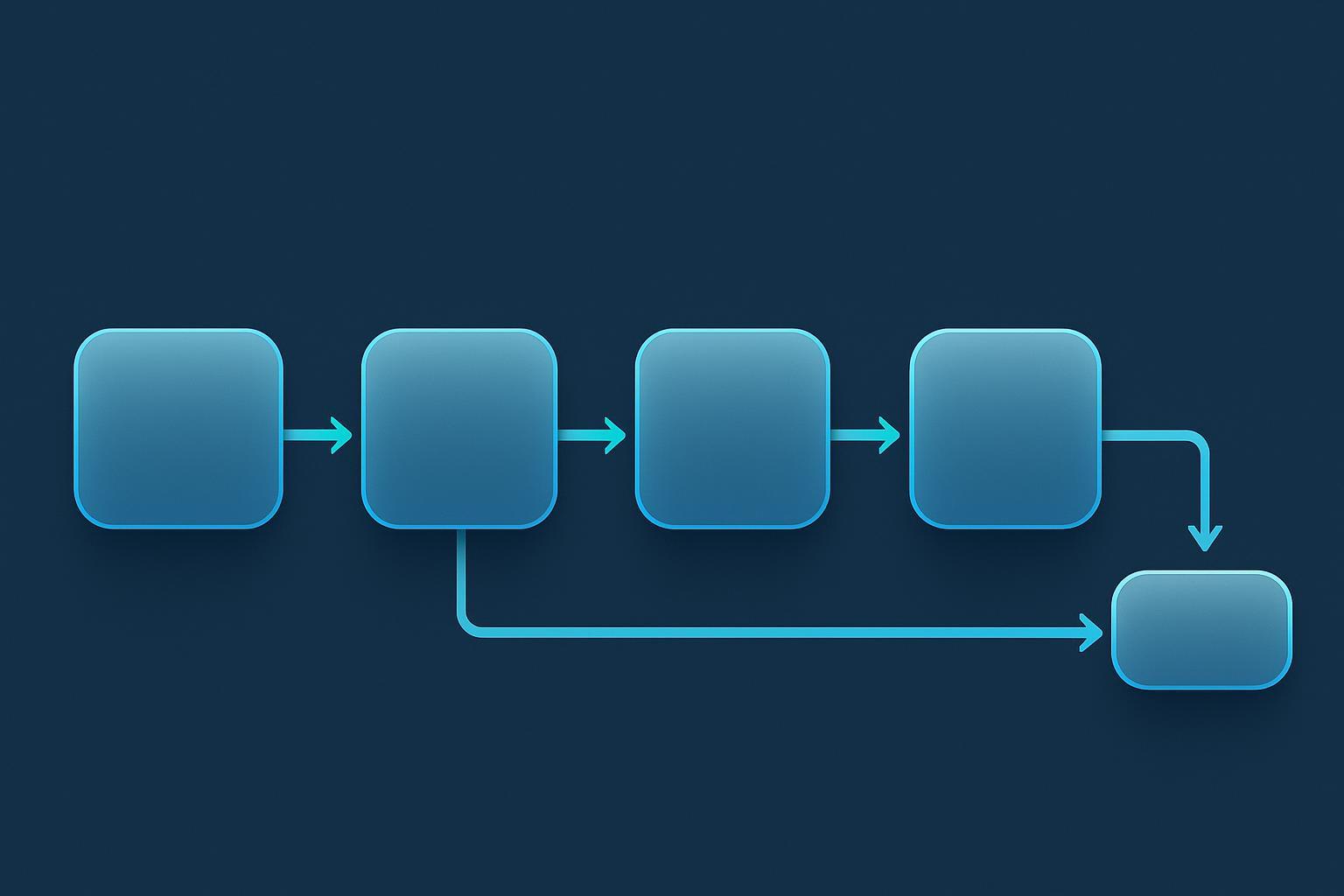
För det finns ingen deadline att vänta på, granskningsordningen har större betydelse än granskningsdatumet. Förändringskontroll kommer först eftersom alla andra områden beror på det. Leverantörskvalifikation, spårbarhet och analytiska register följer, sedan avvikelsehantering, och klient-QMS-gränssnittet varar eftersom det förbrukar utdata från de andra fem. Revideringen splittringsklausul 6.1 i separata krav på risker och möjligheter, och klausul 5.1.1 kräver nu att högsta ledningen främjar en kvalitetskultur, så förvänta dig att klausulnumreringen slutförs på sina ställen. Behandla detta som en granskningsram, inte en klausul-för-klausul tolkning, och verifiera mot den publicerade standarden och ditt certifieringsorgan.
Innan du börjar: Omfattning, Bevis och tid
Ha dessa redo innan du öppnar standarden: den publicerade ISO 9001:2026 text, din nuvarande kvalitetsmanual, de kvalitetsavtalsmallar du utfärdar till leverantörer, den senaste internrevisionsrapporten, leverantörslistan med tilldelade risknivåer, och läsåtkomst till revisionsspåret för kromatografidatasystemet. Du borde redan vara bekväm med ISO 9001 klausulstruktur och med läsning av peptidbatch-poster; om någon av dem är ny, granska det först, eftersom stegen förutsätter att du kan följa en post från begäran till stängning.
Budgetera ungefär en arbetsdag per granskningsområde för ett litet team. Pappersbaserade poster tar längre tid, ofta två dagar per område, eftersom borren i Steg 3 beror på att snabbt hämta en hel del fil.

En regel styr allt nedan: en vara räknas som utförd endast när en post kan framställas på begäran, inte när ett förfarande beskriver det. Ett försvarbart förändringsrekord, till exempel, måste namnge godkännaren och de åtgärder som följer av granskningen, inte bara själva förändringen (David Barker Consulting, 2026). Samma logik gäller för inkommande material: en fullständig analys bör omfatta alla tester som specificeras för råvaran, så ett analyscertifikat enbart är inte rekordet (Q7 Q&En implementeringsarbetsgrupp).
Key Takeaway: Granskningen ger resultat, inte slutsatser. Allt du inte kan bevisa blir en öppen handling, inte ett pass.
Steg 1: Granska förändringskontroll mot den nya betoningen

Peptidförändringskontroll är det första området att granska eftersom en lucka här ogiltigförklarar de andra fem. Ett försvarbart register måste namnge godkännaren och de åtgärder som uppstår vid granskningen, inte bara förfrågan som utlöste den. I Q7 kräver ett formellt förändringskontrollsystem som omfattar råvaror, specifikationer, analytiska metoder, anläggningar, stödsystem, utrustning, processsteg och datorhårdvara, och den förväntar sig att föreslagna ändringar ska granskas och godkännas av de ansvariga organisatoriska enheterna. Under ICH Q7 §7.14, att förändra var en kritisk råvara kommer ifrån är i sig en förändringskontrollhändelse. ISO’s own auditing guidance treats change management as a practice to be audited, so the test is the record, not the procedure.
The peptide-specific scenario the record must reconstruct: a resin lot change that shifts the impurity profile above the specification limit.
Check each item yes or no:
-
Has every change in the last 12 months been risk-assessed before approval?
-
Peptidsyntes Is the effective date recorded separately from the approval date?
-
Is training on the change evidenced?
-
Was effectiveness verified after implementation?
Steg 2: Granska leverantörskvalifikationer efter risknivå, Inte med certifikat
Peptide supplier qualification fails most often because a certificate of analysis is treated as the qualification itself. A certificate tells you what one lot contained. It does not tell you whether the supplier was ever assessed against the risk it carries to your process.
The practical alternative is risk tiering. Industry models commonly use three to five tiers, and the widely referenced four-tier model in USP <1043> assigns tier by product contact, impact on critical quality attributes, in-process failure detectability, source complexity and lot-to-lot variability. Requalification cadence follows the tier: critical suppliers every one to two years, high and moderate every two to three years, low every three to five years (MOL Ändringar, vendor-published guidance, hämtas 2026-09-10).
|
Tier |
Typical peptide inputs |
Requalification cadence |
|---|---|---|
|
Kritisk |
Hartser, skyddade aminosyror, referensstandarder |
Every 1–2 years |
|
Hög |
Solvents and reagents with CQA impact |
Every 2–3 years |
|
Måttlig |
Ancillary materials, packaging contact |
Every 2–3 years |
|
Låg |
Non-contact consumables |
Every 3–5 years |
Then work the binary items:
-
Is every supplier assigned a tier?
-
Is the tier justified in writing against the five assignment factors?
-
Is the requalification date current, or has it lapsed quietly?
-
Where several materials come from one vendor, is there a confirmatory-testing backstop? Testing each material at least once every five years is described as a reasonable minimum in the same source.
-
Is outsourced analytical testing qualified on the same basis as a material supplier, including a full analysis covering all tests specified for the raw material?
One honest limitation: tier models are guidance, not a single mandated scheme. Your certification body may accept a different structure, provided the reasoning is documented and the cadence is defensible.
Steg 3: Kör en tidsstyrd spårbarhetsövning på ett levande parti
Peptide traceability is verified by running it, not by reading the procedure. A mock trace exercise is run as a timed drill on a live lot: trace backward to the customer request and specification, incoming materials, the synthesis batch record and the purification records, then forward through analytical release, förpackning, shipment and destinations. Reconcile quantities so every unit is accounted for as received, consumed, scrapped, held or shipped, and log any missing lot number, unclear handoff or quantity mismatch as a corrective action rather than explaining it away (Certiva, hämtas 2026-08-12).
The split-lot case is where drills usually fail. When one synthesis batch is divided across two purification runs, both directions of the trace must still resolve to the same parent batch, and a reconciliation that closes on paper can hide a purification record that never names which half it processed.
Close the drill with four binary answers: was it completed inside the target time, did every handoff have a named owner, did the quantity reconciliation land within tolerance, and was every discrepancy logged as a corrective action?
Steg 4: Granska analytiska poster ner till rådata

För en mängd peptider, the controlled record is the electronic one, not the printed report. Analytical records have to retain the acquired chromatogram or spectrum, the full injection sequence including injections that never reached the final report, the instrument and integration methods, the audit trail with create, modify and delete events carrying user and timestamp, and the lineage linking Syntetisk Handla Peptider sample, metodversion, instrument, analyst and sequence. Manual integration must be exceptional, justified and attributed, and reprocessing must not overwrite the original result (CloudTheapp, hämtas 2026-08-25).
Chromatography data system audit trails are an explicit inspection target, and reprocessing has to stay visible next to the original result rather than replacing it (CASRAI, hämtas 2026-08-28).
Work through these as binary checks:
-
Can the audit trail be produced for a named lot on demand?
-
Is every manual integration justified in the record itself?
-
Is the method version recorded alongside the result?
-
Are system suitability results retained with the sample results?
-
Does the CoA trace back to the underlying data?
Where a supplier runs orthogonal HPLC or high-resolution MS verification, the record linkage between the analytical result and the released lot is the part that gets tested. MOL Changes states this as a capability of its analytical verification workflow, not as a certification.
Steg 5: Granska avvikelsehantering och OOS/OOT-stängning
A deviation system is judged by closure quality, not by count. Inom peptidtillverkning, four events must route through it: an out-of-specification impurity result, an out-of-trend purity drift across consecutive lots, a failed system suitability check, and any reprocessing step that changes the reported result.
Work the binary items. Is every deviation classified by impact? Is the root cause recorded rather than the symptom? Is the CAPA linked to the deviation it closes? Is effectiveness verified at a defined interval? Is the client notified where the deviation affects a released specification?
This area attracts scrutiny, though the numbers need care. Data integrity featured in about 15% of the drug warning letters reviewed for FY2025 (IntuitionLabs, 2026), and the apparent fall from the 2016 peak is partly a definitional shift: 81% of FY2016 letters went to firms outside the US, mot 60% by FY2018 (IntuitionLabs, 2026). Of the FY2025 letters reviewed, 59% went to US facilities (Pharmaceutical Online, 2026). Om
Notera: The FY2025 and FY2016–FY2018 figures use different denominators and must not be plotted as a single declining line.
Steg 6: Mappa Custom Synthesis till Client-QMS Interface
Most peptide quality failures at the client boundary are ownership failures, not technical ones. The interface has to say in writing who approves the specification, who owns change notification, who owns deviation communication, who owns release criteria, and where escalation goes.
A quality agreement plus a technical agreement pairing is what operationalises the ICH Q10 elements, covering change management, deviation and CAPA ownership, knowledge management, management-review interfaces and escalation paths, with validated 21 CFR del 11 compliance treated as a contractual baseline (MOL Ändringar, 2026-09-10). That page also records industry change-notification windows of 30, 60 eller 90 dagar, longer for site, behandla, raw-material and analytical-method changes, and up to six months for comparable-materials supply.
Work through the binary items:
-
Is a named quality contact identified on both sides?
-
Is the notification window defined per change type?
-
Is the specification approval path documented?
-
Is the release-criteria owner unambiguous?
-
Is a joint review cadence scheduled?
One stated approach among several is the six-pillar supplier-governance model, which groups raw-material qualification, dokumentation, sterilization strategy, testing capacity, change control and contingency planning into a single governance view for custom synthesis programmes (MOL Ändringar, 2026-09-10).
Nästa steg: Request the quality documentation package to see how these interface controls are documented before your next client audit.
[INTERNAL-LINK: none]
Vanliga misstag att undvika i en ISO 9001:2026 Recension
The most common failure in an ISO 9001:2026 peptide quality system review is reviewing documents instead of records, which produces a clean gap analysis and an unclean audit. Four mistakes account for most of that gap.
Treating the absent deadline as permission to wait. Because no transition deadline has been published, some teams park the review until one appears. The fix is to schedule the review against your own surveillance cycle, not against a date that does not exist yet.
Reviewing clause by clause instead of process by process. A clause walkthrough confirms that a procedure exists; it does not show whether the procedure held on a live lot. Review the six process areas in the order they generate risk, and let the clauses fall where they belong.
Accepting supplier certificates as qualification evidence. A certificate states that a supplier was audited once. It says nothing about the lot in front of you, so pair it with the confirmatory testing and requalification cadence your risk tier requires.
Treating the printed CoA as the analytical record. When a discrepancy is found, the controlled record is the electronic one, not the printed report, and a mock trace exercise is run as a timed drill to prove the electronic trail closes.
Hur en färdig recension ser ut
If the review went correctly, you are holding a dated findings register, not a set of notes. Every checklist group has a named reviewer. Every item that could not be evidenced has an owner and a due date against it, and every item that passed is listed too, because the passes are what you will show an auditor first.
The traceability drill is the clearest success signal: a mock trace exercise run as a timed drill should end with a reconciled quantity, meaning the mass balance you reconstruct from batch records matches what the lot actually consumed and released. If the numbers do not reconcile, the drill found a real gap, which is the point of running it. Peptidproduktion
The stretch goal is to run this same framework against one critical supplier’s system and place the two findings registers side by side. Comparing them is the fastest way to surface interface gaps, the places where your change control assumes a notification the supplier never agreed to send, before an auditor finds them for you.
Vanliga frågor
Finns det en publicerad övergångsdeadline för ISO 9001:2026?
Inga. The transition document is still unnumbered, published by the Global Accreditation Cooperation as “IAF MD XX”, so no official deadline exists yet. Certification bodies are telling clients to plan for a three-year window, but that figure rests on the 2015 cycle, which gave organisations three years between publication and withdrawal of the previous edition. Samma situation finns redan för ISO 14001:2026, where the transition period is likewise unsettled. One certification body states plainly that its transition figure comes from a draft, so check your own certification body’s written notice rather than a summary page.
Har vår befintliga ISO 9001:2015 certifikatet förblir giltigt?
Ja, for now. The sixth edition of ISO 9001 publicerades den 16 september 2026 and supersedes the 2015 utgåva, but certificate validity follows accreditation and certification-body transition arrangements that are not yet published. Keep your current certificate and start the review now rather than waiting for a deadline that does not exist.
Var ska ett litet lag börja om det bara kan granska ett område detta kvartal?
Start with change control. Leverantörskvalifikation, traceability and deviation handling all generate records that change control governs, so a gap there is the one most likely to invalidate work done elsewhere. One focused review of change control will surface more downstream problems than any other single area.
Kan vi använda detta ramverk för att granska en leverantör istället för vårt eget system?
Ja. Two adjustments make it work: the traceability drill becomes a request for the supplier’s own drill record rather than a live exercise you run, and the interface section becomes the quality agreement itself, which is where your requirements and the supplier’s obligations meet. Everything else transfers unchanged.
Slutsats
You now have a six-area review order, a binary checklist for each area, and the two facts that set the clock: ISO 9001:2026 publicerades den 16 september 2026, och ingen deadline för övergång har publicerats. That second fact is the reason to run this ISO 9001:2026 peptide quality system review now rather than later. Findings from a review of this kind take longer to close than a transition deadline takes to arrive, so the teams that start with change control and work the sequence are the ones who will not be compressing remediation into a single quarter.
The findings register you built along the way is the deliverable. It tells you which of the six areas needs a CAPA, which needs a documentation update, and which is already defensible as written.
If you would rather not build the evidence pack alone, MOL Changes can share a quality documentation package covering supplier governance, change-notification windows and the client-QMS interface, or connect you with a specialist who works on peptide quality systems daily. MOL Changes har ett kommersiellt intresse av peptidkvalitetsstandarder, so weigh that as you read.
Verify every item against the published standard and your certification body before you treat any of it as closed.