Varför $39.79 Miljardprognos spelar roll för beslut om outsourcing av peptider
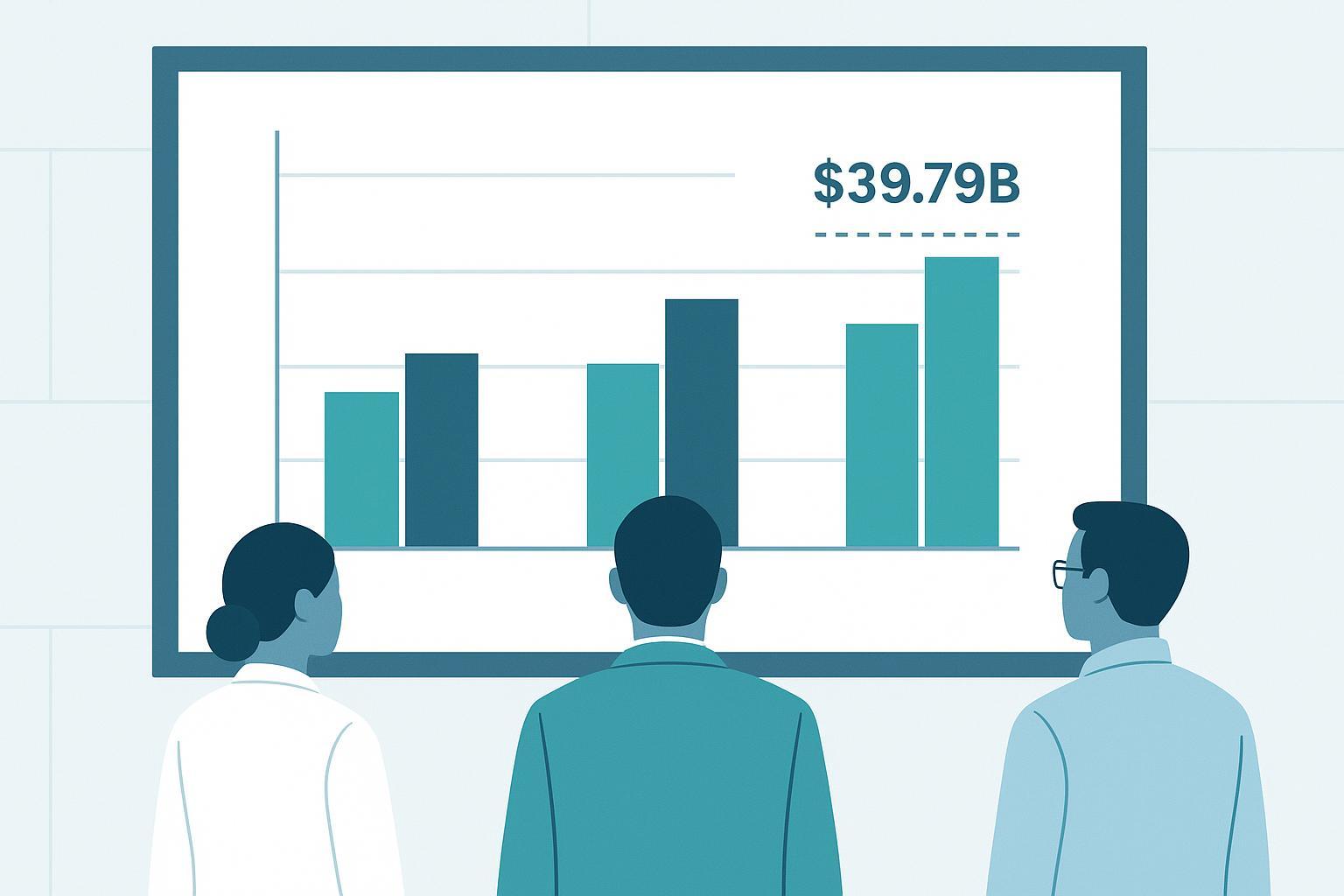
Marknaden för läkemedelsupptäcktstjänster anges ofta som ett enda nummer, men antalet ändras med definitionen. Research and Markets sätter 2030 figur kl $39.79 miljarder från $23.21 miljarder in 2026, a 14.4% CAGR, räkna intäkter från läkemedel, DMPK, tjänster inom biologisk och medicinsk kemi (Forskning och marknader, Marknadsrapport för Drug Discovery Services 2026, åtkomst 2026). Den kedjan är enkel uppströms: ingen annan leverantör i denna recension återger det.

En smalare CRO-vänd definition sätter 2030 marknaden i USD 27.23 miljard, upp från USD 16.36 miljarder in 2025 vid a 10.7% CAGR (Marknader och marknader, Drug Discovery Services Market Report 2025–2030, basår 2024). Gapet spåras till CRO-till-pharma-definitionen bakom det mindre antalet, vilket exkluderar tjänsteintäkter som bokförts utanför det förhållandet. En tredje leverantör sätter 2035 marknaden över USD 89 miljarder på a 13.95% CAGR (Preferensforskning, Drug Discovery Services Marknadsstorlek & Globala trender 2035, publiceras 2026-08-19).
Key Takeaway: De $39.79 miljarder prognos vilar på en uppströmskälla. Prognoser av denna typ varierar beroende på leverantör eftersom de mäter olika omfattningar.
Om marknadens egen storlek beror på hur omfattningen definieras, en peptidpartners leverans behöver samma tydlighet.

Den konventionella utsikten: Köp Synthesis, Montera resten själv
Det dominerande rådet är att köpa varje steg från den leverantör som gör det steget bäst. Få anpassad peptidsyntes från den kvalificerade leverantören till lägsta kostnad, sedan avtalsändring, märkning, rening och analys separat, på logiken att specialister slår generalister på både pris och djup.
Den logiken är inte lat. Fastfassyntes mognade som en diskret, offertbar tjänst, och upphandlingssystem byggdes kring offerter per uppgift: en sekvens, en renhetsgrad, ett pris, en ledtid. CDMO-kapacitetsguider, leverantörers FAQ-sidor och marknadsrapportsammanfattningar förstärker alla modellen, och marknaden den betjänar är verklig. Marknader och marknader värderar själva peptidsyntesmarknaden till under en miljard dollar idag, USD 0.98 miljarder in 2026, nå USD 1.54 miljarder med 2031 vid a 9.5% CAGR. Grand View Research sätter 2024 bas på USD 961.5 miljoner som växer till USD 1,840.6 miljoner av 2033, och identifierar CDMO- och CRO-slutanvändningssegmentet som den snabbast växande delen av peptidsyntesen.
För en kort stund, enkel, väluppfostrad sekvens, Per-task sourcing vinner verkligen. Kritiken som följer måste vara specifik om var den slutar vinna.
Där fragmenterad peptidoutsourcing går sönder
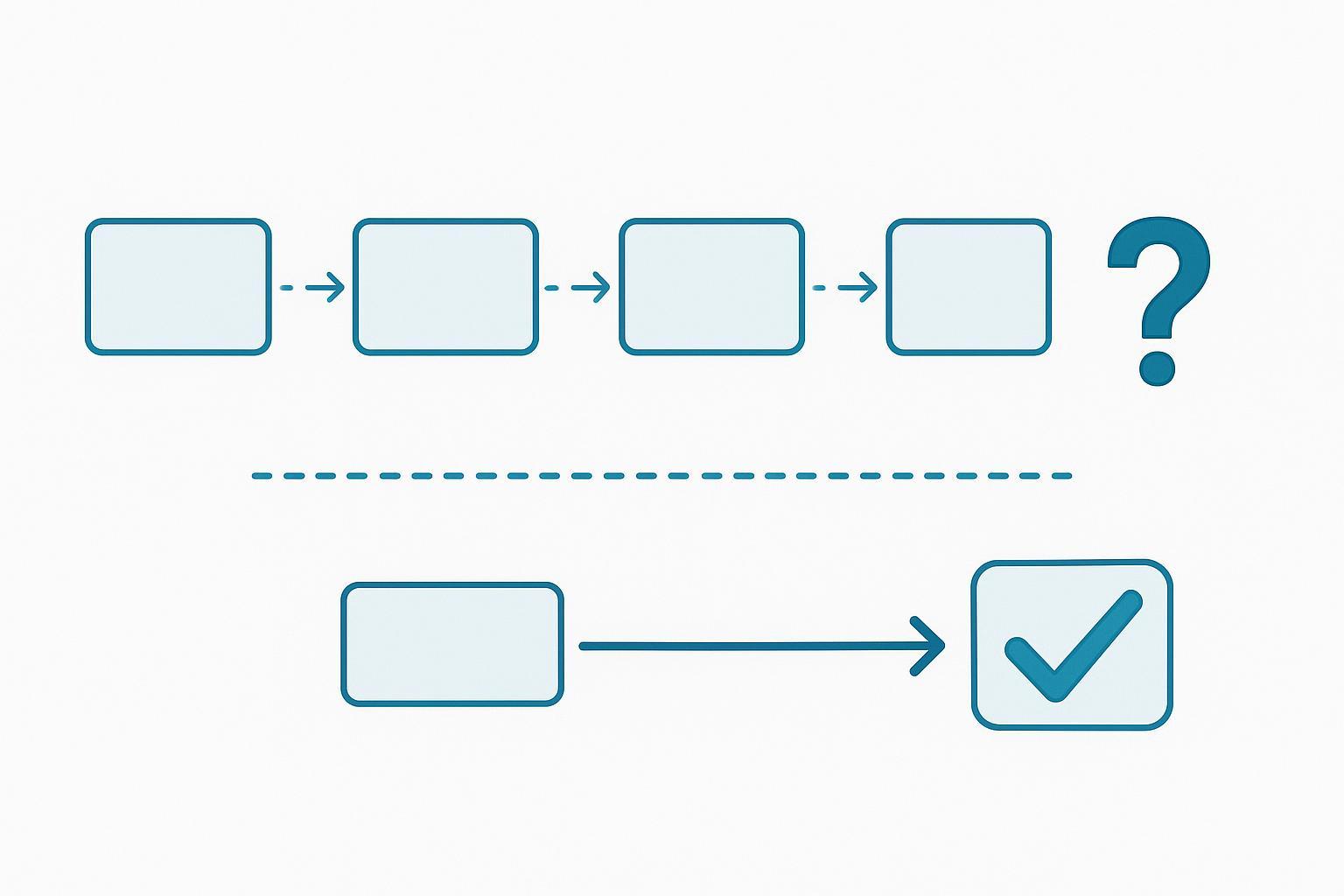
Fragmenterad peptidoutsourcing tar inte bort integrationsarbete; det flyttar det arbetet till ditt team och bryter spårbarhetskedjan i processen.
Det första avbrottet är datakedjan. Varje leverantörs analyscertifikat hänvisar till sitt eget batch-ID, metodversion och acceptanskriterier, så att rekonstruera en lotshistorik över fem leverantörer blir manuell arkeologi snarare än en fråga.
Svåra sekvenser misslyckas i sömmarna. Hydrofobisk, aggregationsbenägna och multi-site modifierade sekvenser förlorar utbyte vid varje överföring, och ovan 95% renhet i kilogram skala tar vanligtvis flerstegs preparativ HPLC, vilket innebär att återvinningskostnaden landar på den som äger det sista steget. Återhämtning, inte syntes, det är där det mesta peptidmaterialet går förlorat: 50–80 % råavkastning, sedan 20–50 % efter rening.
Tidslinjer sammansätter istället för att lägga till. Adesis uppskattar det varje tillagd leverantörshandoff kan lägga till månader av tekniköverföringstid, med multi-CDMO-arbetsflöden som sträcker sig till 24–36 månader. Det är en leverantörsuppskattning, inte ett riktmärke.
⚠️ Varning: Över leverantörer, försening och kostnad multipliceras. Sex månader per handoff stannar inte sex månader när fyra handoffs står i kö bakom varandra.
Den konventionella modellen optimerar varje uppgift och suboptimerar peptidoutsourcingprogrammet.
Vad data faktiskt visar: Integration är variabeln som rör sig
Prognoserna alla citerar mäter utgifter, inte resultat. Grand View Researchs marknadsrapport för peptidterapi sätter marknaden för peptidläkemedel till USD 140.9 miljarder in 2025, stiger till USD 294.6 miljarder med 2033 vid en 8.7% CAGR, och att efterfrågetrycket landar uppströms syntesen, på lag som måste flytta fler sekvenser genom modifiering, märkning, rening och testning än vad deras interna kapacitet tillåter.
Peptidsyntes Det är därför leverantörsantal är fel variabel. För varje program, fråga om leveransen är ett material eller ett beslut. Om det är ett beslut, require one accountable party across sequence design support, syntes, modifiering, märkning, purification and analytical testing, which is what integrated peptide services actually means in practice.
För tips: Ask whether the deliverable is a material or a decision. Materials can be sourced per task; decisions need one owner.
A batch-specific release package shows the difference concretely: the synthesis lot, the modification step and the analytical results carry one batch identifier and one method-version register, so a reviewer can trace a purity value back to the run that produced it.
The honest limit: no retrieved source quantifies integrated versus fragmented adoption as a percentage, so this argument rests on mechanism and documented artifacts, not on an adoption statistic.
Vad ett spårbart datapaket måste innehålla

A traceable data package is a lot-specific record that ties every result to a batch, a method version and a release decision. A certificate of analysis should tie every result to one lot, and if it does not, the number on the page is not evidence of anything.
Compiled vendor guidance, not a published standard, converges on the same minimum content. The table below consolidates it.
|
Required element |
What it must be tied to |
Felläge när det saknas |
|---|---|---|
|
Batch/lot identifier |
The physical lot the sample came from |
Results cannot be traced to shipped material |
|
Identity and counterion or salt form |
The specified salt form for that lot |
TFA and acetate lots look interchangeable on paper |
|
Analytical method identifiers and versions |
The exact method revision used |
A method change silently invalidates comparability |
|
Acceptance criteria |
Stated before results, inte efter |
Specifications get written to fit the result |
|
Purity result with integrated chromatogram and peak-area table |
The integration, not a summary percentage |
A single number hides co-eluting impurities |
|
Raw RP-HPLC chromatograms |
The run that produced the purity figure |
No way to re-integrate or audit the baseline |
|
LC-MS spectrum with observed versus theoretical mass and charge states |
The same lot and method version |
Identity is asserted rather than demonstrated |
|
Föroreningsprofil, specified, unspecified and total |
The reporting threshold applied |
Unspecified impurities go uncounted |
|
Peptidkartläggning, where used |
The digest and column conditions |
Sequence confirmation cannot be reproduced |
|
Counterion confirmation |
The lot’s declared salt form |
Stoichiometry and assay drift |
|
Endotoxin by LAL, sterility or bioburden, där så krävs |
The release specification for the intended use |
A research-grade lot is treated as clinical-grade |
|
Avvikelse, OOS and OOT records with QA disposition |
The batch record and the disposition decision |
Failures disappear between testing and release |
|
Tjänster Testing lab and approver |
Named laboratory and named approver |
Accountability is unattributable |
|
Final released or withheld decision |
The lot, daterad |
Material ships without a documented release |
Two named references frame the analytical side. I Q2(R2), gäller i juni 2024, requires validation of analytical procedures for their intended use, so a method identifier without a validation status is an incomplete record. USP <71> och USP <85> are the relevant compendial references for sterility and bacterial endotoxins; their clause wording is not reproduced here. ALCOA data-integrity expectations apply to the raw data, the integrations and the audit trail, not only to the reported summary.
Purity specifications move with program stage, and these bands are vendor-sourced rather than harmonized. Research-grade material is commonly 70%, med 80, 90, 95 och 98% options selected by assay use. Preclinical work generally runs 90 till 98%, with at least 95% recommended for early screening and IND-enabling studies. Clinical material is generally at least 98%, with single impurities held below 0.5%.
The practical test is simple: ask for the package before you ask for the price. A vendor who cannot produce the integration behind the purity figure has told you what the rest of the record will look like.
Röda flaggor och måsten i urvalskriterier för peptid CRO
Red flags cluster around documentation that cannot be traced. A certificate of analysis that reports a purity percentage with no integrated chromatogram or peak-area table is a red flag. So is a result that is not tied to a method version, an acceptance criterion that appears only after the results are in, and a batch that underperforms without a deviation or out-of-specification record. A single accountable contact who cannot produce raw data on request belongs on the same list, as does a partner who quotes custom peptide synthesis alone and leaves modification, märkning, purification and analytics as your coordination problem.
Must-haves are the mirror image, and each one is checkable. Ask for one batch identifier spanning every stage, a method-version register, and orthogonal characterization at minimum by RP-HPLC plus LC-MS rather than a single method. Ask for the documented counterion and salt form, the named approver and testing lab, and a written release decision. Then attach a scenario: when a 40-mer hydrophobic sequence needs on-resin aggregation control and the purification step sits with a different vendor, what happens to the batch record? If nobody can answer, the traceable data package is a promise rather than a process.
One caution on specifications. Vendor pages commonly publish a purity ladder, with research-grade material around 70% och 80/90/95/98% options, preclinical work roughly 90-98% and often ≥95% recommended for early screening and IND-enabling studies, and clinical material generally ≥98% with single impurities below 0.5%. Those figures come from vendor specification pages, not from a regulator, so treat them as a starting point: purity grade is a specification, not a marketing label, and your program’s regulatory pathway should set the acceptance criteria you actually write into the contract.
Hur man tillämpar kriterierna på ett beslut

Pull the last three CoAs from your current partner and check one thing: is every result tied to a batch ID and a method version? Om inte, you have found your starting point.
-
Write your acceptance criteria and required data-package contents before contacting any vendor. Under a day, and it is the highest-leverage step in the sequence.
-
Map which stages your current model outsources separately, and mark every Handla handoff where the batch identifier changes. One to two weeks.
-
Send the checklist to two or three candidate partners and score responses on artifact completeness, not on price or claimed capability. Syntetiska peptider When you compare integrated peptide services, ask which batch ID follows the material across synthesis, modification and analytics. Two to three weeks.
-
Require a written release decision and a named approver in the contract. Longer-term, but it is what converts a promise into a process.
-
Re-audit the first delivered lot against the checklist from step 1.
The deliverable you are scoring looks like this: a batch-specific release package where the synthesis lot, the modification step and the analytical results share one batch identifier and one method-version register, with raw chromatograms supplied alongside the summary result. That is the artifact, not a claim about it.
Track two numbers as you go: hours your team spends reconstructing lot history per program, and batches requiring re-analysis. Those are the costs fragmentation hides. Expect the first fully traceable package on your next program cycle, not the current one.
Nästa steg: Request a feasibility assessment and ask MOL Changes to show you what a batch-specific release package looks like for a sequence like yours.
Varningar: Där den konventionella modellen fortfarande vinner
The strongest objection to this argument is that integration is not always worth paying for. For a single, well-characterized, unmodified sequence at small scale, per-task sourcing can be cheaper and faster, and consolidation adds coordination overhead that a one-off order does not need.
Context matters in a second way. A team with an established internal analytical function may already own the traceability chain, so it gains less from buying that chain as a service.
The weakest part of the case is evidential. No retrieved source quantifies the cost of fragmentation or the adoption rate of integrated models, so the argument rests on mechanism, documented artifacts and vendor estimates rather than a controlled comparison.
The bounded position: integration earns its premium when the program’s deliverable is a decision and the sequence is difficult, modified or labeled. When the deliverable is simply a material, it is optional.
But doesn’t per-task sourcing give better depth and price?
Often, ja, for a single unmodified sequence. If your program needs one 20-mer synthesized to 95% purity and nothing else, a specialist shop that does only that will usually beat an integrated provider on both unit price and depth of expertise, because you are buying exactly one capability and paying for exactly one capability.
The calculus flips once the sequence needs modification, labeling or orthogonal characterization. At that point the work splits across vendors, and the buyer absorbs the integration labor: reconciling batch IDs, chasing method versions, and re-running characterization because one supplier’s certificate does not answer the next supplier’s question. That labor rarely appears in the per-task quote, which is why the cheaper line items can still produce the more expensive program. Om
Tänk om vi redan har byggt en peptidförsörjningskedja med flera leverantörer?
You do not have to replace every vendor to fix this. The first move is a documentation change, not a re-sourcing decision: impose one batch identifier across all existing suppliers, so that a lot from one vendor and a lot from another can be referred to by the same internal name.
Then request, retroactively, the method versions and raw data behind the current lot. Most suppliers will release this when asked directly, and what they cannot produce tells you where the risk sits. Apply the full checklist at the next program cycle rather than mid-program, and consolidate vendor by vendor as contracts come up for renewal. That way the traceable data package grows around work already underway instead of restarting it.
Hur reagerar du på marknadsrapporterna som visar att outsourcing växer stadigt?
Steady growth in peptide outsourcing is real, and it is consistent with this argument rather than against it, because those reports measure spend, not traceability. MarketsandMarkets puts the peptide synthesis market itself under a billion dollars today, at USD 0.98 miljarder in 2026 stiger till USD 1.54 miljarder med 2031 på en 9.5% CAGR from a 2025 basår. Grand View Research reaches a similar order of magnitude from a different base, USD 961.5 million in 2024 to USD 1,840.6 miljoner av 2033 på 7.71%, and finds the CDMO and CRO end-use segment is the fastest-growing part of peptide synthesis. Figures vary by provider and by what each report counts: reagenser, consumables, and custom peptide synthesis across liquid-phase and solid-phase routes.
The two estimates do not agree, and that disagreement is the point. MarketsandMarkets frames drug discovery services through a narrower CRO-facing definition, early-phase work performed by contract research organizations, while services-revenue estimates count a broader set of activities. A growing number therefore tells you demand is rising. It does not tell you what a given partner will hand back with your lot. Peptidproduktion
För tips: Ask a prospective partner which market definition they benchmark against. A CRO-scope number and a services-revenue number are not comparable, and neither one tells you what your lot record will contain.
Nästa steg för peptidteam som utvärderar integrerade tjänster
The forecast is a reason to define the deliverable, not a reason to buy more tasks. Start your peptide outsourcing review by writing the acceptance criteria and the required data-package contents before you contact any vendor: a checklist written after the quote is a negotiation, inte en specifikation.
-
Draft your release-package requirements today (under an hour). Ask for a lot-specific release package that ties every result to one batch, and name the analytical procedures you expect to see validated under ICH Q2(R2), gäller i juni 2024.
-
Map your current program against the criteria in this article and mark every gap.
-
Request one accountable party across sequence design support, syntes, modifiering, märkning, purification and analytical testing, so integrated peptide services replace handoffs between vendors.
-
Ask each candidate for a sample traceable data package, including raw chromatograms and method versions alongside the summary result. MOL Changes is one example of a partner that supplies this artifact; the deliverable, not the vendor name, is what you score.
Measure progress by whether the next program cycle produces a package you can audit without emailing the lab. Expect the first fully traceable release on that cycle, not this one.
Key Takeaway: Write the acceptance criteria and the required data-package contents before you contact any vendor, a checklist written after the quote is a negotiation, inte en specifikation.
Pressure-test your next peptide program before you commit. Send us your sequence and target specification; we will return a feasibility assessment and a sample analytical package so you can score the deliverable against your own checklist. Request a feasibility assessment.
Avslöjande: MOL Changes har ett kommersiellt intresse av peptidkvalitetsstandarder. This article covers research-use materials and program decisions only; consult a qualified professional before making medical or regulatory decisions.