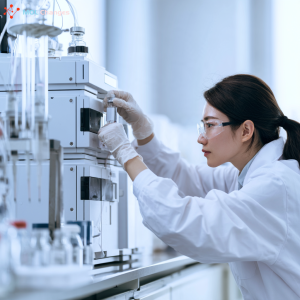
金斯瑞 3 亿美元的人工智能计划: 这对 R 肽意味着什么&D

金斯瑞 3 亿美元的人工智能计划: 这对 R 肽意味着什么&D

正确解读资本信号

金斯瑞九月收益用途分割 2026 配股具有指导意义. 净收益中, 约 16.3 亿港元 — 或大约 70% — 针对 AIDD 平台容量和基础设施. 另有4.7亿港元支持R&D, 数字化工作流程集成, 和全球扩张. 另外2.3亿港元用于一般企业用途.

实际上, GenScript 正在扩展其所谓的“基因到蛋白质”平台: 涵盖人工智能生成的数字序列、生物构建和实验验证的工作流程, 自动化连接各个阶段. 据称的标题功能是“4 天人工智能到生物验证引擎”——在短短四天内从数字序列转变为模型就绪的生物数据. 截至年底 2026, 金斯瑞提出了一个目标,大约是 60% 全球产能 将由人工智能驱动的自动化提供支持.

金斯瑞 3 亿美元的人工智能计划: 这对 R 肽意味着什么&D

这些资本购买的是计算吞吐量, 发现前端的自动化驱动速度, 以及集成的数据管道,允许人工智能生成的设计直接输入到实验工作流程中. 它没有改变的东西——金斯瑞自己的管理层在上半年也承认了这一点 2026 中期业绩电话会议——是实验验证的要求. 直接报价: “人工智能模型可以生成设计, 但这些设计必须经过实验验证。”这不是免责声明; 它是工作流程如何运行的结构描述. 大写正在扩大这句话之前的部分, 不在它之后.

用于采购和研究&D决策者, 这种区别是整个资本公告中与操作最相关的事实.

金斯瑞 3 亿美元的人工智能计划: 这对 R 肽意味着什么&D

人工智能真正加速肽发现的前端

评估AI的实际贡献, 它有助于将其映射到特定的工作流程阶段,而不是将其视为同质功能.

主干网生成和目标感知绑定器设计

截至 2025 年至 2026 年,肽发现中最有效的人工智能应用是结构条件主链生成与固定主链上的序列设计相结合. 占主导地位的管道, 经过多项同行评审分析的审查,包括 一个 2025 药物发现中扩散模型的 PMC 调查, 遵循两阶段架构:

RFdiffusion — 由华盛顿大学蛋白质设计研究所开发并发表于 2023 — 生成以目标结合位点几何形状为条件的三维肽主链结构. 它是一种生成扩散模型,提出与蛋白质表面几何互补的主干坐标, 这比盲库筛选或经典的基于 Rosetta 的设计循环是一个真正的进步. 蛋白质MPNN, 也来自同一组 (2022), 然后进行反向折叠: 给定主干几何形状, 它采样与该结构热力学相容的氨基酸序列. 阿尔法折叠 2 和阿尔法折叠 3 充当排序和过滤层 - 在尝试任何工作台合成之前预测设计序列的可能折叠和复杂几何形状.

该管道是人工智能对肽结合剂发现做出贡献的真正来源. 它将结构假设生成阶段从组合库筛选问题压缩为定向生成过程. The experimental successes are strongest in structure-constrained design scenarios — where a well-characterized target binding pocket allows the model to generate geometry-conditioned proposals rather than working from sequence alone.

前端时间线压缩和命中率现实

GenScript’s management comments on timeline compression are worth taking at face value in the appropriate context: the claim that AI can compress early-stage discovery from a traditional four-to-six-year timeline to twelve to eighteen months refers specifically to the identification and experimental prioritization of candidates — not to the full development-to-IND timeline. Within that scope, the compression is plausible, because AI models reduce the number of trial-and-error synthesis-test cycles needed to reach a usable hit.

The published hit rate data provides a grounded reference point. 根据 一个 2026 analysis of AI peptide design performance by ChemVerify, AI-designed focused peptide libraries show measurable binding to the intended target in 15–35% of cases — defined at the point of synthesis and biophysical testing. This is a meaningful improvement over unfocused combinatorial libraries, but it also means that 65–85% of AI-designed sequences fail at the first wet-lab contact point. The model is not selecting for synthesizability, 纯度, or modification compatibility; it is selecting for predicted binding geometry.

替补时间前的大容量假设分类

The third genuine contribution is upstream of synthesis: AI models can evaluate billions of virtual sequences at negligible marginal cost, filtering out obvious misfolds, low-confidence binding geometries, and sequences with poor predicted stability before any synthesis resource is committed. This has real value as a resource allocation tool — it concentrates experimental effort on the subset of computationally promising candidates rather than running blind screening campaigns.

多肽合成 然而, the output of this triage is still a list of candidates that must clear every subsequent wet-lab gate. The triage narrows the aperture; it does not guarantee passage through the gates that follow.

综合翻译差距

The synthesis translation gap is where the majority of AI-designed peptide attrition occurs, and it remains the most underappreciated quality dimension in the AI-adjacent vendor evaluation conversation.

合成可行性: 模型无法预测什么

AI sequence generators do not model the physical chemistry of solid-phase peptide synthesis. A sequence that presents an excellent binding geometry in silico may be aggregation-prone on resin, insoluble in standard synthesis solvents, difficult to deprotect without side reactions, or require coupling conditions that dramatically reduce yield. Longer sequences compound these problems — each additional residue adds another opportunity for coupling failure, 删除, 或聚合.

As YuYan Chen, Director of Chemistry at BioDuro, described in a detailed account of AI-to-synthesis workflows: “This is not an easy task. We not only need to achieve efficient batch synthesis, but ensure that the crude purity of each peptide is within the acceptable range for every peptide.” That operational constraint — crude purity within acceptable range across an entire library — is a function of synthetic chemistry execution, not of model architecture. Independent reviews of AI-driven peptide design reach the same conclusion. 作为 一 2026 审查于 Chemical Communications 笔记, “limited training data for non-standard modifications, increased synthetic complexity and cost, unpredictable pharmacokinetic profiles, and less-established regulatory approval pathways present substantial barriers to clinical translation.” A separate 2026 comparative review of AI applications in peptide science makes the same structural point from the chemistry side: while SPPS chemistry is repetitive in principle, longer chains are prone to aggregation, folding problems, low coupling efficiency, and racemization that reduce purity or cause outright synthesis failure. It requires the ability to execute 定制肽合成 for sequences with challenging physicochemical profiles, not simply to automate standard sequences at scale.

The 15–35% hit rate cited above is already filtered through this problem. Candidates that could not be synthesized cleanly enough to test are excluded before the hit rate is calculated. The working attrition in synthesis-first programs, where full libraries are attempted, is substantially higher.

在实践中, this plays out through a recurring pattern reported across peptide CRO/CDMO workflows. A computational team delivers a ranked candidate list, the synthesis team attempts the top-priority sequences, and a subset of them fails to reach testable crude purity on the first pass — because of on-resin aggregation, incomplete coupling at hindered residues, or a deprotection step that generates a side-product profile that co-elutes with the target. Resolving that failure is not a matter of re-running the model; it is a matter of changing the synthetic route, the resin, the coupling strategy, or the protecting-group scheme, and re-testing. That iterative chemistry work is where the real time and cost of a synthesis campaign accumulate, and it scales with the complexity of the requested sequence rather than with the difficulty of the design problem.

非规范修饰——药物化学边界

The therapeutic potential of peptide-based candidates often depends on modifications that go beyond the standard 20 proteinogenic amino acids: hydrocarbon stapling to enforce helical conformation, head-to-tail or side-chain-to-side-chain cyclization for protease resistance, D-amino acid substitution, N-methylation to restrict conformational flexibility, lipidation for half-life extension, or PEGylation for pharmacokinetic optimization.

These modifications are the medicinal chemistry boundary that current generative AI models handle poorly. As documented 在一个 2026 review of deep-learning-driven peptide therapeutic design, non-natural amino acids and complex chemical modifications are often poorly represented in model training data, making the designed sequence and the synthesizable molecule two different things. A cyclization that closes a disulfide bridge between two cysteine residues in a predicted structure must still be executed as a controlled oxidation step with measurable yield; a hydrocarbon staple requires a ring-closing metathesis reaction with its own solvent, catalyst, and temperature requirements.

Cyclization in particular carries inherent yield limitations even in expert hands. EMA 的 合成肽开发与生产指导原则 explicitly addresses the need for characterization of such peptides using orthogonal methods, acknowledging that modified peptides generate impurity profiles distinct from their linear counterparts. AI investment does not eliminate these constraints; it shifts where in the workflow the constraint becomes visible.

纯化: 将真实化合物与模拟分离

合成后, crude peptide mixtures contain not only the target sequence but deletion sequences, 差向异构残基, 氧化产物, truncation products, and diastereomers that copurify poorly with the target compound under standard reversed-phase HPLC conditions. Generative models do not predict crude mixture composition, separation behavior on a specific stationary phase, or the influence of organic modifier gradient on diastereomer resolution. This is not a marginal cost item. 作为 industry analysis of peptide manufacturing scale-up reports, purification can account for up to 60% of total manufacturing cost for longer peptide sequences — making separation strategy, not sequence generation, the dominant economic variable in many programs. 一个 2026 CDMO selection analysis frames the same point as a selection pitfall for buyers: “purification and isolation may set the actual output ceiling,” and capacity announced at the synthesis stage does not transfer automatically to the purification stage.

Preparative RP-HPLC purity verification to ≥95%–98%+ — the standard acceptance criterion for research-grade to GMP-grade peptide material — is a wet-lab measurement that requires iterative method development. The chromatographic behavior of a hydrophobic, 合成肽 cyclic, or lipidated peptide at preparative scale is not derivable from its sequence. This is not a computational problem awaiting a better model; it is a physical separation problem that requires analytical instrumentation and chemistry expertise.

分析验证——不可协商的大门

Confirmation of identity and purity after synthesis is governed by the same orthogonality principle regardless of how the sequence was generated. The EMA’s guideline on synthetic peptide manufacture states directly that “characterisation of purity should be addressed using an orthogonal approach, IE. size-based, charge-based and hydrophobicity-based separation techniques.” This means HPLC purity data alone is insufficient; identity must be confirmed by ESI-MS or MALDI-TOF mass spectrometry per batch, not per design.

For any material intended for cell-based assays or in vivo preclinical studies, endotoxin testing by the Limulus Amebocyte Lysate (鲎试剂) assay is critical — a peptide that passes HPLC purity and MS identity checks but carries endotoxin at levels that activate TLR4 signaling will confound assay readouts and may be unusable for the intended biological purpose. Peptide testing and analytical characterization at this level requires calibrated instruments, 经过验证的方法, and quality documentation (辅酶A) that is generated per batch, not per design campaign.

This gate is unchanged by any amount of computational investment at the front end of the discovery pipeline.

Key point: An AI-generated sequence carries no inherent quality certification. Every batch of synthesized peptide must pass the same analytical gates regardless of whether its sequence was designed in silico, rationally optimized, or drawn from a combinatorial library.

放大和无菌生产: 最终翻译测试

The synthesis translation gap is most acute when AI-designed peptide candidates advance from milligram-scale discovery synthesis to gram- or kilogram-scale process development for preclinical supply or early clinical manufacturing.

Scaling custom peptide synthesis across three orders of magnitude — from 10 mg analytical batches to 1 kg GMP production — requires empirical process development for each molecule. 树脂选择, loading density, coupling reagent and solvent selection, deprotection conditions, fragment assembly strategy for longer sequences, and the impurity profile at scale all must be characterized and controlled independently. Process parameters that produce acceptable crude purity at milligram scale routinely require re-optimization at gram scale, because aggregation behavior on resin, solvent volume effects, and heat transfer during exothermic coupling steps change at preparative dimensions. This non-linearity is well documented beyond any single vendor’s account. 作为 一 2026 review of peptide CDMO scaling 说它, moving from milligrams to grams or kilograms introduces resin swelling, mass-transfer, heat dissipation, and solvent-recovery issues, so a peptide that can be made in discovery quantities may not transfer cleanly to preclinical or commercial scale. 一个 2026 CDMO buyer’s guide defines the scale-up track record itself as a qualification criterion, listing demonstrated milligram-to-kilogram scale-up and ICH Q6B-aligned analytical packages as core indicators of real capability.

For assay-ready preclinical material and ultimately for clinical supply, sterile manufacturing adds a further qualification layer. 一流的生产 100 cleanroom environments — controlling bioburden, particulates, and endotoxin — is a facility and process certification requirement, not a software specification. Batch-to-batch consistency in this context means not only consistent HPLC purity and MS identity but consistent endotoxin specification, consistent counterion profile, and consistent reconstitution behavior across every lot supplied to a study site.

This is the quality infrastructure that supports an IND filing or a preclinical package. AI models contribute to defining what sequence to make; they contribute nothing to the manufacturing process that determines whether the sequence can be made reliably at the required specification.

什么是 $300 供应商评估的百万基准手段

GenScript’s capital raise is an industry benchmark event because it establishes a reference point for what large-scale AI infrastructure investment in peptide CRO/CDMO services actually looks like — and it helps clarify what that investment does and does not include.

The table below maps vendor capability dimensions to what AI investment addresses versus what requires independent verification from buyers:

Vendor Capability Dimension

Does AI Infrastructure Investment Address It? 多肽生产

Still Requires Independent Buyer Verification

Computational throughput for sequence design

Yes — directly

Synthesis of complex non-canonical modifications

Indirectly (via automated workflows for standard sequences)

Yes — modification portfolio depth and expert execution

Per-batch HPLC chromatogram and MS spectra (辅酶A)

Yes — analytical transparency per batch

无菌 / 班级 100 manufacturing for assay-ready material

Yes — facility certification and endotoxin specification

Scale-up reproducibility mg to kg

Partially (automated data capture)

Yes — process development evidence and lot records

Endotoxin control for preclinical and cell-based work

Yes — LAL testing documentation per batch

对于R&D directors and procurement leads evaluating CRO/CDMO partners, 这 peptide supply and capability divide between AI-forward platforms and specialized synthesis partners does not primarily reduce to computational power. The qualification questions that determine whether a vendor can deliver usable material for a specific program remain grounded in chemistry and analytical execution:

  • What is the vendor’s modification portfolio depth — not the headline number, but the specific chemistry available for your target modification (例如, stapling type, cyclization strategy, isotope labeling scope)?

  • Does the vendor provide per-batch HPLC chromatograms and MS spectra as part of standard CoA documentation, or only summary purity values?

  • What is the sterile manufacturing capacity for assay-ready lyophilized material, and what endotoxin specification can be reliably demonstrated?

  • How is lot-to-lot consistency documented across scale transitions from discovery to GMP?

商船三井的变化, as an integrated peptide synthesis platform with Class 100 无菌生产环境, a modification portfolio covering over 300 功能组, and per-batch HPLC/MS QC documentation, represents the synthesis execution layer that is relevant to programs where AI-generated candidates must become assay-ready physical material. The computational front-end of any AI-forward discovery workflow still terminates at the request: synthesize this sequence, at this purity, with this modification, for this study.

基准问题 $300 百万不回答

GenScript’s capital raise sets a new scale reference for AI infrastructure investment in the life sciences CRO/CDMO sector. It confirms that computational drug discovery services are becoming a standard part of the platform offering for large-scale service providers, that automation-driven throughput is increasingly the baseline expectation for early-stage candidate triage, and that the market for integrated Gene-to-Protein services is growing rapidly.

What the capital raise does not answer — for any organization evaluating where to source peptide synthesis services — is whether the resulting AI-generated candidates will be synthesizable, modifiable, purifiable to specification, analytically verified per batch, and reproducibly manufactured at scale in a sterile environment. Those questions are answered at the wet-lab execution level, not at the model architecture level.

The practical shift for R&D and procurement teams is this: AI-forward vendor positioning should be evaluated as a front-end capability claim, not as a holistic quality guarantee. The evaluation framework for synthesis execution, 分析严谨性, and sterile manufacturing capability remains the same as it was before the capital raise. The sequence recommendation has changed; the chemistry has not.


关于此分析以及如何应用它

The sections above are intended as neutral industry analysis, sourced from public regulatory documents, peer-reviewed literature, earnings disclosures, and independent CDMO commentary, so readers can evaluate the AI-versus-execution question on their own terms.

The following is a vendor message from MOL Changes and is presented separately from the analysis above.

Assess whether your AI-designed sequences are synthesizable at the specification your study requires. If you are moving a computationally generated candidate into the wet-lab stage, speak with an expert who can evaluate synthesis feasibility, modification strategy, analytical characterization approach, and scale-up pathway before committing to a synthesis campaign. MOL Changes offers technical feasibility assessments for complex and AI-derived peptide sequences — combining synthesis expertise, modification depth, and analytical QC infrastructure to determine what a realistic path from sequence to assay-ready material looks like for your specific program.

irene@molchanges.com 阿凡达

Miao He

输送系统研究科学家 核心专长: 口服肽递送, 脂质纳米颗粒 (利纳普) 封装, 细胞穿透肽 (CPP), 和缓释制剂.

轮廓: 开发多肽药物的主要挑战在于其半衰期短和口服给药困难, 何苗是解决这些问题的领先专家. 她在肽输送系统领域拥有丰富的经验. 她目前专注于开发新型渗透促进剂和纳米球,以显着提高肽的生物利用度.

事实已核实 & 编辑指南
审阅者: 主题专家
分享这篇文章
搜索 Whatsapp 服务 产品