Modifiche dei peptidi
Modificazione N-terminale
Cos'è la modificazione N-terminale?
L'acetilazione N-terminale rimuove la carica dal terminale amminico di un peptide. Generalmente, La modifica dell'acetilazione è consigliata se il peptide deve imitare la sua struttura naturale nella proteina. Inoltre, la modificazione dell'acetilazione stabilizza la catena peptidica e la rende meno suscettibile alla degradazione enzimatica all'estremità della catena peptidica.
Oltre all'acilazione, altre modifiche N-terminali (per esempio., urea, carbammato, sulfamidico, alchilammina) può essere eseguito.
I radioligandi sono spesso attaccati all’estremità N-terminale di un peptide se la farmacodinamica del peptide lo consente. Per esempio, DOTA, UTILIZZO, NODAGA, ecc. può essere allegato.
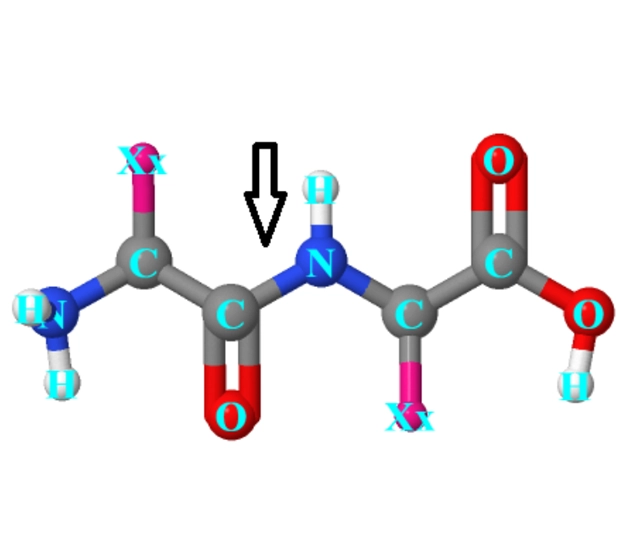
Tecnica di modifica del terminale N
Tipo di modifica
La modifica N-terminale migliora la stabilità dei peptidi perché questa modifica genera una struttura simile alla struttura proteica naturale. Così, questo metodo di modifica può migliorare l'attività biologica del polipeptide e prevenire la degradazione enzimatica.
|
5-FAM
|
BSA (-NH2 del terminale N)
|
Acido esanoico
|
|---|---|---|
|
5-FAM-Ahx |
CBZ |
HYNIC |
|
Abz |
Dansyl |
KLH (-NH2 del terminale N) |
|
Acetilazione |
Dansyl-Ahx |
Acido laurico |
|
Acrilico |
Acido decanoico |
Acido lipoico |
|
Alloc |
DTPA |
Dipinti |
|
Benzoile |
Acido grasso |
MCA |
|
Biotina |
FITC |
Miristoile |
|
Biotina-Ahx |
FITC-Ahx |
Acido ottanoico |
|
BOC |
Fmoc |
OAV (-NH2 del terminale N) |
|
Br-Ac- |
Formilazione |
Palmitoile |
Citazioni in primo piano
Librerie di peptidi derivati dal proteoma per la profilazione di specificità profonda di reagenti di modificazione N-terminale
Le proteine e i peptidi N terminali sono obiettivi importanti per la modifica selettiva con reagenti chemioproteomici e strumenti di bioconiugazione. L'α-ammina N-terminale è presente solo una volta in ciascuna catena polipeptidica, rendendolo un bersaglio attraente per la bioconiugazione delle proteine. Nelle celle, nuovi N terminali possono essere generati mediante scissione proteolitica e catturati da reagenti di modificazione N-terminale che consentono l'identificazione a livello di proteoma di substrati di proteasi con spettrometria di massa tandem (LC-MS/MS). La comprensione della specificità della sequenza N-terminale dei reagenti di modifica è fondamentale per ciascuna di queste applicazioni. Le librerie peptidiche derivate dal proteoma in combinazione con LC-MS/MS sono potenti strumenti per profilare la specificità della sequenza dei reagenti di modificazione N-terminale. Queste biblioteche sono molto diverse, e LC-MS/MS consente l'analisi delle efficienze di modifica di decine di migliaia di sequenze in un singolo esperimento. Le librerie di peptidi derivati dal proteoma sono un potente strumento per profilare le specificità di sequenza dei reagenti di marcatura enzimatica e chimica dei peptidi. Subtiligasi e 2-piridincarbossaldeide (2PCA) sono due reagenti che sono stati sviluppati per la modificazione selettiva dei peptidi N-terminali e possono essere studiati utilizzando librerie peptidiche derivate dal proteoma. Questo protocollo delinea i passaggi per generare librerie peptidiche derivate dal proteoma N-terminale diverse e per applicare queste librerie per profilare la specificità dei reagenti di modificazione N-terminale. Descriviamo in dettaglio i passaggi per profilare la specificità della 2-piridinecarboxaldeide, un reagente di modificazione chimica, e subtiligasi, un reagente di modificazione enzimatica. Questi protocolli possono essere facilmente adattati a fonti proteomiche alternative e ad altri reagenti per l'etichettatura dei peptidi N-terminali.
Servizi correlati di modifica dei peptidi
glicosilazione peptidica
glicosilazione peptidica
La glicosilazione peptidica è una modifica covalente che può potenzialmente migliorare le proprietà fisico-chimiche dei peptidi
Per saperne di piùFosforilazione dei peptidi
Fosforilazione dei peptidi
La fosforalazione può verificarsi sulla serina (S, Essere), Treonina (T, Thr) e tirosina (Y, Tyr) catene laterali mediante formazione di legami fosfoestere
Per saperne di piùPeptidi pinzati
Peptidi pinzati
Introduzione di due aminoacidi innaturali contenenti α-metile, Gruppi α-alchenilici durante la sintesi in fase solida delle catene peptidiche.
Per saperne di piùPeptide ciclico
Peptide ciclico
La ciclizzazione del peptide migliora la stabilità conformazionale dei peptidi (rispetto ai loro analoghi lineari) ed è una strategia comune nello sviluppo dei peptidi.
Per saperne di piùmodificazione peptidica
Vasta esperienza nella modificazione dei peptidi, fornendo molteplici strade praticabili per la ricerca sui peptidi.
