Modifiche dei peptidi
Modifica del terminale C
What is C-terminal modification?
C-terminal modifications play a crucial role in peptide chemistry, enabling researchers to tailor peptide function to a variety of scientific and pharmaceutical applications. These modifications primarily affect peptide stability, carica, binding affinity and biological activity.The MOL Changes team offers a wide range of C-terminal modification services to provide researchers with highly customised peptides for research and therapeutic use.
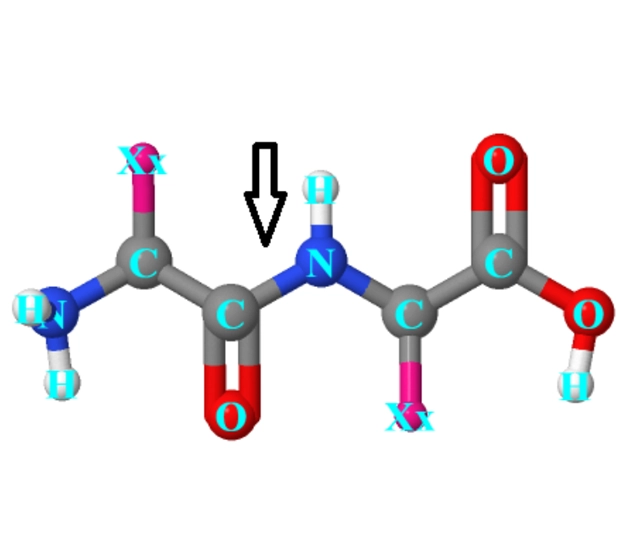
Common C-terminal modifications
Modification type
MOL Changes offers a variety of C-terminal modification options to help scientists choose the best chemical structure for their specific research goals.
|
AFC
|
MAPS Asymmetric 2 branches
|
CMK
|
|---|---|---|
|
AMC |
MAPS Asymmetric 4 branches |
Lys(Biotina) |
|
Amidation |
MAPS Asymmetric 8 branches |
Lys(5-FAM) |
|
BSA (-COOH of C terminal) |
Me |
Lys(TMR) |
|
Bzl |
NHEt |
Lys(Dansyl) |
|
Cysteamide |
NHisopen |
DABCYL/Glu-NH2 |
|
Ester (OEt) |
NHMe |
- |
|
Ester (OMe) |
OSU |
- |
|
Ester (OtBu) |
OAV (-COOH of C terminal) |
- |
|
Ester (OTBzl) |
p-Nitroanilide |
- |
|
KLH (-COOH of C terminal) |
tBu |
- |
Citazioni in primo piano
C-Terminal Peptide Modifications Reveal Direct and Indirect Roles of Hedgehog Morphogen Cholesteroylation
Hedgehog (Hh) morphogens are involved in embryonic development and stem cell biology and, if misregulated, can contribute to cancer. One important post-translational modification with profound impact on Hh biofunction is its C-terminal cholesteroylation during biosynthesis. The current hypothesis is that the cholesterol moiety is a decisive factor in Hh association with the outer plasma membrane leaflet of producing cells, cell-surface Hh multimerization, and its transport and signaling. Yet, it is not decided whether the cholesterol moiety is directly involved in all of these processes, because their functional interdependency raises the alternative possibility that the cholesterol initiates early processes directly and that these processes can then steer later stages of Hh signaling independent of the lipid. We generated variants of the C-terminal Hh peptide and observed that these cholesteroylated peptides variably impaired several post-translational processes in producing cells and Hh biofunction in Drosophila melanogaster eye and wing development. We also found that substantial Hh amounts separated from cholesteroylated peptide tags in vitro and in vivo and that tagged and untagged Hh variants lacking their C-cholesterol moieties remained bioactive. Our approach thus confirms that Hh cholesteroylation is essential during the early steps of Hh production and maturation but also suggests that it is dispensable for Hh signal reception at receiving cells.
Servizi correlati di modifica dei peptidi
glicosilazione peptidica
glicosilazione peptidica
La glicosilazione peptidica è una modifica covalente che può potenzialmente migliorare le proprietà fisico-chimiche dei peptidi
Per saperne di piùFosforilazione dei peptidi
Fosforilazione dei peptidi
La fosforalazione può verificarsi sulla serina (S, Essere), Treonina (T, Thr) e tirosina (Y, Tyr) catene laterali mediante formazione di legami fosfoestere
Per saperne di piùPeptidi pinzati
Peptidi pinzati
Introduzione di due aminoacidi innaturali contenenti α-metile, Gruppi α-alchenilici durante la sintesi in fase solida delle catene peptidiche.
Per saperne di piùPeptide ciclico
Peptide ciclico
La ciclizzazione del peptide migliora la stabilità conformazionale dei peptidi (rispetto ai loro analoghi lineari) ed è una strategia comune nello sviluppo dei peptidi.
Per saperne di piùmodificazione peptidica
Vasta esperienza nella modificazione dei peptidi, fornendo molteplici strade praticabili per la ricerca sui peptidi.
