Modifiche dei peptidi
Fosforilazione dei peptidi
Cos'è la fosforilazione dei peptidi?
La fosforilazione cellulare è una modifica che può cambiare l'attività, proprietà leganti, o localizzazione cellulare di proteine o enzimi. È anche un importante processo regolatorio che svolge un ruolo fondamentale in molte patologie patologiche, compresa l'infiammazione, cancro, disturbi neurologici e metabolici. Enzimi che fosforilano le proteine in specifici residui aminoacidici (per esempio., tirosina, serina, e treonina) sono chiamati chinasi. Gli enzimi che rimuovono un gruppo fosfato mediante idrolisi sono chiamati fosfatasi. Perché la fosforilazione è fondamentale per la maggior parte delle vie di trasduzione del segnale, peptidi fosforilati (i.e., fosfopeptidi) sono utilizzati per l'analisi delle proteine chinasi e fosfatasi in molti test cellulari.
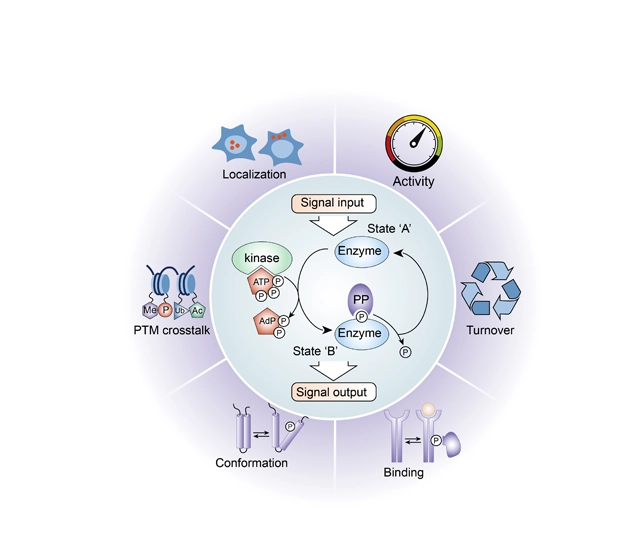
Posizione tipica dei gruppi fosforilici
La fosforalazione può verificarsi sulla serina (S, Essere), Treonina (T, Thr) e tirosina (Y, Tyr) catene laterali mediante formazione di legami fosfoestere. CPC Scientific può sintetizzare fosfopeptidi e incorporare combinazioni singole o multiple di fosfoserina (p.s), fosfotreonina (pT), o fosfotirosina (pY).
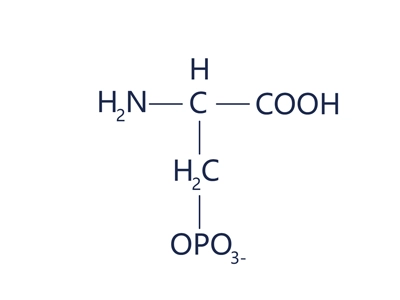
Fosfoserina
La fosfoserina è un peptide corto o una catena peptidica contenente una serina fosforilata (pSer), i.e., un frammento peptidico in cui è presente il gruppo ossidrile (-OH) di un residuo di serina viene modificato da un gruppo fosfato (-PO₄²-).
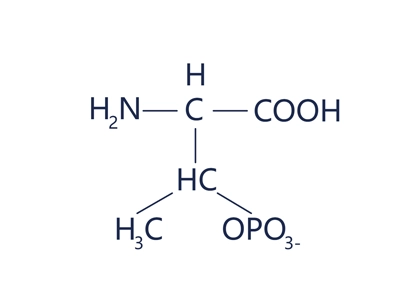
Fosfotreonina
La fosfotreonina è una corta catena peptidica o polipeptidica contenente fosfotreonina (pThr), i.e. un peptide in cui il gruppo ossidrile (-OH) di un residuo di treonina viene modificato da un gruppo fosfato (-PO₄²-).
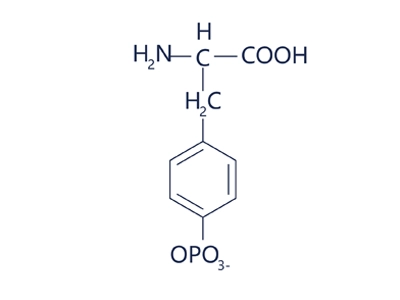
Fosfotirosina
La fosfotirosina è una corta catena peptidica o polipeptidica contenente fosfotirosina (pTyr), i.e. un peptide in cui il gruppo idrossile fenolico (-OH) di una tirosina (Tyr) il residuo viene modificato da un gruppo fosfato (-PO₄²-).
Citazioni in primo piano
La fosforilazione del terminale C PRMT5 modula un interruttore di interazione 14-3-3/PDZ*
PRMT5 è l'enzima primario responsabile della deposizione della dimetilarginina simmetrica nelle cellule dei mammiferi. Nel tentativo di capire come è regolato PRMT5, abbiamo identificato un sito di fosforilazione della treonina all'interno di un motivo della coda C-terminale, che è preso di mira dall'Akt/serum- e chinasi inducibili da glucocorticoidi. Durante lo studio della funzione di questa modificazione post-traduzionale, abbiamo scoperto per caso che la sua coda C-terminale libera lega i domini PDZ (quando non fosforilato) E 14-3-3 proteine (quando fosforilato). In sostanza, un evento di fosforilazione all'interno degli ultimi residui della coda C-terminale genera un "interruttore" di interazione PDZ/14-3-3 post-traduzionale dipendente dalla modifica. Il motivo C-terminale di PRMT5 è necessario per l'associazione della membrana plasmatica, e la perdita di questa capacità di commutazione non è compatibile con la vita. Questo fenomeno di segnalazione è stato recentemente segnalato per l'oncoproteina E6 dell'HPV ma non è stato ancora osservato per le proteine dei mammiferi. Studiare la prevalenza della commutazione PDZ/14-3-3 nella trasduzione del segnale, abbiamo costruito un microarray di domini proteici che ospita domini PDZ e 14-3-3 proteine. Abbiamo utilizzato questo microarray per interrogare le code C-terminali di un piccolo gruppo di proteine candidate e identificato ERBB4, PGHS2, e IRK1 (così come E6 e PRMT5) come conformi a questa modalità di segnalazione, suggerendo che il passaggio PDZ/14-3-3 potrebbe essere un ampio paradigma biologico.
Servizi correlati di modifica dei peptidi
glicosilazione peptidica
glicosilazione peptidica
La glicosilazione peptidica è una modifica covalente che può potenzialmente migliorare le proprietà fisico-chimiche dei peptidi
Per saperne di piùFosforilazione dei peptidi
Fosforilazione dei peptidi
La fosforalazione può verificarsi sulla serina (S, Essere), Treonina (T, Thr) e tirosina (Y, Tyr) catene laterali mediante formazione di legami fosfoestere
Per saperne di piùPeptidi pinzati
Peptidi pinzati
Introduzione di due aminoacidi innaturali contenenti α-metile, Gruppi α-alchenilici durante la sintesi in fase solida delle catene peptidiche.
Per saperne di piùPeptide ciclico
Peptide ciclico
La ciclizzazione del peptide migliora la stabilità conformazionale dei peptidi (rispetto ai loro analoghi lineari) ed è una strategia comune nello sviluppo dei peptidi.
Per saperne di piùmodificazione peptidica
Vasta esperienza nella modificazione dei peptidi, fornendo molteplici strade praticabili per la ricerca sui peptidi.
