Varför bevisbördan flyttades till peptidleverantörskvalifikation
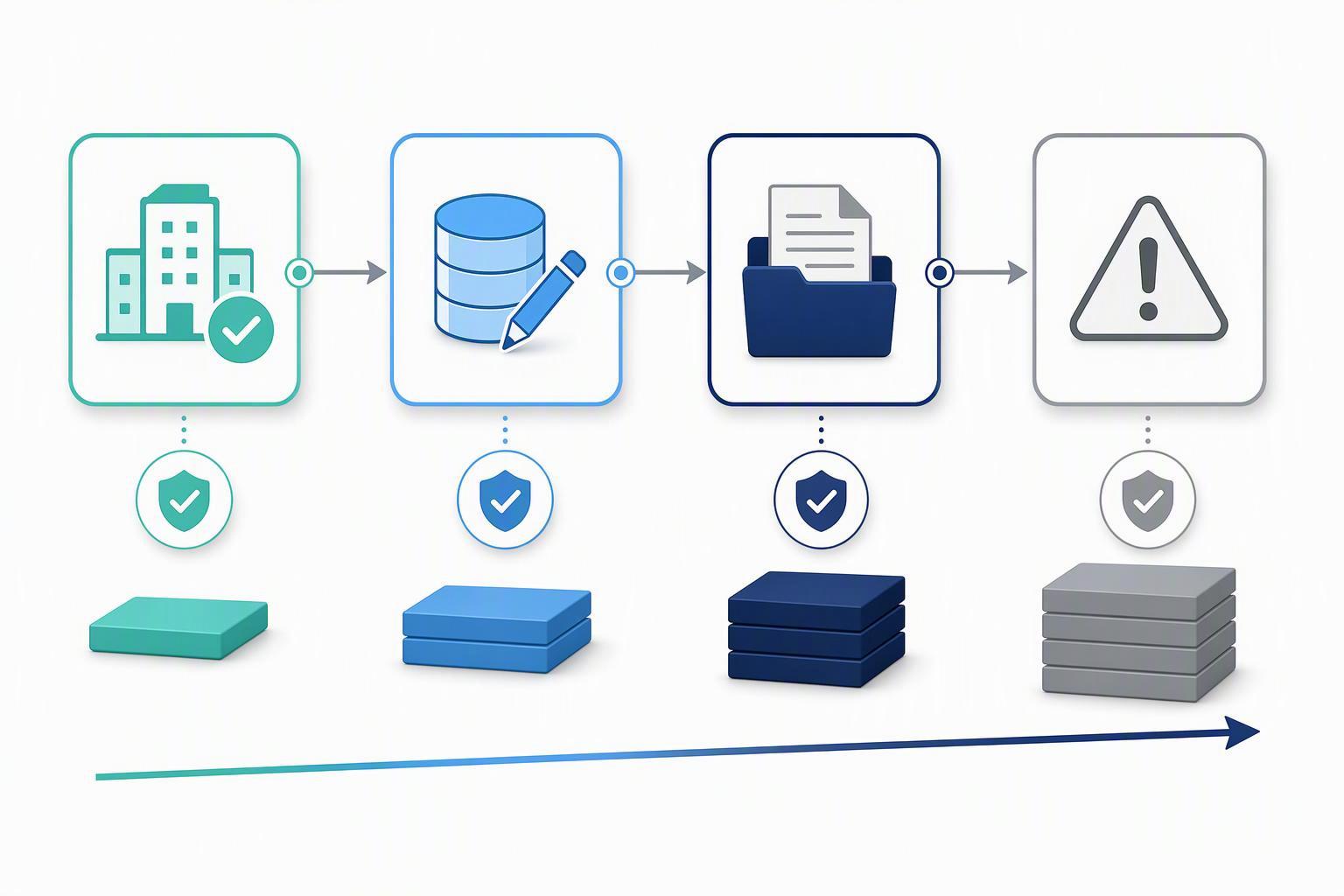
Användaravgifter finansierar granskningssystemet; de köper inte godkännande. Den distinktionen är hela anledningen till att kvalificeringen av peptidleverantörer nu måste byggas som en bevisfil snarare än en leverantörs styrkort.

PDUFA:s omauktorisering till september 2027 håller det receptbelagda användaravgiftsprogrammet igång på en femårscykel, FY 2023 genom FY 2027, enligt FDA User Fee Reauthorization Act of 2022 undertecknad 30 september 2022 (FDA, Ändringar i avgiften för receptbelagda läkemedel, hämtas 28 augusti 2026). Vad de pengarna gör är smalare än det låter. I FDA:s egen förklaring av sina användaravgiftsprogram, avgiften ”tillägg, inte ersätta" kongressanslag och är "inte en "avgift för tjänsten"-betalning,” och granskningsresultat beror inte på om en avgift har tagits ut (FDA, FDA: Användaravgifter förklaras, hämtas 22 maj 2026). Samma sida är uttryckligen att resultatmål inte är garantier: FDA kan fortsätta arbeta efter ett måldatum för granskning, och målen ”räknas inte med att uppfylla tidslinjen 100% för tiden" (FDA, FDA: Användaravgifter förklaras, hämtas 22 maj 2026).
Verkställighet körs på samma maskineri, och det väntar inte på en avgiftscykel. I maj 2026 varningsbrev som satte en leverantör av peptid-API på importvarning 66-40, FDA fann att kvalitetsenheten misslyckades med att säkerställa CGMP-efterlevnad och misslyckades med att upprätthålla fullständig spårbarhet av API:er i kommersiell distribution; den citerade produkten var semaglutid och tirzepatid API, inte peptider generiskt, men fyndet handlar om rekordet, inte molekylen (FDA varningsbrev 723330, 1 maj 2026).

Felmönstret upprepas i komposit: en försändelse ligger vid gränsen eftersom filen inte kan visa vem som faktiskt gjort materialet. Registrering och notering, ingångsdata, inresehandlingar på begäran, frihetsberövande risk. Belastningen ackumuleras i varje steg, och inget stadium accepterar en leverantörs försäkran i stället för ett register.
Steg 1: Definiera vad du måste kunna bevisa innan du veterinär någon
Din kvalifikationsfil finns för att svara på fyra frågor: vem som gjort materialet, under vilket kvalitetssystem, hur det identifieras, och vem är ansvarig för det vid gränsen. Allt du samlar in senare är bevis för ett av dessa fyra svar.
Den regulatoriska baslinjen förklarar varför baren sitter där den gör. FDA uppger att aktiva farmaceutiska ingredienser i sig är felmärkta under FD&C Act 502(f)(1) eftersom deras märkning saknar adekvata anvisningar för konsumentanvändning, och som de måste följa 21 CFR 201.122 för att vara berättigad till märkningsundantag (FDA, Importera aktiva farmaceutiska ingredienser, hämtas 2026-06-15). Samma FDA-riktlinjer noterar att bulkläkemedelssubstanser som används i blandning måste uppfylla antingen avsnitt 503A eller 503B i FD&C Act, och att utländska anläggningar som tillverkar, packa om, ommärkning eller räddnings-API:er som importeras till USA måste registreras hos FDA under FD&C Act 510(i) och 21 CFR 207.17, listar alla kända importörer i den registreringen.
Peptidsyntes Dessa tre krav kopplas direkt till de fyra frågorna. Ansvar vid gränsen är inte en karaktärsbedömning om din leverantör; det är en registrerings- och noteringsstatus som du kan kontrollera.
Notera: Detta ramverk är en utvärderingsmetod, inte ett juridiskt yttrande. Skyldigheterna varierar beroende på jurisdiktion och materialets avsedda användning, så bekräfta kraven med din egen juridiska rådgivare.
Steg 2: Kvalificera leverantören mot licens, cGMP och inspektionshistorik

En leverantörs registreringsstatus och inspektionshistorik är kontrollerbara fakta, inte försäkringar. Köparen som hoppar över kontrollen ärver fyndet.
Börja med licens och notering. Kommersiellt distribuerade API:er måste listas hos FDA under avsnittet 510(j) och 21 CFR 207.41, och vid tidpunkten för importen måste denna förteckning vara läkemedelsförteckningskravet som måste vara tillverkarens eget, inte en distributörs. Verifiera sedan cGMP-status och inspektionshistorik direkt, och bekräfta att leverantören finns på din godkända leverantörslista med en dokumenterad omkvalificeringsutlösare.
Att hoppa över detta steg har en dokumenterad kostnad. FDA de misslyckanden som FDA hänvisade till i december 2025 brev till Darmerica LLC fann att kvalitetsenheten misslyckades med att säkerställa API CGMP-efterlevnad, requalified a supplier with inconsistent inspectional history and no stability data, and failed to list distributed drugs. That case involves API supply generally rather than peptides specifically, but the qualification logic transfers directly.
|
Claim type |
Document that Syntetiska peptider satisfies it |
What its absence signals |
|---|---|---|
|
Licensure and registration |
Foreign establishment registration and importer listing |
Unverified legal basis to import |
|
Drug listing |
Manufacturer’s own API listing under 510(j) |
Distributor listing masking the true manufacturer |
|
cGMP status |
Current compliance status and applicable guidance |
Reliance on self-declaration |
|
Inspection history |
Inspection records and any warning letter history |
Unassessed enforcement risk |
|
Approved supplier list |
Controlled list with requalification criteria |
No change control over the supplier base |
The failure mode is substitution. FDA’s the batch-number and date changes FDA documented in the 2026 warning letter to Harbin Jixianglong Biotech describes semaglutide API repackaged and relabeled from suppliers not on the approved supplier list, issued new batch numbers such as CP-030-20250711, with the manufacturer misidentified and manufacturing and retest dates altered without supporting data. A CGMP finding at that point converts into Import Alert 66-40, the detention-without-physical-examination mechanism, which holds shipments automatically.
Steg 3: Hantera sekvensinformation som en kontrollerad ingång
Sequence information is a controlled input with its own screening and retention obligations, and a supplier that cannot describe its escalation rule in writing has not implemented one.
The federal screening framework’s screening thresholds start at DNA or RNA 200 nucleotides or longer, with the length recommended to drop to 50 nt within three years, and the best-match approach defined over a 66 aminosyra / 200 nt window (HHS Screening Framework, 88 FR 2023-22540, 2023-10-13). The amino-acid best-match extension in the screening framework applies that same window across all six reading frames, so a peptide order is not outside the screening conversation just because it arrives as an amino acid sequence.
The guidance on orders below the screening threshold recommends screening short orders where components could be assembled into larger sequences of concern, and encourages benchtop synthesizer manufacturers to build screening into equipment (HHS ASPR Screening Framework FAQ, updated 2025-11-19). Ask what happens when a hit occurs: who reviews it, against what rule, and what the customer is asked to supply. The list of documents that can establish a customer’s legitimate use includes proposed end use, institutional affiliation, a named biosafety officer, internal review records, FSAP registration or a completed BIS-711, publication history, ORCID, business licenses, grant numbers, or a research plan. The federal screening framework’s record-retention expectations set a floor of at least three years for sequences-of-concern orders, rising to eight where not unduly burdensome.
Steg 4: Byggmaterialsspårbarhet från orderingång till tredjepartsöverföring

A Certificate of Analysis is one node in the trail, not the endpoint. The trail has to hold when the material changes hands, and that is where most files break.
Under ALCOA+, analytical records must be attributable, läsbar, samtida, original, exakt, komplett, konsekvent, enduring and available. Applied to peptides, that test reaches past the CoA into the raw data behind it: HPLC-kromatogram, MS-spektra, integration parameters, deviations and failed injections. I Q2(R2)’s validation expectations for the methods behind a CoA set the method standard; ALCOA+ is the data-integrity framing regulators now apply to the records those methods generate.
Tjänster The documented failure pattern is quieter than a missing document. It is a new batch number created over existing material, a manufacturer misidentified on a transfer record, dates changed without supporting data, the same traceability failure FDA cited in the 2026 warning letter.
Key Takeaway: A lot number identifies material. A batch record explains it. Buyers auditing peptide supply chain traceability need both, linked.
Steg 5: Förbered export- och leveransdokumentation som rensar den första granskningen
The document set is requested, not volunteered, so assemble it before the shipment moves. Any FDA-regulated product offered for import must meet the same standards as domestic products, and incomplete or invalid electronic data routes a shipment to human review under FDA’s ImportShield Program (FDA, Entry Review, hämtas 2026-01-21).
That review can ask for copies of product labels, certifikat, ingredient lists, processing records, and analytical information, submitted through ITACS, FDA’s preferred channel for entry-review documents. The source lists document categories rather than a mandated universal set, so treat the list as the ceiling of what may be requested, not a fixed checklist.
I praktiken, your peptide export and shipping documentation file should hold a commercial invoice whose line descriptions match the entry data exactly, a packing list, and an SDS. For lyophilized peptides, add the temperature-control record covering the transit window.
Steg 6: Sätt ihop leverantörskvalifikationsdokumentationspaketet
The vendor qualification documentation package is not a folder of PDFs. It is a set of documents with a named owner and a review date for Handla each item, so that regulatory, QA, legal and IP reviewers can each find what they need without asking you to reconstruct the file.
|
Package item |
Primary reviewer |
Typical retention |
|---|---|---|
|
Licensure and registration evidence |
Reglerande |
Life of the supplier relationship |
|
cGMP and inspection history |
QA |
Life of the supplier relationship |
|
Sequence-handling and access records |
IP / rättslig |
Per your records policy |
|
Lot-level Certificate of Analysis and traceability records |
QA |
Per your records policy |
|
Export and shipping documentation set |
Reglerande / rättslig |
Per customs and tax rules in each jurisdiction |
Assign the owner before you circulate the package. A document nobody owns is a document nobody updates.
A representative example of how the pieces map to a supplier’s own published materials: MOL Changes issues a Certificate of Analysis per batch, with lot numbers searchable on its CoA page, alongside per-production-run identity, purity and quantitation testing by HPLC coupled with mass spectrometry. Whether that structure fits your file is a judgement for your reviewers, not a claim about outcomes.
Confirm retention periods against your own regulatory and legal obligations; they vary by jurisdiction and by material.
Vanliga misstag som sänker en kvalifikationsfil
The most common failure is not a missing document. It is a document that cannot be traced to the material in the box. Five patterns account for most of the files that collapse under review.
Treating the CoA as the whole trail. A certificate proves what a batch tested at, not where it went. The traceability failures documented in the 2026 warning letter turned on exactly this gap, plus date changes that no receiving record could corroborate. Fix: pair every CoA with intake records, transfer records and the dates each was signed.
Accepting a registration claim without checking the listing. Buyers take a vendor’s word that its facility is registered. The requirement that the listing be the manufacturer’s own is what reviewers check first. Fix: pull the listing yourself and confirm the entity name matches the invoice.
Having no written sequence-screening escalation rule. Screening gets done informally, so nobody can show what happened when a hit appeared. The screening framework’s escalation expectations are procedural, not discretionary. Fix: write the threshold, the reviewer and the timeline before the first order.
Shipping on a generic commercial invoice. Descriptions like “research compound” invite the questions that what FDA entry review can ask you to produce is designed to answer. Fix: describe the material as the CoA does. Peptidproduktion
Requalifying a supplier with inconsistent inspectional history. This is the requalification failure FDA cited in December 2025: no stability data, no resolution of prior findings. Fix: make requalification conditional on closed findings, not elapsed time.
Vanliga frågor
Can I rely on a distributor’s documentation instead of qualifying the manufacturer?
Inga. Registration and listing obligations attach to the manufacturer, and the listing presented at the time of importation must be the manufacturer’s own API listing. A distributor’s paperwork describes a commercial relationship, not the facility that made the material, so it does not substitute for qualifying the manufacturer directly. Ask the distributor to identify the manufacturing site, then verify that site’s registration, listing and inspection record yourself.
Vad händer om min försändelse dirigeras till mänsklig granskning?
FDA’s ImportShield screening flags entries for review, and a flagged entry can be referred to the district for a documentation request. Expect to supply the entry documents, the manufacturer’s listing evidence, and product-specific records on request. ITACS is the preferred channel for submitting that response, and the clock runs from the referral, so keep the document set assembled before the shipment moves rather than after it is held. Om
Hur länge behöver jag föra sekvenskontroll och beställningsregister?
The Federal Register recommendation is at least 3 years for sequence-of-concern orders, och 8 years where retention is not unduly burdensome. The IGSC protocol sets an 8-year member standard, which is the stricter of the two. If your own counsel has not set a period, 8 years keeps you aligned with both.
Slutsats
The five pillars form one framework: define what you must prove, qualify the vendor against licensure and inspection history, treat sequence information as a controlled input, trace material from intake to third-party transfer, and ship documentation that clears first review. The deliverable is a defensible internal case, not a vendor recommendation. A peptide supplier qualification file earns its keep when your regulatory, rättslig, and IP reviewers can follow every claim back to a primary document.
If you are weighing a specific sequence, the practical next step is a technical feasibility assessment: send the sequence, target scale, purity requirement, and destination market, and ask for the documentation package you would need to qualify the supplier. MOL Changes är en specialiserad R&D organization integrating organic chemistry and biology, offering custom peptide synthesis from sequence design to large-scale production with HPLC, MS, and sterility quality control.
Avslöjande: MOL Changes is a custom peptide synthesis provider, so we have a commercial interest in this topic. Regulatory obligations vary by jurisdiction; confirm your specific requirements with your own regulatory and legal counsel before relying on any framework described here.