Hur man använder denna checklista för motståndskraft i leveranskedjan för peptider
Denna checklista för peptidförsörjningskedjans motståndskraft fungerar som en uppsättning binära bedömningar, inte en läsövning. Varje objekt ställer en Ja/Nej-fråga om ditt eget program, och du svarar det mot vad du kan dokumentera idag, inte vad du tänker bygga.
Objekten är grupperade i fem faser: prekursor- och reagensberoende, alternativ leverantörs kvalifikation, dimensionering av lagerbuffert, frakt och omkvalificering av kylkedjan, och kundkommunikation. Arbeta dem i ordning. Varje fas matar nästa, och en lucka i en tidig fas brukar visa sig som en obesvarbar fråga senare.

Ett "Nej" är ett arbetsobjekt, inte ett misslyckande. Det markerar en plats där ditt program har en enda punkt av misslyckande, och korrigeringen är en uppgift med en ägare och ett datum.
En gräns gäller genomgående. Kopplingen mellan Hormuz-ruttavbrott och peptidtillförsel behandlas kvalitativt här, eftersom ingen primär, peptidspecifik datauppsättning på den mekanismen hittades. Checklistan bygger istället på namngivna standarder och krav på leverantörssida.
⚠️ Varning: Ett "Nej" som registrerats utan en namngiven ägare och ett måldatum är inte ett arbetsobjekt. Det är en anteckning, och anteckningar täpper inte till luckor.
Fas 1: Kartlägg prekursor- och reagensberoende
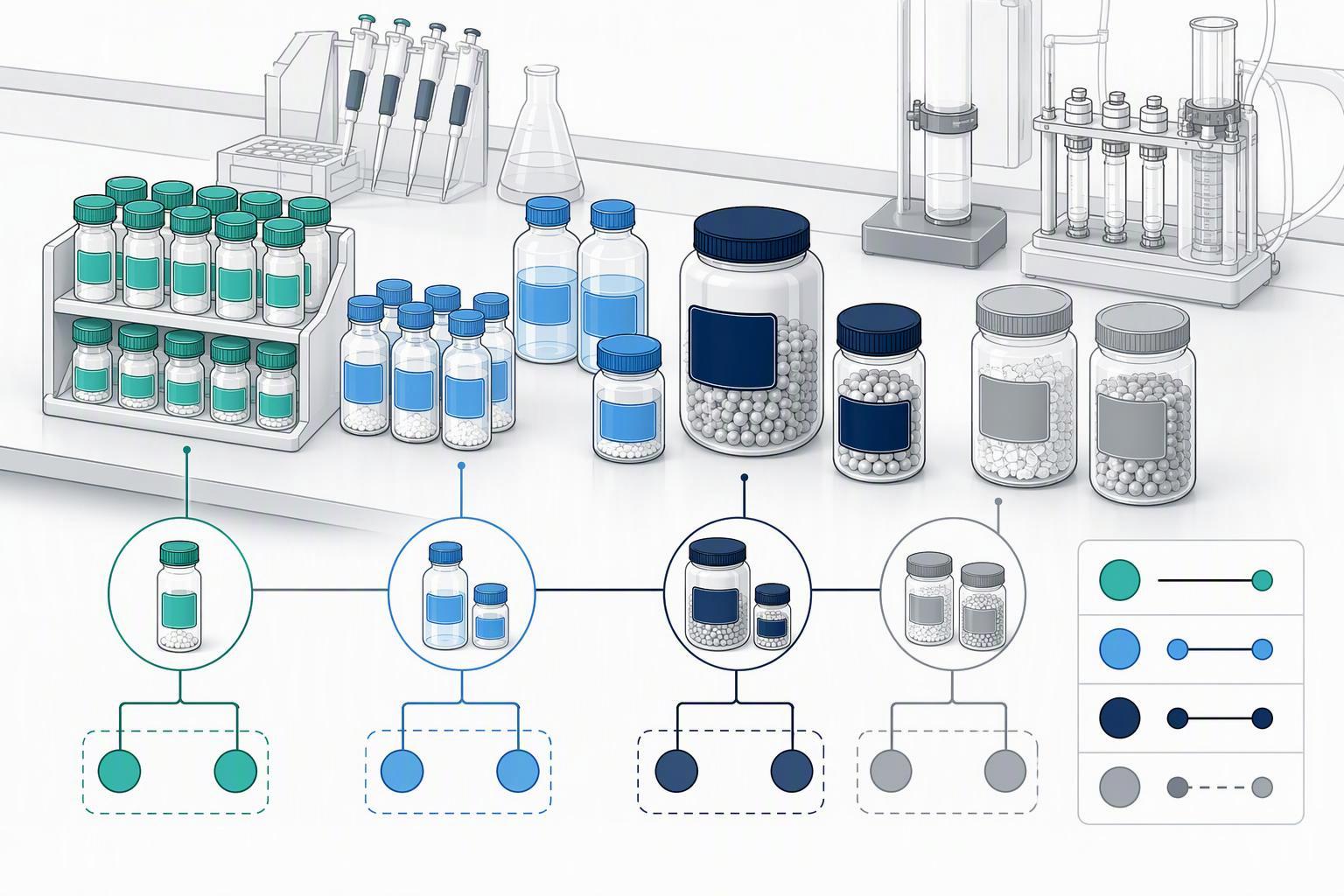
Börja med ingångarna, inte lindring. Innan du kvalificerar en andra leverantör eller dimensionerar en buffert, du behöver veta vilka peptidprekursorer och reagensberoenden som är enskilda felpunkter.
Arbeta igenom varje input och svara på två frågor.
|
Input |
Är en andra kvalificerad källa som heter? |
Kritisk eller utbytbar? |
|---|---|---|
|
Peptidsyntes Fmoc-skyddade aminosyror |
Ja / Inga |
|
|
Kopplingsreagens (STEG, HOBt, DIC och motsvarande) |
Ja / Inga |
|
|
Hartser |
Ja / Inga |
|
|
Kromatografimedia |
Tjänster Ja / Inga |
|
|
Förpackningar och primärbehållare |
Ja / Inga |
Två kataloglistor kan fortfarande vara en tillverkningsplats. Bekräfta den fysiska växten, inte distributören.
Kritisk rangordning måste föregå buffertstorlek. En utbytbar ingång behöver ingen buffert; en kritisk ingång från en enda källa gör det.
Detta är startpunkten eftersom kostnaden för ruttskifte kommer som en grupp av mindre ändringar snarare än en krigstillägg. shimicos analys av kemikaliemarknaden noterar att en leverantör kan hålla fabrikspriset under frakt, försäkring, hamnhantering, finansiering eller ledtid rör sig kraftigt, så offerter måste jämföras på levererad kostnad inklusive hamnavgifter, frakt, försäkring, utsläppskostnad och användbar avkastning.
Fas 2: Kvalificera alternativa leverantörer
En andra källa räknas endast som suppleant när den har godkänts i en dokumenterad kvalifikation. GCC:s läkemedelsindustri är värd $23.7 miljard, och runt 80% av det är beroende av import genom GCC:s luftrum och Hormuzsundet, Syntetiska peptider enligt Think Global Healths analys av korridorens läkemedelsexponering (uppdaterad 20 mars 2026). Detta importberoende gör kvalificering av alternativa peptidleverantörer till ett stående krav, inte en krishantering.
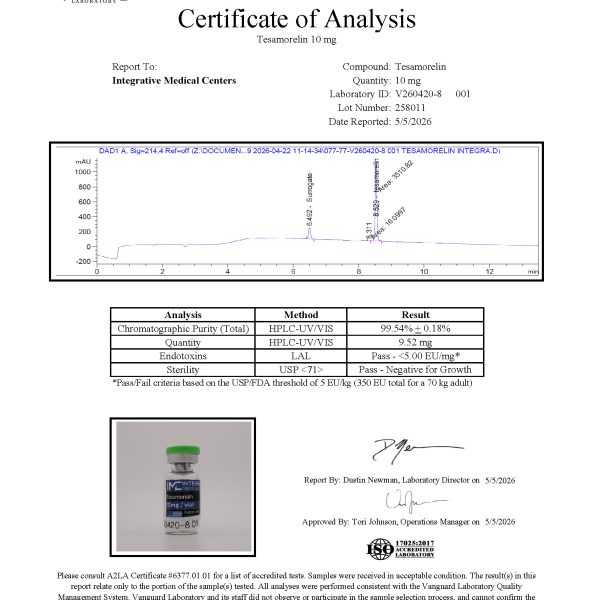
Gör poäng för varje kandidat mot fem rader: skala matchning (mg till kg), reproduktion av dina ändringar, saltform och reningsväg, steril förmåga, och det analytiska paketet. Begär kromatogrammet med dess integrationstabell, MS-spektrumet, och sterilitets- och endotoxindata, inte frasen "hög renhet".
MOL Ändringar, som har syntetiserat peptider sedan dess 1998, illustrerar hur ett komplett paket ser ut: mg-till-kg intervall, 300+ funktionella ändringar, Klass 100 renrumsförmåga, och intern HPLC, MS och sterilitet QC.
För tips: Gör poäng två kandidater sida vid sida innan någon av dem behövs, så jämförelsen är ett rekord snarare än en scramble.
Fas 3: Storlek på lagerbuffertar
I slutet av denna fas kommer du att veta, per ingång, hur mycket som ska hållas och vad som utlöser ett frisläppande från reserv. En regel för platta månaders täckning misslyckas eftersom den ignorerar hållbarhet, lagringsskick och återkvalificeringens ledtid för ett nytt körfält.
Arbeta igenom dessa som ja eller nej-svar:
-
Tillgänglig kontra förbrukningsgrad. För varje prekursor och reagens, är aktuellt lager angivet mot faktisk förbrukning per månad? Ja / Inga
-
Hållbarhet och lagringsskick. Registreras utgångsdatum och nödvändiga lagringsvillkor för varje buffertobjekt? Ja / Inga
-
Reserv trigger. Finns det en definierad händelse som omvandlar rutinsäkerhetslager till en störningsreserv? Ja / Inga
-
Frigör auktoritet. Is one named role Handla authorised to release from reserve? Ja / Inga
Buffer size should track your requalification lead time, not a fixed figure. No source in this research packet publishes a validated buffer magnitude, so treat any single number with caution and size against your own requalification timeline.
Fas 4: Kvalificera om frakt och kylkedja för den nya banan
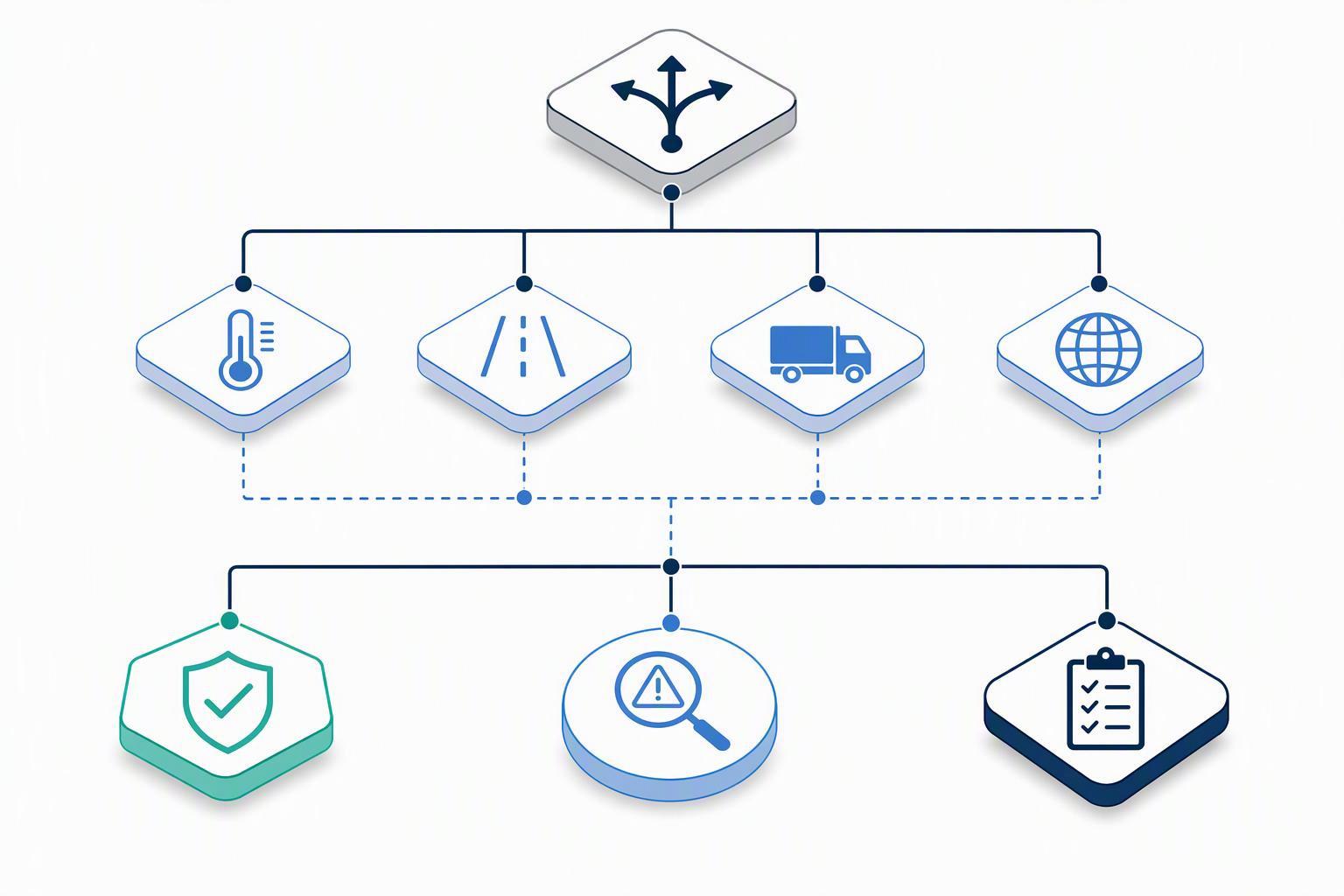
A reroute does not inherit the shipping qualification that covered the old lane. Under the qualification model published in Pharmaceutical Outsourcing’s shipping-system framework (2020), a new lane is itself a trigger to re-qualify, alongside a new product, new shipping vehicle or equipment, new transport mode, and new logistics service provider. The framework’s date does not weaken the trigger list; the conditions it names are the ones a lane change still creates.
Carry-over is narrower than most teams assume. The same source allows it only when the transport temperature range, monitoring locations, lane, LSP and carrier all stay the same in the same transport mode. Change the carrier and the carry-over argument collapses, which matters because carriers of active air and ocean reefer containers can change overnight or on short notice after strikes or natural disasters. Design qualification and operational qualification also run against an anticipated winter or summer temperature and duration profile, so a qualification built for one season is not automatically current for the next.
ICH Q7’s transport requirement, carried in the WHO GMP for active pharmaceutical ingredients (TRS 957 Annex 2), states the underlying obligation plainly: APIs and intermediates should be transported in a manner that does not adversely affect quality, with special transport or storage conditions stated.
Checklist items for this phase:
-
Has the lane change been logged as a change with a risk assessment? Deviations from the lane used for performance qualification should go through change control, not a note in a shipment file.
-
Do temperature range, monitoring locations, lane, LSP and carrier still match the qualified configuration? All five must match. Any one of them moving means the carry-over no longer applies.
-
Is a seasonal DQ/OQ profile current for the new lane? Confirm the profile reflects the season the shipment will actually travel in. Om
Key Takeaway: A carrier or mode change invalidates carry-over even when the temperature range is unchanged.
[VISUAL: diagram, requalification decision flow branching to carry-over permitted / risk assessment required / full requalification required]
Fas 5: Kommunicera ledtidsförändringar till kunder
The rule that prevents late surprises is to notify on trigger, not on confirmation. When a supplier confirms a slipped ETA, the client has already lost the weeks you spent verifying it.
Send the impact statement with the trigger notification. It covers four things: what changed, the impact on the client’s timeline, the recovery window, and the mitigation already in motion.
Checklist items:
-
Is a named owner assigned to client notification? Ja / Inga. A role, not a team inbox.
-
Is the impact statement pre-agreed before the trigger fires? Ja / Inga.
-
Is there a documented mitigation step for each affected lot? Ja / Inga.
Compare quotations on delivered cost, including port charges, frakt, försäkring, utsläppskostnad och användbar avkastning, and say so to the client in those terms. A freight line can look stable while landed cost moves: Think Global Health reported that insurance premiums for vessels transiting the Strait of Hormuz rose more than 1,000% since late February (uppdaterad 20 mars 2026).
För tips: Send the impact statement with the trigger notification, not after the recovery window is confirmed.
Vanliga misstag som bryter en resilienschecklista
The five phases above fail in predictable ways. Each mistake below looks like compliance on paper and leaves the program exposed in practice.
Treating a second catalogue listing as a second source. A distributor entry for the same manufacturer is one source with two order paths. Fixningen: confirm the synthesis site, the analytical package and the modification capability behind the listing before you count it as an alternate.
Sizing buffers from a uniform safety-stock rule. A flat weeks-of-cover figure ignores how long requalification actually takes. Size the buffer from the requalification lead time for that specific input, not from a company-wide default.
Assuming a qualified lane carries over after a carrier or mode change. Qualification attaches to the route, the packaging and the handling, not to the origin-destination pair. Requalify when any of those change.
Notifying clients only once a delay is confirmed. By then the client has no room to adjust. Notify when the lead-time assumption changes, and state the new range with its basis. Peptidproduktion
Hur en ifylld checklista ser ut
A finished peptide supply chain resilience checklist is auditable, inte ambitiöst. You can tell the run is done when four conditions hold across the whole program.
Every critical input has either a named second qualified source or a documented accepted risk. “We’ll find someone” is not a status; a supplier name with a completed qualification file is.
Every buffer item carries a stated reserve trigger and an owner. The trigger is a condition, such as a defined stock level or a supplier notice, and the owner is a person, not a team.
Every active lane has a current qualification status, including any lane you switched to mid-disruption. A lane that moved without requalification is an open item, not a closed one.
Every affected client has a notification owner. The reader should be able to name who tells which account, and when.
För tips: Run the checklist as a review meeting, not a solo exercise. The gaps surface fastest when the buffer owner and the client-notification owner read their rows aloud.
If those four conditions hold, the checklist is complete for this cycle. Route conditions change, so schedule the next review rather than treating completion as permanent.
Nästa steg: Download the peptide supply chain resilience checklist template and work through it with your sourcing and QA leads, or request a documentation review of your current supplier qualification files.
Avslöjande: MOL Changes publishes as a peptide vendor, so we have a commercial interest in how supplier qualification is practiced.
Vanliga frågor
Hur lång tid tar omkvalificeringen?
De 2020 qualification framework behind Phase 2 treats requalification as an event-driven process rather than a calendar one: it starts when a defined trigger fires, such as a supplier change, a route change, or a failed release, and it ends when the new source clears the same analytical and documentation gates as the incumbent. Because the trigger list is the clock, the honest answer is that duration depends on how much of the package already exists. A supplier with a current CoA, kromatogram, MS spectrum and sterility data on file moves faster than one starting from scratch. Build the requalification window into your buffer sizing rather than assuming a fixed number of weeks.
Is a supplier’s own CoA enough evidence?
Inga. A certificate of analysis is the supplier’s own statement about its own material, so it is a starting document, not independent verification. Pair it with the analytical package Phase 2 names: chromatogram and integration table, mass spectrometry spectrum, and sterility or endotoxin data where the grade requires it. The CoA tells you what the supplier claims; the underlying data tells you whether the claim holds.
Tänk om ett körfält stänger mitt i frakten?
Treat it as a change-control event, not a logistics exception. Trigger the Phase 5 notification to affected clients as soon as the disruption is confirmed, then run the shipment through the same qualification logic as a new lane: confirm the alternate routing holds the cold chain, and document the deviation. The record of what happened, when it was detected, and what was decided is what protects the batch and the client relationship.
Ändrar buffertstorleken i milligram- mot kilogramskala?
Ja, and the direction is not intuitive. At milligram scale the constraint is usually the minimum order quantity and the cost of holding it, so buffers are sized in single batches. At kilogram scale the constraint shifts to lead time and the number of qualified sources, because a single disrupted lane can stall a program for the length of a requalification cycle. Scale the buffer to the requalification window, not to the order size.
Slutsats
The five phases run as one sequence, not five separate projects: map precursor and reagent dependencies, qualify alternate suppliers, size inventory buffers, requalify shipping and cold chain for the new lane, then communicate lead-time changes to clients. Each phase produces a Yes/No answer you can record, which is what makes this peptide supply chain resilience checklist decidable rather than aspirational. You finish it knowing exactly which inputs have a second qualified source and which do not.
If the whole sequence looks like too much to run at once, start with Phase 1. Every later phase depends on it: you cannot qualify an alternate supplier for an input you have not identified, size a buffer around a dependency you have not mapped, or requalify a lane for a material you have not traced. Run the dependency map first, then work outward one phase at a time.