
Varför marknaden för peptidsyntes växte utan att göra tillväxten till en skillnad

Varje publicerad uppskattning av marknaden för peptidsyntes är överens om riktningen och är oense om storleken. DataM Intelligence sätter marknaden på 958,85 miljoner USD in 2025 stiger till 2 268,16 miljoner USD med 2033 vid en 11.4% CAGR, medan MarketsandMarkets rapporterar USD 0.91 miljarder in 2025, USD 0.98 miljarder in 2026 och USD 1.54 miljarder med 2031 på 9.5%, och ett pressmeddelande daterat i augusti 25, 2026 upprepar samma siffror. Spridningen är ett omfattningsproblem, ingen oenighet om huruvida efterfrågan växer.
Den tillväxten säger inte till vilken leverantör du ska välja, eftersom intäktsmassan sitter i rutinarbete. Rotanalys rapporter som generiska API:er står för ungefär 88% av peptid-API-intäkter och att tillverkning i kommersiell skala genererar mer än 90% av intäkterna i API-tillverkningsnivån som exkluderar reagenser och material av forskningskvalitet. För standardsekvenser vid volym, en storskalig tillverkare är verkligen det bättre valet. Tillväxt är en planeringssignal, inte ett leverantörsval.

Vad de olika uppskattningarna faktiskt mäter
Uppskattningarna skiljer sig åt eftersom de mäter olika saker, inte för att en av dem har fel. DataM Intelligence segmenterar marknaden för peptidsyntes efter teknik, produkttyp (utrustning; reagenser och förbrukningsvaror; tjänster), processtyp, ansökan, slutanvändare och region, med Nordamerika den största regionen och Asien och Stillahavsområdet den snabbast växande. Det är ett brett utbud av utrustning och förbrukningsvaror.
MarketsandMarkets använder den bredaste publicerade omfattningen, räkneinstrument, reagenser, förbrukningsvaror och tjänster, medan en snävare definition överlappar API-tillverkningsnivån som utesluter reagenser och material av forskningskvalitet. Roots Analysis uppger att dess API-nivå täcker den outsourcade utvecklingen och tillverkningsmöjligheten för peptid-API "snarare än den bredare marknaden för peptidsynteser, reagenser, förbrukningsvaror eller peptidprodukter endast för forskning."

En varning värd att notera: Roots eget nyckelstatistikblock är inte internt förenligt med det undantaget, vilket är en påminnelse om att syndikerad rapportering förtjänar en omfattningskontroll innan den går in i ett affärscase.
Key Takeaway: Innan du citerar någon marknadssiffra för peptidsyntes, namnge omfattningen den mättes under. En siffra utan dess definition är inget bevis.
Drivkrafterna bakom expansionen av marknaden för peptidsyntes
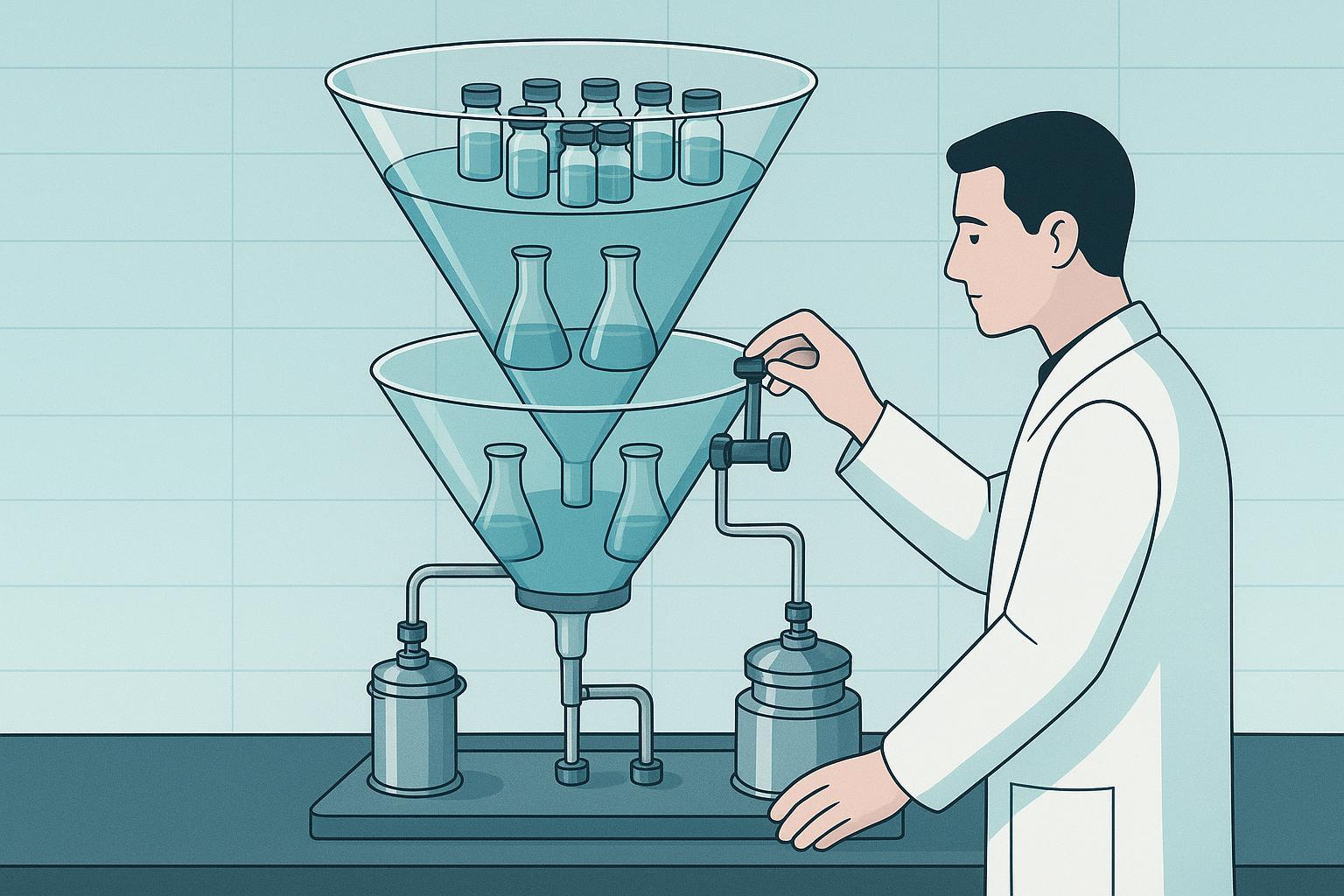
Efterfrågetillväxten är verklig, men det är inte jämnt fördelat, och det drar upp kapacitetskraven snabbare än det drar upp volymen. Den starkaste enskilda kraften är metabolisk och GLP-1-angränsande peptidbehov, vilket har drivit outsourcing till den punkt där ungefär 55% av komplex peptidutveckling hanteras nu av CDMOs, enligt outsourcingandelen som rapporterats för komplex peptidutveckling (Läkemedelstillverkning, 2026, citeras som en sekundär källa; behandla siffran som vägledande snarare än granskad).
Den andra kraften är ett stegskifte. Neuland Labs beskriver tidiga R&D som viktningshastighet och flexibilitet, medan GMP API-arbete skiftar mot validerade processer och dokumentation. Det är olika köpkriterier, och de sitter sällan hos samma leverantör.
Sex kapacitetsdimensioner som avgör vem som vinner
När varje trovärdig leverantör kan peka på samma marknadstillväxt, tillväxt slutar skilja dem åt. Det som skiljer dem åt är en kort lista över funktioner som du kan testa innan du förbinder dig, var och en med ett igenkännbart felläge och en fråga du kan ställa skriftligt. De sex nedan är ordnade efter hur tidigt de tenderar att dyka upp i ett projekt, inte av betydelse.
Lyhördhet och kommunikation under iteration
Svarslatens är den billigaste prediktorn du har, det är därför köpare som utvärderar en partner tittar på hur snabbt frågor besvaras snarare än vid rubrikkapacitet. Kör två tester. Första, skicka en genuint svår sekvens som en förfrågan och tajma avståndet mellan ditt meddelande och ett tekniskt svar som berör kemin, inte ett försäljningsbekräftelse. Andra, fråga vem den namngivna tekniska kontakten kommer att vara och om den personen stannar i projektet genom syntes och QC.
En ärlig lucka: ingen offentlig källa som vi granskade citerar standard kontra svåra handläggningstider i dagar, så behandla alla leverantörers angivna tidslinje som ett påstående att verifiera mot din egen konstruktion snarare än ett riktmärke för att jämföra mellan leverantörer.
Svåra peptidsekvenser

Svåra sekvenser är där skalfördelar slutar spela någon roll, eftersom begränsningen är kemi snarare än reaktorvolym. Hydrofob Leu/Ile/Val/Phe-rik sträcker aggregat på harts och skär kopplingseffektivitet, β-ark-benägna motiv låser kedjan och begränsar reagensåtkomst, sekvenser utöver ungefär 30 till 50 rester ackumulerar trunkationer, cysteinrika konstruktioner adderar disulfidheterogenitet, och Asp-X-kontexter gynnar aspartimidbildning. De flesta misslyckanden spåras tillbaka till aggregering på hartset och minskad kedjerörlighet (Biosyn, vintergrön teknisk sida).
Räddningsverktyget är väldokumenterat: lägre belastande hartser, dubbel- eller trippelkoppling vid riskpositioner, lösningsmedelsinställning, ryggradsskyddade byggstenar, tillfälliga aggregationsbrytare, och segmentsyntes med fragment-stegsrening för sekvenser som fortsätter att misslyckas (Biosyn). Det du verkligen utvärderar är om en leverantör känner igen de fellägen en specialist måste diagnostisera innan han citerar. Fråga direkt om n-1/n-2/n-3 raderingsserier, breda eller delade HPLC-toppar, samma massa uppträder vid flera retentionstider, olöslig råolja efter klyvning, och upprepade kopplingsfel i en region. MOL Changes beskriver en plattform byggd för att hantera komplexa och svåra sekvenser över solid-fas, vätskefas, kombinerat vätska-fast ämne, omvända fastfas- och mikrobiella jäsningsvägar, vilket är den typ av ruttbredd som spelar roll när en inflygning stannar.
Anpassade ändringar och märkning
Katalogbredd är inte modifieringsdjup. En stor leverantör kartlägger renhetsnivåer till applikationer och listar ändringsmenyn över ryggradsändringar, terminal funktionalisering, sidokedjemodifieringar, cyklisering, konjugation, etiketter och kelatorer (Bachem, sida daterad 2026-05-29), medan ett stort kataloghus annonserar över 400 ändringar (Thermo Fisher Scientific). Båda är konkurrerande leverantörer, och båda siffrorna beskriver menyer snarare än din molekyl.
Utvärderingsfrågan är snävare: namnge den exakta ändringen på din konstruktion, inklusive dess position, och fråga om leverantören har utfört det i en jämförbar sekvens. Anpassade citat från peptidsyntes som svarar på katalogfrågan istället svarar på en annan fråga.
| Kategori | Peptidsyntes Representativ kemi | Fråga leverantören |
|---|---|---|
| Ryggrad | D-aminosyror, N-metylering, minskade obligationer | Har detta körts på en sekvens så här lång? |
| Terminal | Acetylering, amidering, biotinylering | Vilken ändstation, och är det ortogonalt mot mina etiketter? |
| Sidokedja | Fosforylering, sulfatering, Syntetiska peptider lipidering | Vad är den förväntade renhetseffekten? |
| Cykling | Huvud mot svans, laktam, häftning, disulfider | Hur bekräftas rätt regioisomer? |
| Konjugation | Klicka på kemi, oxim, PEGylering | Vad är resterande fritt handtag spec? |
| Etiketter | Fluoroforer, stabila isotoper, kelatorer | Vilken partispecifik data följer med? |
Analytiskt djup och dokumentation
Renhet är en kromatografisk area i procent, inte en massfraktion, och den distinktionen avgör hur du jämför leverantörer. RP-HPLC rapporterar areaprocent vid 220 nm-detektering, identitet bekräftas inom ±0,1 Da av ESI-MS eller ±1 till ±2 Da av MALDI-TOF, och ESI-MS passar 500 till 10,000 Detta sortiment (biohackerteam COA verifieringsguide, 2026-05-13). En siffra på ≥98 % är en norm för kritiska applikationer, inte en universell standard, så två leverantörer citerar 98% kan mäta olika saker.
På säljarsidan, baslinjen är frisättningstestning av HPLC och MALDI-MS, med utökade analyser tillgängliga för netto peptidhalt, vatten- och syrahalt, motjoninnehåll, ESI-MS/MS och endotoxin, dokumenteras genom ett analytiskt datablad med TSE/BSE-certifikat (Bachem, 2026-05-29). Där datapaketet matar en reglerad arkivering, de styrande förväntningarna sitter i USP <71>, USP <85>, I Q2(R2) och MHRA ALCOA vägledning.
För tips: Be om det partispecifika analysintyget med själva kromatogrammet och metoden bakom, inte ett representativt kromatogram från en liknande batch. Peptidanalytisk karakterisering som du inte kan spåra till ditt parti är marknadsföring, inte dokumentation.
Flexibilitet i forskningsstadiet
Tidiga program behöver motsatsen till vad program i sena stadier behöver: små mängder, fungerande renhetsnivåer, och dokumentation som matchar fasen. Bachems icke-GMP anpassade syntes löper från 5 mg till 100 g kl 80% till 97% renhet, med rekommenderade nivåer av >95%, 90 till 95% och >80% mappas till applikationer (Bachem, sida daterad 2026-05-29). Läs det som en meny, inte en ranking: den högra nivån är den som din analys tolererar.
Flexibilitetsfrågan är om en leverantör kommer att skala ner dokumentation och renhet utan att tappa den analytiska rigoriteten som gör tidiga resultat pålitliga, och om samma rutt fortsätter när programmet går framåt.
Vad detta betyder för etablerade, Utmanare och köpare
Samma marknadsdata pekar på olika handlingar beroende på var du sitter. Sittande företag har en varaktig fördel i API-tillverkningsnivån som utesluter reagenser och material av forskningskvalitet, där intäkter i kommersiell skala dominerar och GMP-inspektionshistorik är svår att replikera. Den fördelen överförs inte till svåra peptidsekvenser, ovanliga peptidmodifieringar och märkning, eller räddningsarbete på program som har stannat, där begränsningen är expertis snarare än reaktorvolym.
För utmanare, det försvarbara läget är den hårda kanten: komplexa sekvenser, anpassad peptidsyntes för icke-standardiserade förfrågningar, och analytiskt djup som tål revision. Att konkurrera på kapacitet mot etablerade skalleverantörer är en kapitaltävling; att tävla om problemlösning är det inte.
För köpare, den praktiska innebörden är snävare än vad rubriken antyder. Marknadens storlek talar om för dig att kategorin är verklig och växer. Den säger ingenting om huruvida en given leverantör kan leverera din sekvens.
⚠️ Varning: Låt inte siffran av marknadsstorlek komma in i ett styrkort för leverantörer. Poängförmåga passade istället: sekvenssvårigheter, ändringsomfång, analytisk dokumentation och revisionsrättigheter.
Ett beslutsramverk för att välja en leverantör
Betyg varje kandidat mot sex frågor, var och en med en godkänd eller underkänd-signal snarare än ett betyg. Teknisk passform: kan leverantören namnge en väg för din specifika peptidklass, oavsett om det är linjärt, cyklisk, konjugerad, märkt, fosforylerad, multidisulfid eller hydrofob? Analytisk kompetens: innehåller analyscertifikatet ett partispecifikt kromatogram, att komma ihåg att renhet är en kromatografisk area i procent, inte en massfraktion? Kvalitetssystemberedskap: vilka namngivna inspektioner och standarder kan de visa? Lyhördhet: köpare som utvärderar en partner tittar på hur snabbt frågor besvaras och om en namngiven teknisk kontakt svarar. Dokumentationsnivå: stämmer paketet med ditt utvecklingsstadium? Kontinuitet: kan samma rutt föra ett forskningsparti till ett större parti?
| Dimensionera | Fråga att ställa | Passsignal | Vikt för steg |
|---|---|---|---|
| Teknisk passform | Vilken väg för denna peptidklass? | En namngiven rutt, inte ett allmänt svar | Hög på upptäckt |
| Analytiskt djup | Är kromatogrammet partispecifikt? | Faktiskt spår i COA | Hög genomgående |
| Kvalitetssystem | Vilka besiktningar och standarder? Peptidproduktion | Namngiven, verifierbar | Hög på GMP |
| Lyhördhet | Vem svarar, och hur snabbt? | Namngiven kontakt, angiven latens | Hög i uppskalning |
| Dokumentation | Matchar nivån min scen? | Nivå matchade att använda | Reser sig med scenen |
| Kontinuitet | Samma väg vid större tomt? | Bekräftad överlämning | Hög i uppskalning |
Vikt dessa olika när du rör dig: upptäckt belönar teknisk passform och flexibilitet, uppskalning belönar lyhördhet och kontinuitet, och GMP belönar framför allt bevis och dokumentation av kvalitetssystem.
Nästa steg
Tillväxt på marknaden för peptidsyntes är en planeringssignal, inte ett urvalskriterium. Kapacitetspassning är det som avgör om ett program håller schemat.
Ta med ett riktigt fall till jämförelsen: en svår peptidsekvens, en ovanlig ändring, eller ett märkningskrav som din nuvarande leverantör hanterar långsamt eller inte alls. Be varje kandidat att citera mot det fallet, jämför sedan analyspaketet, dokumentationsnivån, och vägen de föreslår. MOL Changes inbjuder dig att starta den utvärderingen med din sekvens i handen.
Den här artikeln är producerad av MOL Changes. Materialet som beskrivs är avsett för forskning och vidareutveckling; kvalificerad personal bör rådfrågas innan någon klinisk eller diagnostisk ansökan.
Vanliga frågor
Men det spelar ingen roll mer än något annat för tillförlitligheten?
För rutin, hög volym, order i standardsekvens, ja, och marknadsdata säger det: mer än 90% av peptidsyntesintäkter sitter hos leverantörer i kommersiell skala, vilket är exakt det arbete som deras reaktorer byggdes för. Tillförlitlighet i svårsekvensarbete är en annan egenskap. Det visar sig som räddningsförmåga när en syntes stannar och som analytisk transparens när du frågar vad som egentligen kom av hartset, ingen av dessa skalar med reaktorvolym.
Hur jämför jag leverantörer när deras publicerade renhetsspecifikationer använder olika metoder?
Normalisera innan du jämför. Renhet rapporteras vanligtvis som en RP-HPLC-area i procent vid 220 nm, och identitetsbekräftelsestoleransen skiljer sig åt beroende på instrument: ESI-MS är citerad vid ±0,1 Da medan MALDI-TOF körs på ±1–2 Da. Två leverantörer kan både skriva ut "98%" och mena olika saker. Fråga efter metoden och det partispecifika kromatogrammet, eftersom peptidanalytisk karakterisering endast är jämförbar när mätningen bakom den är synlig.
är inte $2.27 miljarder räkna siffran jag ska använda i mitt affärscase?
Endast om du anger dess omfattning och prognosfönster bredvid den. De $2.27 miljard siffra är en 2033 prognosen under en bred definition av marknaden, medan den är smalare 2026 omfattningar landar nära $0.98 miljard. Ange omfattningen, basår och prognosfönster tillsammans, eller citera intervallet.
Tänk om jag redan har kvalificerat mig till en storskalig leverantör?
Behåll dem för det de är bra på och lägg till en specialistväg för de sekvenser som misslyckas. De två relationerna utesluter inte varandra. Svårsekvensarbete är vanligtvis en liten del av programvolymen och en stor del av programrisken, varför det är värt att köpa separat.