Varför peptidkvalitetsstyrning nu är ett utvärderingsproblem, Inte ett inköpsproblem

Peptidkvalitetsstyrning har skiftat från en inköpsfråga till en utvärderingsfråga. Marknaden för peptidläkemedel växer med ca 11% per år, från $49,21 miljarder in 2025 till $54,62 miljarder in 2026 enligt The Business Research Companys Global Peptide Therapeutics Market Report 2026, och verkställigheten har skalat med det: Elva peptidföretag fick FDA-varningsbrev under ett enda år, över två 2026 kohorter som spåras av Peptifact FDA varningsbrevspårare.
Den operativa frågan är inte längre om det finns en leverantör. Det är om du kan försvara acceptanskriterierna bakom ditt leverantörsval. FDA:s mars 2026 varningsbrev till Gram Peptides och FDA:s augusti 2026 brev till Peptide Partners LLC båda aktiverar FDA:s test för avsedd användning, inte på en renhetssiffra. De FDA varningsbrevsindex är datumfiltrerbar, så posten är kontrollerbar.

Key Takeaway: Styrningsfrågan har gått från att hitta en leverantör till att försvara ett acceptanskriterium.
Fyra pelare organiserar resten av detta stycke: specifikationer, spårbar dokumentation, lämplighetstestning, och ansvarsfull kommunikation.

Den konventionella utsikten: Köp på renhetsprocent och ett analyscertifikat
Mainstream-positionen är okomplicerad: ett analyscertifikat från leverantören som visar en hög omvänd fas HPLC-renhet är tillräckligt bevis på kvalitet, och pris plus angiven renhet är de rationella urvalskriterierna. Den normen kom inte från ingenstans. Den kommer från leverantörens QC-rapportgenre själv, och hur en leverantörs QC-rapport vanligtvis presenteras är arketypen: ett syntesrenhetstal, en massbekräftelse, och en kort metodlinje, förpackat som ett kvalitetsbevis på en sida.
Det blev dominerande av tre försvarbara skäl. Det är enkelt, det är jämförbart över citat, och det fungerade när peptidköpare mestadels var interna forskargrupper som köpte från en känd syntespartner under ett befintligt kvalitetsavtal. Den kommersiella logiken förstärkte det. Med peptidterapimarknaden som växer med ungefär 11% per år, upphandlingsteam behövde ett screeningfält, och renhetsprocenten var den enda varje offert redan hade.
Syntesleverantörer förespråkar det eftersom de kan producera det. Upphandlingsmallar byggda runt dem kodar den. Och siffran i sig ser lugnande ut: en 6 285 rapporter inlämnad provanalys fann en medianrenhet på 99.80%, med ett interkvartilintervall på 99.50% till 99.90%. När nästan varje rapport landar i samma smala band, fältet slutar diskriminera. Det är det första tecknet på att peptidcertifikat för analysspårbarhet, inte rubriken, är där det verkliga utvärderingsarbetet sitter.
Tre sätt att genvägen renhetsprocent misslyckas

Ett renhetstal mäter ett attribut, under en metod, på ett prov, och det säger ingenting om identitet, motjon, kvarvarande lösningsmedel, endotoxin, eller sterilitet. Att behandla det som en allmän kvalitetssignal är där de flesta utvärderingarna går fel.
Det första misslyckandet är förutsägande. En analys av 6 285 rapporter inlämnat prov fann en medianrenhet på 99.80%, ändå skickades dessa prover in av säljare, inte köpt blind (Mendias & Awan / Finnrick Analytics, april 2026). En inköpsrevision med tio peptider över fyra leverantörsnivåer, körs på produkt köpt slumpmässigt och testad av MZ Biolabs, hittade den FDA-registrerade 503B-nivån på 98.7%, 99.1%, och 98.3% renhet, direkttillverkaren på 89.1%, 91.3%, och 85.4%, och budgetnivån kl 71.3% och 78.9%, med ett prov som inte kan lösas (Peptidlistan, januari 2026). De två datamängderna pekar i motsatta riktningar, vilket är poängen: en citerad siffra från en leverantör säger dig inget förutsägande om en annan leverantörs parti.
Det andra misslyckandet är kategoriskt. Samma inlämnade provdatauppsättning registrerade en 2.4% andel identitetsfel, med den namngivna peptiden helt enkelt frånvarande i 156 av 6,487 granskade rapporter. I köprevisionen, en produkt som var fel förening helt uppmätt 2,847 Da emot 4,113 Da förväntas för semaglutid. Ingen renhetsprocent kan uttrycka det resultatet, eftersom instrumentet mätte fel molekyl korrekt.
The third failure is regulatory, and it is the most consequential. An RUO label does not insulate a seller whose own website establishes intended human use, as FDA’s March 2026 warning letter to Gram Peptides makes explicit, because intended use is defined at 21 CFR 201.128 by the seller’s own claims rather than by the label text. A buyer who treats the label as a compliance signal is reading the wrong artifact.
Peptide quality governance fails at the shortcut because the shortcut collapses four independent control questions into one number.
Vad data faktiskt visar: Två konkurrerande metoder, En ärlig läsning
The widely quoted failure percentages, 41.6% against a lenient benchmark and 71.1% against a stricter one, come from a single upstream laboratory’s analysis of 6,285 rapporterar, and that figure has been repeated far more often than it has been independently reproduced (Finnrick-derived audit summary, 2026). It is one dataset, not a consensus.
The two most cited sources pull in opposite directions. A 6,285-report submitted-sample analysis draws from samples vendors chose to send, so its selection bias runs toward good material, och dess 2.4% identity-failure rate should be read in that light. A ten-peptide purchase audit across four vendor tiers buys anonymously and therefore skews the other way. Neither is the definitive failure rate.
The one independent purchase-based upstream is the 2024 peer-reviewed market surveillance study, in which products labelled 99% purity measured 7.7% till 14.37% actual purity and endotoxin appeared in every sample at 2.16 till 8.95 EU/mg (Ashraf et al., JMIR 2024). That is 2024 data and historical context, not a current rate.
So peptide quality governance should evaluate the control system behind a number rather than the number itself.
Pillar 1: Tydliga specifikationer innan något testbeslut
A specification is the document that decides, i förväg, which tests are necessary and which are wasted effort. Write it before a supplier is selected, not after a lot arrives.
Without a numeric acceptance criterion there is no release decision, only an opinion. Define identity; purity with the analytical method and detection wavelength named; motjon och saltform; kvarvarande lösningsmedel; vattenhalt; the endotoxin limit derived from the USP 〈85〉 endotoxin limit formula, where K = 5 USP-EU/kg för andra vägar än intratekal och 0.2 EU/kg för intratekal; and sterility testing per USP 〈71〉 where the material must be sterile. When USP 〈71〉 and USP 〈85〉 actually apply depends on the finished-product route, not on how the material is ordered.
De EMA:s riktlinjer för utveckling och tillverkning av syntetiska peptider, effektiv 2026-06-01, covers specifications and analytical control for synthetic peptides, so specification writing is now a regulatory expectation rather than an internal preference.
The failure mode is a lot released against a summary CoA with no chromatogram and no stated method, where nobody can reconstruct why it passed. That is where peptide certificate of analysis traceability breaks down, and it breaks down before testing ever starts.
⚠️ Varning: Do not attribute the circulating 0.1%/0.5%/1.0% impurity thresholds to the EMA guideline. What the EMA guideline page does and does not state is narrower than the trade coverage suggests: the landing page carries no numeric reporting, identifiering, or qualification thresholds.
Pillar 2: Spårbar dokumentation som överlever en revision
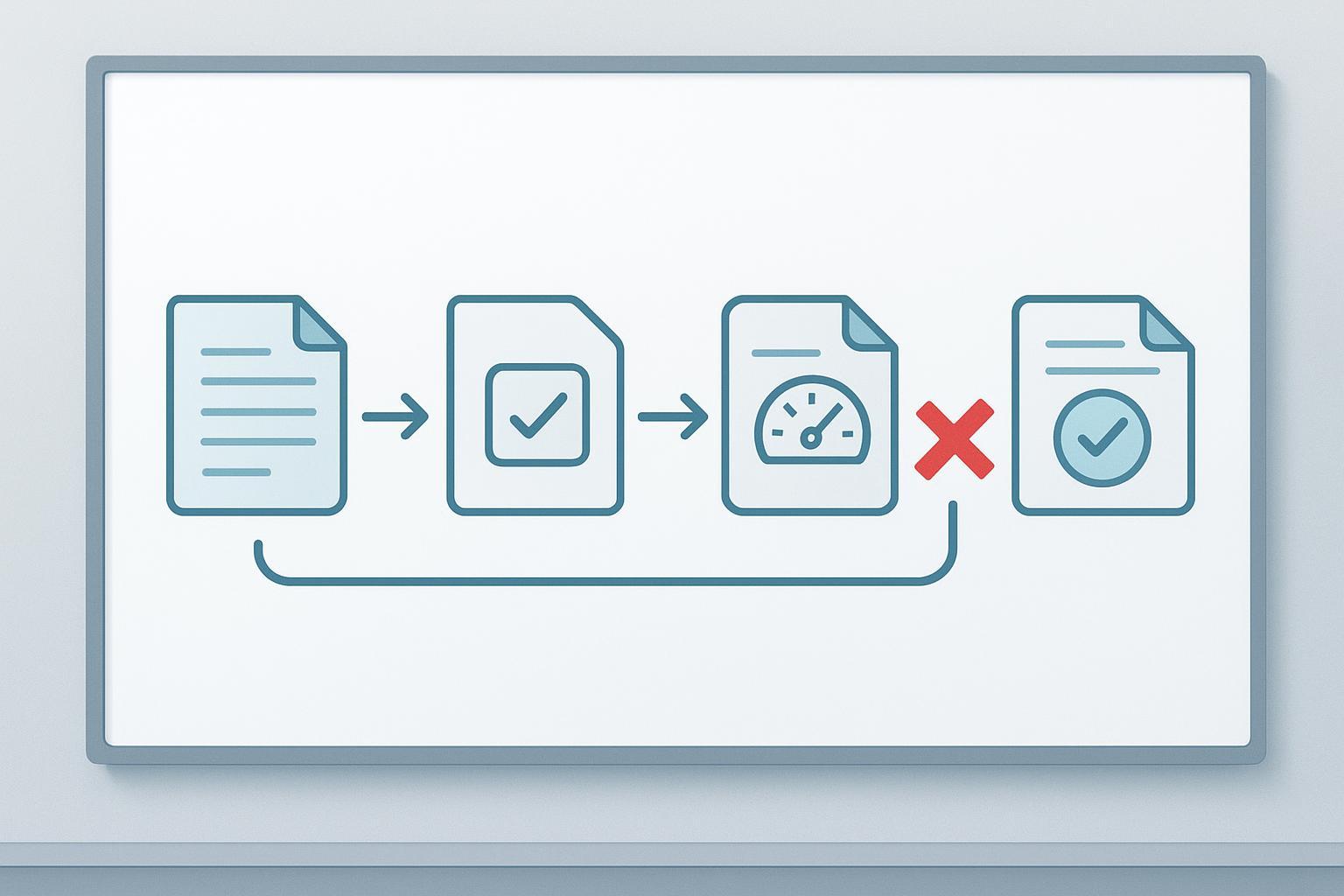
Traceability means an auditor can reconstruct the batch from the raw data forward without asking the supplier a single question. That standard matters more than it used to, because the FDA’s intended-use test is applied to what a seller’s own materials say, which makes documentation a compliance surface rather than a quality record filed away after release (FDA:s mars 2026 varningsbrev till Gram Peptides). De MHRA GxP data integrity guidance sets the expectation: records must be attributable, läsbar, samtida, original och korrekt, and additionally complete, konsekvent, enduring and available across the full data lifecycle, with any correction preserving the original entry and the reason for change.
For research-use-only peptide documentation, that translates into four concrete asks. Require the original chromatogram and mass spectrum, not a summary table. Require the method reference behind each figure. Require instrument qualification records consistent with the USP 〈1058〉 analytical instrument qualification 4Qs model, last revised in 2017. And require that corrections preserve both the original entry and the reason for change.
För tips: run the data-chain test on one historical lot before adding any new supplier questionnaire.
Felläget är tyst. A supplier produces a CoA, the purity figure looks acceptable, and the buyer files it. Months later a reviewer asks how that figure was generated, and the supplier cannot produce the underlying data file. The chain from raw data to released certificate is broken, and the buyer has no way to repair it after the fact.
Pillar 3: Validerad eller lämplig testning, Vald medvetet
The choice between a fully validated method and a fit-for-purpose method is a decision about what the data will be used for, and it has to be made explicitly rather than inherited from whatever routine the supplier happens to run. I Q2(R2) validation of analytical procedures requires a procedure to be validated as fit for its intended purpose through a risk- and use-based strategy, with a predefined protocol, justified acceptance criteria and a validation report. Typical minimum designs include nine determinations across the range or six at 100% av testkoncentrationen.
One clarification matters before you write a specification around it: what ICH Q2(R2) does not say is that there is a formal “fit-for-purpose method” category sitting alongside “fully validated method”. The guideline uses fit for intended purpose as the overarching requirement, which is why early-stage work is supported by phase-appropriate or partial validation with scientific justification for what has not yet been tested.
That leaves the practical question the guideline does not answer for you: which tier does this decision actually need? A practical validated-versus-fit-for-purpose decision rule circulating in consultancy and vendor commentary maps use case to validation expectation, and it is worth adopting with the caveat that it is commentary, not a primary standard.
|
Use case |
Validation expectation |
Peptidsyntes Typical technique |
|---|---|---|
|
Upptäckt, undersökning, internal ranking |
Fit-for-purpose or qualified |
RP-HPLC with stated conditions; ESI-TOF or Orbitrap HRMS for identity; MALDI-TOF as an orthogonal check |
|
IND-enabling data in a regulatory package |
Qualified or partially Syntetiska peptider validerad |
The above, plus method documentation and justification for untested parameters |
|
Pivotal, submission-critical or lot-release decisions |
Fully validated |
Validated RP-HPLC or HRMS; endotoxin by the USP 〈85〉 LAL technique classes, gel-koagel, turbidimetric or chromogenic, with limits set by the USP 〈85〉 endotoxin limit formula |
The failure mode runs in both directions. A lot-release decision resting on a screening-grade method produces a number nobody can defend, and a discovery-stage decision blocked by a validation burden the use case never required burns weeks for no regulatory gain. Fit-for-purpose analytical testing peptides is a deliberate match between method and decision, not a default.
Pillar 4: Ansvarsfull kommunikation som styrningskontroll
How a supplier describes its products is an auditable control, not a marketing afterthought. The FDA reads intended use from the seller’s own words, and FDA’s intended-use test treats research-use-only labeling as insufficient when the website itself evidences intended human use. That is exactly what FDA’s March 2026 warning letter to Gram Peptides found: intended-use evidence drawn from the seller’s own product pages, including appetite suppression, weight reduction, glucose handling, and lipid metabolism claims.
The pattern repeats. FDA:s augusti 2026 letter to Peptide Partners LLC charged named peptides plus BAC reconstitution solution as unapproved new drugs, citing human-disease and human-tissue claims. Across two 2026 cohorts, Elva peptidföretag fick FDA-varningsbrev under ett enda år, which makes unsupported therapeutic claims peptides a documentation risk rather than a copywriting preference.
⚠️ Varning: A technically excellent supplier whose product pages describe appetite suppression or glucose handling converts a documentation strength into an enforcement exposure for everyone downstream.
Treat claim language as a reviewed artifact with its own approval gate. Keep a research-use-only framing with a research-scope disclaimer, and require that any efficacy-adjacent statement trace to a peer-reviewed source or be removed. The language discipline this implies is narrow: “may help,” “has been associated with,” never “cure” or “guaranteed.” Peptidproduktion
Så här tillämpar du detta utan att bygga om din leverantörsbas

Start with the specification, because it is the one pillar that requires no cooperation from the supplier to begin. Everything else follows from it.
-
Write or revise the specification. Set numeric acceptance criteria and name the method for each one. This is a quick win measured in days, and it is time-sensitive: the EMA guideline on the development and manufacture of synthetic peptides applies from 2026-06-01, so specifications drafted against older assumptions will need revisiting anyway.
-
Request the underlying data package for one current lot. Then test whether the chain is reconstructible: rådata, instrument qualification records, and the review trail behind the release decision. The MHRA GxP data integrity guidance and its ALCOA+ expectations are the practical test. Budget one to two weeks.
-
Classify each existing use case against a practical validated-versus-fit-for-purpose decision rule, and flag any lot-release decision that currently rests on a screening method. This takes one to two months because it touches historical decisions.
-
Add a claim-review gate to any outward-facing product description, and keep it running.
Measure two things: the share of lots where the full data chain was produced on request without escalation, and the count of release decisions traceable to a fully validated method. The first two steps change supplier conversations within a quarter; the classification work takes longer.
If you want to see what a complete package looks like before you ask a supplier for one, MOL Changes can send a documentation package covering specification, metod, and release records, or connect you with a technical expert to walk through the classification step.
Varningar: Där den konventionella utsikten fortfarande håller
The strongest limitation of this framework is that it assumes you have leverage over your supplier, and early-stage academic groups buying single vials often do not. A ten-peptide purchase audit across four vendor tiers is a small sample, and it supports an argument about matching control intensity to consequence, not a claim about the wider market. Where a failed lot costs a week of screening rather than a batch, a summary CoA and a fit-for-purpose method are proportionate, and demanding a full validated package would be waste. The pillar ordering is also an editorial judgment: if your binding constraint is sterility or endotoxin, inverting it is reasonable. The point is calibration, not maximum rigor everywhere.
But Doesn’t a High Purity Number Still Tell Me Something?
Ja, and it is worth being precise about what. A purity figure describes the sample that was tested, under the method the supplier chose, on the day it was run. It says nothing about the next lot, the next synthesis batch, or the same product six months later.
That is how two apparently contradictory results coexist. A 6,285-report submitted-sample analysis reported a median purity of 99.80% (Finnrick, hämtas 2026-05-19), while a ten-peptide purchase audit across four vendor tiers found budget-tier lots releasing at 71.3% och 78.9% (Peptide List, hämtas 2026-05-19). Both can be true: one measures what suppliers chose to send, the other measures what buyers actually received.
So the useful question is not “what is your purity?” but “what is your release specification, which method defines it, and what does a lot record show for a batch you did not select?” Ask for the chromatogram, not the number.
Vad händer om vi redan har kvalificerade leverantörer på de gamla kriterierna?
Requalification is additive, not a restart. You do not need to reopen every supplier file or issue a new questionnaire. Run the data-chain test on one historical lot per supplier: pull the certificate of analysis, the underlying chromatogram, the mass spectrometry data, and the instrument qualification records for the run, then ask whether the numbers on the summary sheet can be traced back to raw data that a reviewer could reconstruct. Suppliers whose documentation survives that test keep their qualified status and move to a lighter periodic check. Suppliers whose documentation does not survive it move to a full review, and the test result, not a questionnaire score, decides which is which. The same expectation applies to your own records: the MHRA GxP data integrity guidance sets out the attributable, läsbar, samtida, original, and accurate standard that both sides of the chain are measured against, and USP 〈1058〉 analytical instrument qualification covers the instrument records that make a reported result reconstructable.
Hur svarar du på argumentet att denna kontrollnivå är opraktisk?
The control intensity is meant to be proportional, not uniform, and the framework says so explicitly. A practical validated-versus-fit-for-purpose decision rule permits fit-for-purpose methods at early stages, where the question is whether a material is worth pursuing at all, and reserves validated methods for the stages where a result will carry regulatory or contractual weight. That is also what ICH Q2(R2) supports: phase-appropriate validation with scientific justification, not maximum validation everywhere. What ICH Q2(R2) does not say is that any method is acceptable because the work is early.
The cost asymmetry is what settles the objection. Requesting the documentation package costs a supplier conversation and some review time. Discovering at scale-up that the release data cannot be reconstructed costs the batch, the timeline, and the audit finding.
Skiftet som måste hända
Governance capacity has to scale with demand, and it scales through specifications, spårbarhet, deliberate method selection and disciplined claims, not through a stricter purity threshold. The industry norm of treating a certificate of analysis as the terminal quality artifact has to give way to treating the data chain behind it as the artifact, and buyers should ask for that chain before enforcement asks on their behalf. Eleven peptide firms received FDA warning letters in a single year, so the shift is already underway (U.S. Food and Drug Administration, hämtas 2026-06-11). A market where a documentation package is a standard part of a quote, rather than a special request, is the realistic near-term outcome. Take the four pillars into your next supplier conversation and note where the chain breaks. That is where peptide quality governance earns its keep.
Avslöjande: MOL Changes supplies research-use-only peptides and documentation packages, so we have a commercial interest in buyers demanding more complete records. The framework above is drawn from public regulatory and pharmacopoeial sources and applies to any supplier, including us.
Reviewed for research-use scope and documentation accuracy by the MOL Changes technical team. This article discusses research-use-only materials and analytical documentation practices; it is not medical advice, and nothing here should be read as guidance on human use. Consult a qualified professional before making decisions about any research material.