Sửa đổi peptide
Pegylation peptide
2. Pegylation peptide là gì?
Quá trình glycol hóa polyethylen peptide là quá trình gắn cộng hóa trị một hoặc nhiều polyethylen glycol (PEG) chuỗi thành một phân tử peptit. Quá trình glycol hóa polyetylen làm tăng trọng lượng phân tử của peptide, bảo vệ peptide khỏi bị thủy phân bởi protein hydrolase, và cuối cùng là cải thiện dược động học của peptide.
Peptide đóng một vai trò quan trọng trong ngành dược phẩm và phát triển liệu pháp điều trị bằng thuốc. Tuy nhiên, ứng dụng in vivo của peptide bị hạn chế do sự phân hủy nhanh chóng của các enzyme phân giải protein, độ hòa tan kém, phản ứng kháng nguyên, và lọc cầu thận ở thận. Liên kết cộng hóa trị của polyethylen glycol (PEG) làm giảm khả năng miễn dịch, cải thiện độ hòa tan và giảm độ thanh thải của thận. Việc bổ sung chuỗi PEG đơn phân tán là yếu tố chính trong sự phát triển điều trị của peptide PEGylat. Những peptide polyethylen glycolated an toàn và hiệu quả này rất cần thiết để mang lại hiệu quả điều trị tối ưu.

Các nhà khoa học pegylation peptide
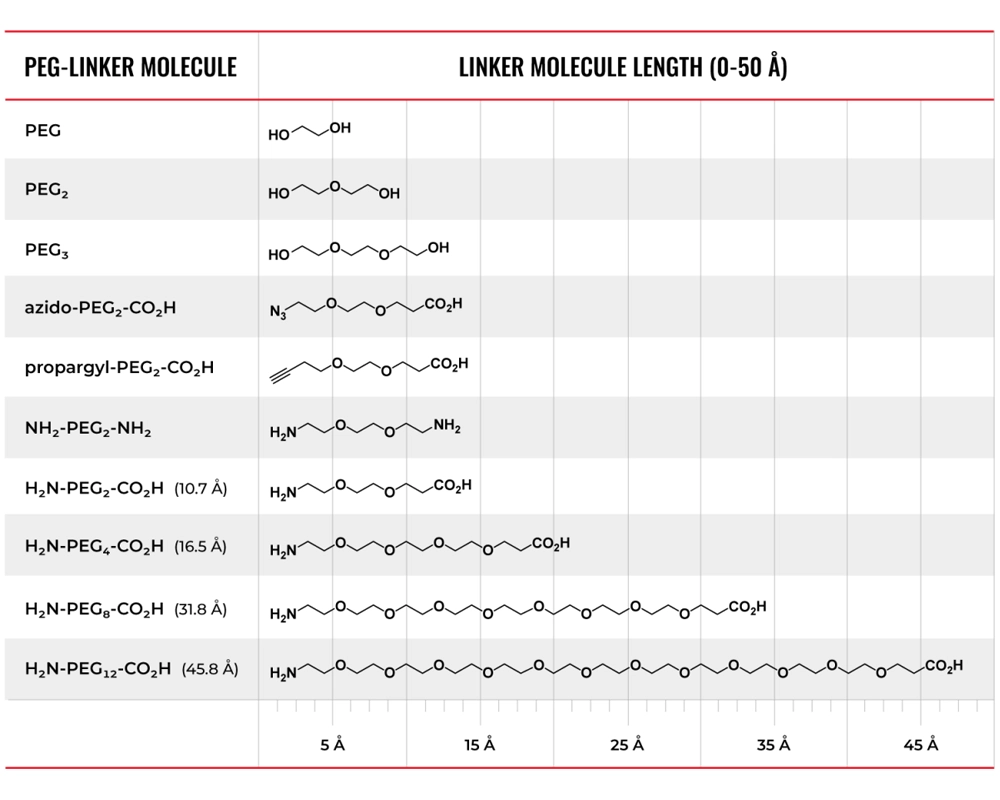
Các liên kết và từ viết tắt PEG phổ biến
·Bấm vào Hóa học, xảy ra giữa nhóm azide của thuốc thử PEG và nhóm alkyne của peptide, hoặc ngược lại.
·Khớp nối Suzuki-Miyaura, xảy ra giữa nhóm iodophenyl của thuốc thử PEG và nhóm peptide aryl boronic, hoặc ngược lại..
·Khớp nối Sonogashira, xảy ra giữa nhóm iodophenyl của thuốc thử PEG và nhóm alkyne của peptit, hoặc ngược lại.
|
Viết tắt.
|
Tên chuỗi PEG đầy đủ
|
|---|---|
|
PEG |
tetraetylen glycol |
|
mini-PEG2 |
8-axit amin-3,6-dioxaoctanoic |
|
mini-PEG3 |
axit amin-3,6,9-trioxaundecanoic |
|
Axit NH2-PEG2 |
3-(2-(2-Aminoethoxy)ethoxy)-axit propanoic |
|
PEG750 |
nhiều(etylen glycol) metyl ete (Mn trung bình 750) |
|
PEG1000 |
nhiều(etylen glycol) metyl ete (Mn trung bình 1000) |
|
PEG2000 |
nhiều(etylen glycol) metyl ete (Mn trung bình 2000) |
|
PEG5000 |
nhiều(etylen glycol) metyl ete (Mn trung bình 5000) |
|
este (OTBzl) |
p-Nitroanilide |
|
KLH (-COOH của thiết bị đầu cuối C) |
tBu |
Trích dẫn nổi bật
Phát triển phối tử peptide không thể đảo ngược được dán nhãn phóng xạ để chụp ảnh PET về yếu tố tăng trưởng nội mô mạch máu
Các chất tạo ảnh dựa trên đầu dò peptide có các đặc tính dược động học mong muốn với điều kiện là chúng có ái lực cao với mục tiêu in vivo. Một cách tiếp cận để cải thiện ái lực của phối tử peptit với mục tiêu của nó là làm cho tương tác này cộng hóa trị và không thể đảo ngược.. Vì mục đích này, chúng tôi đã đánh giá thẻ peptide ái lực được gắn nhãn 64Cu, 64Cu-L19K-(5-fluoro-2,4-dinitrobenzen) (64Cu-L19K-FDNB), liên kết cộng hóa trị và không thể đảo ngược với yếu tố tăng trưởng nội mô mạch máu (VEGF) như một tác nhân tạo ảnh PET. Chúng tôi đã so sánh các đặc tính in vivo của 64Cu-L19K-FDNB trong xenograft khối u biểu hiện VEGF với các chất tương tự liên kết không cộng hóa trị của nó, 64Cu-L19K-(2,4-dinitrophenyl) (64Cu-L19K-DNP) và 64Cu-L19K. phương pháp: Peptit L19K (GGNECDIARMWEWECFERK-CONH2) được chế tạo với axit 1,4,7-triazacyclononane-1,4,7-triacetic ở đầu N để dán nhãn phóng xạ với 64Cu bằng miếng đệm polyethylen glycol giữa peptide và chelate. 1,5-Difluoro-2,4-dinitrobenzen được liên hợp ở đầu C lysine để liên kết ngang với VEGF, dẫn đến L19K-FDNB. 64Cu-L19K-FDNB đã được thử nghiệm về khả năng liên kết cộng hóa trị với VEGF trong ống nghiệm. Như một sự kiểm soát, L19K được liên hợp thành 1-fluoro-2,4-dinitrobenzen, dẫn đến L19K-DNP. Nghiên cứu hình ảnh PET và phân bố sinh học của 64Cu-L19K-FDNB, 64Cu-L19K-DNP, và 64Cu-L19K bản địa được so sánh trong xenograft HCT-116. Các nghiên cứu ngăn chặn 64Cu-L19K-FDNB đã được thực hiện bằng cách tiêm đồng thời lượng L19K-FDNB dư thừa không được gắn nhãn. Kết quả: Các nghiên cứu liên kết in vitro đã xác nhận liên kết cộng hóa trị và liên kết không thể đảo ngược của 64Cu-L19K-FDNB với VEGF, trong khi 64Cu-L19K-DNP và 64Cu-L19K không liên kết cộng hóa trị. Hình ảnh PET cho thấy sự hấp thu khối u cao hơn với 64Cu-L19K-FDNB so với 64Cu-L19K-DNP và 64Cu-L19K, với giá trị hấp thụ chuẩn hóa trung bình là 0.62 ± 0.05, 0.18 ± 0.06, Và 0.34 ± 0.14, tương ứng, Tại 24 h sau khi tiêm (P < 0.05), Và 0.53 ± 0.05, 0.32 ± 0.14, Và 0.30 ± 0.09, tương ứng, Tại 48 h sau khi tiêm (P < 0.05). Các nghiên cứu ngăn chặn với 64Cu-L19K-FDNB với sự có mặt của lượng peptide không được đánh dấu dư thừa cho thấy một 53% giảm sự hấp thu khối u ở 48 h sau khi tiêm. Phần kết luận: Trong nghiên cứu chứng minh khái niệm này, việc sử dụng phối tử peptide liên kết cộng hóa trị chống lại VEGF giúp cải thiện sự tích lũy chất đánh dấu tại vị trí khối u trong cơ thể, so với các chất tương tự peptide liên kết không cộng hóa trị của nó. Kỹ thuật này là một công cụ đầy hứa hẹn để tăng cường hiệu lực của các đầu dò peptide làm tác nhân tạo ảnh.
Dịch vụ biến đổi peptide liên quan
glycosyl hóa peptit
glycosyl hóa peptit
Quá trình glycosyl hóa peptide là một biến đổi cộng hóa trị có khả năng cải thiện các tính chất hóa lý của peptide
Đọc thêmPhosphoryl hóa peptit
Phosphoryl hóa peptit
Phosphoral hóa có thể xảy ra trên Serine (S, trở thành), Threonine (T, thứ ba) và Tyrosine (Y, Tyr) chuỗi bên bằng cách hình thành liên kết phosphoester
Đọc thêmPeptide cố định
Peptide cố định
Giới thiệu hai axit amin không tự nhiên có chứa α-methyl, Nhóm α-alkenyl trong quá trình tổng hợp pha rắn chuỗi peptide.
Đọc thêmPeptide tuần hoàn
Peptide tuần hoàn
Chu trình peptide tăng cường sự ổn định về hình dạng của peptide (so với các chất tương tự tuyến tính của chúng) và là một chiến lược phổ biến trong phát triển peptide.
Đọc thêmbiến đổi peptit
Có nhiều kinh nghiệm trong việc sửa đổi peptide, cung cấp nhiều con đường khả thi cho nghiên cứu peptide.
