पेप्टाइड विनिर्माण स्वचालन वास्तव में अभी क्या कर रहा है, इकाई संचालन द्वारा इकाई संचालन
एसपीपीएस स्वचालन आमतौर पर युग्मन को संभालता है, संरक्षण और धुलाई, दरार आमतौर पर चेन असेंबली के बाद होती है. अन्य प्लेटफार्मों में समाधान-चरण शामिल है, बंधाव और संकर प्रक्रियाएं; सभी पेप्टाइड स्वचालन समान चार-चरणीय चक्र नहीं हैं.
स्वचालित करने का दबाव पैमाना है. जीएलपी-1 पेप्टाइड एपीआई की व्यावसायिक मांग सालाना दसियों या सैकड़ों किलोग्राम तक पहुंच सकती है और कुछ मामलों में मीट्रिक-टन उत्पादन स्तर तक पहुंच सकती है।, खोज के समय एमजी-टू-जी से क्लिनिकल स्तर पर किलोग्राम और वाणिज्यिक स्तर पर मल्टी-किलोग्राम अभियानों के माध्यम से संश्लेषण चरणों की प्रगति होती है (बाकेम, 2026). उस मात्रा में, एक सामान्य 30-अमीनो-एसिड पेप्टाइड की आवश्यकता होती है 30 अनुक्रमिक युग्मन और संरक्षण चक्र, और कम से 99% प्रति चरण दक्षता से संचयी उपज हानि और अशुद्धता संचय महत्वपूर्ण हो जाता है, दर्जनों निकट संबंधी उपोत्पादों का उत्पादन (न्यूलैंड प्रयोगशालाएँ, 2026).
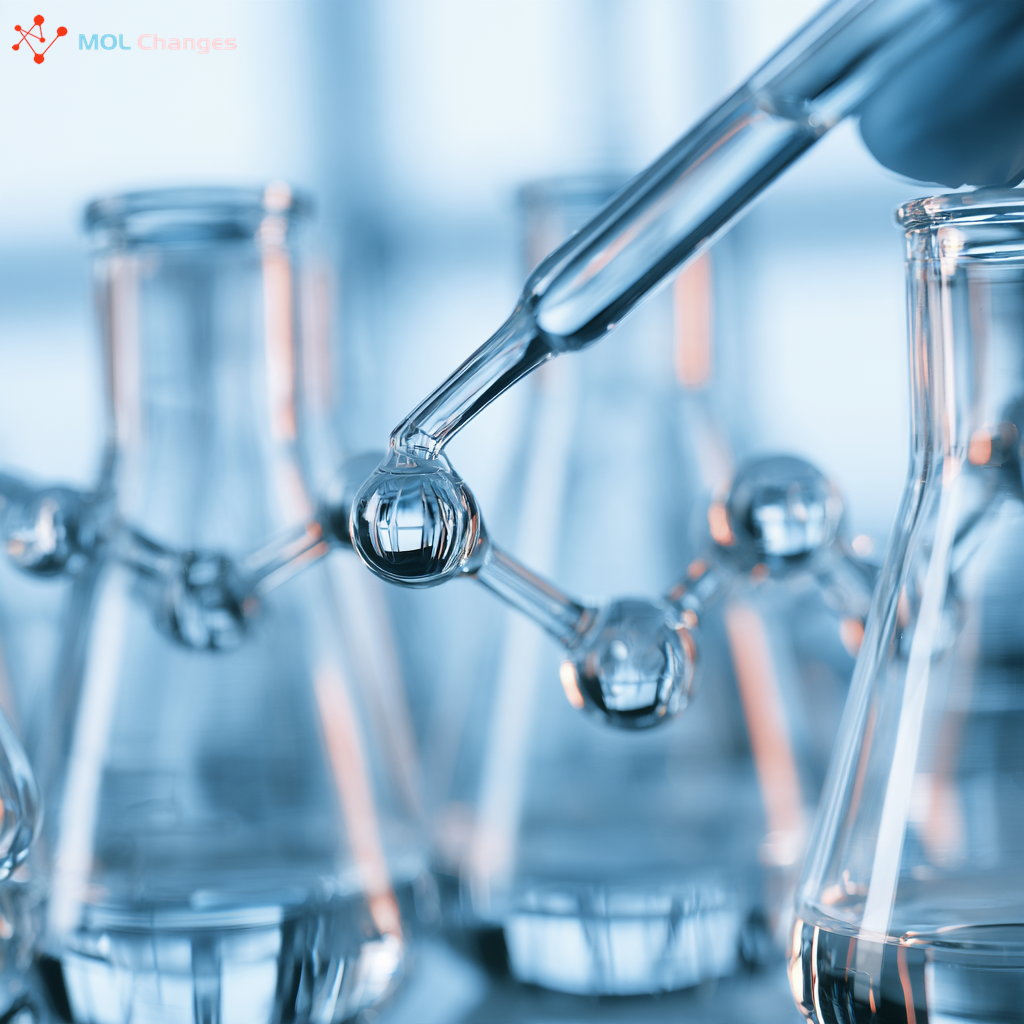
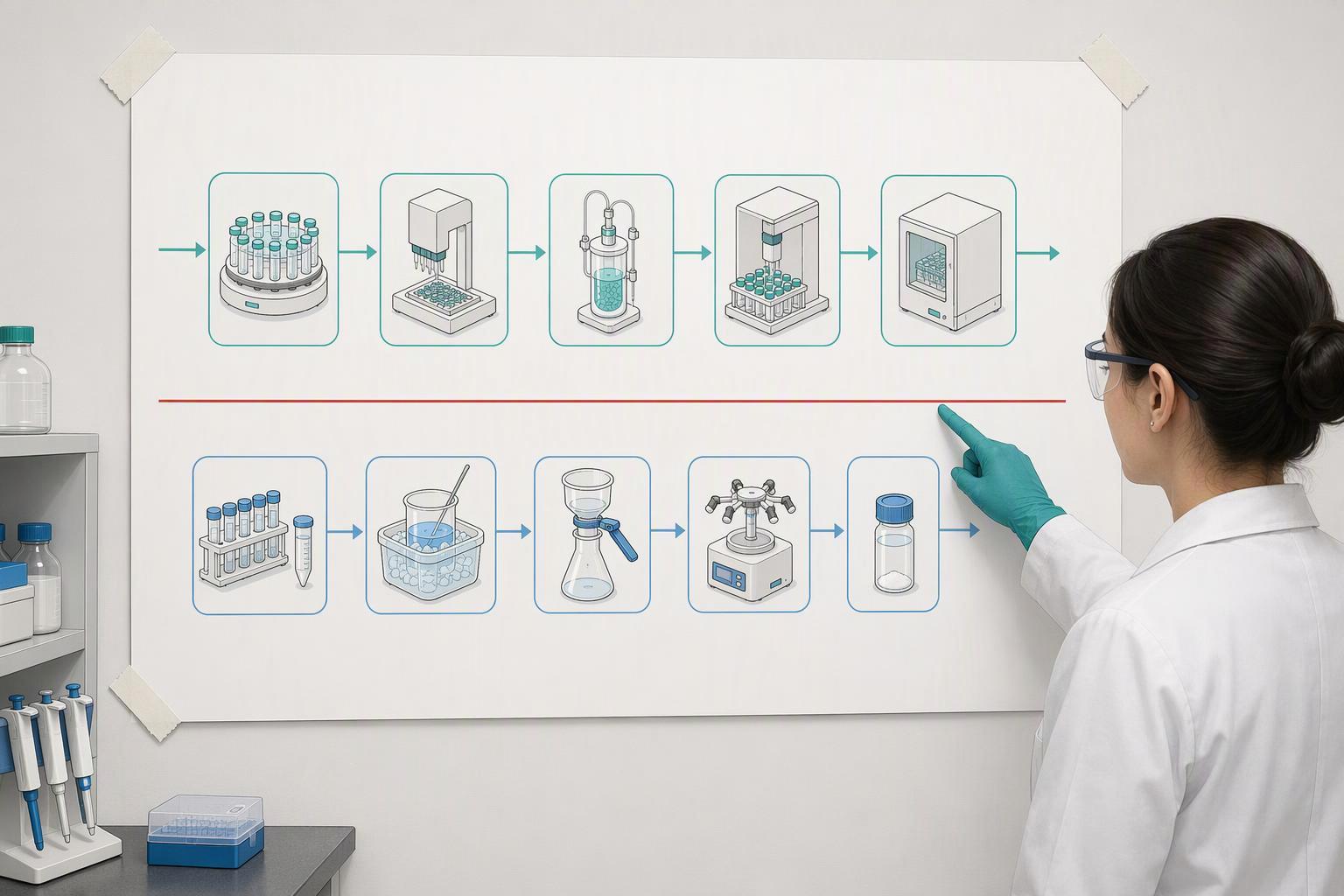
संश्लेषण, दरार, शुद्धिकरण और विश्लेषण सभी को अलग-अलग डिग्री पर स्वचालित किया जा सकता है. उनकी उपयुक्तता प्रक्रिया की समझ पर निर्भर करती है, उपकरण, किसी चरण को कितनी बार दोहराया जाता है इसके बजाय निगरानी और सत्यापन.
पेप्टाइड-निर्माण के कौन से चरण गुणवत्ता या नियामक जवाबदेही को कमजोर किए बिना स्वचालित किए जा सकते हैं
जिन चरणों को स्वचालित किया जा सकता है वे वे हैं जहां उपकरण साक्ष्य तैयार करता है और साक्ष्य को प्रौद्योगिकी-तटस्थ मानक के लिए मान्य किया जाता है. स्वचालित तेज़-प्रवाह संश्लेषण मोटे तौर पर प्राप्त होता है 2.5 प्रति मिनट अमीनो एसिड बनाम 26 व्यावसायिक रूप से उपलब्ध गर्म सिंथेसाइज़र के लिए प्रति अमीनो एसिड मिनट 70 डिग्री सी, अवशेषों को कम से कम शामिल करते हुए 40 सेकंड तक 90 डिग्री सी (हार्ट्रैम्पफ एट अल., विज्ञान, 2020). की समानांतर शुद्धि 96 पेप्टाइड्स लेता है 1.55 घंटे और 1 लीटर विलायक बनाम 56 घंटे और 50 अनुक्रमिक आरपी-एचपीएलसी के लिए लीटर, 36 गुना समय और 50 गुना विलायक कमी (बायोटेज ब्रोशर, विक्रेता दस्तावेज़ V.6).
इन चरणों को रक्षात्मक बनाने वाली बात यह है कि सत्यापन मार्ग इसलिए नहीं बदलता क्योंकि कोई मशीन इन्हें निष्पादित करती है. मैं Q2(आर2) यह आवश्यक है कि एक विश्लेषणात्मक प्रक्रिया अपने इच्छित उद्देश्य के लिए उपयुक्त हो और सत्यापन पैकेज उत्पाद द्वारा उचित हो, मैट्रिक्स, विश्लेषण और प्रौद्योगिकी; यह प्रौद्योगिकी-तटस्थ है और इसलिए एआई-सहायता प्राप्त या स्वचालित पेप्टाइड क्यूसी विधियों पर लागू होता है (मैं Q2(आर2), अंतिम संस्करण, नवंबर 2023). ICH Q14 का उन्नत विकास दृष्टिकोण विश्लेषणात्मक प्रक्रिया मापदंडों के जोखिम मूल्यांकन को जोड़ता है, विश्वविद्यालय- या बहुभिन्नरूपी प्रयोग या मॉडलिंग, और विधि संचालित डिज़ाइन क्षेत्रों सहित सेट-पॉइंट और रेंज के साथ एक परिभाषित नियंत्रण रणनीति (मैं Q14, अंतिम संस्करण, नवंबर 2023).
उत्पादन और गुणवत्ता-प्रणाली सॉफ़्टवेयर के लिए FDA के कंप्यूटर सॉफ़्टवेयर आश्वासन मार्गदर्शन में चिकित्सा-उपकरण का दायरा है. इसके जोखिम-आधारित विचार जानकारीपूर्ण हो सकते हैं, लेकिन यह फार्मास्युटिकल पेप्टाइड विनिर्माण सॉफ्टवेयर के लिए आवश्यकताओं को स्वचालित रूप से स्थापित नहीं करता है.
कुंजी ले जाएं: किसी चरण को स्वचालित करना और उस चरण के बारे में निर्णय को स्वचालित करना अलग-अलग साक्ष्य बोझ वाली अलग-अलग परियोजनाएं हैं.
कौन से चरण योग्य मानव नियंत्रण में रहने चाहिए, और क्यों
पेप्टाइड औषधि विकास पुनः संयोजक पेप्टाइड संश्लेषण ईएमए की सिंथेटिक-पेप्टाइड दिशानिर्देश रिलीज़ निर्णय को सबसे स्पष्ट मानव-स्वामित्व वाला कदम बनाती है. सिंथेटिक पेप्टाइड्स के लिए शुद्धता सबसे महत्वपूर्ण महत्वपूर्ण गुणवत्ता विशेषताओं में से एक है; संरचना की पुष्टि आवश्यक है; प्रतिवादी पहचान और सामग्री को उचित ऊपरी सीमा के साथ नियंत्रित किया जाना चाहिए; और केवल "उच्च आणविक भार अशुद्धियाँ" लेबल वाला एक विनिर्देश पैरामीटर स्वीकार्य नहीं है, क्योंकि डिमर्स, ट्रिमर, ओलिगोमर्स और समुच्चय को व्यक्तिगत रूप से निर्दिष्ट किया जाना चाहिए (ईएमए, लागू 1 जून 2026).
एआई पर एफडीए की स्थिति अभी भी एक मसौदा है. जनवरी 2025 विनियामक निर्णय लेने में सहायता के लिए एआई पर मार्गदर्शन को "कार्यान्वयन के लिए नहीं" लेबल दिया गया है. इसमें गैर-बाध्यकारी सिफ़ारिशें शामिल हैं” (एफडीए, 2025), और यह एक जोखिम-आधारित विश्वसनीयता मूल्यांकन ढांचे का प्रस्ताव करता है जिसमें उपयोग के एक विशेष संदर्भ के लिए विश्वसनीयता साक्ष्य के माध्यम से विश्वसनीयता स्थापित की जाती है (संघीय रजिस्टर, डॉकेट एफडीए-2024-डी-4689, 2025).
The chemistry itself explains why some decisions resist delegation. Aspartimide formation occurs during standard Fmoc deprotection with 20% डीएमएफ में पाइपरिडीन, and the base pKa values behind that step are piperidine 11.1, HOBt 4.6 and the DBU conjugate acid 13.5 (Kong et al., 2025). Choosing a base is choosing a side-reaction profile, which is a qualified chemist’s judgement, not a software default.
जहां पेप्टाइड विनिर्माण स्वचालन वर्तमान में विफल है: कठिन क्रम और मिलीग्राम-से-किलोग्राम स्केल-अप
Difficult sequences above 50 को 60 amino acids remain a challenge even with automated SPPS protocols, and no unique protocol exists for highly hydrophobic peptides: every new synthesis still needs special optimisation (Mueller et al., 2020). The mechanism is on-resin aggregation. Difficult sequences are defined as peptides poorly solvated while attached to the solid support, preventing complete deprotection and coupling steps, and they contain a high number of hydrophobic residues such as Leu, वैल, Phe and Ile; Val and Ile are beta-branched, with glycine inducing beta-sheet packing in combination with these (Mueller et al., 2020).
Asp-X motifs can be susceptible to aspartimide formation depending on sequence and deprotection conditions. Select and validate a suitable method, whether executed manually or automatically. The next residue in a motif is not necessarily the C-terminal residue of the whole peptide.
The capability ceiling is visible in the published performance data. Isolated yields across automated fast-flow protein sequences were 2.2 को 19.0 एमजी, या 1 को 5%, after HPLC purification, with proinsulin (86 आ) पर 2.2 mg and HIV-1 protease (99 आ) पर 5.3 एमजी, and the longest chain at 164 aa over 327 consecutive reactions (हार्ट्रैम्पफ एट अल., विज्ञान, 2020). That is a research-scale result, not a manufacturing claim.
Scale-up is a separate discipline. Milligram screening measures chemical feasibility, not manufacturing robustness: at kilogram scale the process must be redesigned around reactor geometry, mixing and mass transfer, heat removal, resin behaviour, purification loading and impurity-profile shifts, so transfer is process re-engineering with pilot batches rather than protocol duplication (वैश्विक बायोटेक प्रयोगशालाएँ, 2026). Capacity is also route-specific: एसपीएसएस, एलपीपीएस, hybrid convergent and recombinant-plus-synthetic architectures are not interchangeable, and purification rather than synthesis often sets the deliverable volume, so a site can be capable of building a molecule and unable to purify it at the required volume (सीडीएमओ हब, 2026).
एक स्वचालित बैच निर्णय का बचाव करने के लिए समीक्षक को किन रिकॉर्ड्स को क्रॉस-रेफरेंस करना चाहिए

An automated batch decision is defensible when the record package lets a reviewer reconstruct what the system did and who authorised it. 21 सीएफआर 11.10(ए) requires validation of systems to ensure accuracy, विश्वसनीयता, consistent intended performance and the ability to discern invalid or altered records, और 11.10(ई) Peptide P सुरक्षित की आवश्यकता है, कंप्यूटर जनित, time-stamped audit trails that do not obscure previously recorded information and are retained at least as long as the subject records (21 सीएफआर भाग 11, current as in force).
The signature layer must cross-reference the decision. Signed electronic records must show the printed name of the signer, the date and time of signature, and the meaning associated with the signature, such as review, अनुमोदन, responsibility or authorship (21 सीएफआर 11.50(ए), current as in force). The MHRA’s Classical Peptide Synthesis ALCOA principles add that data must be attributable, पढ़ने योग्य, समसामयिक, मौलिक और सटीक, with the “+” adding complete, सुसंगत, स्थायी और उपलब्ध, and there is no difference in expectations whichever acronym is used (एमएचआरए, 2018).
The MHRA also sets the control expectation: organisations are expected to implement, design and operate a documented system providing an acceptable state of control based on the data integrity risk with supporting rationale, such as a data integrity risk assessment (एमएचआरए, 2018). Routine forensic checking is not expected; periodic audits are (एमएचआरए, 2018).
The peptide-specific layer comes from the EMA. एसपीपीएस के दौरान, standardised steps such as deprotection, washing, coupling and capping need not be described in detail each time provided conditions are given and it is clear where they are used; the final cleavage and deprotection step must be described in detail including scavengers; and material traceability from synthesis steps through the final active substance is expected (ईएमए, असरदार 1 जून 2026).
पेप्टाइड विनिर्माण स्वचालन वास्तव में क्या मापा गया लाभ और जोखिम प्रदान करता है
Published fast-flow synthesis and purification demonstrations show gains under their stated conditions. Cross-publication cycle times, solvent intensities and scales are not necessarily head-to-head comparisons. Benchmark the same construct and acceptance criteria, including purification and recovery.
Solvent choice carries a measurable cost signal. The solvent cost per amino-acid coupling cycle runs from 151 EUR for DMSO/EtOAc (1:9) with recycling, को 297 EUR for DMF, 406 EUR for NBP/EtOAc (1:1), और 431 EUR for DMSO/EtOAc without recycling (Green Chemistry review, 2022). Dna And Peptide Synthesis
Epimers can have identical mass; deletion products ordinarily differ by the mass of the missing residue. Both may challenge chromatographic selectivity, but they are not both generally near-isobaric to the intact peptide. Use diagnostic mass and separation evidence appropriate to the impurity.
What the sources do not provide is equally important. No retrieved source quantifies a peptide manufacturing failed-batch or out-of-specification rate, and none quantifies a release-testing turnaround time or a measured reduction from automated QC. Defect-rate reduction should be treated as qualitative and attributed to in-process analytics rather than claimed against an unmeasured baseline.
पेप्टाइड आर कैसा होना चाहिए?&डी टीम ने अपना स्वचालन रोलआउट अनुक्रमित किया?

Sequence an automation rollout using the actual process risk, detectability, control strategy and validation needs. ICH Q9(आर 1), finalized in January 2023, provides a risk-management framework, not a mandatory order of automation projects. Pharmaceutical software controls must be assessed under the applicable framework. पेप्टाइड्स
Two boundary cases should be excluded from early automation. Difficult sequences above 50 को 60 amino acids still need sequence-specific optimisation (Mueller et al., 2020), and milligram-to-kilogram transfer is process re-engineering rather than protocol duplication (वैश्विक बायोटेक प्रयोगशालाएँ, 2026). Automating either before the process is understood simply automates the failure.
अक्सर पूछे जाने वाले प्रश्नों
क्या पारंपरिक स्वचालन मामला अभी भी उच्च-मात्रा के लिए है?, अच्छे व्यवहार वाले अनुक्रम?
हाँ, and that is where the case is strongest. Short, well-solvated sequences that run the same cycle hundreds of times are exactly the conditions under which automated peptide synthesis quality control pays for itself, because the coupling and deprotection steps are reproducible and the analytical endpoints are stable. The boundary only starts to move once a sequence is poorly solvated on the resin, since incomplete coupling and deprotection cannot be corrected by tighter scheduling. The conventional case is not wrong; it is narrower than the way it usually gets stated.
हम पहले से ही एक स्वचालित लाइन चलाते हैं. क्या मानव सीमा को दोबारा स्थापित किया जा सकता है??
Retrofitting review and control points may be feasible, but assess software, इंस्ट्रुमेंटेशन, मान्यकरण, data integrity and operational cost before choosing a change. Existing hardware does not necessarily capture all required evidence.
हमें पेप्टाइड निर्माण में एआई के लिए विक्रेता आरओआई आंकड़ों पर कैसे प्रतिक्रिया देनी चाहिए?
Treat them as unverified until you can see the method. There is currently no public benchmark set for AI-optimised purification across difficult sequences, so any headline return figure rests on a vendor’s own sequence mix, scale and analytical endpoints, and will not transfer to yours. Ask for the sample set, the sequence difficulty distribution, the scale, और समय खिड़की, and if those are not available, run the comparison on your own hardest sequences before committing.
Does the EMA’s 1 जून 2026 मानकीकृत एसपीपीएस चरणों के लिए हम जो दस्तावेज़ बनाते हैं, उसमें परिवर्तन की प्रभावी तिथि?
It changes the traceability expectation rather than the chemistry. EMA’s synthetic-peptide guideline became effective on 1 जून 2026, and for standardised solid-phase steps it expects the documentation to show how each step was controlled and how the record connects synthesis through to the final active substance. If your automated steps already produce time-stamped, attributable records, the work is mostly mapping them to that expectation; if they do not, that gap is the priority under the requirements now in effect.
Why can’t a difficult sequence simply be handed to an automated synthesizer?
Difficult sequences can require changes in solvent, युग्मन, संरक्षण, तापमान, resin or assembly route. Length alone does not guarantee poor solvation, and appropriate automated process development may improve performance. Confirm the method experimentally at the intended scale.
निष्कर्ष
The evidence supports this split unevenly, and that is the honest position. Cycle-time and solvent gains are measured and large. Defect-rate and release-turnaround improvements are not quantified in any retrieved source, so they should not be claimed. Difficult sequences above 50 को 60 amino acids and milligram-to-kilogram transfer remain human-led process development (Mueller et al., 2020; वैश्विक बायोटेक प्रयोगशालाएँ, 2026).
The next step is a records audit, क्रय आदेश नहीं. Before the first automated batch, confirm that the system validation, लेखापरीक्षा, signature manifestation and traceability chain can be produced on demand, because those are the artefacts a reviewer will ask for first (21 सीएफआर भाग 11, current as in force; एमएचआरए, 2018).