De conventionele visie: Schaal is de veilige keuze
Het grootste deel van het afgelopen decennium, het reguliere antwoord op de selectiecriteria voor peptideleveranciers was eenvoudig: rangschik de capaciteit op de eerste plaats. Tier-1 CDMO's en de inkoopplaybooks die daaromheen zijn gebouwd, behandelen de productieschaal, het reactorvolume en de locatie tellen als de belangrijkste signalen voor risicovermindering, op de redenering dat alleen een grote fabrikant het aanbod kan garanderen wanneer de vraag piekt.
Dat uitzicht verdiende zijn plaats. Capaciteitsschaarste tijdens het GLP-1-tijdperk was reëel, en de leveranciers die vroegtijdig kapitaal toezegden, hebben daadwerkelijk een aanbodprobleem opgelost. CordenPharma's peptide-uitbreiding van ongeveer € 900 miljoen, juli aangekondigd 2024, voegde grootschalige productietreinen toe in Colorado plus een Europese greenfield-locatie. Bachems gebouw K, zijn grote fabriek in Bubendorf, verankerde CHF 332.6 miljoen aan investeringen voor het boekjaar 2025 en voltooide de aangegeven verschuiving van CDMO naar CMO richting industriële schaal, uitvoer met hoog volume.

Schaal was nooit het verkeerde antwoord. Het is simpelweg niet langer de enige.
Waarom schaal niet langer de onderscheidende factor is
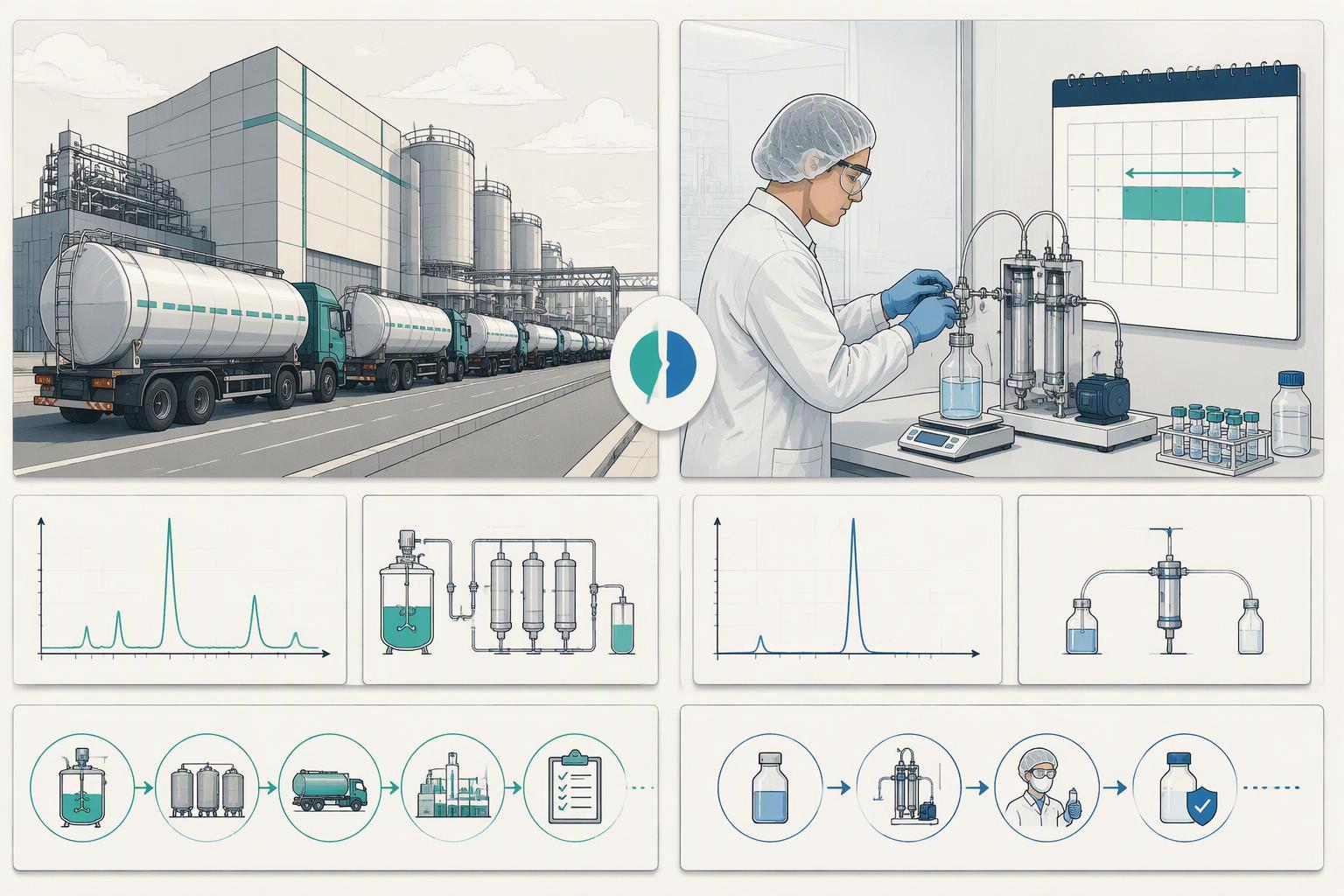
Capaciteit is gestopt met het scheiden van leveranciers, omdat iedereen tegelijkertijd dezelfde capaciteit koopt. Wanneer verschillende CDMO's in hetzelfde venster grootschalige peptidefabrieken in gebruik nemen, de beperking waarmee het veld werd gesorteerd, wordt een gedeelde kostenbasis in plaats van een gedeeld voordeel. Er volgen drie problemen wanneer schaalgrootte als de veilige keuze wordt beschouwd.

De eerste is dat het opbouwen van capaciteit kapitaalintensief is en verwaterend werkt voordat het bijdraagt. De EBIT-marge van Bachem daalde tot 22.0% in boekjaar 2024 vanaf 22.4%, die het bedrijf toeschreef aan “hogere afschrijvingen op nieuwe investeringen” in zijn bedrijf Vrijgave resultaten boekjaar 2024. Het patroon herhaalde zich in de eerste helft van 2026, toen het bedrijf in het meest recente tussentijdse rapport verklaarde dat “de opstartkosten voor gebouw K het bedrijfsresultaat zoals verwacht beïnvloedden”.. Nieuwe capaciteit kost marge voordat er iets wordt verdiend.
Het tweede probleem is dat waar de groei daadwerkelijk is ontstaan, het kwam eerder voort uit benutting en mix dan uit de schaal zelf. De commerciële API-groei van Bachem in de eerste helft van 2025 werd “voornamelijk gedreven door een goede operationele uitvoering binnen ons netwerk die leidde tot een geoptimaliseerd gebruik van bestaande faciliteiten," volgens Bachems H1 2025 resultaten. Bestaande planten beter vullen, er niet meer van bezitten, het nummer verplaatst.
Het derde probleem is dat het breedteargument dunner is dan de totale groei doet vermoeden. De omzet van GenScript voor boekjaar 2025 steeg 61.4%, Maar GenScript’s FY2025-resultaten schrijven dat vooral toe aan licentie-inkomsten, voornamelijk sublicenties van LaNova, terwijl ProBio's 309.1% de groei wordt vertekend door eenmalige posten en de vergoedingen voor diensten zijn toegenomen 21%. De koppercentages meten hier de timing van de deal, geen servicecapaciteit.
Wanneer elke serieuze speler dezelfde capaciteit koopt, De selectiecriteria voor peptideleveranciers verschuiven naar wat capaciteit niet kan kopen: reactievermogen, gespecialiseerde aanpassingen, analytische transparantie, en technische samenwerking.
Wat de gegevens feitelijk laten zien over de selectiecriteria voor peptideleveranciers
Lees de bekendgemaakte cijfers opnieuw en het beeld wordt omgekeerd. GenScript's H1 2026 tussentijdse resultaten schat de totale omzet op ongeveer 404,2 miljoen dollar, omhoog 27.3% jaar na jaar op vergelijkbare basis; de resultaten voor het boekjaar 2025 rapporteren 959,5 miljoen dollar en 66,000+ actieve klanten van Life Science Group. Dat zijn cijfers over de servicelijnbreedte. Geen van de GenScript-resultatenpagina's die voor deze vergelijking zijn gelezen, openbaart een peptidespecifieke omzetlijn, capaciteitscijfer of doorloopbenchmark, en die kant van de vergelijking berust op een dunnere publieke openbaarmaking dan de Bachem-kant. De afwezigheid is de bevinding.
Bachems H1 2025 de resultaten tonen een netto-omzet van CHF 313.0 miljoen, omhoog 30.2%, en een EBITDA-marge van 29.1%, op van 23.1% een jaar eerder. De groei van die vorm kwam voort uit een betere benutting van de faciliteiten die Bachem al beheert, niet uit nieuwe capaciteit.
Vier criteria dragen in plaats daarvan het gewicht: reactievermogen, gespecialiseerde peptidemodificaties, transparantie van analytische gegevens van peptiden, en peptide CDMO technische samenwerking. Het bewijs achter elk ervan is kwalitatief, waar de marktgegevens schaars zijn.
|
Criterium |
Wat de koper inspecteert |
Chelaatvormende peptiden Zwak antwoord |
Sterk antwoord |
|---|---|---|---|
|
Reactievermogen |
Methodeoverdracht en pilot-batchplanning |
Aangepaste peptiden Wachtrijen voor slots van meerdere maanden, hoge MOQ's |
Genoemde transferperiode, Klik op Chemiepeptiden traject van piloot naar kilogram |
|
Gespecialiseerde aanpassingen |
Modificatieportfolio en sequentiecomplexiteit afgehandeld |
Lijst met alleen catalogus |
Specifieke wijzigingstypen met precedent |
|
Analytische transparantie |
CoA fields and method documentation |
Purity percentage alone |
Methode, kolom, and lot-to-lot comparability data |
|
Technical collaboration |
Scale-up handoff and transfer support |
Handoff at purchase order |
Documented transfer plan across mg to kg |
Criterium 1 En 2: Responsiviteit en gespecialiseerde aanpassingen
These two criteria are measured in elapsed time and chemistry classes, not in tonnes. Responsiveness means method-transfer and pilot-batch lead time; specialized modifications means whether a supplier can hold a non-standard chemistry through scale-up.
On responsiveness, the structural contrast is utilization. Bachems H1 2025 results describe growth as coming from utilization of existing facilities rather than new capacity, which is the pattern buyers meet as slot scheduling and high MOQs on early-stage pilot batches. GenScript’s FY2025 results disclose no turnaround benchmark on the pages reviewed, so published lead times remain a qualitative range: roughly two to three weeks for standard sequences and three to six weeks for complex ones, figures that appear mainly in commercially motivated sources and should be treated as a range, not a market statistic.
Voor custom peptide synthesis capabilities, evaluate by chemistry class rather than service bullets. PEGylatie, cyclisatie, glycopeptides and isotope labeling each carry different failure modes, and the question is whether the supplier holds the modification through scale-up. Four sequence properties predict difficulty: hydrophobicity and aggregation tendency, ketting lengte, modificatie op meerdere locaties, and disulfide topology. Each maps to a capability, not a catalog entry.
Voor Tip: Run the buyer-side evaluation sequence in order: difficult-sequence feasibility check, then
specialized peptide modificationscapability check, then analytical package review, then the scale-up and tech-transfer conversation.
Criterium 3: Analytische transparantie is de moeilijkste claim om te vervalsen
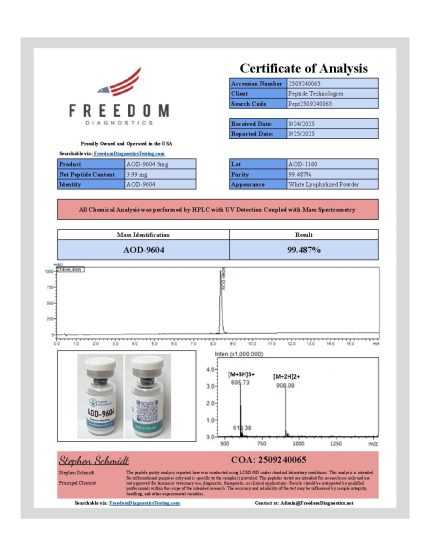
Analytical transparency is the one criterion a buyer can verify before committing, which makes it the highest-signal screen in the framework. A batch certificate of analysis is not proof on its own. What matters is whether it carries the fields a filing needs: an HPLC chromatogram with the method and column conditions, an MS spectrum confirming the expected mass, a purity figure tied to a defined method, and a stated endotoxin result.
Endotoxin thresholds tighten with the assay, and the default specification rarely matches the application. One testing-vendor resource reports that levels below 1.0 EU/mg are generally acceptable for immortalized cell lines, onderstaand 0.05 EU/mg for primary immune cells, En 0.1 naar 0.5 EU/mg for in vivo rodent studies, with USP 〈85〉 injectable limits set at 5 EU/kg/hr on a different unit basis (Creative Proteomics endotoxin and sterility testing resource, ongedateerd). That is a single vendor source, and the USP 〈85〉 figure should be re-verified against the chapter itself before it anchors a specification.
De eerlijke beperking: USP’s 〈1503〉 chapter on synthetic peptide quality attributes and the ICH Q6B framework for justified specifications could not be read in full text in this pass, so the documentation argument here rests on supplier-side and secondary material rather than the standards themselves.
Criterium 4: Technische samenwerking en de overdracht van opschaling
Technical collaboration is what decides whether responsiveness, modifications and analytical transparency survive the jump from pilot to commercial batch. A supplier can look strong at milligram scale and still fail the handoff: purity drifts, batch-to-batch comparability weakens, and the receiving team inherits a method it cannot reproduce. Peptide CDMO technical collaboration is therefore a selection criterion, not a courtesy.
MOL-wijzigingen, as one example inside this framework, describes the two sourcing extremes it positions against: “choosing either a single tier-1 contract development and manufacturing organization (CDMO) of uitsluitend vertrouwen op lage kosten, niet-geverifieerde catalogusleverancier. Both extremes introduce systemic risk.” The same page states Peptide-chemie that a warm second source, kept alive through minor annual order allocations, cuts emergency supplier transition timelines from 12 months to under 3 weken. Treat that as the brand’s stated service model, not an independent benchmark; the operational case for a warm second source rests on the buyer’s own continuity planning.
The cheap alternative fails in a predictable place. Suppliers promising rapid turnaround often lack cleanroom sterility controls, robuuste analytische instrumentatie, of batch-tot-lot-vergelijkbaarheid, which is exactly the documentation a commercial batch needs. Bedrijven voor peptidesynthese
Hoe het raamwerk toe te passen
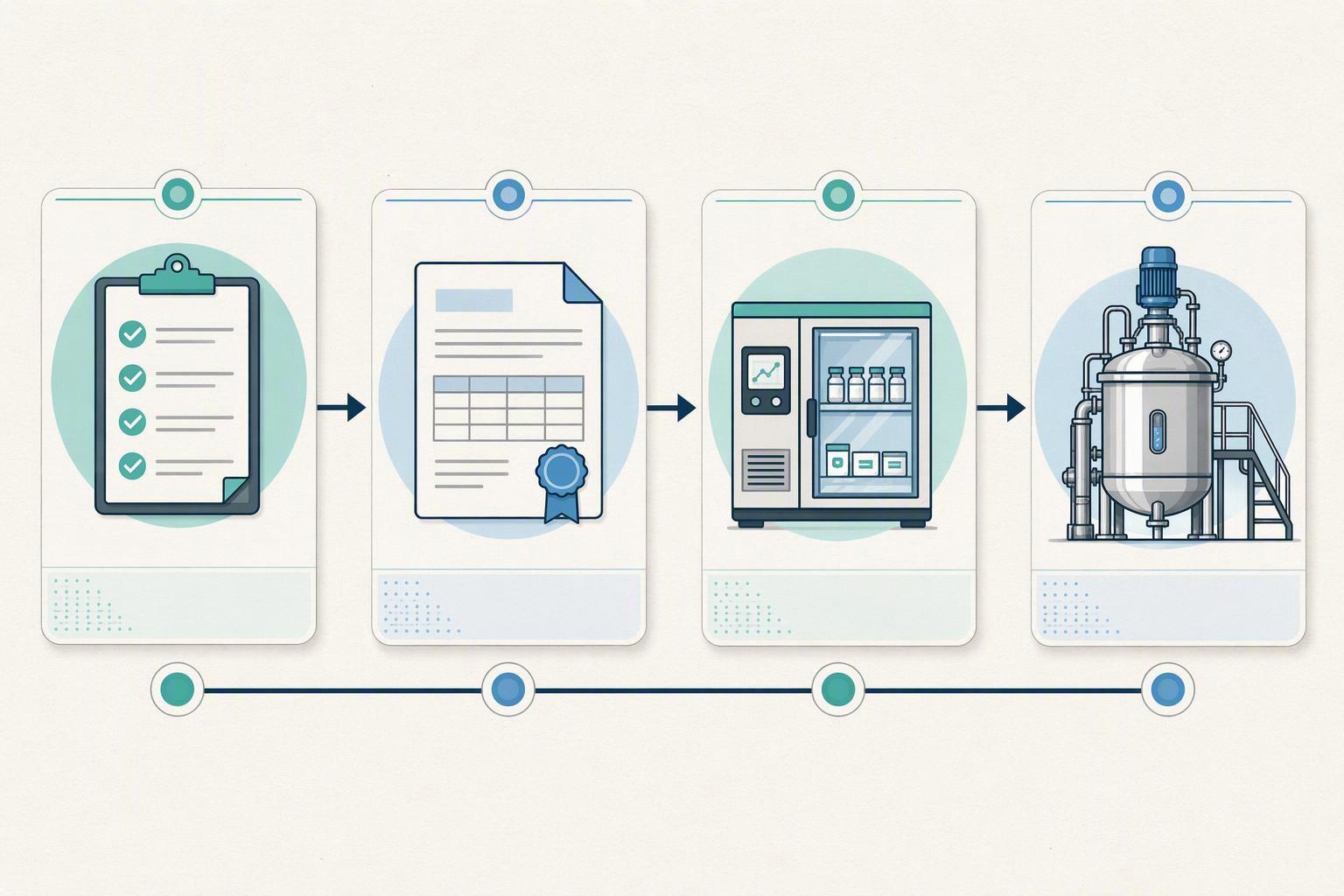
Start by sending a supplier the sequence that actually gives you trouble, not a catalog peptide. A trial synthesis on your real difficult sequence is the fastest way to see whether the responsiveness claim holds, and it takes days rather than a full evaluation cycle. Met isotoop gelabelde peptiden
-
Send the difficult sequence for a trial synthesis. Dagen. This is the quickest filter you have.
-
Request the modification list with named chemistries. Ask which of them survive scale-up, not just which appear in a brochure. Snelle overwinning.
-
Request a real batch CoA and read the method fields, not only the purity number. Snelle overwinning.
-
Open a tech-transfer conversation covering the mg to kg path and the documentation handoff. Langere termijn.
-
Qualify a warm second source with a minor annual allocation. Langere termijn, and the step most buyers skip until an emergency forces it.
Scoring sheet: carry the four criteria (reactievermogen, gespecialiseerde aanpassingen, analytische transparantie, technical collaboration) into the supplier call as a one-page grid, and score each answer against the artifact you were shown.
Measure the framework by method-transfer elapsed time, batch-to-batch comparability, and whether the analytical package clears your filing review without follow-up queries. Those three signals are the operational lever behind Bachem’s H1 2025 resultaten, where utilization, not catalog breadth, moved the margin line. Expect the first three steps to change your shortlist within one evaluation cycle.
Waarschuwingen: Waar de conventionele visie nog steeds geldt
For a late-stage commercial program with fixed, multi-year demand, tier-1 scale and a regulatory track record genuinely reduce risk, and the four criteria above do not replace that. Slot scheduling and minimum order quantities bite hardest at development and early-clinical scale, which is where this framework applies most strongly.
Two limits are worth naming. The GenScript side of this comparison rests on thinner public disclosure than the Bachem side, so part of the asymmetry may reflect disclosure practice rather than capability. And Bachem’s margin compression is self-declared as planned and transitory, a fairer framing than margin pressure alone; the company’s stated 2026 ambition of more than CHF 1 billion in sales and over 30% EBITDA-marge, as of the H1 2025 uitgave, is not the profile of a supplier losing ground.
The claim is not that scale is worthless. It is that scale has stopped being sufficient on its own.
Veelgestelde vragen
But doesn’t a tier-1 CDMO’s scale protect us if demand spikes?
Scale protects the supplier’s throughput, not your queue position. The company’s stated 2026 ambition at large CDMOs is to fill capacity with programs already holding reserved slots, so a spike is exactly when an unreserved buyer waits longest. The protection you want is a warm second source with a reserved slot, not a bigger primary.
Wat als we al een grote leverancier hebben gekwalificeerd en overstappen duur is??
You do not have to switch. Qualify a second source alongside the incumbent, which is what the operational case for a warm second source describes: minor annual allocations keep the relationship and the documentation current, so an emergency transition is a phone call rather than a fresh qualification. The incumbent keeps the volume; the second source keeps you covered.
Hoe reageer je op het argument dat boetiekleveranciers geen commerciële volumes kunnen ondersteunen??
That argument conflates a boutique’s catalog business with its custom peptide synthesis capabilities. GenScript’s FY2025 results show how license-driven growth qualification works at scale, and the same qualification logic applies downward: what matters is whether the supplier can document method transfer, lot comparability and scale-up continuity, not whether its name is large. Ask for the transfer record, not the headcount.
Isn’t analytical transparency just a matter of asking for the CoA?
Nee. A CoA is a summary; peptide analytical data transparency is whether the underlying method, the lot it was run on and the specification it was judged against travel with the number. Endotoxin thresholds tighten with the assay, so a certificate that reports a value without the method and limit tells you little. Ask which assay, which lot, which specification, and whether peptide CDMO technical collaboration extends to reviewing the data with you.
Conclusie: Waar kopers om moeten vragen 2026
Scale is now table stakes in peptide supplier selection criteria, and the four criteria that actually separate suppliers are responsiveness, gespecialiseerde aanpassingen, analytical transparency and technical collaboration. Bachems H1 2026 results make the point: net sales rose 4.3% naar CHF 326.4 million while the EBITDA margin fell 3.7 percentage points to 25.4% (Bachems H1 2026 resultaten, juli 2026). Capacity growth no longer guarantees pricing power or service quality.
So ask for artifacts, geen garanties. Request a representative CoA with the analytical method behind each specification, a written list of modifications the supplier has actually delivered, and a named technical contact who owns the scale-up handoff. Where suppliers publish nothing comparable, treat the gap as a finding: GenScript’s FY2025 results show how little peptide-specific disclosure reaches buyers who need to compare (GenScript’s FY2025-resultaten). The market improves when the CoA, the modification list and the transfer path become the comparison surface.
If you are evaluating suppliers now, request a representative CoA package and a technical consultation before you commit to a slot.
Dit artikel is gepubliceerd door MOL Changes, which offers custom peptide synthesis and analytical documentation services. Consider that interest when weighing the framework above.