Vereisten: Wat u gereed moet hebben voordat u een leverancier evalueert
Een documentatierondleiding duurt ongeveer een halve dag per leverancier. U hoeft geen volledige audit uit te voeren om er waarde uit te halen, maar je hebt wel vijf dingen nodig voordat je voor het eerst belt.
Wat je klaar moet hebben:

-
Het huidige certificaat van de leverancier, met de vervaldatum ervan
-
De scopeverklaring die bij dat certificaat is gevoegd
-
Uw kwaliteitsovereenkomst, ondertekend of in concept
-
Het meest recente auditrapport, als er een bestaat
-
Het analytische pakket voor één livekavel
Ga ervan uit dat u vertrouwd bent met de woordenschat op het gebied van kwaliteitsmanagement: non-conformiteit, corrigerende actie, gedocumenteerde informatie. Als die termen nog geen tweede natuur zijn, de ISO 9000:2015 vocabulaire is de gedeelde referentie, en het is de moeite waard om er vóór het gesprek overeenstemming over te bereiken. ISO 9000:2015 definieert non-conformiteit als “het niet voldoen aan een vereiste” en corrigerende actie als “actie om de oorzaak van een non-conformiteit weg te nemen en herhaling te voorkomen.” De meeste vastgelopen gesprekken met leveranciers komen erop neer dat twee partijen verschillende woorden gebruiken voor dezelfde gebeurtenis.
Voor Tip: Vraag naar de scopeverklaring van het certificaat, niet alleen het certificaat. Een certificaat zonder scope geeft aan dat een systeem gecertificeerd is, niet wat dat systeem omvat.
Hoe de ISO 9001:2026 De transitietijdlijn bepaalt uw kwalificatiedeadlines
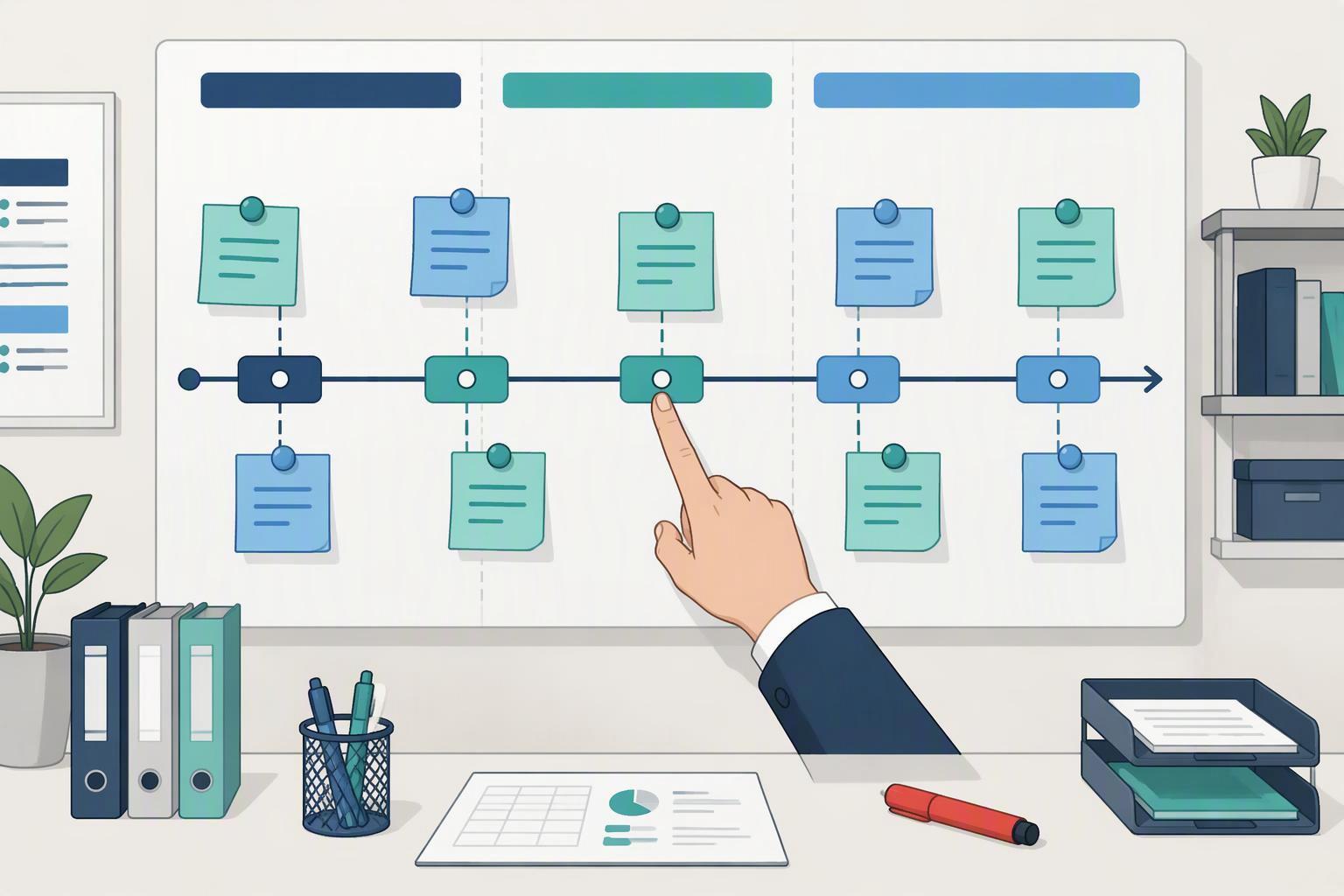
Met die vijf items in de hand, de volgende vraag is timing: de ISO 9001:2026 De transitietijdlijn geeft u vier aanbestedingsdeadlines vóór de standaard 30 september 2029 vervaldatum, en de eerste valt op 31 Maart 2027, wanneer accreditatie-instanties klaar moeten zijn om organisaties te beoordelen op basis van de 2026 editie (ISO/TC 176 SC2-overgangskennisgeving, opgehaald 2026-09-28). Certificatie-instellingen dienen vervolgens hun transitieverklaringen in per 30 juni 2027, waarna de overgangsbesluiten van de accreditatie-instantie volgen 30 september 2027 (ISO/TC 176 SC2-overgangskennisgeving, opgehaald 2026-09-28).
De datum waarop uw shortlist van leveranciers verandert, is 31 Maart 2028: vanaf dat punt, nieuwe of initiële geaccrediteerde certificering wordt alleen afgegeven tegen de 2026 editie (ISO/TC 176 SC2-overgangskennisgeving, opgehaald 2026-09-28). Een ISO-gecertificeerde leverancier 9001:2015 na die datum kan niet bestaan. Het venster zelf loopt drie jaar na publicatie, sluiten 30 september 2029 voor organisaties die vasthouden 2015 certificaten, een duur die de briefing over de releasedag van LRQA bevestigt.
Sleutel afhaalmaaltijd: Als het certificaat van uw leverancier verloopt in 2028 of 2029, hun transitieverplichting moet al in uw kwaliteitsovereenkomst zijn opgenomen, en elke nieuwe leverancier waarvoor u zich daarna kwalificeert 31 Maart 2028 zal gecertificeerd aankomen bij de 2026 editie.
ISO beschouwt de revisie als een gerichte update in plaats van als een herschrijving, leiderschap benadrukken, kwaliteitscultuur en ethisch gedrag, een duidelijkere afweging van risico’s en kansen, een nieuwe sectie waarin de bedoeling van de vereisten wordt uitgelegd, en goedkeuring van de nieuwste geharmoniseerde structuur (ISO's release-opmerking, 16 september 2026). Verwacht een herziene nadruk, geen vervangen kwaliteitsmanagementsysteem.
Oefening 1: Wijzigingsbeheer dat communicatie en effectiviteit omvat, Niet alleen goedkeuring
Oplossingsfase Peptidesynthese Wijzigingscontrole van peptideleveranciers onder de 2026 editie vraagt om meer dan een ondertekende goedkeuring. Een walkthrough op clausuleniveau van de herziene tekst luidt clausule 6.3, plannen van veranderingen, zoals het verwachten van beschikbaarheid van informatie, hoe de verandering wordt gecommuniceerd, hoe de effectiviteit wordt gemonitord en geëvalueerd, en hoe de resultaten worden beoordeeld (MOL-wijzigingen, 2026-09-29). Op goedkeuring alleen is de clausule niet langer van toepassing.
Peptide Cro Dat is van belang vanwege een harsvervanging, een tegenionenuitwisseling of een verandering van methodeversie kan de identiteit veranderen, zuiverheid, onzuiverheidsprofiel of stabiliteit terwijl het analysecertificaat er onveranderd uitziet. Clausule 8.5.6, controle over veranderingen, heeft sinds de 2015 uitgangspunt dat productiewijzigingen moeten worden beoordeeld en gecontroleerd om onbedoelde gevolgen te voorkomen; de verwachte artefacten zijn wijzigingsaanvraagformulieren, risicobeoordelingen, goedkeuringsregistraties en bijgewerkte procedures (QA, Februari 2026).
Vraag dus naar het wijzigingsrecord achter één specifieke wijziging ten opzichte van de laatste 24 maanden en loop het van begin tot eind: verzoek, risicobeoordeling, goedkeuring, communicatie met getroffen klanten, effectiviteitscontrole, sluiting. Een logboek met goedkeuringsdata en geen effectiviteitsbeoordeling, of een klantmelding die na verzending binnenkomt, is de faalmodus. Eén voorbeeld: een HPLC-zuiverheidstest verplaatst naar een nieuwe methodeversie, de wijziging werd goedgekeurd, en niemand vergeleek de twee versies op hetzelfde perceel.
Oefening 2: Batchtraceerbaarheid die u voorwaarts en achterwaarts kunt reconstrueren
Traceerbaarheid van peptidebatches is geen archiveringsoefening, en de audittest bewijst het: Kies één lotnummer uit een recente levering en vraag de leverancier om dit te reconstrueren, uit archieven, zonder voorbereidingstijd. Achteruit, de genealogie zou moeten lopen naar de partijen grondstoffen en hun leveranciers. Vooruit, het moet naar elke zending lopen Peptide testen die op het perceel trok. De clausule 8 operationele vereisten bepalen de basislijn: clausule 8.5.2 vereist dat organisaties waar nodig outputs identificeren, hun status identificeren (goedgekeurd, in behandeling, afgewezen, uitstel), En, waar traceerbaarheid vereist is, controle over unieke identificatie en bewaar de gedocumenteerde informatie erachter.
Daarom bewijst een analysecertificaat alleen minder dan kopers veronderstellen. Een CoA rapporteert de resultaten van een monster; er wordt niet weergegeven welke partijen grondstoffen in de partij zijn binnengekomen, welke methodeversie is uitgevoerd, of waar de rest van de boel naartoe ging. Traceerbaarheid is het artefact dat u vertelt of het certificaat iets betekent.
Voor Tip: Kies het lotnummer vóór het gesprek, niet tijdens. Een leverancier die het monster vooraf kent, kan een overzichtelijk verhaal in elkaar zetten; een leverancier met live records antwoordt binnen enkele minuten. Winkel
Wat de 2026 editie verwacht
Artefact op aanvraag
Clausule Semaglutide-synthese anker
Uitgangen geïdentificeerd, status zichtbaar, unieke identificatie gecontroleerd waar traceerbaarheid vereist is, gedocumenteerde informatie bewaard
Een reconstructie van achterwaarts naar materiaal en vooruit naar verzending van één bemonsterde partij, geproduceerd uit archiefstukken Vloeibare fasepeptidesynthese
Clausule 8.5.2, identificatie en traceerbaarheid
Falen lijkt een van twee dingen. Ofwel stopt de genealogie bij het bulktussenproduct, waardoor de grondstoffenloten naamloos blijven, of de reconstructie duurt dagen en komt aan als een geschreven verslag in plaats van als een document. Beide vertellen je hetzelfde: het systeem beschikt over een certificaat, geen traceerbaar lot.
Oefening 3: Afwijkingsbeheer met een hoofdoorzaak en een CAPA-link

Deviation management in peptide manufacturing is where a supplier’s quality system either works or performs. The test is not whether deviations are closed, but whether each one closes with a determined cause and a corrective action whose effectiveness was reviewed.
De clausule 10.2 requirements in full set the sequence to check each entry against: react to the nonconformity by controlling and correcting it and dealing with its consequences; evaluate whether action is needed to eliminate the cause so it does not recur or occur elsewhere; determine the causes; determine whether similar nonconformities exist; implement the action; review its effectiveness; update risks and opportunities; and change the quality management system if necessary. The retained record must show the nature of the nonconformity and the actions taken, including results.
Request the last 12 months of the deviation log and read it for three things. Are causes determined, or merely described? Was the rest of the operation checked for the same nonconformity? Was effectiveness reviewed after implementation?
A log where every entry reads “operator error, retrained” fails all three. An isolated deviation is a data point; the same one recurring across products, instruments or operators is a systemic signal, and only the CAPA record separates them.
Oefening 4: Documentatie en analytische gegevens die inspectie overleven
The documentation question is not whether records exist. It is whether they are controlled, attributable and retained in a form an inspector can follow. A supplier can hand you a certificate of analysis and a tidy summary table and still fail this test, because a summary table is a transcription of a result, not the record that produced it.
Start with the controlled document set index: the procedures, the method versions and the specifications, each with a version number and an effective date. A method referenced by name with no version is a gap, geen detail. Then ask for the raw data behind one reported purity or identity result: the chromatogram and the mass spectrum, with the acquisition method version, the analyst and the instrument identified.
That request maps to the data-integrity principles set out in MHRA’s data-integrity guidance: toerekenbaar, leesbaar, gelijktijdig, origineel, nauwkeurig. The documented-information requirement in clause 8 of ISO 9001:2026 wijst dezelfde kant op, toward records that are created and controlled as the work happens rather than reconstructed afterward.
⚠️Waarschuwing: A summary table is not raw data. If the package contains a CoA and a table but no chromatogram, you cannot verify the result, only accept it.
When a supplier calls the raw data proprietary, that is a commercial position, not a quality one. Ask instead for a redacted chromatogram with the method version and instrument intact. The result and its provenance are what you are evaluating; the formula behind a proprietary gradient is not.
Oefening 5: Quality by Design en het vergelijkbaarheidsgesprek

Quality by design for a peptide supplier means one practical thing at the buyer’s end: a comparability protocol agreed before a change, not a discussion after it. At peptide scale, purity and yield move together, so a change that looks operationally minor can shift the impurity profile.
That trade-off is why scale-up changes carry risk. CDMO guidance on milligram-to-kilogram scale-up notes that above 95% purity at kilogram scale the route often necessitates multi-step preparative HPLC and carefully controlled lyophilization, and that aggregation, degradatie, or prolonged hold times can cause notable yield loss. The same source puts the practical solid-phase limit near 30 naar 40 residuen. It is a CDMO’s own explainer, so read it for direction rather than as an independent benchmark.
Synthesis economics reinforce the point. The widely cited synthesis-economics analysis puts a 50-plus-step process at an average 99% yield per step, and reports that improving crude purity by 10% can save more than 50% post-purification. The figures come from named industry experts quoted in that piece, not from a controlled study.
Put the protocol in the quality agreement: which change types trigger a comparability study, what it measures (identiteit, zuiverheid, onzuiverheidsprofiel, and where relevant potency and stability), and what acceptance criteria apply before changed material ships. A supplier that reports a change after the fact and offers a CoA as the comparability evidence has not met that bar.
A documentation package that includes full analytical verification, such as the one MOL Changes can be used to provide, supports this review.
Veel voorkomende fouten die kopers maken bij het toepassen van de 2026 Verwachtingen
The most common buyer-side failure is treating the certificate as the evidence rather than the records behind it. A certificate says an audit happened; it does not show that the supplier can reconstruct a batch, explain a deviation, or control a change. These five mistakes show up repeatedly in supplier evaluations, and each has a straightforward fix.
Accepting a CoA as proof of traceability. A certificate of analysis confirms what was tested on one sample, not where the material came from or where it went. Buyers accept it because it arrives first and looks authoritative. Ask instead for the batch genealogy that links incoming lots to the finished peptide.
Reading a change log for approvals only. A log showing sign-offs tells you a change was authorized, not that anyone checked whether it worked. The fix is to request the effectiveness check that follows the approval.
Accepting a deviation log with dispositions and no causes. A disposition closes a batch; a root cause and a linked CAPA close the problem. If the log has no cause column, the supplier is tracking outcomes rather than preventing recurrence.
Requesting a documentation package without naming the artifacts. Vague requests get vague packages. Name what you want: the change record, the deviation log with CAPA references, the controlled document set.
Leaving the transition obligation out of the quality agreement. If the agreement is silent on who owns the 2026 overgang, the obligation defaults to nobody. Put the deadline and the responsible party in writing.
Veelgestelde vragen
What happens to a supplier’s 2015 certificaat na 30 september 2029?
It stops being a valid basis for your qualification file. Under the ISO 9001:2026 transition timeline, certificates issued against the 2015 edition are withdrawn on 30 september 2029 (the ISO/TC 176 transition notice). If a supplier has not transitioned by then, treat their certificate as expired and re-open the qualification rather than letting it lapse quietly in your approved-supplier list.
Moet een leverancier direct na publicatie opnieuw gecertificeerd worden??
Nee. ISO 9001:2026 werd gepubliceerd op 16 september 2026 (ISO’s launch announcement), and the transition window runs to 30 september 2029. A supplier holding a current 2015 certificate stays certified during that period. What changes for you is the deadline, not the certificate: ask for their transition plan and a target audit date, then track it as a qualification milestone.
Heeft de 2026 editie zelf de kwalificatie-eisen van leveranciers wijzigen?
Not the requirement to evaluate and control externally provided processes, products and services, which remains part of the standard’s purchasing and supplier control expectations. Wat de 2026 edition shifts is how you evidence that evaluation: controle wijzigen, traceerbaarheid, deviation handling and documented records are assessed against the practices above. Your qualification criteria stay yours; the audit trail behind them gets stricter.
Wat moet ik doen als een leverancier een audit ter plaatse afwijst??
Accept it as a data point and adjust the evidence you require. Ask instead for a remote documentation review, a completed self-assessment against the five practices, batch records for a named lot, and a deviation log with CAPA linkage. If they decline all of these, you have no verifiable basis for approval, and the practical answer is to keep them unapproved or qualify an alternative source.
Conclusie
You now have five artifacts to request from any peptide supplier you are qualifying: a change-control record that shows communication and effectiveness, a batch genealogy you can walk backward and forward, a deviation log linked to a root cause and a CAPA, a controlled documentation and analytical record set, and a comparability protocol for process changes. Each one is a document a supplier either has or does not, which makes the request itself a fast filter. The dates make it timely rather than theoretical: the ISO/TC 176 transition notice sets 30 september 2029 as the end of the transition, so a supplier who cannot produce these records now has roughly three years to build them, and you carry the audit risk in the meantime.
If you would rather not run that review alone, talk to a technical expert about your documentation package, or request a walk-through of the change-control and traceability records.
Openbaring: dit artikel is gepubliceerd door MOL Changes, a peptide manufacturer, so the supplier practices described here reflect the standards we are held to as well as the ones we apply.