The conversion is a redesign, eseng tlatsetso
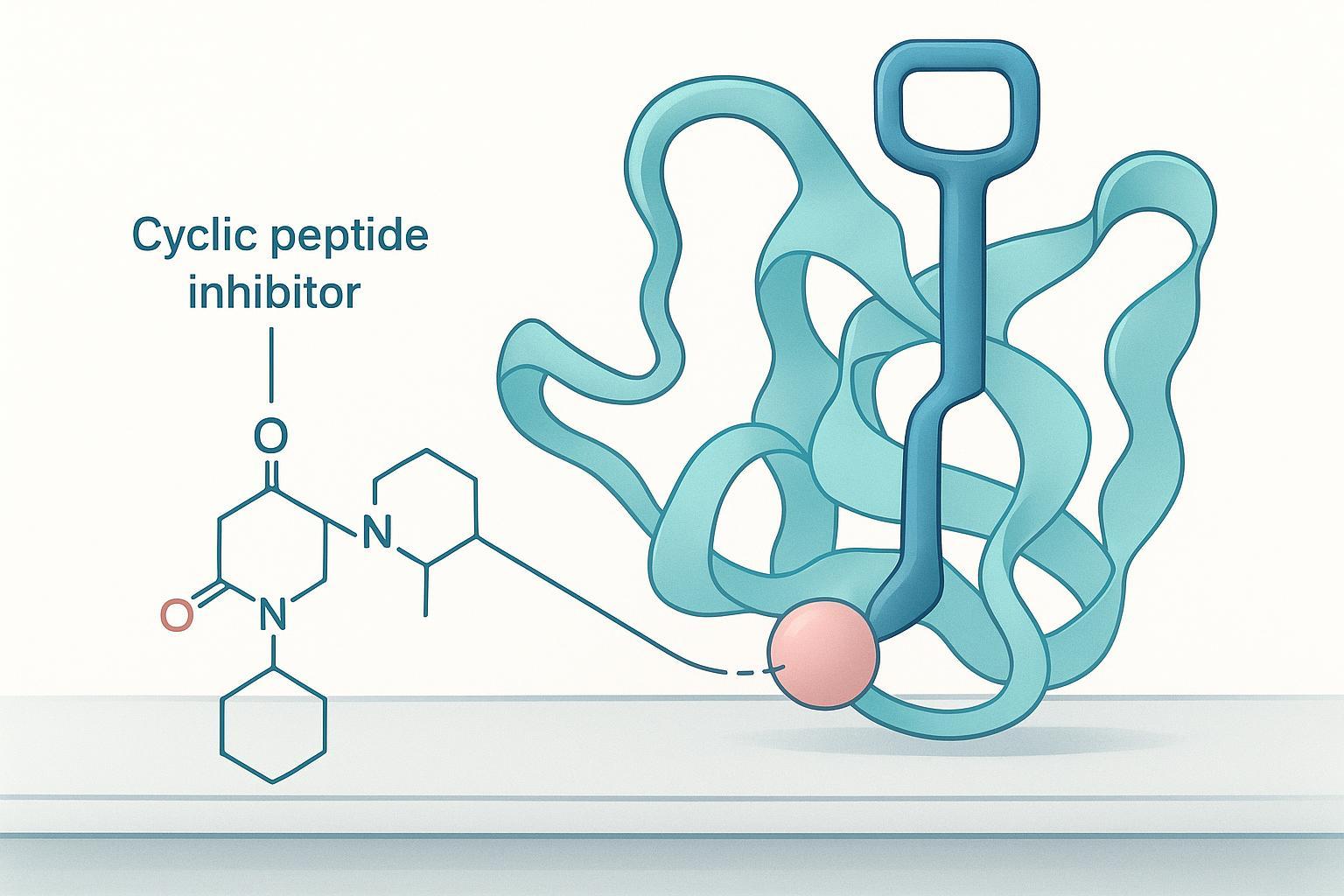
Peptide ea cyclic e thibelang HIF-1α ka ho lula ka pokothong ea PAS-B ke senotlolo se sehiloeng ho lekana senotlolo se le seng.. Ho e fetola ho senya ho bolela ho cheselletsa molamu holim'a senotlolo seo: sehokelo hammoho le ntho ea ho thaotha ea VHL, e behiloe hoo reng e ntse e lutse ka pokothong ha letsoho le lecha le otlolla letsoho ho hira ligase.. Meno a ke ke a fetoha. Tse ding tsohle di ka kgona.
Phapang eo e tsamaisa morero oohle. Tabeng ea ankora, linker le VHL ligand li hahiloe joalo ka tloaelo ea amino acid mme li kenyellelitsoe ka kotloloho nakong ea synthesis ea peptide e tiileng., ho ena le ho hokelloa ka mora ho palama baesekele (JAKAKA, Cyclic Peptide PROTACs Khutlisa ho senyeha ha VHL-Mediated HIF-1α ho Hypoxia, 2026). Liphello tse sebetsang ke hore ntlha ea ho khomarela e fetoha khetho ea moralo e tsitsitseng ka nako ea ketane ea kopano, ha se phetoho eo o e mamelang hamorao bencheng.
Qeto e 'ngoe le e 'ngoe e theohelang tlaase e latela boitlamo boo: e leng sethatho se rarollang lekopanyi, e leng conformational cheke e tiisang hore reng e ile ea pholoha, le hore na ke teko efe e ka khethollang ho theola seriti le ho lula feela.

Which exit vector should carry the linker?
Khetho ea sebaka sa conjugation ke qeto ea pele e qobellang e 'ngoe le e' ngoe hamorao, 'me molao o bonolo ho o hlalosa: khetha boemo boo mohlomong bo ka bakang pherekano e tlamang 'me ho na le monyetla o moholo oa hore bo be le solvent (Mekhoa ea hajoale ea moralo oa lihokelo tsa PROTAC, 2020). Ha sebopeho sa kristale se kopaneng sa peptide ea cyclic e hokahaneng le sepheo se fumaneha, molao oo o arajoa ka tlhahlobo. Ha ho se joalo, tlhahlobo e ke ke ea etsa qeto ea potso, le ho etsa eka ho seng joalo ke kamoo mananeo a lahleheloang ke likhoeli.
Litšebeletso Sebaka sa sehokelo le sona ha se mohato oa ho tsoa ho seo u se ts'oereng ka mor'a hore peptide e ntlafatsoe. Ke khetho ea moralo oa ketane-kopano, e tsitsitseng pele synthesis e qala, joalo ka ha ho ne ho le joalo ka sekoting sa ankora. Ho fetola kelello ea hau hamorao ho bolela ho kopanya peptide hape, ho se hlophise ketane e ka thoko.
Molao oa maemo a matla: beha boemo ba li-vector ho latela seo e mong le e mong a se bolokang, ka tatellano ena: kamano ea sepheo, joale boitšoaro bo rarahaneng, ebe ho theoloa. SAR e moqotetsane sebakeng se neng se shebahala se le mokelikeli-ho pepesitsoe ke temoso, eseng lerata. Boemo boo bo tsamaisana le meroalo, 'me boemo bo tlameha ho etsoa bocha.
Installing the linker and the E3 element
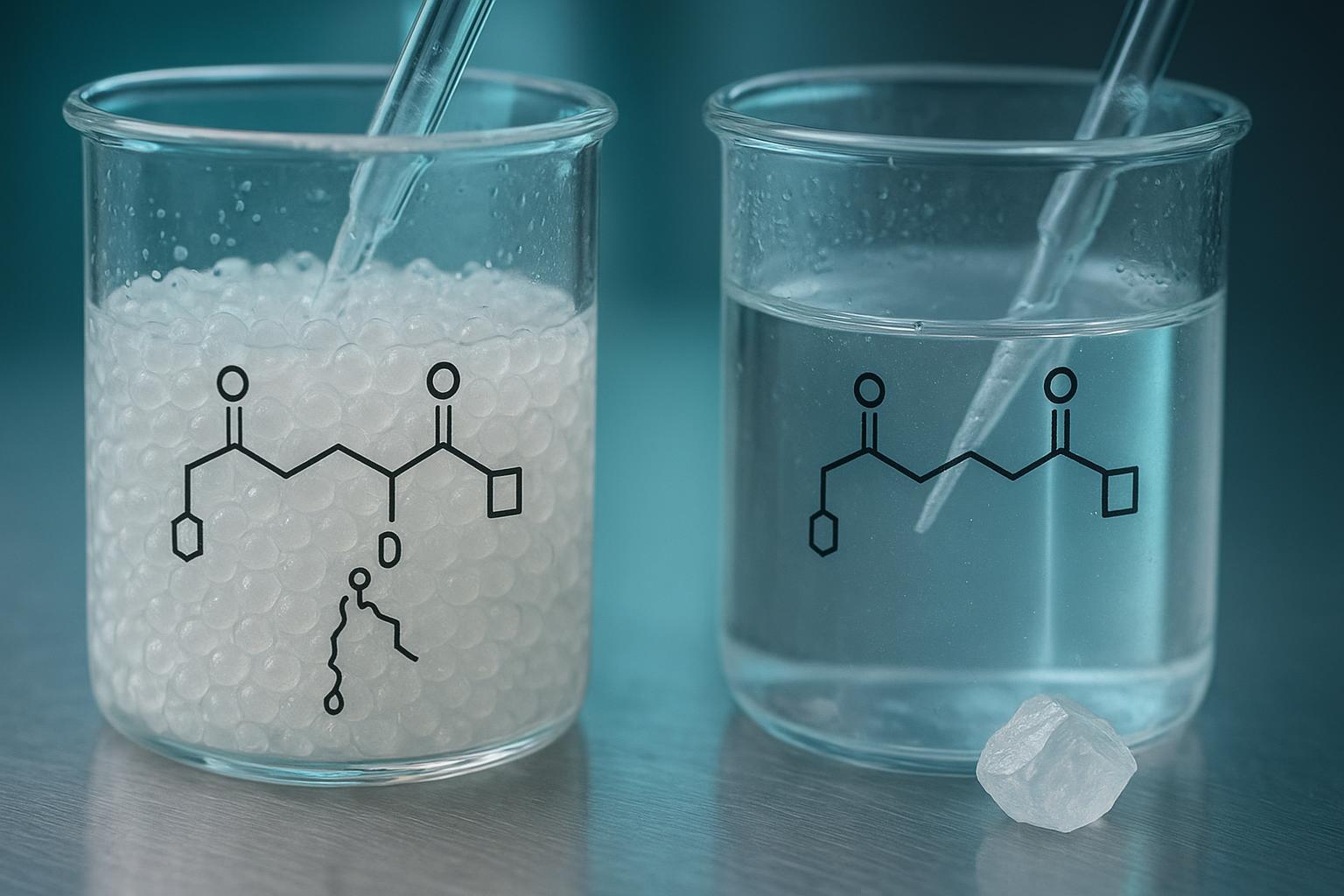
Qeto ea tsela e tla pele, hobane on-resin le tharollo conjugation hloleha libakeng tse fapaneng. Ho kengoa holim'a resin ea amino acid e sa sebetseng habeli ho theha sehokelo ketane ka boeona, kahoo leano la sehlopha se sireletsang le tlameha ho boloka sehokelo sa orthogonal sa linker se ntse se le teng Reka khokahanyo e 'ngoe le e' ngoe e latelang le mohato oa cyclization. Tharollo conjugation kamora cyclization e potlakile ho pheta-pheta, empa e pepesa peptide ea mahala ho k'hemistri ea ts'ebetso habeli mme e u siea u hloekisa motsoako oa li-isomer tsa boemo haeba masala a sebetsang a sa ikhetha..
Mosebetsi oa Southampton o bonts'a seo iteration eo e se rekang. Letoto le qalileng ka cyclo-CLLFVY le ile la fallela sehloohong sa ntoa sa moloko oa bobeli, cyclo-CLLF(CF3)HAEBA(Br), e jereng lihokelo tse telele tsa amino acid tseo e seng tsa tlhaho tse hahelletsoeng ka tatellano ho fapana le ho hlongoa kamora moo (McDermott et al., 2025). Ho aha sehokelo ka ketane ke sona se etsang hore bolelele ba linker e be bo fapaneng ba moralo ho fapana le bothata ba tlhoekiso.
Seo se bohlokoa hobane tšokelo e kholo ea bohloeki ba peptide le ho menahana ha tsela ena ke epimerization, 'me e ka qojoa ka mokhoa oa mochine. Ho kenya tšebetsong amino acid ho etsa planar oxazolone eo e leng ea nakoana ho α-carbon., kahoo reprotonation e ka khutlisa L- kapa tlhophiso ea D. Kotsi e nyoloha ka ts'ebetso e atolositsoeng, haholo reactive coupling reagents, le bokeletseng ba mahareng, le masalla a kang phenylglycine, cysteine le histidine ke tsona tse tloaelehileng haholo (Bachem; Epimerization ho Peptide Synthesis, 2023).
Boholo bo itšetlehile ka tsela, 'me mosebetsi oa ho khoneha oa morekisi a le mong o bontša ho ata ho e-na le ho beha tekanyo: fragment-route conjugation e hlahisoang ka bongata 13% sebopeho sa epimer mme sa emisoa, ha tsela e 'ngoe e bonts'itse 2–3% epimerization e nyolohela ho hoo e ka bang 5% ka mora tlhoekiso, mme SPPS ea mela e fane ka chai e phahameng ka ho fetesisa ntle le epimerization e fumanoeng (Bachem). Bala seo e le sesupo sa hore na ke lihlopha life tsa litsela tse nang le kotsi, eseng joalo ka sekhahla seo u ka se lebellang ka tatellano ea hau. About
What RP-HPLC purity data can and cannot tell you
Peresente e le 'ngoe ea tlhoro e kholo ho 214 nm ha e netefatse khokahano e nepahetseng kapa ho mena ka nepo. E u joetsa hore mefuta e monyang UV ka har'a sampole ea hau e le sehlopha se le seng ho gradient e le 'ngoe.. Eo ke ’nete e molemo, mme ke nnete e nyane ho feta mananeo a mangata a e nkang e le.
Bakeng sa e kholoanyane, conjugate e eketsehileng ea hydrophobic, the method resolves less than it did for the parent cyclic peptide. The linker and E3 element add hydrophobic surface area, the retention time shifts, and species that were baseline-separated on the parent gradient start to co-elute. A published disulfide-cyclized peptide degrader program reports its preparative practice plainly: one RP-HPLC step on a 0.1% TFA water/acetonitrile gradient running 26–43% over 40 metsotso ka 10 mL/mets, detection at 220 nm, oxidation monitored by mass spectrometry alongside HPLC, and a final HPLC quality check before lyophilization (Frontiers ho Immunology, 2023). Note what that paper does not state: any purity threshold. The number is a process output, eseng tlhaloso.
Suppliers commonly specify ≥95% RP-HPLC purity as the floor for biological evaluation, ≥98% for quantitative binding and dose-response work, le ≥99% bakeng sa mosebetsi o tloaelehileng, ka bohloeki bo hlalosoang e le sebaka sa tlhoro e kholo holim'a sebaka se phahameng ka ho fetesisa ka ho bonoa ha UV ho 214-220 nm. (GenScript; Pōpo ea Proteomics, 2025). Tšoara lihlopha tseo e le kopano ea ho reka ho e-na le ho fumana tekanyo ea molek'hule ea hau. Ba hlalosa seo morekisi a tla se tiisa, eseng seo conjugate ea hau e se hlokang.
Lekhalo le bohlokoa hobane bohloeki ba peptide le ho mena ke lipotso tse fapaneng, mme RP-HPLC e araba feela ea pele. Epimer e kopanyang, sesomo sa disulfide se sa phutholohang, kapa motsoali ea sa arabeleng ea mathang ka nako e tšoanang kaofela a le teng e le tlhoro e hloekileng ea lesoha. Boitsebiso ka bongata, stereochemistry, le tharollo conformation mong le e mong hloka mokhoa oa orthogonal.
Bala matrix joalo ka tlhahlobo ea khaso, eseng boemo. RP-HPLC e akaretsa hydrophobicity le bohloeki. LC-MS le HRMS li koahela boitsebiso bo bongata, e leng tsela eo u netefatsang hore sehokelo se kentsoe. Chiral LC e akaretsa stereochemistry, e leng tsela eo u tšoarang epimerization sebakeng sa conjugation. NMR le CD sekoaelo tharollo conformation, e leng kamoo u khethollang conjugate e phuthetsoeng ho e sa phutholohang. Ha ho mola o le mong o nkang kholomo e fetang e le 'ngoe, le lenaneo le tlalehang mola oa pele feela le na le bopaki ba potso e le 'ngoe ho tse' nè.
Liphello tse sebetsang bakeng sa khetho ea sebaka sa conjugation: haeba sephutheloana sa hau sa tlhahlobo ke mohlala o le mong oa RP-HPLC, ha o tsebe ho tseba hore na vector ea ho tsoa eo u e khethileng e hlahisitse conjugate eo u e entseng. Kenya mekhoa ea orthogonal pele u tsamaisa tsela, eseng kamora tlhahlobo e tlamang e khutla e bataletse.
Folding and conformational verification
Peptide Synthesis Cyclization e thibela mokokotlo, empa ha e fane ka tiisetso ea hore bioactive conformation e pholoha tlatsetso ea linker. That distinction is why conformational evidence has to be orthogonal to purity evidence: each method class answers a question the others cannot.
Chiral LC resolves stereochemistry, so it tells you whether the conjugate racemized at the residues you care about. CD reports on solution secondary structure, and NMR reports on the specific contacts that define the bound fold. None of these substitutes for another, and none of them substitutes for a functional readout. The same principle governs the assay stage: a ternary-complex signal alone is insufficient, and cellular DC50/Dmax values alone are phenotypic rather than mechanistic (Methods to Study the Molecular Mechanism and Drive the Design of Degraders, kgutlisitsoe 2026-05-14).
Key Takeaway: High HPLC purity is not correct conjugate. Tlhōrō e hloekileng le e tiisitsoeng ka bongata e ntse e ka kenya menahano e fosahetseng mohatong oa tlhahlobo.
Bakeng sa sephutheloana sa hau sa data, sekheo seo ke kotsi ea ho koala. Conjugate e fetisang bohloeki le boitsebiso ba bongata empa e sa ka ea hlahlojoa ka mokhoa o lumellanang e na le kotsi e sa lekanyetsoang pele., 'me sehlopha sa liteko se e rua. Tšoara bohloeki ba peptide le ho mena joalo ka mela e 'meli e fapaneng ea bopaki, se seng le se seng se na le mokgwa wa sona le mokgwa wa sona wa ho amohela, pele boitsebiso bo lokolloa ho baeloji.
The functional assay evidence chain
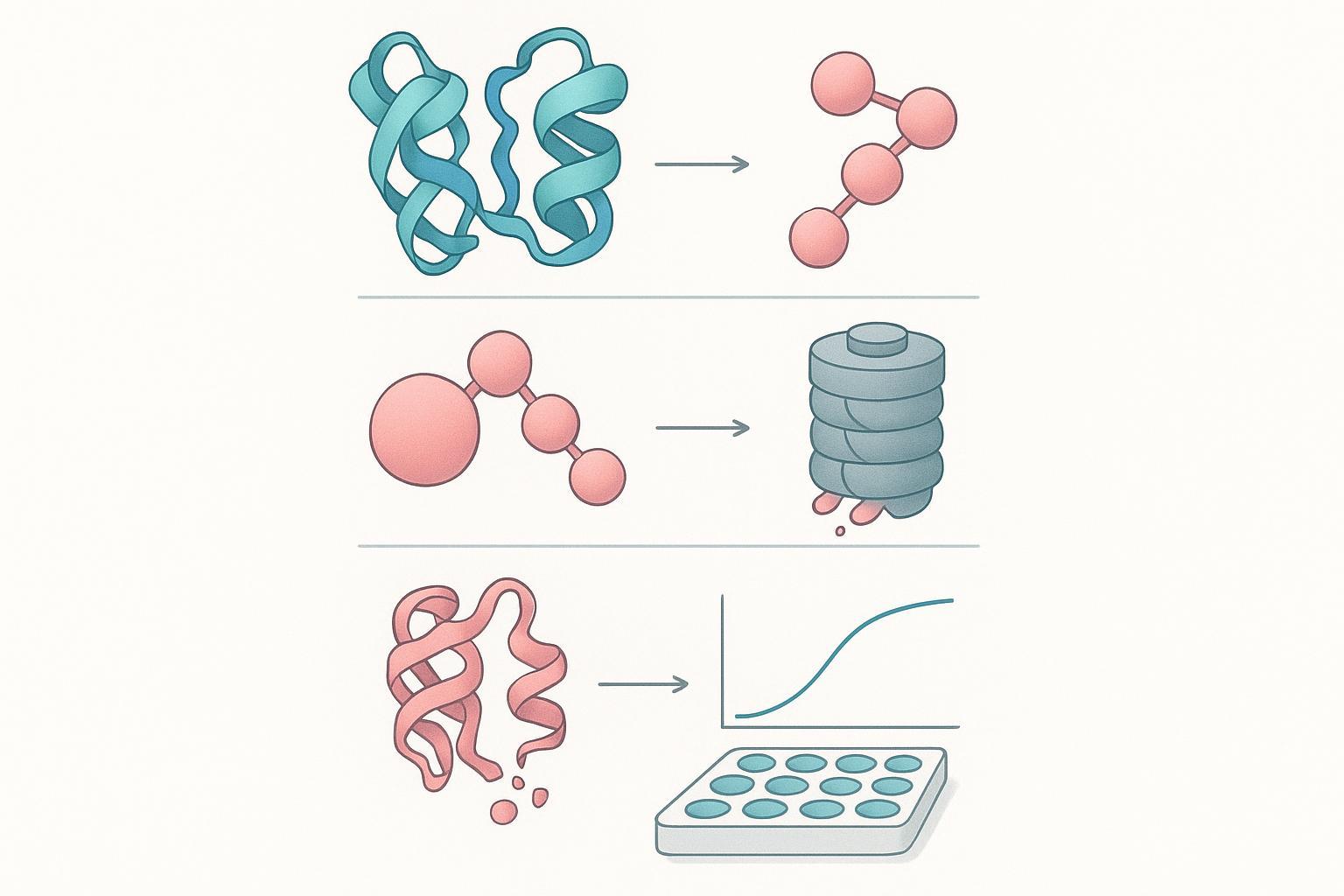
Kopo ea ho nyenyefatsa ke mokhoa oa kopo, 'me ha ho teko e le 'ngoe e e tsamaisang. Ketane ea bopaki e na le lihokelo tse 'ne, mme mohlahlobi o tla sheba tse nne: sebopeho se rarahaneng sa ternary, shebiloeng hohle, ho itšetleha ka proteasomal, and a quantitative potency and ceiling readout. If your package stops after the first link, you have shown binding, not degradation.
Work down the chain against your own data. Ternary complex: a co-crystal or a biophysical assay showing target, PROTAC and E3 ligase in one assembly. Ubiquitination: a direct or indirect readout that the target itself acquires ubiquitin. Proteasomal dependence: rescue by a proteasome inhibitor. Potency and ceiling: DC50 and Dmax from the same dose-response series.
The third link is the one most often skipped, and it is cheap to close. In the cyclic peptide work, PD-L1 loss at 2.5 µM after 4 hours was blocked by MG132, which is what separates degradation from a downstream transcriptional effect (Frontiers ho Immunology, 2023). Target engagement can be shown the same way: cellular thermal shift assays moved DHHC3 from 49 °C liseleng tse sa phekoloang ho 55 °C liseleng tse nang le peptide, bopaki ba hore motsoako o fihla protheine pele ho senyeha leha e le hofe ho lekanngoa (Frontiers ho Immunology, 2023).
Chate eo ke khang e matla ka ho fetesisa sengolong sena bakeng sa ho nka karolo ea E3 joalo ka sebopeho se fapaneng ho fapana le monahano o latelang.. Ho fetola CRBN bakeng sa VHL, ka k'hemistri e tšoanang ea warhead, falletse DC50 ho tloha 0.103 µM ho 1.92 µM, le letsoho la IAP ho 7.530 µM (Lefu la Sele & Boloetse, 2024). Hoo e ka bang likarolo tse peli tsa boholo li arola letsoho le molemo ka ho fetisisa le le mpe ka ho fetisisa tekong e le 'ngoe ea cellular.
Joale lekhalo. Letoto le tšoanang le tlaleha litekanyetso tsa DC50 empa ha ho na Dmax, kahoo potency e bapisoa ho pholletsa le matsoho ha siling ea ho senyeha ha eona (Lefu la Sele & Boloetse, 2024). Motsoako o ka ba matla mme o ntse o siea boholo ba sepheo se eme. Ha u fana ka sephutheloana ho tloha k'hemistri ho ea ho baeloji, kopa curve e felletseng ea karabelo ea lethal dose, eseng palo e le 'ngoe: ts'ehetso ea tlhahlobo ea ts'ebetso e bolela lekhalo, taolo ya pholoso, le tlhahlobo ea lipuisano hammoho, hobane ke seo mohlahlobi a tla se kopa mabapi le ho senyeha ha HIF-1α kapa sepheo leha e le sefe seo u se lebisang pele.
The oxygen-state limit on the anchor case
Anchor cyclic peptide PROTAC e khutlisetsa ho senyeha ha VHL-mediated HIF-1α ka matla ho 3% O₂, 'me ha e bontše ho senyeha ha letlooa ho 1% O₂. Seo ha se ho hloleha ha matla. Tlas'a maemo a tlalehiloeng monyenyetsi o lula a lebeletsana- le nyenyefatso-e nang le bokhoni ho 1% O₂, empa resynthesis ea sepheo e feta sebaka sa tumello, kahoo letamo la boemo bo tsitsitseng ha le ke le oa (JAKAKA, Cyclic Peptide PROTACs Khutlisa ho senyeha ha VHL-Mediated HIF-1α ho Hypoxia, 2026).
Bala seo e le molao oa moralo ho e-na le mongolo o botlaaseng ba leqephe: ho bala ho senyeha ho ka hlalosoa feela khahlanong le sekhahla sa resynthesis ea sepheo sa moelelo o tšoanang oa cellular. DC50 e lekantsoeng ka khatello e le 'ngoe ea oksijene ha e fetisetsoe ho e' ngoe, hobane palo eo u e lekantseng ke sekala sa nete, eseng sebaka sa tumello.
Pele o bapisa conjugate ea hau khahlanong le DC50 e phatlalalitsoeng, netefatsa tsitsipano ea oksijene, mohala oa sele, le boitšoaro bo bocha ba sepheo tlas'a boemo bo tšoanang.
Common misconceptions that cost programs time
Liphoso tse 'ne tsa liqeto li nka boholo ba nako e lahlehileng lenaneong la moralo la cyclic peptide PROTAC. E 'ngoe le e 'ngoe e nka sebaka sa tekanyo e tlase bakeng sa potso eo lenaneo le hlileng le hlokang ho arajoa.
Bohloeki bo phahameng ba HPLC ha se conjugate e nepahetseng. Tlhōrō e le 'ngoe e bohale ka 95% e u joetsa hore lisebelisoa li homogeneous ka mokhoa o le mong oa ho lemoha. Ha e u joetse hore sehokelo se lutse holim'a masala a reriloeng, hore stereochemistry e ile ea pholoha ho kopana, kapa hore E3 ligand e ntse e tiile. Tokiso ke sebopeho sa orthogonal: LC-MS bakeng sa netefatso ea bongata, le mokhoa oa bobeli oa chromatographic kapa spectroscopic o arolang conjugate ho li-isomer tsa eona tsa boemo.
Tlamahano e ts'oaretsoeng ea sepheo ha e so thehoe. Tekolo e tlamang e tlaleha ho lula teng. Ho nyenyefatsa ho hloka ho ba hohle, ho kopanela ha proteasomal le tahlehelo ea sepheo, ha ho le e 'ngoe ea eona e tlamang ho fumana. Tokiso ke ho tšoara tlama joalo ka heke, eseng pheletso, le ho hloka tekanyo ea protheine pele e tseka ho theoloa.
ternary complex tlhahlobong ea biophysical ha se ho senyeha ha cellular. Sebopeho se rarahaneng sa Ternary sea hlokahala empa ha sea lekana; e tsitsitseng e rarahaneng e ntse e ka hlōleha ho ubiquitylate. Tokiso ke ho kenya kopo ka liseleng le ho lekanya maemo a protheine ka kotloloho.
A DC50 ntle le Dmax ke setšoantšo sa potency e sa fellang. Potency le boholo ke thepa e fapaneng, le motsoako o nyenyefatsang 40% of the target at saturation is a different proposition from one that clears 90%. The fix is to report both, ka mehla, from the same dose-response series.
A decision framework for the conversion
Run these five checks in order against your own program. Each one has a failure mode attached, and each one is cheaper to fix before the next.
-
Rank candidate exit vectors empirically, not by inspection. Express the same cyclic inhibitor with the linker at two or three different positions, run the conjugate series through the target-binding assay, and let the rank order pick the winner. Mokhoa oa ho hloleha: choosing the vector that looks most accessible on the model and discovering after scale-up that binding is gone.
-
Decide the route before you commit the linker. On-resin versus solution conjugation determines how much epimerization risk you carry, kahoo e nke e le qeto ea tsela ho e-na le ho e sebelisa ka morao ho nako. Mokhoa oa ho hloleha: conjugate e hloekisang ka mokhoa o hloekileng empa e lahlehetsoe ke stereochemistry data e tlamang e itšetlehileng ka eona.
-
Hloekisa, ebe u tšoaea orthogonally. Bohloeki ba RP-HPLC le netefatso ea bongata li araba lipotso tse fapaneng, 'me ha ho le ea mong ea tlalehang ka ho lumellana. Mokhoa oa ho hloleha: mokgoa wa ho lokolla wa mokgoa o le mong o fetisang sehlopha se sa phuthweng hampe.
-
Netefatsa ho mena pele o sebelisa tekanyetso ea tekanyetso. Dichroism e chitja, NMR, kapa sebopeho se tlamang se tlamang se tiisa hore conjugate e ntse e le teng tumellanong le morero.
-
Theha ketane ea liteko pele u tseka ho theoloa. Sebopeho se rarahaneng sa Ternary, boikopanyo ba sepheo, Li-Peptide tsa Synthetic 'me palo ea ho nyenyefatsa ke likopo tse tharo tse fapaneng, mme sephetho se tlamang sa binary se ts'ehetsa sa pele feela.
Key Takeaway: Netefatso ea Conformational ke ntho eo mananeo a e tlolang hangata. Lintlha tsa bohloeki le netefatso ea bongata li ke ke tsa u bolella hore na conjugate e phuthetsoe ka nepo, kahoo sehlopha se ka fetisa heke e 'ngoe le e' ngoe ea tlhahlobo 'me e ntse e hlōleha ho sebetsa.
Tatelano e bohlokoa ho feta mohato o le mong: lenaneo le behang li-vector pele 'me le netefatsa conformation pele mosebetsi oa ho hlahloba o qoba ho kopanya hape motsoako oo o seng o o hlalositse..
Mehato e latelang
Haeba lenaneo la moralo la cyclic peptide PROTAC le tseleng ea hau, ntho ea bohlokoa e latelang ke puisano ea scoping ho fapana le qeto ea ho reka. Tlisa ntho tse tharo: tatellano ea hau ea ankora le data efe kapa efe ea sebopeho, vector ea ho tsoa eo u e khethileng kapa bonkgetheng bao u ba lekanyang, le lipalo-palo tsa liteko tseo sehlopha sa hau se tla li amohela e le bopaki ba ho theoloa. Lintlha tseo tse tharo li etsa qeto ea hore na phetoho ke sehokelo se otlolohileng kapa tokiso e hlokang k'hemistri e ncha..
Bakeng sa lihlopha tse hlokang molekane oa motsoako le sebopeho, MOL Changes e bolela bokhoni ho pholletsa le mokhahlelo o tiileng le oa ho belisoa ha likokoana-hloko, tlhoekiso ea tikoloho e laoloang, HPLC/MS le sterility QC, le sekala sa mg-to-kg. Lethathamo leo le bohlokoa haholo ha lenaneo la conjugate le tloha ho lisebelisoa tsa analytical-scale ho ea ho bongata boo letoto la tlhahlobo le sebetsang le le hlokang.. Tlhahiso ea Peptide
Key Takeaway: Lihahi tse hlalositsoeng mona ke li-reagents tsa lipatlisiso. Phetolelo efe kapa efe ea bongaka e hloka netefatso e ikemetseng, 'me ha ho letho tataisong ena le ka nkang sebaka sa netefatso ea hau ea tlhahlobo le baeloji.
Tsebiso: mokhatlo oa mongoli o fana ka litšebeletso tsa peptide synthesis le sebopeho sa mofuta o boletsoeng sehloohong sena.
Buisanang ka lenaneo le tloaelehileng la conjugate. Arolelana tatellano ea hau ea ankora, sepheo sa ho tsoa ka vector le lintlha tse hlokahalang tsa tlhahlobo, 'me u kope sephutheloana sa litokomane tsa tlhahlobo (mokhoa oa bohloeki, gradient, Netefatso ea MS le ho mena data) haufi le mohala oa scoping. Qala puisano ea lenaneo.
Lipotso tse botsoang khafetsa
What do I do if there is no co-crystal structure of my cyclic peptide bound to the target?
Beha maemo a matlerele a mokhethoa ka matla ho fapana le ho emela sebopeho. Hlalosa peptide ka sehokelo ho masalla a mokhethoa ka mong, ebe o lekanya ka tatellano: e bolokileng kamano ya sepheo, sebopeho sa ternary-complex le E3 ligase, le ho senyeha ha lisele. Boemo bo mamellang ho nkela sebaka ho boloka kamano ea eona; ya sa tshwaneleheng ha a tshwanelehe. Tšoara likamano tse moqotetsane tsa ts'ebetso sebakeng sa mokhethoa joalo ka lets'oao la ho emisa, hobane vector ea ho tsoa e kanna ea patoa ka har'a sehokelo se tlamang.
Is a longer linker always better for a cyclic peptide PROTAC?
Che. Bolelele ba sehokelo le sebopeho se fetola ternary-complex geometry, mme geometry eo e tsamaisa potency mahlakoreng ka bobeli. E qotsitsoeng hangata 5-15 fensetere ea athomo e tsoa ho likhakanyo tsa bobeli tseo maqephe a tsona a mantlha a sa kang a baloa nakong ena, kahoo tšoara mofuta ofe kapa ofe o khethehileng e le khopolo-taba ea ho qala ho hlahloba letoto le lenyenyane, e seng tlhaloso e qapiloeng khahlanong le.
How do I distinguish epimerization from a folding problem on my analytical data?
Sebelisa mekhoa ea orthogonal, hobane tlhōrō e le 'ngoe ea RP-HPLC e ke ke ea arola mekhoa e 'meli ea ho hlōleha. Chiral LC kapa NMR e rarolla stereochemistry ho masala a amehileng; circular dichroism le tlaleho ea NMR mabapi le phetiso ea tharollo. Epimerization ke kotsi e tsebahalang ea k'hemistri ea conjugation ho fapana le sebaka sa ho bua sa morekisi, kahoo ha peptide e hloekile le ho mena ka bobeli li shebahala li amoheleha 'me mosebetsi o ntse o theoha, tsamaisa tlhahlobo ea stereochemical pele u theha sehokelo bocha.
What is the minimum assay set to claim degradation rather than inhibition?
Litekanyo tse 'nè: sebopeho sa ternary-complex, shebiloeng hohle, ho itšetleha ha proteasomal ho netefalitsoe ke pholoso ea mofuta oa MG132, le palo ea DC50 le Dmax ho tloha ho li-curve tsa karabelo ea tekanyo. Ternary complex feela ha ea lekana, kaha ho tlama ntle le phetisetso ea hohle ha ho bontše letho ka ho senyeha. DC50 le Dmax feela ke phenotypic: ba bonts'a sepheo se ile sa nyamela ntle le ho bontša hore proteasome e e bakile. Tlaleha sete hammoho, mme o bolele mola wa sele le ntlha ya nako bakeng sa e nngwe le e nngwe.