Förutsättningar: Vad du ska ha redo innan du utvärderar en leverantör
En dokumentationsgenomgång tar ungefär en halv dag per leverantör. Du behöver inte köra en fullständig revision för att få värde av det, men du behöver fem saker framför dig innan det första samtalet.
Vad ska man ha klart:

-
Leverantörens aktuella certifikat, med dess utgångsdatum
-
Omfattningsförklaringen som bifogas det certifikatet
-
Ditt kvalitetsavtal, undertecknad eller i utkast
-
Den senaste revisionsberättelsen, om en sådan finns
-
Det analytiska paketet för en levande tomt
Anta att du är bekväm med kvalitetsledningsordförråd: nonkonformism, korrigerande åtgärd, dokumenterad information. Om dessa termer ännu inte är andra natur, de ISO 9000:2015 ordförråd är den delade referensen, och det är värt att komma överens om det innan samtalet. ISO 9000:2015 definierar avvikelse som "underlåtenhet att uppfylla ett krav" och korrigerande åtgärd som "åtgärd för att eliminera orsaken till en avvikelse och för att förhindra upprepning." De flesta avstannade leverantörssamtal går ut på att två parter använder olika ord för samma händelse.
För tips: Be om certifikatets omfattningsangivelse, inte bara certifikatet. Ett certifikat utan dess omfattning talar om för dig att ett system var certifierat, inte vad det systemet täcker.
Hur ISO 9001:2026 Tidslinjen för övergång anger dina kvalificeringstider
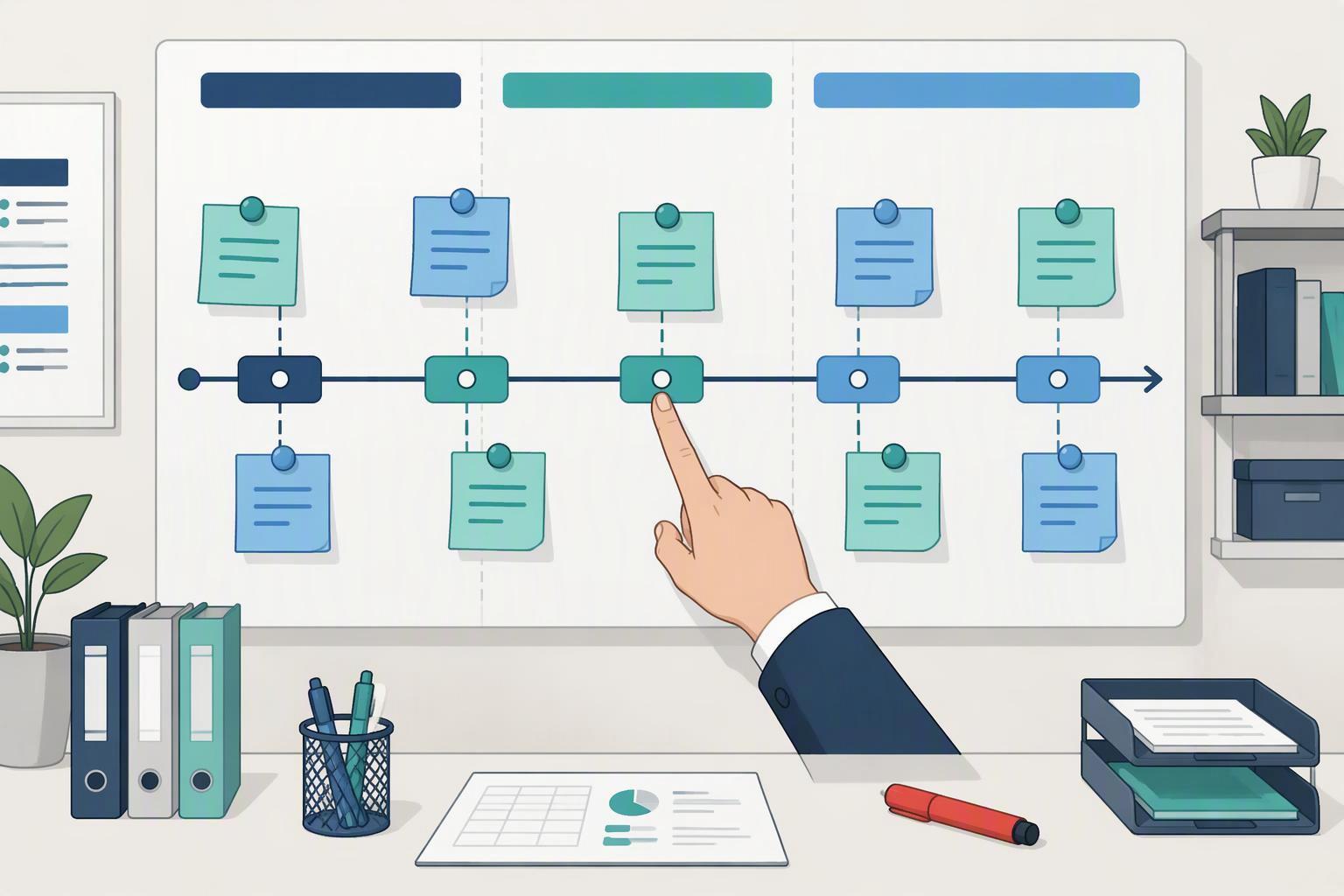
Med de fem sakerna i handen, nästa fråga är timing: ISO 9001:2026 övergångstidslinjen ger dig fyra upphandlingstider före standardens 30 september 2029 utgångsdatum, och den tidigaste faller på 31 mars 2027, när ackrediteringsorgan måste vara redo att bedöma organisationer mot 2026 utgåva (ISO/TC 176 SC2 övergångsmeddelande, hämtas 2026-09-28). Certifieringsorgan lämnar sedan in sina övergångsdeklarationer senast 30 juni 2027, med ackrediteringsorganets övergångsbeslut som följer av 30 september 2027 (ISO/TC 176 SC2 övergångsmeddelande, hämtas 2026-09-28).
Datumet som ändrar din leverantörshöglista är 31 mars 2028: från den punkten, ny eller initial ackrediterad certifiering utfärdas endast mot 2026 utgåva (ISO/TC 176 SC2 övergångsmeddelande, hämtas 2026-09-28). En leverantör certifierad enligt ISO 9001:2015 efter det datumet kan inte existera. Själva fönstret löper tre år från publicering, stängning 30 september 2029 för organisationer som håller 2015 certifikat, en varaktighet som LRQA:s release-day briefing bekräftar.
Key Takeaway: Om din leverantörs certifikat upphör att gälla 2028 eller 2029, deras övergångsskyldighet bör redan vara inskriven i ditt kvalitetsavtal, och alla nya leverantörer du kvalificerar dig efter 31 mars 2028 kommer att anlända certifierad till 2026 utgåva.
ISO ramar in revisionen som en riktad uppdatering snarare än en omskrivning, betonar ledarskap, kvalitetskultur och etiskt beteende, tydligare övervägande av risker och möjligheter, ett nytt avsnitt som förklarar syftet med kraven, och antagande av den senaste harmoniserade strukturen (ISO:s release not, 16 september 2026). Räkna med reviderad betoning, inte ett ersatt kvalitetsledningssystem.
Öva 1: Förändringskontroll som täcker kommunikation och effektivitet, Inte bara godkännande
Peptidsyntes i lösningsfas Peptidleverantören ändrar kontroll under 2026 upplagan kräver mer än ett undertecknat godkännande. En genomgång på klausulnivå av den reviderade texten läser klausul 6.3, planering av förändringar, som förväntar sig tillgång till information, hur förändringen kommuniceras, hur effektiviteten övervakas och utvärderas, och hur resultaten granskas (MOL Ändringar, 2026-09-29). Enbart godkännande innehåller inte längre klausulen.
Peptid Cro Det spelar roll eftersom en hartsersättning, ett motjonbyte eller en metodversionsändring kan skifta identitet, renhet, föroreningsprofil eller stabilitet medan analyscertifikatet ser oförändrat ut. Klausul 8.5.6, kontroll av förändringar, har krävt sedan 2015 baseline that production changes be reviewed and controlled to prevent unintended consequences; the expected artifacts are change request forms, risk assessments, approval records and updated procedures (NQA, februari 2026).
So ask for the change record behind one specific change from the last 24 months and walk it end to end: begäran, riskbedömning, approval, communication to affected customers, effectiveness check, closure. A log with approval dates and no effectiveness review, or a customer notification that lands after shipment, is the failure mode. One example: an HPLC purity assay moved to a new method version, the change was approved, and nobody compared the two versions on the same lot.
Öva 2: Batchspårbarhet Du kan rekonstruera bakåt och framåt
Peptide batch traceability is not a filing exercise, and the audit test proves it: pick one lot number from a recent delivery and ask the supplier to reconstruct it, from records, without preparation time. Backward, the genealogy should run to raw-material lots and their suppliers. Forward, it should run to every shipment Peptidtestning that drew on the lot. The clause 8 operation requirements set the baseline: klausul 8.5.2 requires organisations to identify outputs where needed, identify their status (godkänd, pending, rejected, hold), och, where traceability is required, control unique identification and retain the documented information behind it.
That is why a certificate of analysis alone proves less than buyers assume. A CoA reports results for a sample; it does not show which raw-material lots entered the batch, which method version was run, or where the rest of the lot went. Traceability is the artifact that tells you whether the certificate means anything.
För tips: Choose the lot number before the call, not during it. A supplier who knows the sample in advance can assemble a tidy narrative; a supplier with live records answers in minutes. Handla
Vad det 2026 edition expects
Artifact to request
Klausul Semaglutide Synthesis anchor
Outputs identified, status visible, unique identification controlled where traceability is required, documented information retained
A backward-to-materials and forward-to-shipment reconstruction of one sampled lot, produced from records Liquid Phase Peptide Synthesis
Klausul 8.5.2, identification and traceability
Failure looks like one of two things. Either the genealogy stops at the bulk intermediate, leaving the raw-material lots unnamed, or the reconstruction takes days and arrives as a written account rather than as records. Both tell you the same thing: the system holds a certificate, not a traceable lot.
Öva 3: Avvikelsehantering med en rotorsak och en CAPA-länk

Deviation management in peptide manufacturing is where a supplier’s quality system either works or performs. The test is not whether deviations are closed, but whether each one closes with a determined cause and a corrective action whose effectiveness was reviewed.
The clause 10.2 requirements in full set the sequence to check each entry against: react to the nonconformity by controlling and correcting it and dealing with its consequences; evaluate whether action is needed to eliminate the cause so it does not recur or occur elsewhere; determine the causes; determine whether similar nonconformities exist; implement the action; review its effectiveness; update risks and opportunities; and change the quality management system if necessary. The retained record must show the nature of the nonconformity and the actions taken, including results.
Request the last 12 months of the deviation log and read it for three things. Are causes determined, or merely described? Was the rest of the operation checked for the same nonconformity? Was effectiveness reviewed after implementation?
A log where every entry reads “operator error, retrained” fails all three. An isolated deviation is a data point; the same one recurring across products, instruments or operators is a systemic signal, and only the CAPA record separates them.
Öva 4: Dokumentation och analytiska register som överlever inspektion
The documentation question is not whether records exist. It is whether they are controlled, attributable and retained in a form an inspector can follow. A supplier can hand you a certificate of analysis and a tidy summary table and still fail this test, because a summary table is a transcription of a result, not the record that produced it.
Start with the controlled document set index: the procedures, the method versions and the specifications, each with a version number and an effective date. A method referenced by name with no version is a gap, inte en detalj. Then ask for the raw data behind one reported purity or identity result: the chromatogram and the mass spectrum, with the acquisition method version, the analyst and the instrument identified.
That request maps to the data-integrity principles set out in MHRA’s data-integrity guidance: hänförlig, läsbar, samtida, original, exakt. The documented-information requirement in clause 8 of ISO 9001:2026 pekar på samma sätt, toward records that are created and controlled as the work happens rather than reconstructed afterward.
⚠️ Varning: A summary table is not raw data. If the package contains a CoA and a table but no chromatogram, you cannot verify the result, only accept it.
When a supplier calls the raw data proprietary, that is a commercial position, not a quality one. Ask instead for a redacted chromatogram with the method version and instrument intact. The result and its provenance are what you are evaluating; the formula behind a proprietary gradient is not.
Öva 5: Kvalitet genom design och jämförbarhetssamtalet
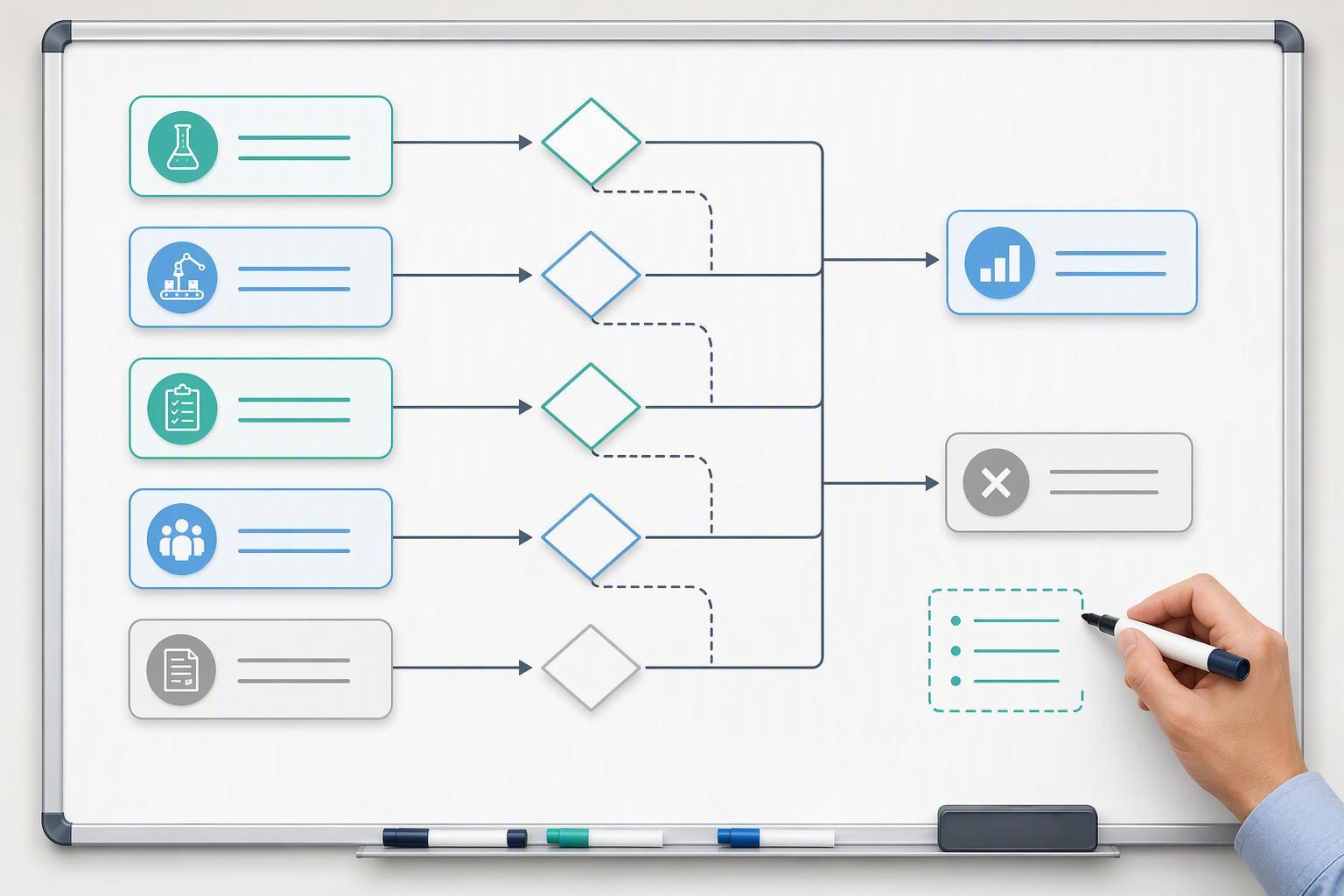
Quality by design for a peptide supplier means one practical thing at the buyer’s end: a comparability protocol agreed before a change, not a discussion after it. At peptide scale, purity and yield move together, so a change that looks operationally minor can shift the impurity profile.
That trade-off is why scale-up changes carry risk. CDMO guidance on milligram-to-kilogram scale-up notes that above 95% purity at kilogram scale the route often necessitates multi-step preparative HPLC and carefully controlled lyophilization, and that aggregation, degradering, or prolonged hold times can cause notable yield loss. The same source puts the practical solid-phase limit near 30 till 40 rester. It is a CDMO’s own explainer, so read it for direction rather than as an independent benchmark.
Synthesis economics reinforce the point. The widely cited synthesis-economics analysis puts a 50-plus-step process at an average 99% yield per step, and reports that improving crude purity by 10% can save more than 50% post-purification. The figures come from named industry experts quoted in that piece, not from a controlled study.
Put the protocol in the quality agreement: which change types trigger a comparability study, what it measures (identitet, renhet, föroreningsprofil, and where relevant potency and stability), and what acceptance criteria apply before changed material ships. A supplier that reports a change after the fact and offers a CoA as the comparability evidence has not met that bar.
A documentation package that includes full analytical verification, such as the one MOL Changes can be used to provide, supports this review.
Vanliga misstag som köpare gör när de tillämpar 2026 Förväntningar
The most common buyer-side failure is treating the certificate as the evidence rather than the records behind it. A certificate says an audit happened; it does not show that the supplier can reconstruct a batch, explain a deviation, or control a change. These five mistakes show up repeatedly in supplier evaluations, and each has a straightforward fix.
Accepting a CoA as proof of traceability. A certificate of analysis confirms what was tested on one sample, not where the material came from or where it went. Buyers accept it because it arrives first and looks authoritative. Ask instead for the batch genealogy that links incoming lots to the finished peptide.
Reading a change log for approvals only. A log showing sign-offs tells you a change was authorized, not that anyone checked whether it worked. The fix is to request the effectiveness check that follows the approval.
Accepting a deviation log with dispositions and no causes. A disposition closes a batch; a root cause and a linked CAPA close the problem. If the log has no cause column, the supplier is tracking outcomes rather than preventing recurrence.
Requesting a documentation package without naming the artifacts. Vague requests get vague packages. Name what you want: the change record, the deviation log with CAPA references, the controlled document set.
Leaving the transition obligation out of the quality agreement. If the agreement is silent on who owns the 2026 transition, the obligation defaults to nobody. Put the deadline and the responsible party in writing.
Vanliga frågor
What happens to a supplier’s 2015 intyg efter 30 september 2029?
It stops being a valid basis for your qualification file. Under the ISO 9001:2026 transition timeline, certificates issued against the 2015 edition are withdrawn on 30 september 2029 (the ISO/TC 176 transition notice). If a supplier has not transitioned by then, treat their certificate as expired and re-open the qualification rather than letting it lapse quietly in your approved-supplier list.
Måste en leverantör omcertifieras omedelbart efter publicering?
Inga. ISO 9001:2026 publicerades den 16 september 2026 (ISO’s launch announcement), and the transition window runs to 30 september 2029. A supplier holding a current 2015 certificate stays certified during that period. What changes for you is the deadline, not the certificate: ask for their transition plan and a target audit date, then track it as a qualification milestone.
Gör det 2026 upplaga ändra leverantörskvalifikationskraven själva?
Not the requirement to evaluate and control externally provided processes, products and services, which remains part of the standard’s purchasing and supplier control expectations. Vad det 2026 edition shifts is how you evidence that evaluation: ändra kontroll, spårbarhet, deviation handling and documented records are assessed against the practices above. Your qualification criteria stay yours; the audit trail behind them gets stricter.
Vad händer om en leverantör avböjer en revision på plats?
Accept it as a data point and adjust the evidence you require. Ask instead for a remote documentation review, a completed self-assessment against the five practices, batch records for a named lot, and a deviation log with CAPA linkage. If they decline all of these, you have no verifiable basis for approval, and the practical answer is to keep them unapproved or qualify an alternative source.
Slutsats
You now have five artifacts to request from any peptide supplier you are qualifying: a change-control record that shows communication and effectiveness, a batch genealogy you can walk backward and forward, a deviation log linked to a root cause and a CAPA, a controlled documentation and analytical record set, and a comparability protocol for process changes. Each one is a document a supplier either has or does not, which makes the request itself a fast filter. The dates make it timely rather than theoretical: the ISO/TC 176 transition notice sets 30 september 2029 as the end of the transition, so a supplier who cannot produce these records now has roughly three years to build them, and you carry the audit risk in the meantime.
If you would rather not run that review alone, talk to a technical expert about your documentation package, or request a walk-through of the change-control and traceability records.
Avslöjande: this article is published by MOL Changes, a peptide manufacturer, so the supplier practices described here reflect the standards we are held to as well as the ones we apply.