如何选择多肽CDMO合作伙伴: 2026 指导

如何选择多肽CDMO合作伙伴: 2026 指导

如何选择多肽CDMO合作伙伴: 从您自己的需求图开始

大多数团队首先建立供应商列表. 更强的举措是先写下自己的限制, 因为在功能页面上看起来很出色的合作伙伴仍然可能不适合您的序列. 五个输入完成工作: 序列类别和长度, 修饰类型, 目标规模及路线, 归档途径和时间表, 以及您提交的肽分析和文件要求.

路径问题属于该列表的顶部. 肽位于小分子和生物制剂之间, 通常受 ICH 小分子指南管辖, 尽管有些课程可能需要生物监督, 这就是为什么早期监管调整很重要 (纽兰实验室, 2025). 在联系任何人之前先回答这个问题, 因为路径决定了合作伙伴必须能够生产哪些工件.

要求

为什么它限制了合作伙伴的选择

证明这一点的神器

序列类别和长度

判断是否固相合成, 发酵, 或者混合路线是可行的

具有先例序列的路线基本原理

改装类型

非标准残留, 缀合物, 和环化需要专门的化学能力

具有功能组覆盖的修改菜单

目标规模及路线

开发与商业规模之间的差距迫使技术转让

记录了目标范围内的放大历史记录

多肽合成 归档途径和时间表

ICH 小分子与生物监督改变了证据包

您的途径的监管差距评估

分析和文档要求

发布测试和稳定性范围必须与备案相符

示例发布包和方法摘要

要点: 在第一次致电供应商之前填写此地图. 它将模糊的搜索转换为评分的候选名单, 它告诉你要请求哪些文物而不是相信哪些主张.

技术配合: 将综合平台与您的序列类相匹配
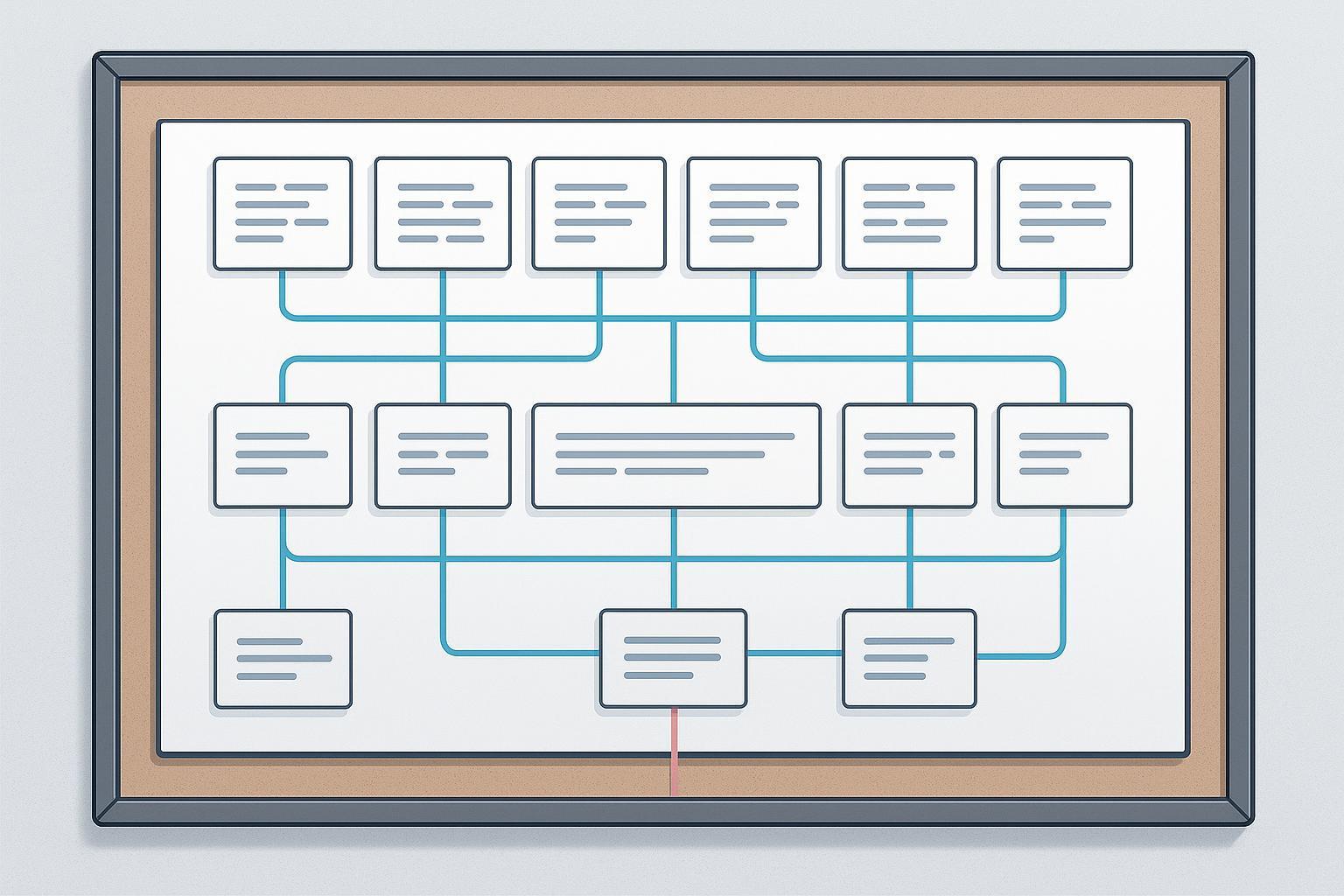
映射肽序列类别的决策图 (短线性, 30+ 残差线性, 修饰/共轭, 大容量商业) 候选合成器

手里拿着那张地图, 第一个过滤器是路由兼容性, 不是反应器体积. 已公布 特定路线的容量 人物很少说出他们背后的制造路线, 并且运力不会跨航线转移: 固相 (统计软件), 液相 (LPPS), 混合收敛, 重组加合成平台不可互换. LPPS 生产线上拥有闲置吨数的供应商无法承担您的 SPPS 工作.

链长度决定哪些路线甚至可行. Neuland Labs 指出,SPPS 产量随着连锁店的增长而下降, 与超出的序列 30 到 40 氨基酸接近 SPPS 单独使用的实际极限; 混合固/液相片段冷凝可降低成本,同时保持纯度. 耦合效率的复合数学解释了原因: 在 99% 每步耦合 30 步骤, 仅有的 74% 全长链条的结果是正确的, 并且规模扩大的难度加剧 30 残留物, 这正是索马鲁肽 (31) 和替泽帕肽 (39) 坐 (肽杂志, 2026-02-09).

那么当你问如何选择多肽CDMO合作伙伴时, 答案从三个问题开始: 你为这个序列建议哪条路线, 该路由使用什么片段策略, 我能看到选择背后的粗纯度数据吗?

序列类到候选路线决策图, 显示短线性肽, 长链或疏水链, 和修改后的序列分支到 SPPS, 混合收敛, LPPS, 或重组加合成路径.

扩大规模纪律: 验证路径, 不是反应器尺寸

路由兼容性已解决, 反应堆规模仍没有扩大规模计划. The binding constraint in most peptide programs is purification, not chain assembly: preparative HPLC accounts for 20 到 35 percent of total peptide manufacturing cost, and a two-week synthesis campaign can require four to six weeks of purification work (肽参谋, retrieved 2026-06-01). CDMO Hub’s analysis of peptide manufacturing puts the same point bluntly: synthesis capacity is not purification capacity, and for complex or high-volume sequences the preparative HPLC train and lyophilization suite are what actually set the schedule (Issue 4, retrieved 2026-08-26).

That gap widens as peptide scale-up from mg to kg proceeds, because a single GMP-scale preparative HPLC run consumes 20 到 50 liters of acetonitrile and 4 到 12 hours of instrument time (肽参谋, retrieved 2026-06-01). Solvent logistics, waste handling, and lyophilization throughput therefore deserve the same scrutiny as reactor volume.

A disciplined partner should already hold the high-risk parameters in a defined design space. PharmaFocus America’s QbD review classifies cleavage and deprotection pH and reaction time, HPLC solvent gradient and flow rate, and SPPS coupling efficiency and resin swelling as high-risk parameters requiring explicit control, with design and control spaces fixed by the end of clinical development (Quality by Design in Action, 2025-06-16).

对于小费: Ask three questions before accepting any capacity claim. What is the purification train, including column dimensions and gradient capability? What is the lyophilization suite capacity, in shelf area and cycles per week? And how are manufacturing slots defined in the agreement, by calendar window or by confirmed campaign start?

分析深度: 按需发布包

Ask for the method list before you ask for the price. A vendor that can name its chiral method, its counterion assay and its endotoxin calculation is describing a release package; one that answers with a purity percentage is describing a brochure.

Every analytical procedure behind that package should be validated under 我Q2(R2), adopted in March 2024, which sets the general framework for validation, including spectroscopic methods, and covers post-approval change management.

Endotoxin is where loose language shows up fastest. 美国药典 <85> sets no single parenteral limit: it is the K/M endotoxin limit, with K = 5 USP-EU/kg for routes other than intrathecal and 0.2 USP-EU/kg for intrathecal, and M as the maximum recommended human dose per kg per hour. A vendor quoting an absolute EU/mg figure without the dose basis has not done the calculation.

Sterility follows the same pattern. The two USP sterility methods are membrane filtration and direct inoculation, both requiring 14-day incubation, with Fluid Thioglycollate Medium at 30-35 °C and Soybean-Casein Digest Medium at 20-25 ℃. Confirm which method is used and on what sample size.

Impurity control is the criterion that separates in-process discipline from end-only testing. The main peptide impurity classes are deletion sequences, incomplete deprotection products, over-coupled and side-reaction products, 氧化产物, and residual reagents, solvents and counterions. In-process analytics, UV monitoring for Fmoc removal, Kaiser or ninhydrin testing for coupling completeness, and HPLC/MS on crude and purified material, catch these while the batch is still recoverable.

⚠️警告: A high HPLC area percent is not identity confirmation, and a correct intact mass is not a purity measurement. ICH Q6A notes that a single chromatographic retention time is not sufficiently specific, and counterion content such as TFA, acetate or chloride does not appear in an HPLC-UV peptide purity figure at all.

The thresholds worth writing into your requirements map come from the 0.10% 和 0.5% impurity thresholds in FDA’s 2021 指导: 肽相关杂质 0.10% or greater should be identified and characterised, new impurities between 0.10% 和 0.5% need characterisation plus justification including a comparative immunogenicity risk assessment, and new impurities above 0.5% of drug substance are not acceptable for that ANDA pathway.

Use the table below as the checklist you send with your RFP. Each row names a test, the standard it rests on, and the artifact the vendor should hand over so you can verify the claim rather than accept it.

测试

Standard or basis

Artifact the vendor supplies

Chiral purity

Validated chiral method under ICH Q2(R2)

Representative chromatogram plus validation summary

抗衡离子的身份和含量

服务 ICH Q6A specificity 合成肽 期望

Assay method and result for TFA, acetate or chloride

残留溶剂

ICH Q3C limits

Headspace GC method and batch results

内毒素

美国药典 <85>, K/M calculation

LAL result with the dose basis used for M

不育

美国药典 <71>, membrane filtration or direct inoculation

方法, incubation conditions, 14-day result

Peptide-related impurities

美国FDA 2021 杂质阈值

Impurity table with identification and characterisation data

身份

ICH Q6A

Mass spectrum plus a second orthogonal identity method

Treat these as peptide analytical and documentation requirements, not as a wish list. If a vendor cannot produce the artifact for a row, that row is unverified, and unverified analytical depth is the most expensive gap to close later, because it surfaces during filing rather than during the RFP.

文件和监管准备情况: 将工件归档为检查点

an annotated excerpt of a batch record and a change-history log with the fields a sponsor should verify highlighted (deviation entry, investigation cl

Documentation is where a peptide CDMO partner either shortens your filing timeline or quietly extends it. Evaluate it as filing artifacts, not as a quality certificate.

Request the analytical method documentation first, and check it against the ICH Q2(R2) validation framework: 特异性, 准确性, 精确, 线性度, range, and robustness each need a stated result, not a claim of compliance. Then ask for the impurity rationale. The impurity-rationale expectation is a documented justification for every specified and unspecified impurity, tied to the route of synthesis and to forced-degradation data. A profile with no rationale behind its limits is a filing risk you inherit. 多肽生产

Read batch records through the ALCOA data-integrity lens set out in MHRA’s GXP data integrity guidance, then test it with one question: how is a deviation recorded, investigated, and closed? The answer reveals whether change history is a controlled record or a retrospective summary.

Put four items in the technical agreement: 批次记录, impurity rationale, change history with effective dates, and the DMF or ASMF position. Add the supplier-tier audit gap: sponsors audit the CDMO but not its input suppliers, and final-assembly equipment lead times are reported at 18-24 月 (CDMO Hub, 肽制造内部, Issue 4, 2026).

专业修改,无切换延迟

Every outsourced modification step is a handoff, and handoffs are where timelines are lost. The modification types that most often leave the primary synthesis site are lipidation, 聚乙二醇化, 共轭, non-natural and D-amino acid incorporation, 环化, and counterion exchange.

The cost of an unplanned handoff is measurable in planning terms. Qualifying a new peptide API supplier is typically quoted at six to twelve months, with the full second-source path commonly cited at eighteen to twenty-four months (CDMO Hub, “Six Peptide CDMO Selection Pitfalls,” retrieved 2026-08-26). These are directional planning ranges from vendor-adjacent trade publishers, not audited figures, so treat them as a scheduling assumption rather than a benchmark.

A subcontracted step can also sit on a different route and a different capacity pool than the main chain, which means the modification queue moves on someone else’s schedule. That is why the modification-capability question belongs in the technical evaluation: an integrated partner should hold in-house cyclic, PEGylated, 装订的, conjugated and unusual-amino-acid capability (纽兰实验室, retrieved 2026-07-16).

One practical way to confirm specialized peptide modification support stays inside the same system is a verification workflow rather than a capability claim. Ask the sponsor-side technical lead to trace one modification step end to end: which change-control record governs it, which analytical release specification applies, who signs the deviation, and whether the certificate of analysis is issued under the same quality system as the main chain. If the answers route through a third party’s quality department, the handoff is real regardless of how the proposal describes it. MOL Changes is one example of a platform that keeps synthesis and modification under a single accountable workflow.

The contract checkpoint follows from that trace. Name the modification steps explicitly in the quality agreement, require the same change-control and release system for each, and set a notification obligation before any step is moved to another site.

危险信号和破坏交易的因素: 应该用什么来结束谈话

Red flags are not the same as missing must-haves. A missing must-have is a gap you can ask a vendor to close; a red flag is a pattern that tells you the vendor is answering from a brochure rather than from your sequence. Score the two lists separately, because a candidate can pass every must-have on paper and still fail on how the answers were produced.

The two structural red flags both concern capacity claims. A vendor that asserts capacity without naming the route it applies to is describing a general capability, not your project, because route-specific capacity does not transfer across synthesis routes. The same applies to the synthesis-versus-purification gap: synthesis capacity is not purification capacity, so a reactor count tells you nothing about whether the purification train can handle your load.

The remaining deal-breakers are documentation failures. A release package that stops at appearance and assay has no impurity rationale, and at filing the threshold is unforgiving: new impurities above 0.5% of drug substance are not acceptable for that ANDA pathway. Refusal to show a change-history log, a subcontracted modification step with no named accountable owner, and endotoxin or sterility testing described without the applicable limit or method all belong on the same list. So does any purity claim that leans on HPLC-UV alone, which is why identity and purity are different tests.

根据您自己的要求对候选人进行评分

a horizontal bar chart of US peptide CDMO capacity utilization by phase (阶段 1 ~82%, Phase 2–3 ~78%, overall 78–85%) with a note that the underlying

Turn the requirements map into a weighted matrix before you read another proposal. List each criterion from your opening map, assign it a weight that sums to 100 across the set, then score every candidate from 1 到 5 on the artifact they actually supplied. An absent artifact scores zero, not a neutral three: an unreturned chromatogram is missing evidence, not a rounding error.

Two rows deserve their own weight columns. The first is total-engagement cost, because a quoted price is not the cost. Neuland estimates that an RFP price may represent only 60 到 70 percent of true engagement cost once tech transfer, 分析发展, change orders and stability storage are added, which is a single-company estimate rather than an industry benchmark, so treat it as a prompt to build your own line items. The second is slot certainty. PeptideStaff’s mid-2026 US utilization estimates put US peptide CDMO capacity utilization at 78 到 85 百分比, with Phase 1 supply near 82 percent and Phase 2 到 3 near 78 percent at Tier 1 CDMO, and commercial capacity described as tight; the analyst behind the figure is unnamed, so confirm current availability directly rather than relying on the range alone.

标准

重量

Candidate A

Candidate B

Candidate C

Sequence-class fit

Scale-up path evidence

Release package completeness

Regulatory artifact readiness

Modification coverage

Total-engagement cost

Slot certainty

店铺

Weighted total

100

Score each cell only against documentation you have in hand, and leave a cell blank rather than guessing. The matrix is a comparison tool, 不是判决: it shows you where two candidates genuinely differ and where the difference is only in how well they answered the RFP.

下一步: 将框架转变为技术对话

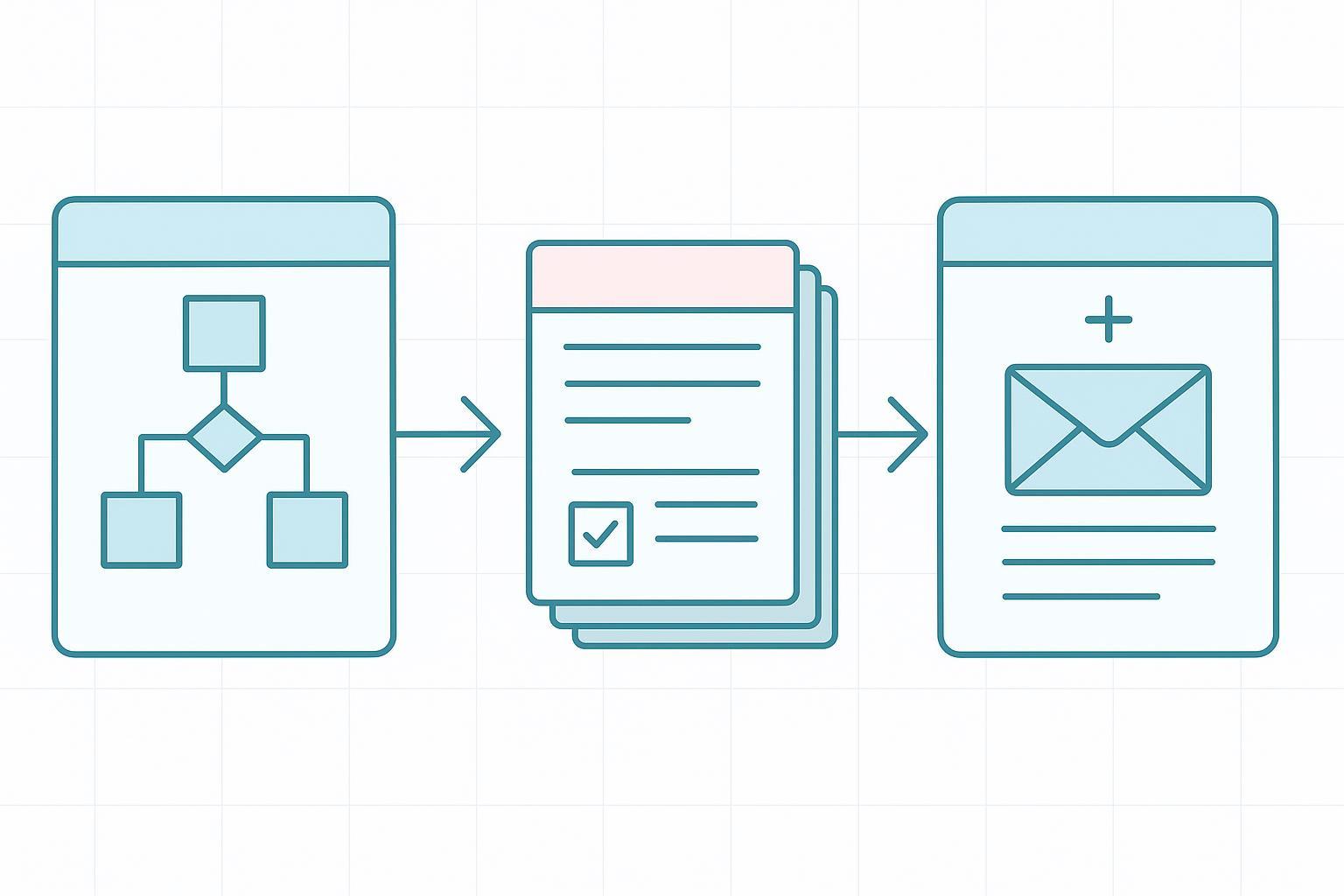
a three-step sequence showing the requirements map feeding an artifact request list, which feeds a scored shortlist and a single technical request to

The requirements map, the artifact checklist, and the scored shortlist are only useful once they become one specific request. Send the shortlisted CDMO a single document that pairs your sequence class, scale target, and modification list with the exact artifacts you need to see: method package, analytical documentation, and a defined slot commitment. That request is answerable. A general capabilities deck is not.

Ask for the method package and the analytical documentation before you ask for pricing. Pricing without a method behind it cannot be compared across candidates, and the comparison is the whole point of the framework above. 关于

For a worked sense of how to choose a peptide CDMO partner, the closing move is the same at every scale: convert the framework into one technical conversation, then let the artifacts decide.

笔记: MOL Changes is a peptide CDMO and may be one of the candidates you evaluate. This article is educational and does not recommend any single supplier.

Readers should consult qualified regulatory and quality professionals before making filing or sourcing decisions.

常见问题解答

获得肽 CDMO 合作伙伴资格需要多长时间?

Trade-publisher planning ranges put a Phase 1 new program start at 9 到 15 月, up from 6 到 9 months in 2023, with commercial manufacturing or tech-transfer starts at 12 到 18 months and a full second-source qualification path commonly cited at 18 到 24 月. These are planning ranges reported by trade publications, not audited figures, so treat them as directional. The practical implication is the 12-to-18-month engagement rule: begin qualification well before you need GMP synthesis, not after your clinical timeline is already fixed.

Can a CDMO’s announced capacity be used for my sequence?

Not by default. Announced capacity figures rarely specify the manufacturing route they were built for, and route-specific capacity does not transfer between routes, so a headline number tells you little about your sequence. Synthesis capacity is also not purification capacity, and the synthesis-versus-purification gap is where most assumptions break. Two questions resolve it: which route is the announced capacity built for, and what purification and lyophilization capacity accompanies it.

如果修改步骤必须分包,我该怎么办?

Treat the subcontract as a controlled handoff rather than an exception. Four checkpoints make it manageable: a named accountable owner on the prime CDMO’s side, the same change-control system covering both parties, a defined analytical release point at the handoff, and a documented transfer plan with acceptance criteria. Handoff delays are a recognized risk in multi-site programs, though published figures on their frequency are single-source and should not be treated as a failure rate.

最便宜的 RFP 响应是否是最低的总成本?

不. Neuland estimates that an RFP price may represent only 60 到 70% of true engagement cost once tech transfer, 分析发展, change orders, and stability storage are added, and that figure comes from a single company rather than an independent benchmark. Score responses on the total-engagement-cost row of your matrix, not the quoted line item, and ask each candidate to price the scope you actually expect to consume.

结论

The framework reduces to four moves you can reuse on any candidate: map your own requirements before you take a call, ask for artifacts rather than assertions, score red flags separately from must-haves, and put total-engagement cost into the matrix instead of comparing headline quotes.

The market context makes that discipline worth the effort. With mid-2026 US utilization estimates at 78-85%, announced capacity is not the same as capacity you can book, and lead times still stretch well past the point where a program can absorb a restart. A partner who can show you the synthesis route, the analytical package, and the change history is worth more than one who can only show you a reactor count.

作为 2024-2026 capex cycle’s capacity comes online through 2027-2030, the differentiator shifts from who has capacity to who can document it. The conversation you start now, framed around your requirements map, is the one that will still be useful when the supply picture loosens.

管理员头像

Bingyan Gao

质量和分析技术员 核心专长: 微量杂质的分离与鉴定, HPLC/MS 方法开发, 手性纯度分析, 并符合国际药典.

轮廓: 高丙彦是多肽纯度和质量的“终极守门人”. 熟练使用各种高端分析仪器,擅长开发高度复杂修饰肽的定制色谱分离方法. 他建立了严格的杂质分析体系,不仅保证了产品的纯度 99% 或更高,但也能精确识别和消除可能导致免疫原性的微量杂质. 深入了解FDA和EMA对肽类药物的监管要求, 他确保从工厂释放的每一批产品都附有全面、权威的分析证书 (COA).

事实已核实 & 编辑指南
审阅者: 主题专家
分享这篇文章
搜索 Whatsapp 服务 产品