为什么通用 LIMS 评估无法进行肽 QA

肽批次可追溯性打破了大多数实验室从通用 LIMS 指南继承的清单. 肽释放测试不是对一个样品进行一次测试. 它跨越质谱鉴定, 反相HPLC纯度, 抗衡离子和三氟乙酸含量, 鲎试剂法检测内毒素, 和不育, 每条记录都带有必须完全一致的标识符: 供应商批次, 内部批次, 入藏号, 顺序表, 色谱图标题, 和分析证书. 通用指南不会测试任何协议.
他们也停在了错误的边界. 在实践中, 色谱数据管理分为两个系统. CDS 控制仪器, 执行序列, 采集并积分色谱图, 评估系统适用性, 并拥有本机原始文件. LIMS 拥有注册权, 监管链, 测试作业, 批处理, 结果聚合, 规格检查, 报告, 和处置记录. LIMS 推送工作清单并收回批准的结果, 这是肽评估必须询问而不是假设的交接.
如果您当前的清单来自一般 LIMS 指南, 它是为无需协调序列表与色谱图标题的数据模型而编写的.
问题 1: 系统能否端到端地证明序列和批次的可追溯性?
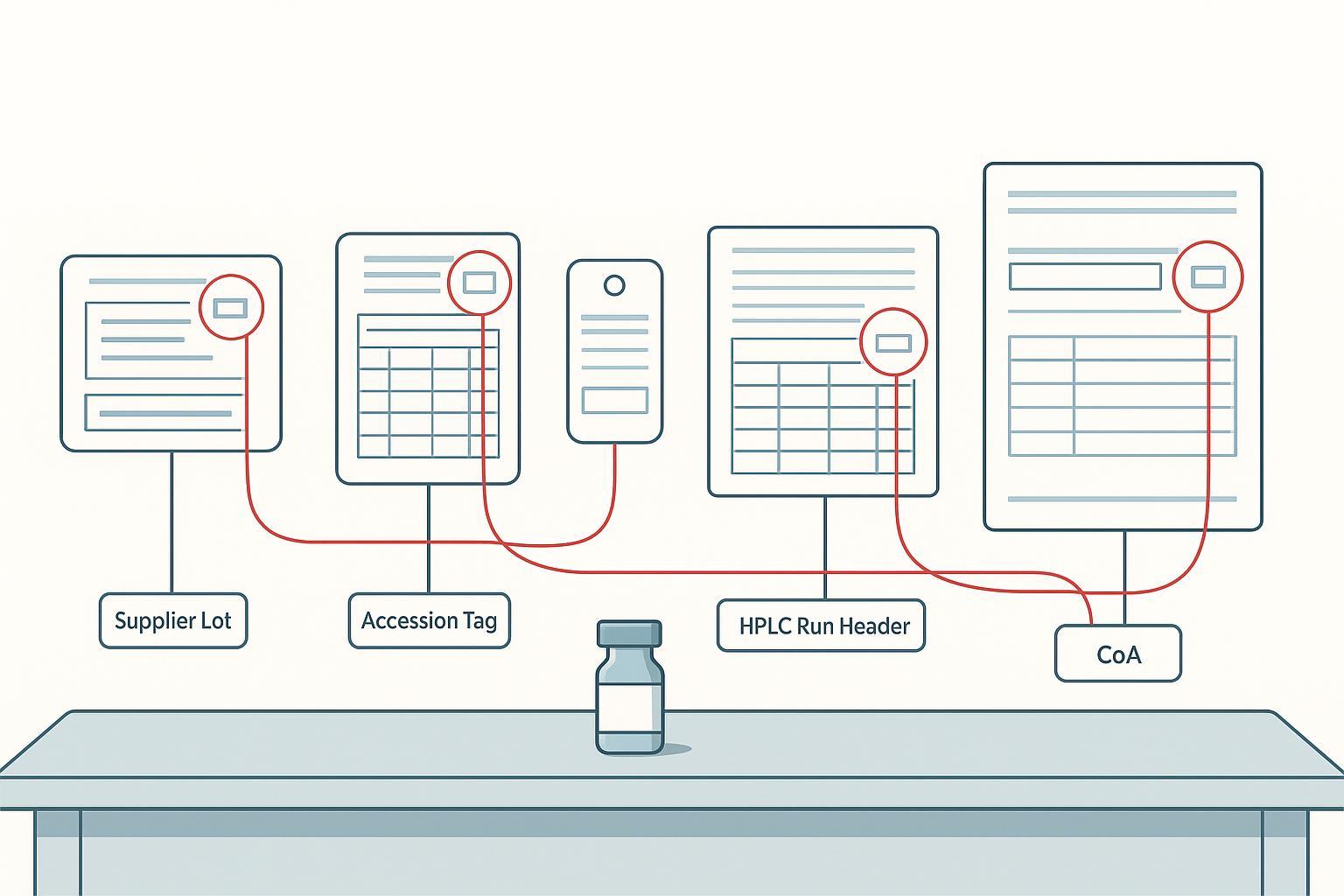
只有当序列表上出现相同的标识符时,才能证明肽批次的可追溯性, 运行标头和 CoA, 系统可以在单个查询中遍历该链. 在实践中, 这意味着三组字段必须彼此一致,而不是位于不同的模块中.
|
顺序表 |
运行头 |
参考标准 |
|---|---|---|
|
顺序和修改 |
数据文件名和路径 |
标准名称及批号 |
|
样本标识符 |
仪器ID |
指定效力或纯度 |
|
多肽合成 方法名称和版本 |
有效期或重新测试日期 |
|
|
获取日期和时间 |
校准曲线链接 |
|
|
服务 分析师 ID |
||
|
样品瓶位置或工作清单 |
共享标识符是样本标识符和方法版本: 打破其中任何一个,链条就会停止. 将此列表视为构建您自己的演示脚本的从业者指南, 不作为监管清单.
然后让供应商向后运行. 给他们一个 CoA 批号并要求他们提供序列记录, 奔跑, 方法版本和分析师一目了然, 无需离开系统或手动重建查询.
问题 2: LIMS 如何处理等分试样的监管链和稳定性拉动?
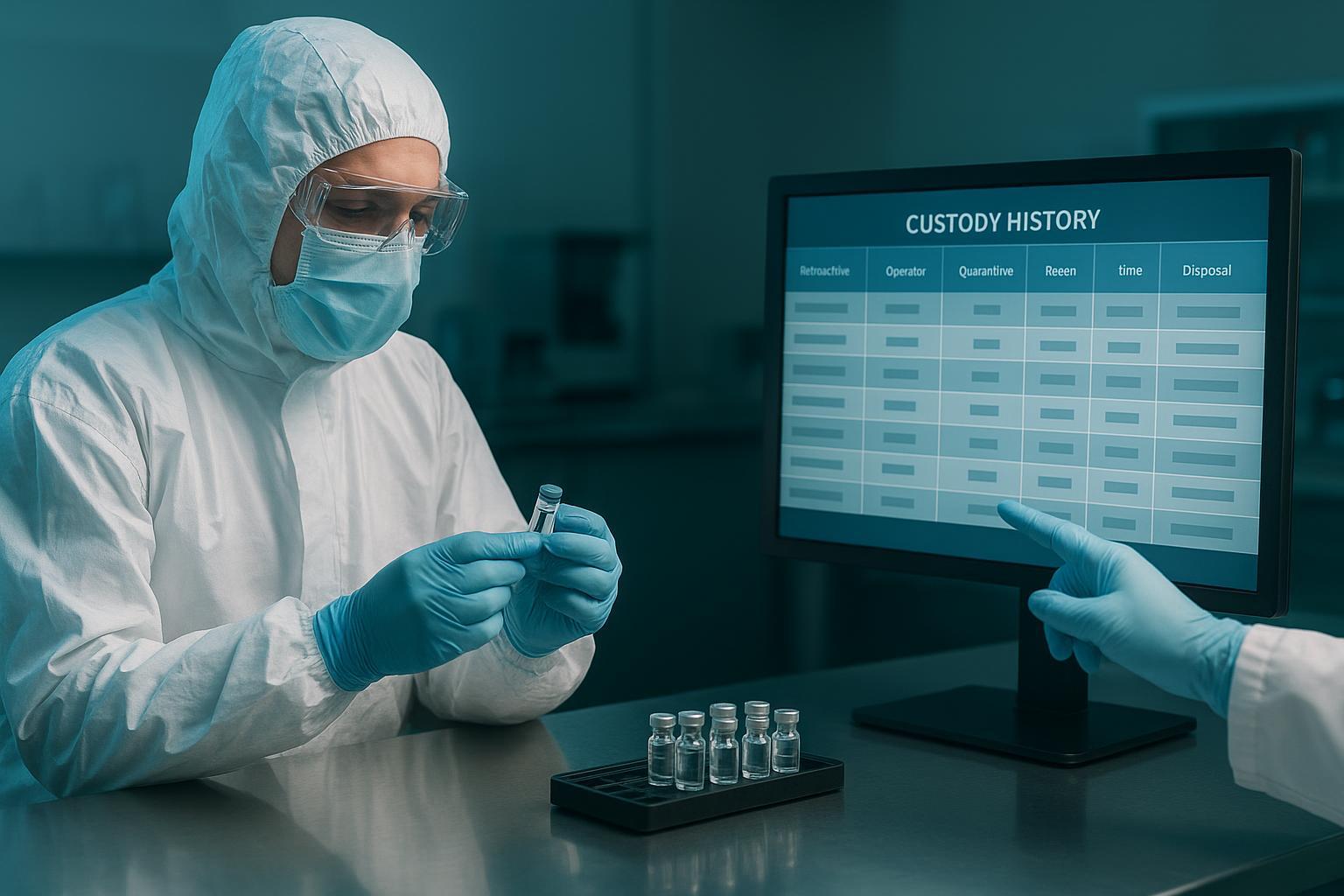
LIMS 中的监管链是传输和状态的记录, 不是签名块. 收货及检疫, 每个等分部分, 每次冻结/解冻事件, 每个稳定性拉点和最终处置条目都需要自己的时间戳, 归属记录. 21 CFR部分 11 需要安全, 计算机生成的, 带时间戳的审计追踪 独立捕获日期, 每一个创造的动作背后的时间和操作者, 修改或删除电子记录. 该规定还规定这些记录必须可供 FDA 检查, 这是监护历史必须满足的标准,无需手动重建.
对于肽批次, 这意味着审阅者可以打开一个视图并查看收据, 检疫释放, 分成三份, 两个稳定拉手和一个处置入口, 每个都带有时间戳, 运算符和原因.
问题 3: LIMS 是否控制原始色谱数据和方法版本?
色谱数据管理和方法版本控制决定发布决策是否可以在数年后重建. LIMS 必须知道哪个方法版本产生每个结果, 并且它必须阻止报告被取代版本的结果. 如果无法解析该链接, 无论审计跟踪看起来多么干净,批次记录都是不完整的.
边界在这里很重要. 色谱数据系统拥有仪器控制, 顺序执行, 获得, 一体化, 系统适用性和本机原始文件. LIMS 拥有注册权, 保管, 测试作业, 批处理, 结果聚合, 规格检查, 报告和处置记录. 单独的 CDS 不会携带批次级别的上下文; 仅 LIMS 无法保存原始信号.
Map the method lifecycle to a recognised framework. 我Q2(R2), the harmonised analytical procedure validation framework issued in March 2024, covers validation principles including the analytical use of spectroscopic data, and supports justified post-approval change management. For the instruments themselves, USP 〈1058〉 frames instrument qualification as fitness for intended use, official as of 1 August 2017.
In the demo, ask the vendor to revise a method, then show what happens to results already reported under the prior version.
问题 4: 如何路由和保存不合规格的调查?

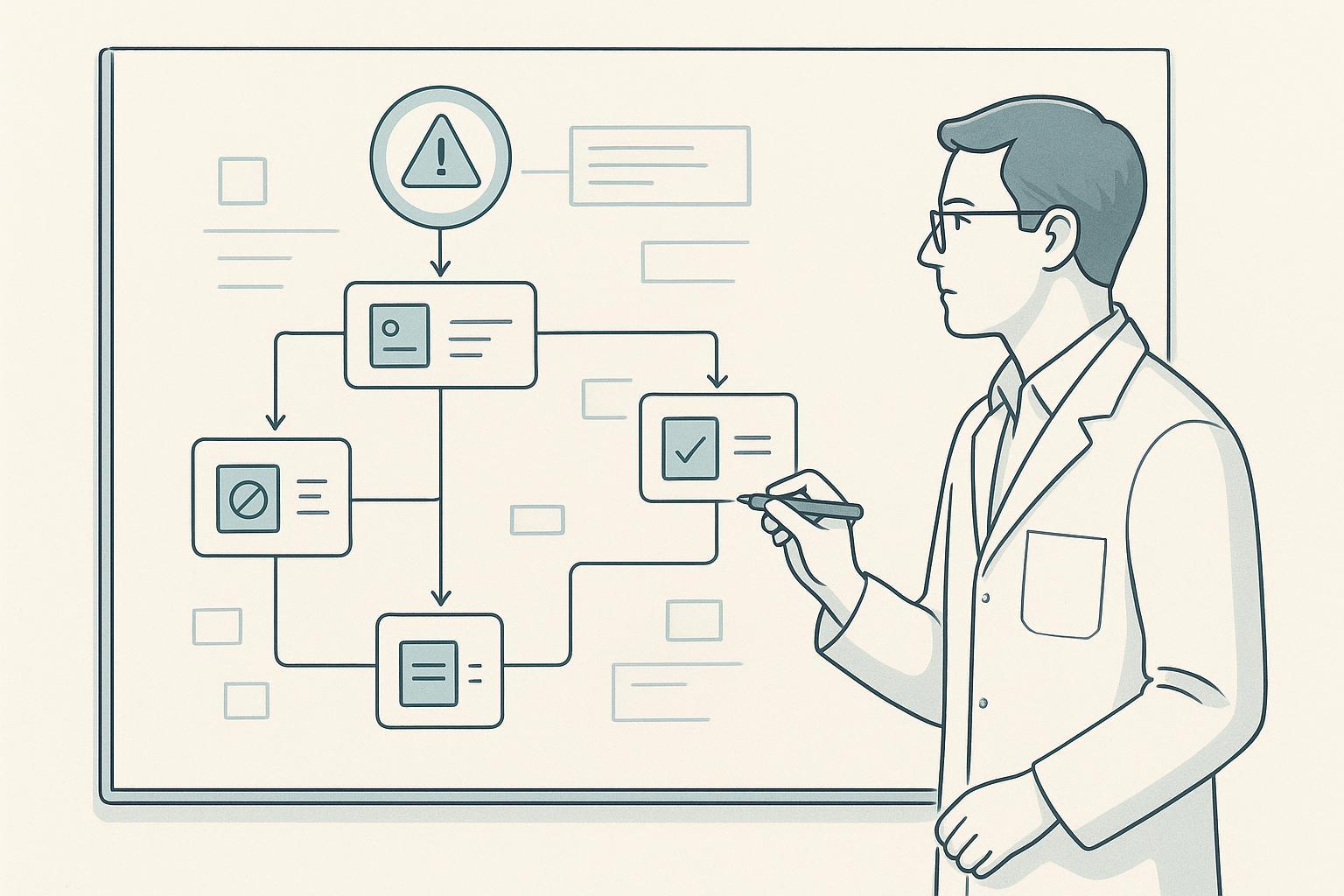
An out-of-specification investigation in a peptide QC lab is a routing and preservation problem before it is a compliance exercise. Industry-standard two-phase practice, framed by the FDA’s guidance on investigating out-of-specification test results, starts with a Phase I laboratory investigation: the lab checks its own work for an assignable cause before the result is treated as a product failure. Only when Phase I finds no assignable laboratory cause does the event escalate to Phase II, where the investigation moves beyond the laboratory.
The routing matters less than what survives it. For any OOS event, the record an auditor must be able to reconstruct includes the original reported result with sample ID, 方法, instrument, run sequence, date and time, analyst, and batch or lot context; the raw data behind it, including chromatograms, integrations, weights, calculations, and system-suitability and calibration records; an audit trail of every addition, 删除, 修改, reprocessing, and re-integration, with who authorised each one and why; the investigation record itself, with its phase assignment, evidence reviewed, conclusions, CAPA, and disposition; and the full retest history showing why retests were permitted, whether the initial result was invalidated, and which result became reportable (NCI Frederick, Managing Out-of-Specification Test Results or Unexpected Test Results, 2022).
A LIMS that stores only the final disposition cannot reconstruct any of this. Ask the vendor to walk one OOS event through the system end to end, from the first reported value to the reportable result.
问题 5: 分析证书是否仅根据批准的结果生成?
Certificate of analysis generation is a controlled-document function, not a reporting template. A CoA is assembled from approved results, and its header fields must agree exactly with the sequence table, run header and reference standard records for that lot. The fields that carry the most weight are product name, 批号, COA date and testing laboratory, because those four are what a customer checks first and what an auditor reconciles against the batch record.
That is why the release-blocking test belongs in the demo. Ask the vendor to generate a CoA for a lot that still has an open out-of-specification investigation against it, then watch what the system does. A LIMS built for peptide QA refuses, flags, or routes for approval. A reporting tool prints the certificate anyway, and you have just seen how a non-conforming lot reaches a customer.
|
CoA header field |
Source record it must agree with |
|---|---|
|
Product name |
顺序表 |
|
Lot number |
Sequence table and run header |
|
COA date |
Approval record for the released results |
|
Testing laboratory |
Run header and reference standard records |
If the vendor cannot show that agreement in the demo, treat the CoA as unverified until they do.
端到端的可防御证据链是什么样的
A defensible peptide lot traceability chain is a sequence of handoffs, and each handoff needs a named record plus a control that keeps the record honest. Walk it in the demo from the vial label through accession, analytical run, method version, analyst, review, disposition, 和分析证书. At every one of those steps, ask which record carries the handoff and what stops that record from being edited after the fact. Chain of custody in the LIMS is only as strong as its weakest handoff, so a system that names the record but cannot show the control is showing you a form, 不是一个控制.
MOL Changes supports this kind of staged handoff, and can be used to keep method versions and review records attached to the lot they belong to.
肽 QA LIMS 选择中的常见错误

The most common failure in choosing a LIMS for peptide QA is evaluating on a feature checklist instead of asking the vendor to produce a record. Checklists are easy to score and hard 合成肽 to falsify, which is exactly why they survive procurement. The five mistakes below are the ones that cost labs the most, and each has a cheap fix you can apply in the next demo.
Accepting a demo on synthetic data. Vendors demo with clean, pre-built lots because real data exposes gaps. Ask them to start from one of your own CoA lot numbers and walk to the sequence record, 奔跑, the method version and the analyst who signed it. If the walk breaks anywhere, you have found your answer.
Treating the CDS/LIMS boundary as an integration detail. It is a data-ownership decision. Whoever holds the raw chromatographic data controls the audit trail, so settle that before you discuss connectors.
Letting method versioning be a free-text field. Free text cannot prove which method produced a result. Require a version history that binds each result to the method revision in force at the time of the run.
Assuming CoA generation is a reporting feature. It is a release control. Ask what the system does when an out-of-specification investigation is still open at the moment someone tries to issue the certificate.
Not asking what happens to an open OOS at release. This is the question that separates a defensible system from a document repository, and it takes thirty seconds to ask.
如何对答案进行评分并做出决定
Score each of the five questions on three axes, and score the vendor’s behavior, not the feature list. 第一的: did they demonstrate the record in the system, or only describe it? A traceability claim shown live, with a real lot walked from synthesis through release, is worth more than a slide. 第二: was the evidence exportable? Ask them to export the audit trail, the method-version history, or the OOS record as a file you can open. If the answer lives only inside their interface, you cannot audit it. 第三: did the answer survive a follow-up? Ask what happens when a stability pull is split across two analysts, or when a method is revised mid-study. Vendors who know their product answer immediately; vendors who do not will offer a call with an engineer.
For a LIMS for peptide QA, the scoring criteria should also include the cost and timeline of validation, because that is often the deciding factor. Regulated LIMS validation is reported at roughly $15,000 到 $80,000 for validation alone, with full regulated implementations commonly reported at $150,000 到 $500,000 and timelines of 6 到 12 months single-site and 18 到 36 months multi-site (1LIMS, retrieved 2026-08-10). Treat these as indicative only: they come from vendor and consultancy estimates that vary widely, with no stated methodology or sample, so they should not anchor your decision. Use them to frame a budget conversation, not to choose a system.
|
问题 |
Demonstrated the record |
Evidence exportable |
Survived follow-up |
|---|---|---|---|
|
1. Sequence and lot traceability |
|||
|
2. Chain of custody for aliquots and stability pulls |
|||
|
3. Raw chromatographic data and method versions |
|||
|
4. OOS investigation routing and preservation 关于 |
|||
|
5. CoA generated from approved results only |
Two limitations deserve a place in the scoring. Instrument-vendor lock-in is real: a system built tightly around one chromatography vendor’s data format can make a second instrument line expensive to onboard later. Migration cost is the other. Moving historical peptide data out of a legacy system, with its audit trails intact, is a project in itself, and vendors rarely quote it upfront. Ask both questions before you sign, and score the answers honestly.
If the scoring leaves you with two viable options, talk to a peptide QC specialist who has run these systems in a regulated lab, not just a sales engineer.
常见问题解答
色谱数据系统能否单独覆盖肽 QA 追溯性?
不. A chromatography data system is the system of record for acquisition, 一体化, and the native raw file, but registration, 保管, 批处理, 规格检查, and the disposition record sit in the LIMS. That boundary matters for your evaluation because chromatographic data management and peptide lot traceability are two different record chains, and only one of them ends in a release decision. Ask the vendor to show where the CDS record is referenced by the LIMS record, and what happens to that reference when a result is reprocessed.
如果供应商无法在演示中显示方法版本历史记录怎么办?
Treat it as an unresolved release-blocking control, not a roadmap item. Method version control is what lets you prove which procedure produced a released result, so a demo that cannot display it is an incomplete demo, not a scheduling problem. Ask for the method lifecycle in writing, including how a version is retired and how historical results stay bound to the version that generated them, then ask for a reference lab that has been audited on exactly that. If the vendor cannot supply either, the out-of-specification investigation path downstream is unverifiable too.
肽 QC LIMS 需要多少验证?
Scope validation to the records your lab releases on, and map instrument qualification to USP 〈1058〉 “fitness for intended use” rather than treating it as a separate exercise. In practice that means the validated scope covers registration, custody transfer, specification evaluation, 和处置记录, with the instruments feeding those records qualified for the purpose they serve. A LIMS for peptide QA does not need to be validated as a whole system beyond what those release decisions depend on.
ELN 是否会改变这五个问题中的任何一个?
不. An ELN changes where the analyst writes, not who owns custody, method version, or the disposition record. If an ELN is in the stack, the same five questions apply to whichever system holds those records, and you should confirm in the demo which one that is.
结论
You now have a working evaluation framework: five questions for a LIMS for peptide QA, each paired with a specific record to demand and a specific request to send. Sequence and lot traceability maps to the full analytical record set, which for a typical peptide lot runs to roughly six to eight core documents covering MS identity, RP-HPLC purity, 抗衡离子, 内毒素, 不育, 和残留溶剂 (Polypeptide QC specifications, undated). Chain of custody maps to aliquot and stability-pull logs. Raw chromatographic data and method versions map to the instrument export and version history. OOS routing maps to the investigation record. CoA generation maps to the approved-results gate.
The value of asking this way is that it moves the conversation from a feature list to an audit. A vendor can claim traceability; only the records show whether it holds.
The next step is deliberately small. Request a representative CoA and analytical data package, then run the five questions against it before you book a second demo. If the answers are thin, ask to speak with a peptide QC specialist on the vendor’s team and put the same five questions to them.
Disclosure: MOL Changes has a commercial interest in peptide quality standards and LIMS evaluation practice.