Antecedent cellular mechanisms
The essence of human aging is cellular senescence, senescent cells forever out of the cell cycle, but they will not be removed as directly as apoptotic cells, senescent cells generally have a large number of damaged DNA, which may be the reason why they are not removed, so the senescent cells will be a large number of retained, and continue to be deposited thereby inducing the body’s aging and the occurrence of related diseases. (Before senescent cells kill you, you should strike first)
The p53 gene has the function of inducing apoptosis, and its mechanism is that the p53 protein encoded by the p53 gene functions as a checkpoint in the G1 phase of the cell cycle and is responsible for checking whether there is any damage to the chromosomal DNA; once the defective DNA is found, it stimulates the expression of CIP, which prevents the cells from entering into the cell cycle and initiates the mechanism of DNA repair; if the repair fails, the p53 initiates the apoptosis mechanism.
N'ime sel anụ ahụ, FOXO4 expression rises and affects the process of cellular senescence and apoptosis through interaction with proteins such as p53. Because it attaches to p53, it can prevent senescent cell death.
Difference between FOXO4 and FOXO4-Dri
FOXO4 short peptide is L-type amino acid.
FOXO4-Dri short peptide is D-type amino acid.
Why FOXO4-Dri appears
FOXO4 is a straight-chain polypeptide composed of 46 amino asịd, the vast majority of the sequence is D-type amino acids, because he combined with the p53 gene, preventing the expression of the p53 gene, thus leading to the inability to remove senescent cells.
In the original idea, scientists wanted to use gene editing to take out the foxo4 gene, but this was too much work and prone to DNA damage. Ya mere, scientists devised an alternative by replacing all of the L-type amino acids in the FOXO4 short peptide with D-type amino acids, which inverts the conformation of FOXO4-Dri and competitively binds to p53, while preventing FOX04 from binding to p53.
P53 activates apoptotic proteins and causes cell death. By removing old cells from the tissue, more dramatic tissue regeneration can be achieved.
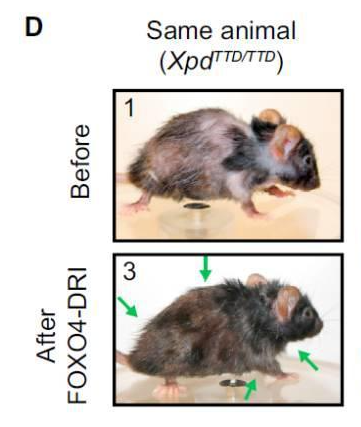
Mgbakwunye: senescent mice injected with FOX04-dir showed significant improvement in kidney function and hair began to repair itself.

Bingyan Gao
Profaịlụ: Bingyan Gao bụ "onye nche ọnụ ụzọ ámá" nke ịdị ọcha na ịdị mma peptide. Ọ maara nke ọma n'iji ngwa nyocha dị elu dị iche iche na ọkachamara n'ịzụlite ụzọ nkewa chromatographic ahaziri maka peptides gbanwetụrụ nke ukwuu.. O guzobela usoro profaịlụ adịghị ọcha siri ike nke na-abụghị naanị na-eme ka ngwaahịa dị ọcha nke 99% ma ọ bụ karịa mana ọ na-achọpụtakwa kpọmkwem ma kpochapụ adịghị ọcha nke nwere ike ịkpata immunogenicity. Site na nghota miri emi nke iwu FDA na EMA chọrọ maka ọgwụ peptide, ọ na-ahụ na ogbe ọ bụla ewepụtara na ụlọ ọrụ ahụ na-esonyere ya na Asambodo nyocha zuru oke na ikike. (COA).
- siRNA Manufacturing Model for Peptide Production 2026年10月14日
- Nchọpụta ọgwụgwọ Peptide: Catestatin na orexin 2026年10月13日
- kristal Peptide 2D na-eduzi n'igwe: Nhazi & Ihe akaebe 2026年10月12日
- Usoro Peptide dị iche iche: Ọsọ Novo-Kalyope 2026年10月11日
- Nhọrọ Peptide CMO: Ihe akara akara ngosi nke 6 akụkụ nke ọkọnọ 2026年10月11日
Usoro inyocha eziokwu anyị
Anyị na-ebute izi ezi na iguzosi ike n'ezi ihe na ọdịnaya anyị ụzọ. Nke a bụ otu anyị si edobe ụkpụrụ dị elu:
- Nyocha ọkachamara: Ndị ọkachamara gbasara ihe na-enyocha akụkọ niile.
- Nkwado isi mmalite: Enwere ntụkwasị obi na-akwado ozi, isi mmalite ọhụrụ.
- nghọta: Anyị na-ehota n'ụzọ doro anya ma na-ekpughe esemokwu ndị nwere ike ime.
Ụlọ nyocha anyị
Ndị ọkachamara nwere ahụmahụ na-enyocha nke ọma ọdịnaya anyị iji hụ na izi ezi na mkpa.
- Ndị ọkachamara ruru eru: A na-enyocha akụkọ ọ bụla site n'aka ndị ọkachamara nwere ihe ọmụma gbasara mpaghara.
- Ntụle ọhụụ: Anyị na-etinye nyocha kachasị ọhụrụ, usoro, na ụkpụrụ.
- Nkwenye na Ogo: Ndị na-enyocha ihe na-eme ka o doo anya, ziri ezi, na izu oke.
Chọọ akara ndị ọkachamara nyochara ka ị gụọ ọdịnaya ị nwere ike ịtụkwasị obi.