What ISO 9001:2026 for Peptide Labs Actually Changes
サービス ISO 9001:2026 for peptide labs changes how quality decisions are made and recorded, not which forms exist. The revision was published on 16 9月 2026, planned over a 36-month revision cycle coordinated by ISO/TC 176 SC2 WG29, and it lands eleven years after ISO 9001:2015. の clause-by-clause change count records 6 major changes, 13 moderate, そして 21 small or editorial.
The clauses that moved matter more than the total. の standards body’s clause-by-clause summary of what the revision changes places the primary culture and ethics changes in 5.1.1 そして 7.3, and separates risk from opportunity into 6.1.2 そして 6.1.3. The revision’s change-management clauses, 6.3 そして 8.5.6, introduce a more integrated approach to managing change. の 2024 climate amendment is folded into the core text of 4.1.

Two boundaries are worth stating before any practice. ISO 9001 sits below GMP for a peptide API: it is a general QMS framework and does not replace the ICH quality guideline set that governs API manufacture, ICH Q7 and ICH Q11. It is also not ISO/IEC 17025 またはISO 13485.
The transition window is expected to run 36 月, putting certificate expiry near September 2029, but that date remains pending IAF resolution and certification-body sources disagree. Confirm it against the IAF resolution, not a vendor page.

Why the 2026 revision is a system question, not a paperwork question
The revision rewrites the language of evidence, not the list of records. ISO 9001:2026 drops “maintain documented information” and “retain documented information” in favour of “shall be available as documented information” and “documented information shall be available as evidence of,” and the clause-by-clause list of where records must exist confirms via Annex A.2 e) that “as evidence of” does not create a legal evidential standard.
The count is unchanged. Across Clauses 4 に 10, 27 points require documented information: 8 available for use as documents, 19 available as evidence as records, the same set as 2015. A custom peptide synthesis quality system therefore does not need more paperwork. It needs decisions that can be traced back to the batch.
ステップ 1: Map Peptide Batch Traceability Before You Touch the Documentation

Start with the batch record, not the quality manual. Peptide batch traceability is the spine every later practice hangs on: change control, risk assessment, supplier oversight, and client documentation all attach to a lot that can be followed from raw materials to release.
The reason is structural. 固相ペプチド合成 (SPSS) builds a chain one amino acid at a time on a resin, and a typical 30-amino-acid peptide needs 30 連続的なカップリングと脱保護サイクル. At 99% efficiency per step, cumulative yield loss and impurity accumulation become significant, as Neuland Labs describes in its account of what changes when a peptide process scales. A single 30-mer can also generate 50 に 100 potential impurities, and Neuland Labs explains why peptide impurities need their own control strategy: impurities at or above 0.10% require structural identification, and those above 0.5% need safety justification.
That arithmetic is why a resin lot, an amino acid lot, or a mid-campaign column swap has to be traceable to the exact peptide lot it touched. Build the genealogy first: peptide lot to raw-material lots, process parameters, in-process checks, analytical results, deviations, and the release record. Then verify it. Pick one released lot and trace it backwards to its raw-material lots without leaving the record set. If you have to phone someone to close a link, the map is not finished.
ステップ 2: Build Change Control Around Analytical Method Versions and Column Swaps
A column swap mid-campaign is a planned change, not lab housekeeping. Under ISO 9001:2026 clause 6.3, the planning inputs the standard now expects for a change are purpose and potential consequences, integrity of the QMS, availability of resources and information, allocation or reallocation of responsibilities and authorities, how the change is communicated, how effectiveness is monitored, and how results are reviewed. Write those into the change form before the column is unpacked.
The reason is analytical, not administrative. Deletion sequences and epimers are nearly isobaric with the target peptide, so reverse-phase HPLC separation is unreliable without orthogonal methods, and Neuland Labs describes co-elution as the norm rather than the exception. A new column lot or gradient shifts retention and resolution, which is why co-elution is the norm rather than the exception to plan around. Change control in peptide synthesis therefore has to cover method version, column lot, and gradient as one controlled set, with a defined effectiveness check: re-run a retained reference sample and compare against the historical result before releasing new data.
Checklist: clause 6.3 change-planning inputs
Purpose of the change and its potential consequences
ペプチド合成 Effect on the integrity of the quality management system
Availability of resources and of information
Allocation or reallocation of responsibilities and authorities
How the change is communicated
How effectiveness is monitored and how results are reviewed
ステップ 3: Apply Risk-Based Thinking to Synthesis and In-Process Control
ISO 9001:2026 splits clause 6.1 into two subclauses: risk management (6.1.2) and opportunity-based thinking (6.1.3). For a peptide lab, that separation forces something most quality manuals have never done: name the specific failure modes of solid-phase synthesis, not the generic categories.
Build the register from chemistry. The practitioner primer on what goes wrong in solid-phase synthesis documents incomplete couplings that leave truncated and deletion sequences, aspartimide formation at Asp that drives epimerization and a −16 Da mass shift, and C-terminal Cys on Wang resin eliminating to dehydroalanine (−36). Each entry needs a control and a detection point, not just a severity score.
Scale changes the risk profile. A CDMO’s account of what changes when a peptide process scales identifies mass transfer (resin swelling, solvent exchange, mixing dynamics), heat transfer (温度 店 gradients altering epimerization rates), and downstream loadability (reduced preparative column resolution forcing pooling changes) as the variables that shift between mg and kg.
重要なポイント: No single ICH framework governs peptide impurity thresholds. ICH Q3A and Q3B explicitly exclude synthetic peptides, so your register has to justify its own action limits.
ステップ 4: Qualify Peptide Suppliers by Criticality, Not by Certificate

Supplier qualification should follow the consequence chain, not the certificate portfolio. A resin lot change mid-campaign shifts swelling behaviour and coupling kinetics, an amino acid lot with different enantiomeric purity shifts the epimer profile, and a solvent lot change alters the ion-pairing behaviour that governs how much residual TFA remains in the crude. That last consequence is not cosmetic: residual TFA from solid-phase synthesis is considered undesirable or potentially toxic in clinical use, and removing it by counterion exchange to chloride or acetate adds process steps (ニューランド研究所, 取得した 2026-04-27).
So qualification depth should track what the material does to your process. Materials that can move a critical quality attribute warrant certificate review plus independent analytical verification; materials that can halt a campaign warrant an audit. And a certificate does not by itself prove an operating system: it evidences one lot against one specification, not the change control, deviation handling, and investigation records behind it. Ask for those records instead of the certificate alone.
ステップ 5: Issue Client Documentation That Survives Version Control and Deviation Review
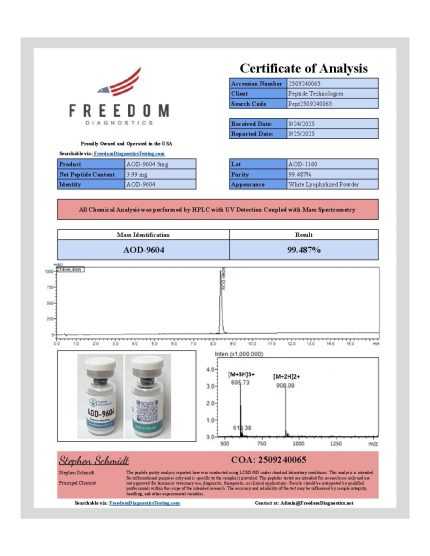
By the end of this step, every client-facing document you issue can be traced back to the exact conditions that produced it. That traceability is what lets a package survive a deviation review months later.
The clause-by-clause list of where records must exist separates two things that peptide labs often blur together. Documents are controlled, current, approved, and available where the work is done; records are protected from alteration, retained for a defined period, and retrievable on demand (ISO 9001:2026 documented information listing, 取得した 2026-09-18). A certificate of analysis is a record. The method it was run under is a document.
That distinction has teeth in a custom peptide synthesis quality system. A CoA, an HPLC chromatogram, and a mass spectrum (MS, which measures a molecule’s mass-to-charge ratio to confirm identity) issued per lot must each point to the method version and column lot in force on the day of analysis. Change the column mid-campaign and the earlier chromatograms still belong to the earlier method version. If the package does not say so, a later deviation review cannot reconstruct which conditions applied to which lot.
MOL Changes operates an integrated peptide synthesis platform with Class 100 ultra-sterile cleanroom production and mg-to-kg scale-up, issuing a CoA, HPLCクロマトグラム, and MS spectrum per lot. That is a documentation capability, not a certification claim.
避けるべきよくある間違い
Treating the revision as a documentation reformatting exercise. The clause-by-clause list of where records must exist is unchanged at 27 points from 2015, so teams reasonably conclude that existing templates will pass. What actually moved is how decisions 合成ペプチド get recorded and linked: risk reasoning, change justification, and the traceability between them. The fix is to audit your decision trail, not your document set. Ask whether a reviewer could reconstruct why a specification changed, not whether a form exists.
Qualifying suppliers by certificate rather than by criticality. A supplier certificate says a system was audited; it says nothing about the resin and amino acid lots that drive epimerization and truncation. Rank suppliers by the failure modes their materials can cause, then set oversight depth accordingly.
Running change control on synthesis steps only. Analytical method versions and column swaps sit outside many change processes, which is where co-elution risk enters. Co-elution is the norm rather than the exception in peptide analysis, so a column change can silently alter what a release result means.
Building a risk register from generic categories. A register organized around “supplier risk” and “process risk” satisfies an auditor and informs no one. Name the peptide failure modes you are actually managing.
結果: What a Working System Looks Like
A working ISO 9001:2026 for peptide labs system is recognizable by what you can retrieve, not by what you can display. Five markers are checkable without an auditor in the room. について
A released lot traces backwards to its raw-material lots without leaving the record set. Every analytical method version and column lot in force on an analysis date is recoverable. The risk register names peptide-specific failure modes, each with a control and a detection point. Supplier qualification depth varies by material criticality rather than by certificate count. And a client package issued eighteen months ago still reconciles against the method version and deviation log of its day.
The stretch goal is extending that same genealogy spine to cold-chain excursions and to endotoxin and particulate risk for any lot destined for clinical work. ペプチドの生産
This is an operating-model explainer, not regulatory advice. MOL Changes はペプチドの品質基準に商業的関心を持っています; its documented QC stack, per-lot CoA and HPLC/MS documentation, とクラス 100 cleanroom are capability facts, not certification claims.
よくある質問
Is ISO 9001:2026 certification required for a peptide lab?
No regulator requires it. ISO 9001 is a voluntary standard, and certification is a customer-driven expectation rather than a legal obligation for most peptide laboratories. What is mandatory depends on what you make and where you sell it: a peptide intended as an active pharmaceutical ingredient falls under GMP, そして ICH quality guideline set that governs API manufacture takes over from there. ISO 9001 and GMP are not substitutes. A quality management system built to ISO 9001 can sit underneath a GMP framework, but it does not discharge GMP obligations on its own.
How does the 36-month transition period work?
The certification body’s revision timeline gives certified organizations a 36-month window to move from the 2015 edition to the 2026 revision. Certificates issued against the older edition remain valid during that window, so there is no immediate deadline pressure. The practical risk sits elsewhere: audits scheduled early in the transition will expect to see evidence that your gap analysis is underway, even if the full transition is not complete. Start the mapping now, not in month 30.
How much of the documented-information set actually changed?
Less than the revision headlines suggest. The clause-by-clause list of where records must exist shows 27 points unchanged between editions. The shift is in what the standard asks you to do with those records, particularly around risk, change control, and organizational knowledge, not in the number of documents you must hold. If your 2015 system is well built, you are extending it rather than rebuilding it.
What should a small lab sequence first?
Start with batch traceability. It is the practice every other one depends on: change control, risk-based in-process decisions, and client documentation all assume you can reconstruct what happened to a lot. A lab that can trace a batch end to end has the foundation to layer the remaining four practices on top. A lab that cannot will find each of them harder to implement than it needs to be.
結論
The five milestones are one system, not five projects. Batch traceability gives change control something to point at; change control gives risk-based thinking a place to land; supplier qualification extends the same logic upstream; and client documentation is simply the visible surface of all four. Break any link and the chain fails at the point a reviewer tests it.
That is the difference between a certificate on a wall and a quality system that holds up. A certificate records that an auditor once found your documentation in order. A working system survives the harder test: a deviation review six months into a campaign, or a method change that forces you to show which lots were released under which version. ISO 9001:2026 for peptide labs rewards the second, because its documented-information expectations follow the product through synthesis, 分析, and release rather than stopping at the binder.
If you take one action from this guide, review your own evidence trail against the 27 documented-information points and see where the chain breaks first. If you would rather see what a complete per-lot package looks like, MOL Changes publishes an example of the CoA, HPLC, and MS documentation it issues per lot.