Peptide synthesis is a key technology for obtaining peptides with specific sequences and functions, which is widely used in the fields of biomedicine and material science. The traditional liquid-phase synthesis method is cumbersome and low yielding, which is difficult to meet the increasing demand, and was revolutionized by Bruce Merrifield’s Solid Phase Peptide Synthesis (统计软件) 在 1963, for which he was awarded the Nobel Prize in Chemistry in 1984. 然而, the traditional solid phase synthesis technique requires repetitive steps of deprotection, coupling and washing to gradually extend the peptide chain, and finally cutting the target molecule from the carrier, which is not in line with the concept of green chemistry. Reverse Phase Solid Phase Peptide Synthesis (RP-SPPS) employs hydrophobic carriers (例如, polystyrene resin) and polar solvents (例如, 二甲基甲酰胺), 这与正相固相合成相反. 最近几年, RP-SPPS以其独特的优点在多肽合成领域得到越来越广泛的应用.
优点
与传统正向固相合成相比, 逆向固相合成 (RP-SPPS) 有其独特的优势.
完全模拟生物体内的肽合成: 与生物体内肽合成方向高度一致, 为生物体内肽和蛋白质合成的研究提供体外实验基础.
更容易纯化: 疏水性载体易于用有机溶剂清洗, 有效去除过量试剂和副产物, 并简化纯化步骤.
独特的羧基末端修饰: RP-SPPS 可以直接在固相树脂上合成羧基末端修饰, 无需预修饰或肽链合成后修饰.
更符合绿色化学: 反相固相合成可抵抗水性条件下的反应,仅需要少量有机溶剂即可高效完成偶联.
适用于无保护策略: RP-SPPS 适用于市场上大多数未受保护的合成肽策略, 使肽合成更容易.
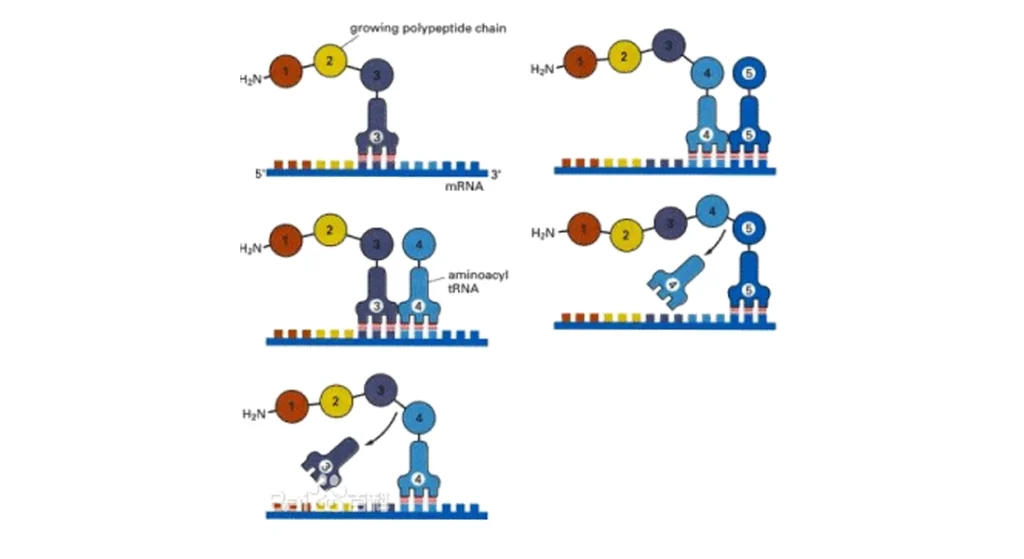
N-C方向肽链延伸
应用前景
随着新载体的发展, 偶联试剂和自动合成仪, RP-SPPS将在多肽合成领域发挥更大作用, providing more efficient and convenient peptide synthesis solutions for the fields of biomedicine and material science.